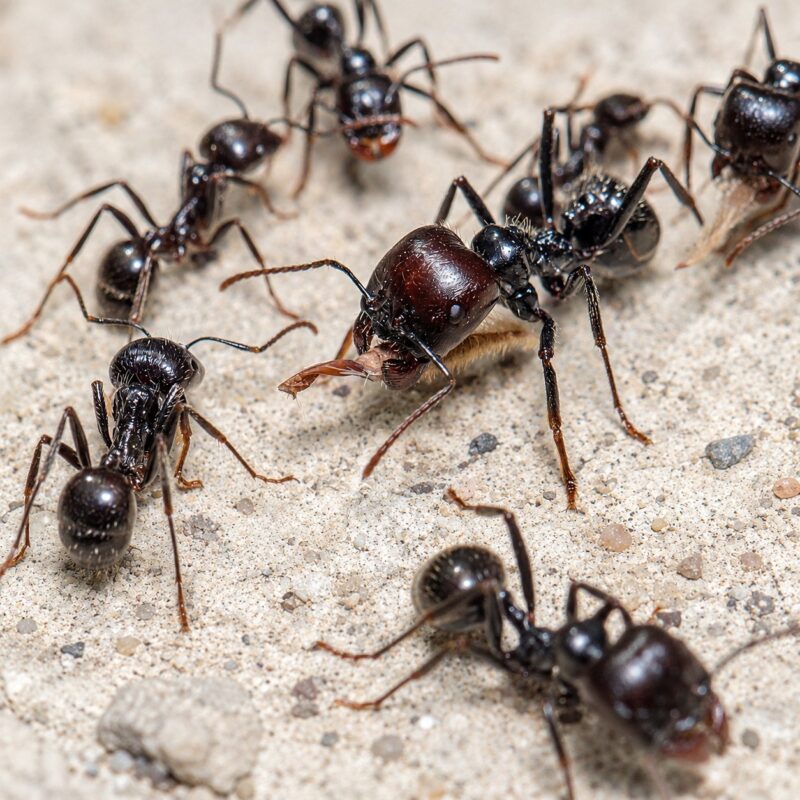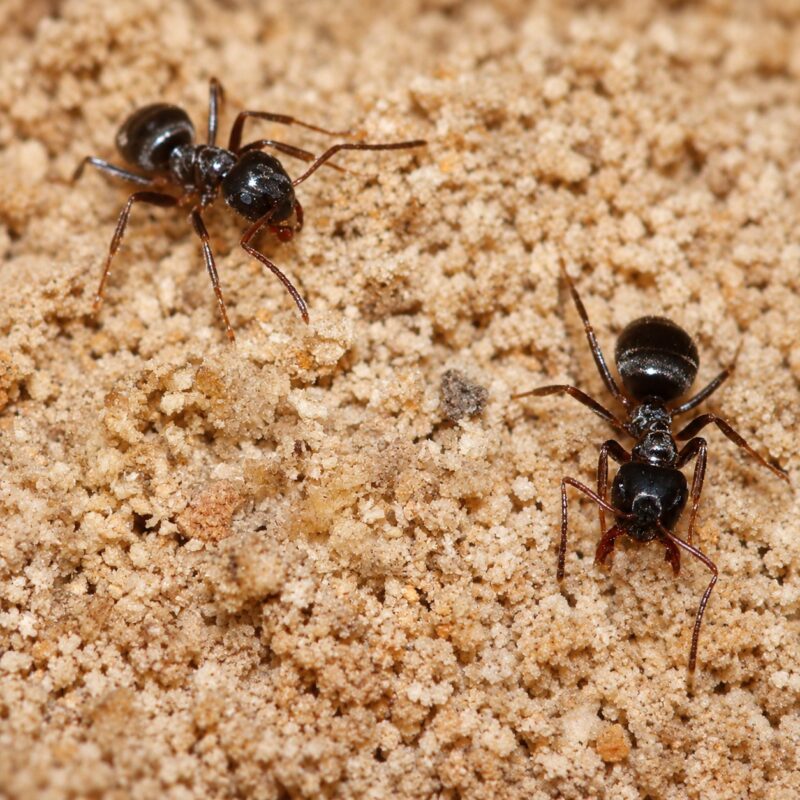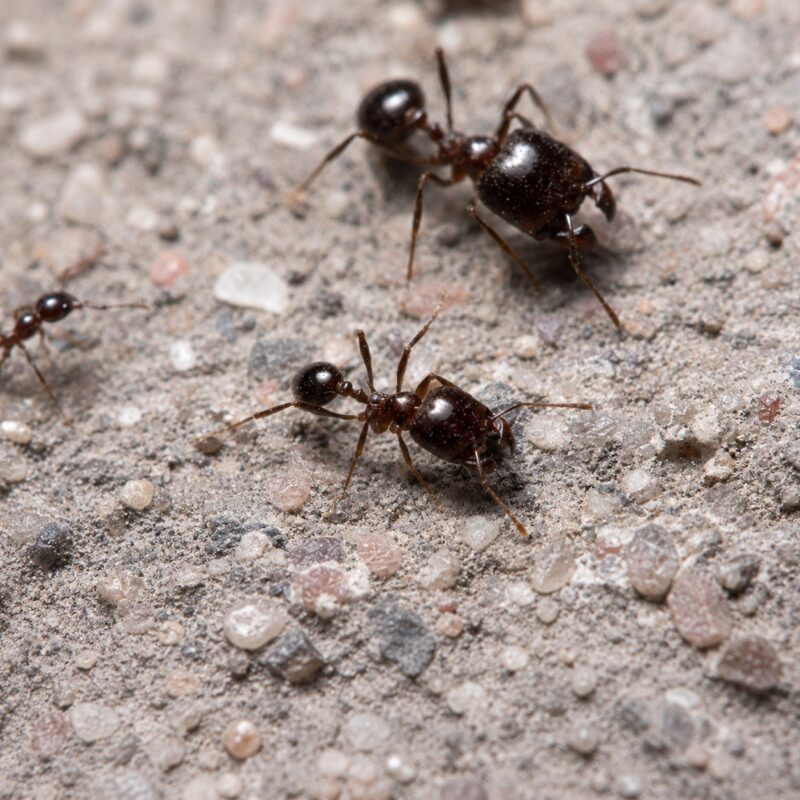





European Ant Nuptial Flight Calendar 2026: When Queens Take Wing


Late spring through early autumn, a strange thing happens above European fields, pavements and forest clearings. For one or two hours on a single warm day, the sky fills with winged ants. Most are males. They die within a day. A few are queens, and if you find one on the ground after the flight, you can start a colony from a single ant.
This is the nuptial flight calendar for 2026, covering the species that actually fly across Europe: when they fly, where to look, and what to do in the first 72 hours after the catch. The 2026 season is running early. A warm March and April pushed Camponotus ligniperda queens into the air in the Pfälzer Wald on 21 May, two to three weeks ahead of the multi-year average. The main Lasius niger peak is forecast for 20–25 July, possibly sooner if June stays hot.
Quick answer
When do European ants fly in 2026? Most flights happen between mid-May and early September. Camponotus ligniperda and Formica rufa fly in late May to June. Tetramorium and Messor structor peak in June–July. Lasius niger, the “flying ant day” species, peaks 20–25 July. Messor barbarus and Aphaenogaster senilis fly in September and October across Iberia.
Hero table: 2026 European nuptial flight months at a glance
Months are typical peaks across central and southern Europe in a warm season. Real local timing depends on rainfall, humidity, and the first calm afternoon above 20 °C.
| Genus / Species | Peak flight month | Region | Difficulty | At ANTonTOP |
|---|---|---|---|---|
| Camponotus ligniperda | Late May – June | Central EU, DE, PL | Medium | Yes |
| Camponotus herculeanus | June – July | Northern EU, Alps | Medium | Yes |
| Camponotus vagus | June – August | Southern EU, Mediterranean | Medium | Yes |
| Camponotus aethiops | June – July | Southern EU | Medium | Yes |
| Formica rufa | May – June | Central / Northern EU | Hard (protected in DE) | Restricted |
| Formica fusca | May – July | EU-wide | Easy | Yes |
| Formica cunicularia | May – July | Central EU | Easy | , |
| Tetramorium caespitum / immigrans | June (peak) | EU-wide | Very easy | Yes |
| Lasius niger | 20 – 25 July (peak) | EU-wide | Very easy | Yes |
| Lasius flavus | Late August – September | Central / Northern EU | Medium | Yes |
| Lasius emarginatus | July – September | Central EU | Easy | Yes |
| Messor structor | August – September | Central / Eastern EU | Medium | Yes |
| Messor barbarus | September – October | Iberia, Southern France | Medium | Yes |
| Aphaenogaster subterranea | June – September | Central / Southern EU | Medium | Yes |
| Aphaenogaster senilis | September – October | Iberia | Hard | Yes |
| Crematogaster scutellaris | June – August | Mediterranean | Hard (high flight) | Yes |
| Myrmica rubra | August – September | Northern / Central EU | Easy | , |
| Solenopsis fugax | July – August | Southern EU | Easy | , |
The table is the short version. The genus sections below explain what to actually do when one of these dates rolls around.
What a nuptial flight really is
A nuptial flight is the only time a mature ant colony releases reproductive females (alates, future queens) and males (drones) into the air at the same time. They mate mid-air or on nearby vegetation. The males die within hours. The mated queens land, snap their wings off, and look for a crack, a stone, or a patch of soil where they can dig a small chamber and start laying eggs.
Three environmental conditions usually line up at once for a flight to happen:
- Warmth. Most central-European species need surface temperatures above 20 °C.
- Humidity after rain. Many species fly within 24 hours of a rain that softens the soil.
- Low wind, late afternoon. Calm evenings between 17:00 and 21:00 are the classic window.
When the conditions hit, several colonies of the same species across a whole region tend to fly on the same day. This is why “flying ant day” feels synchronised. It usually is.
Genus-by-genus: when, where and what to do
Lasius niger, the black garden ant
The species behind every UK and German headline about “flying ants”. Workers are 3–5 mm. Queens are 8–9 mm and unmistakable once on the ground. They favour pavement cracks, garden borders and any sun-warmed flat surface. Peak in 2026 is expected 20–25 July, possibly a few days earlier if the heatwave continues.
Single queen, claustral founding (she does not leave the chamber to feed). A textbook beginner species. Forgiving, productive, easy to keep in a glass or acrylic formicarium.
Camponotus ligniperda and herculeanus, large carpenter ants

Massive queens, 15–18 mm, very visible on the ground. C. ligniperda flies late May into June, often after warm rain in clearings and forest edges. C. herculeanus is later, June–July, and a mountain species.
Claustral, single queen, slow first year, dramatic colony in years 2–3. Treat the first three months with patience and do not open the test tube. I lost a ligniperda foundation two seasons ago by lifting the cover once a week to check; the queen ate her own brood by week six.
Tetramorium caespitum / immigrans, pavement ants
If you have ever seen swarming ants on a city pavement in June, those were Tetramorium. The queens are 6–8 mm, dark brown, easy to spot. One of the easiest species to start with. Claustral founders, fast colony growth. T. immigrans has overtaken caespitum across much of urban Europe; the catching strategy is identical for both.
Messor structor and Messor barbarus, harvester ants
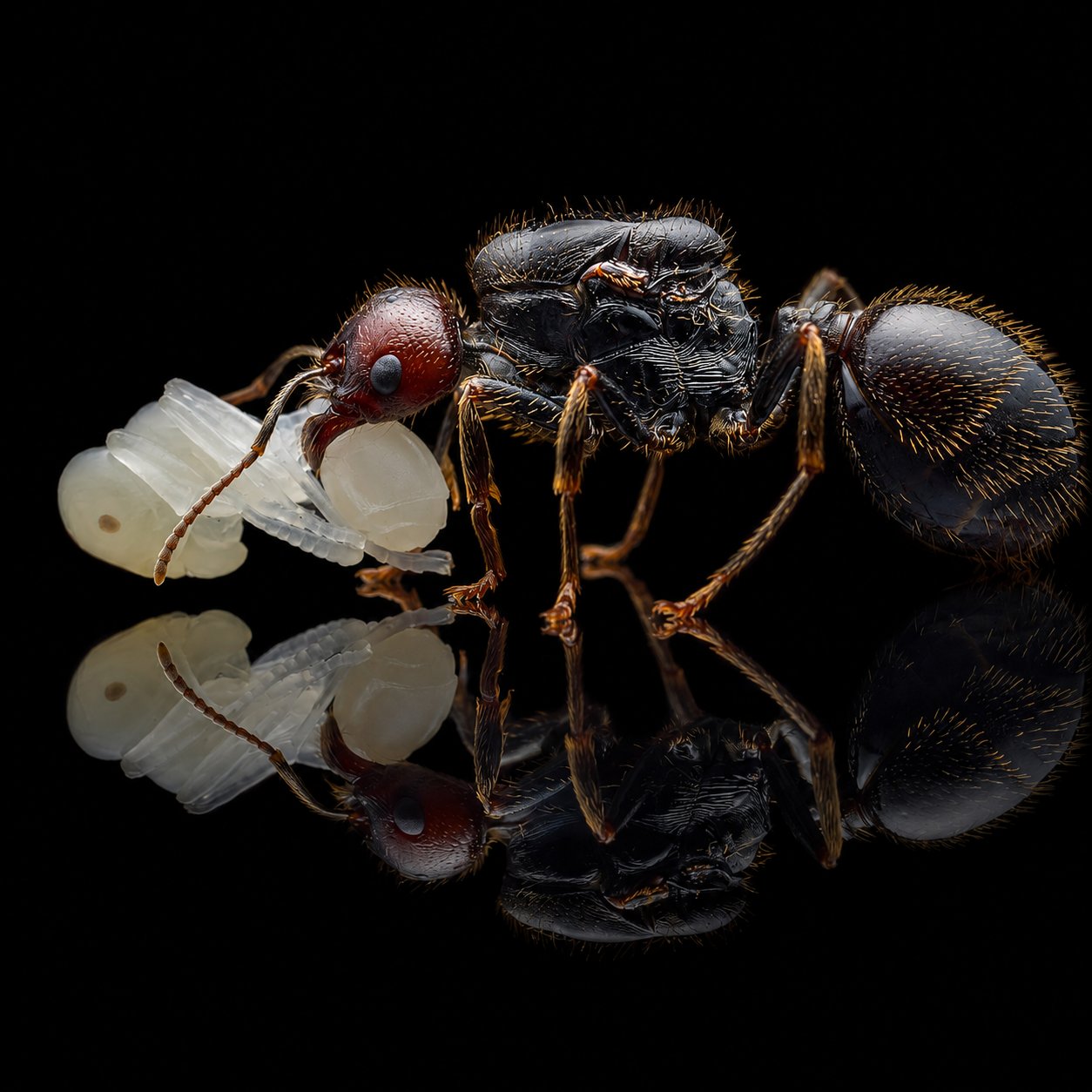
The seed-haulers. M. structor flies in August and September in central and eastern Europe. M. barbarus is the famous Iberian species and flies September and October, often within 48 hours of the first autumn rain. Queens are 14–16 mm with a blocky head, very recognisable.
Semi-claustral. The queen will leave the chamber to forage if hungry. Offer one or two grass seeds in the test tube after the first week. Long-term colonies are spectacular, with polymorphic workers and visible seed granaries.
Formica fusca and cunicularia, black field ants
Common across all of Europe, flying May to July. Queens are 7–10 mm. F. fusca is the textbook beginner species after Lasius niger. Claustral, easy. Avoid Formica rufa (red wood ant); it is protected in Germany, Poland, Austria and several other countries, and illegal to collect.
Aphaenogaster, Mediterranean rovers
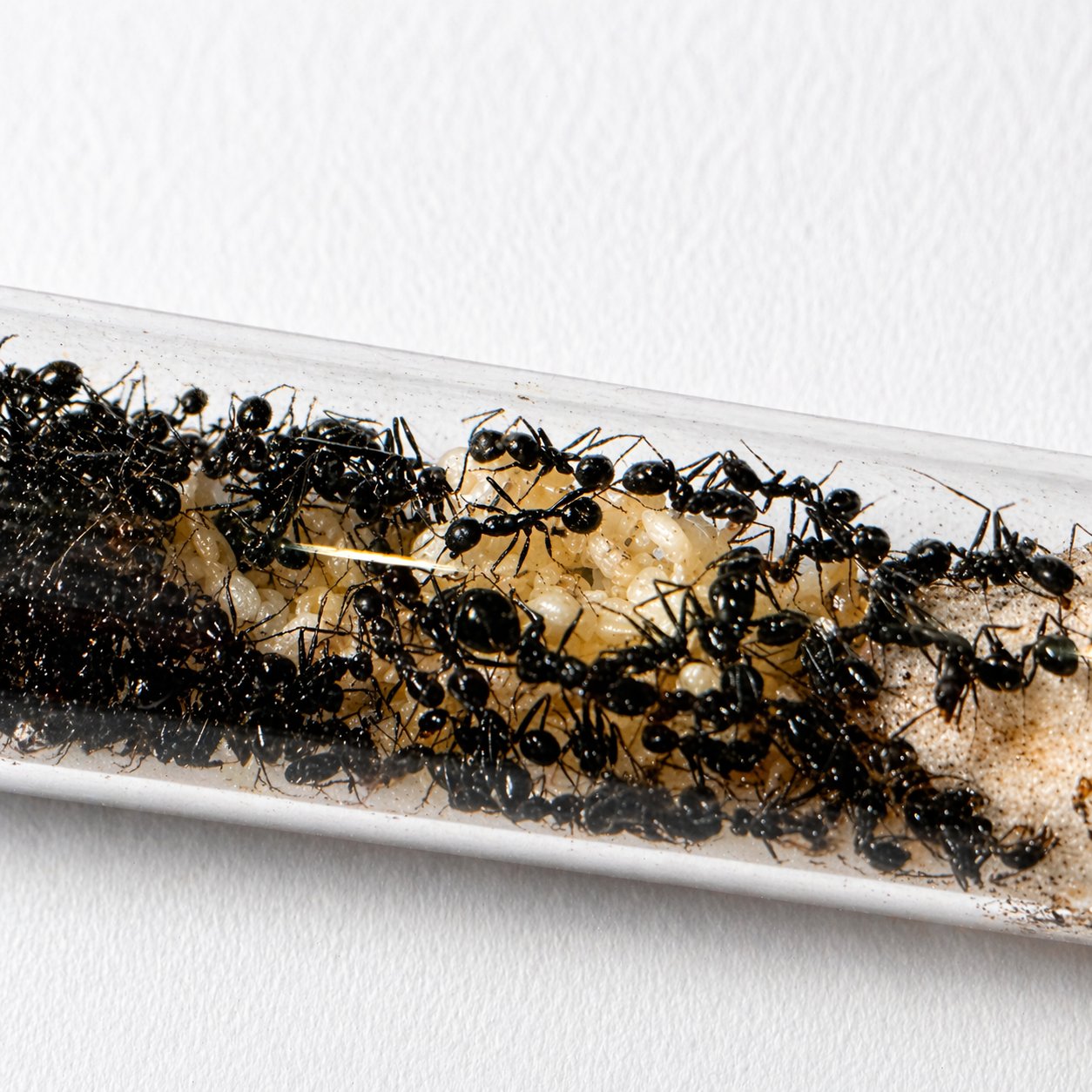
A. subterranea flies across central and southern Europe in June through September. A. senilis is an Iberian specialist and flies September and October, usually after autumn rain. Both are semi-claustral. Queens are 8–10 mm. A. senilis in particular forms beautiful, fast-moving colonies that suit a sandy desert setup.
Crematogaster scutellaris, the heart-gaster

A Mediterranean species, June through August. The flights happen high in the canopy and queens are hard to catch on the ground. Most keepers buy Crematogaster founding queens instead of chasing them.
How to catch a queen ant: five-step field protocol
- Watch the weather. Check the forecast 24 hours after a warm rain. A calm evening above 22 °C with high humidity is your window.
- Pick the right ground. Pavements for Tetramorium and Lasius. Forest edges for Camponotus and Formica. Open field paths for Messor. Match the spot to the species.
- Look for shed wings. A queen on the ground without wings has already mated. This is what you want. Winged queens that have not mated yet are not useful.
- Pick her up gently. Use a small clear container with a damp paper square inside. Do not handle her with bare fingers; the warmth of your skin stresses her.
- Move her to a test tube within an hour. Standard 16 × 100 mm test tube setup with a water reservoir and cotton plug. Wrap the tube in dark paper. Leave it alone for two to three weeks.
If you miss the flight or catch nothing, the fallback is straightforward: order a queen from our ant species catalogue and skip the first three months of waiting.
The first 72 hours after the catch
What you do in the first three days decides whether the colony survives or fails.
- Do not feed a fully claustral queen. Lasius niger, Camponotus, Tetramorium, Formica fusca and Aphaenogaster subterranea all live off their wing muscles and fat reserves for the first 6 to 10 weeks.
- Feed semi-claustral species sparingly. Messor and Aphaenogaster senilis take one or two seeds and a drop of honey water per week.
- Keep the tube dark. Wrap in red film or black paper. Queens that are stressed by light will eat their own eggs.
- Hold temperature at 22–26 °C. A heating cable on a thermostat is more reliable than ambient air.
- Check once a week, no more. Lift the cover, glance, replace. Every disturbance costs eggs.
A successful claustral queen will have a small clutch of eggs within 7 to 14 days, the first larvae by day 30, and the first 2 to 4 nanitic workers between week 8 and week 10. From that moment the colony begins to feed itself.
Why 2026 is an early year for flights
A warmer than usual March and April across central Europe pushed soil temperatures above the trigger threshold by mid-May. Camponotus ligniperda was already flying in the Pfälzer Wald on 21 May 2026, two to three weeks earlier than the multi-year average. Lasius niger peak is forecast for 20–25 July, but a sustained heat dome through June could pull it forward into the second week of July.
To maximise your chances of catching a queen this season:
- Set a weather alert for “first rain after seven warm days”.
- Walk the same 200-metre route in your neighbourhood at 18:00–20:00 every evening of that week.
- Carry three or four collection tubes at all times. Flights of different species can overlap on the same evening.
Frequently asked questions
Why do flying ants all appear on the same day?
Because they synchronise on the same environmental triggers: temperature, humidity and barometric pressure. Several colonies of the same species in a region usually release alates within the same one-to-two-hour window on the same calm, warm afternoon.
Can I keep a queen I find indoors?
Yes, provided she has shed her wings. A queen with wings still attached has not mated and will lay only unfertilised (male) eggs. Always confirm wing loss before committing to a setup.
Do I need a formicarium straight away?
No. A founding queen and her first 5 to 10 workers live happily in a 16 × 100 mm test tube setup for the first 3 to 6 months. Move the colony to a proper formicarium once you see 20 to 30 workers and the test tube starts to look crowded.
What if I catch a winged male by accident?
Release him. Males die within 24 to 48 hours of the flight regardless of what you do, and they contribute nothing to colony founding.
Is collecting queen ants legal in Europe?
For most common species, yes. Formica rufa and the rest of the Formica rufa group are protected in Germany, Poland, Austria and several other countries. Never collect these. When in doubt, check your local nature protection law before the flight season.
Skip the wait: buy a founding queen
If you do not want to spend evenings walking pavements with a tube in your pocket, you can buy a ready-mated queen with or without her first workers. Our catalogue covers most of the species in the calendar above, including Lasius niger, Camponotus ligniperda, Messor barbarus, Tetramorium, Aphaenogaster senilis, Crematogaster scutellaris and the rarer Cataglyphis desert species.
A queen caught on a July evening costs you a walk. A queen shipped from us costs €15 to €80 and saves you a season of uncertainty.
Plan your 2026 season
Bookmark this calendar, set a reminder for the third week of July, and keep three collection tubes near your front door from mid-May onwards. The European ant year has roughly four windows: late May for Camponotus ligniperda and Formica rufa, June for Tetramorium and Aphaenogaster subterranea, mid-July for Lasius niger, and September for Messor, Aphaenogaster senilis and Lasius flavus. One walk on the right evening can give you a colony that lives ten years.
Did you like this article?
Thanks for your feedback!