




Best Beginner Ant Species in Europe (2026) – 7 Easy Colonies to Start With


Every ant keeper remembers their first colony. Pick the right species and you get months of easy, rewarding growth that hooks you for life. Pick the wrong one, something fussy, tropical and unforgiving, and you can lose a queen in weeks and decide the hobby is not for you.
So this is the honest shortlist. Seven species that are genuinely easy to keep in Europe, that grow at a satisfying pace, and that forgive the small mistakes every beginner makes. No expert-only traps, no species that needs a lab to survive.
What makes an ant beginner-friendly?
Before the list, here is what we are actually looking for:
- Claustral founding: the queen raises her first workers without needing to be fed. This removes the number-one way beginners kill a colony.
- Tolerates room temperature: no heating cables, no humidifiers, no fragile tropical climate to maintain.
- Hardy and forgiving: survives a missed feeding, a slightly dry nest, a bit of beginner fussing.
- Visible and active: you actually want to watch it. A colony that hides forever is a boring first pet.
Every species below ticks most of these boxes.
1. Lasius niger – the black garden ant

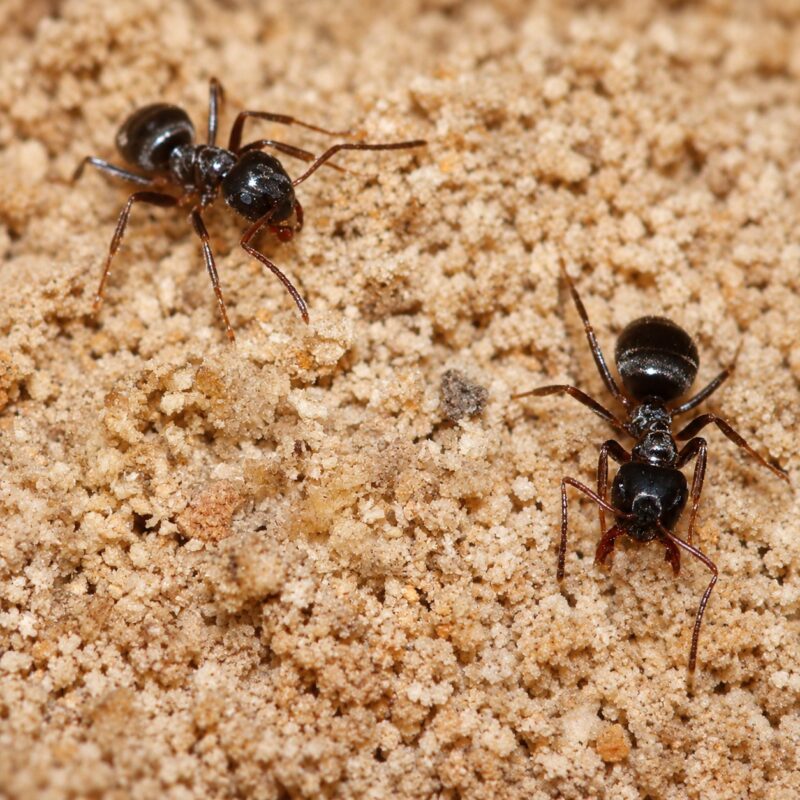
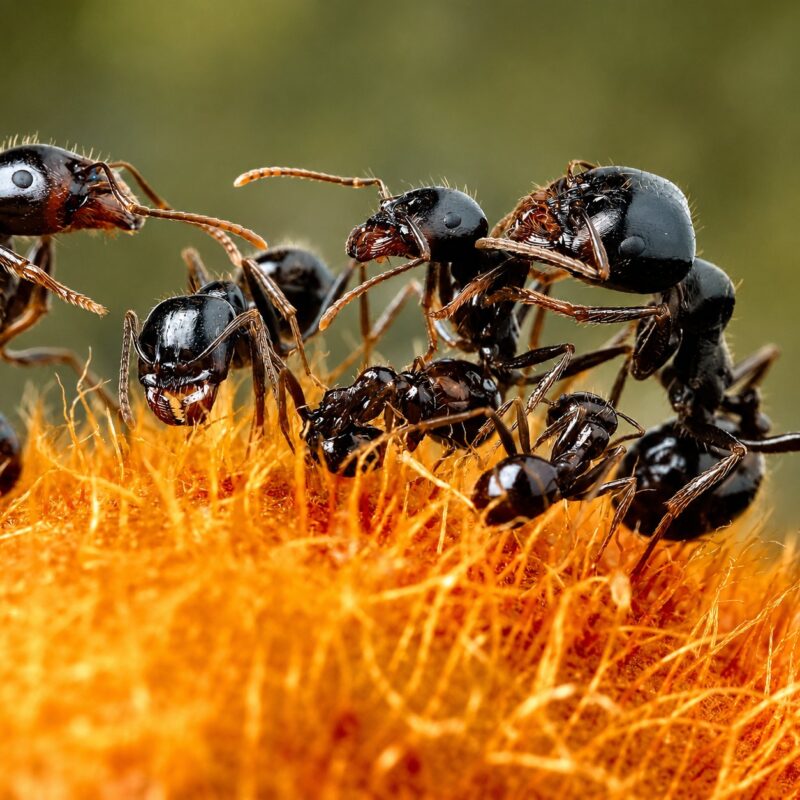
The default first ant, and for good reason. Fully claustral founding, room temperature, tough as nails, and free to catch on a summer evening. Workers are small (3–5 mm) and jet black, the queen lives for decades, and the colony grows steadily without any special kit. The only rule is a cool winter rest.
Best for: absolute first-timers who want the safest possible start. Full details in our Lasius niger care guide.
2. Messor barbarus – the harvester ant
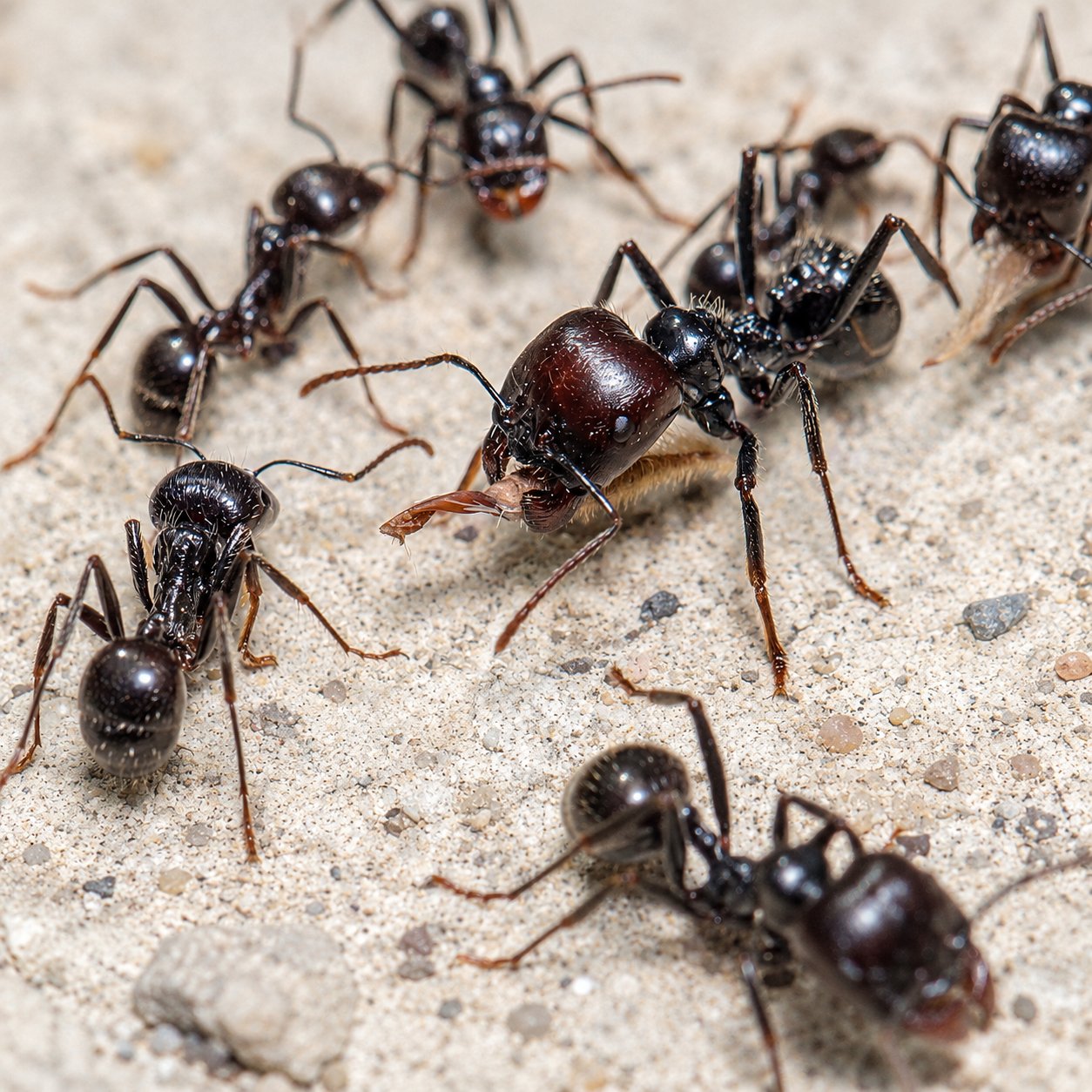
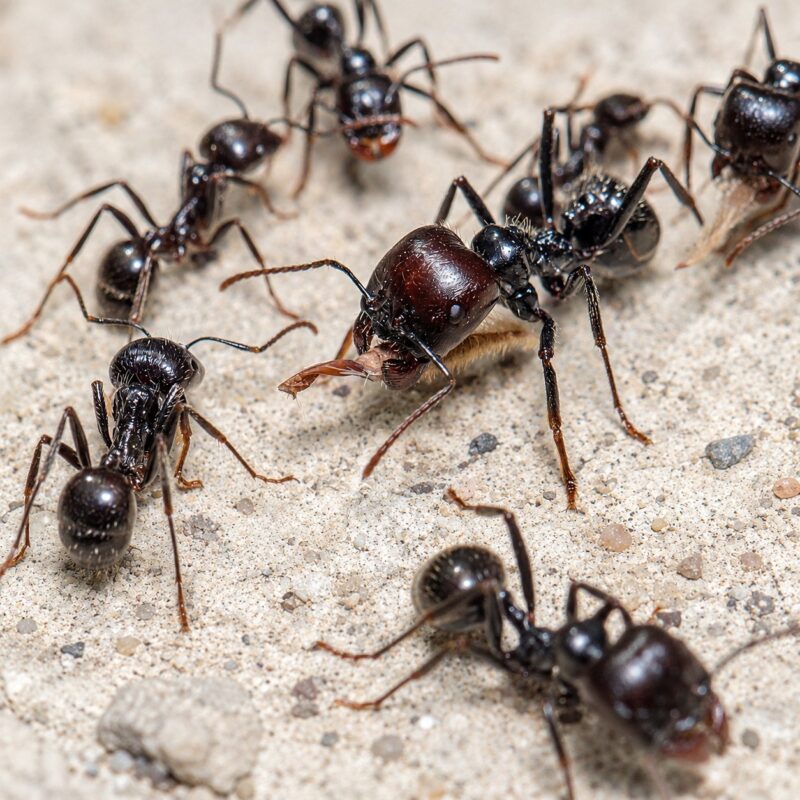
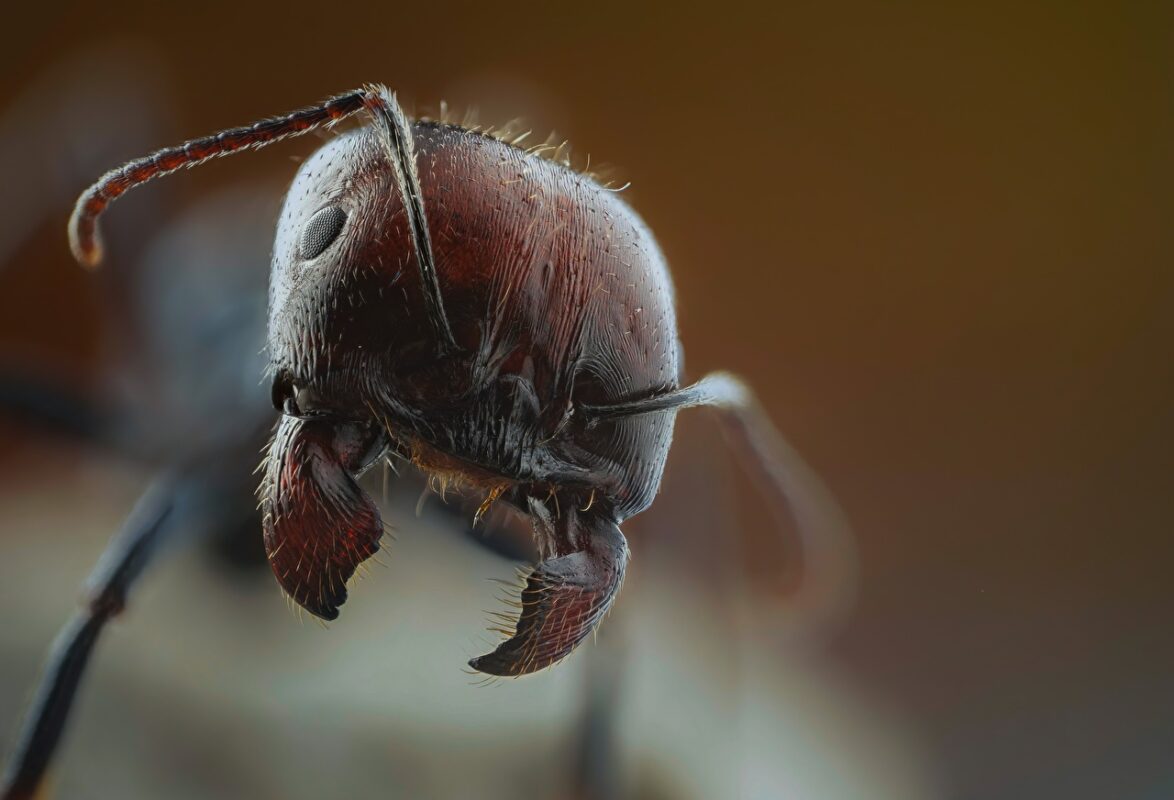
If you want the most rewarding beginner ant rather than just the easiest, this is it. Messor barbarus collects and stores seeds, so feeding is cheap and clean: you literally give them a pinch of seeds. They come in different worker sizes, from tiny minors to big-headed majors that crack the seeds open, which is fascinating to watch. Colonies grow fast and large.
Best for: beginners who want visible action and a colony that booms. Browse Messor barbarus.
3. Messor structor – the toughest harvester

The harvester ant of central and eastern Europe, and one of the hardiest beginner species there is. Like its Mediterranean cousin it collects and stores seeds, so feeding is cheap and clean, but it is smaller, tougher and far more cold-tolerant, bred by the steppe to shrug off conditions that bother other ants. Forgiving, steady and very hard to kill.
Best for: beginners who want a bombproof seed-eater. See Messor structor.
4. Crematogaster scutellaris – the acrobat ant

One of the most charismatic small ants you can keep. When alarmed they cock their heart-shaped gaster up over their back like a scorpion, which is how they earned the name “acrobat ant.” They are fast, busy, constantly visible, and have a striking dark-red head with a black body. A Mediterranean species that is hardy and easy in captivity.
Best for: beginners who want a lively, characterful colony to watch. See Crematogaster scutellaris.
5. Pheidole – the big-headed ants

Pheidole gives you the spectacle of soldiers without the difficulty of Carebara. Tiny minor workers do the daily work while big-headed soldiers crack seeds and defend the nest, a real two-caste colony. Growth is fast and the activity is non-stop. A great pick if you want polymorphism on easy mode.
Best for: beginners drawn to soldiers and fast-growing colonies. See Pheidole indica.
6. Camponotus nicobarensis – the fast carpenter ant
Most carpenter ants are slow. Camponotus nicobarensis is the exception, and that is exactly why it is such a popular first exotic. This tropical Southeast Asian species grows fast for a Camponotus, stays active all year with no hibernation, and is genuinely hardy. You still get the bigger workers and a handsome bicolour look, just without the long wait.
Best for: beginners who want a carpenter ant that actually gets going. See Camponotus nicobarensis.
7. Myrmicaria brunnea – for something livelier

If you want a colony with real attitude, Myrmicaria brunnea delivers. These long-legged tropical ants are fast, busy and never still, and when alarmed they throw the gaster up over the back in a striking defensive arch. They grow quickly, stay active all year with no hibernation, and bring genuine energy to a setup, a brilliant pick once you want a species with character.
Best for: keepers ready for a lively, fast-moving colony. See Myrmicaria brunnea.
Quick comparison
| Species | Worker size | Difficulty | Winter rest | Why pick it |
|---|---|---|---|---|
| Lasius niger | 3–5 mm | Easiest | Yes | Safest possible start |
| Messor barbarus | 3–14 mm | Easy | Light | Most rewarding, seed-eater |
| Messor structor | 4–7 mm | Easy | Light | Toughest harvester |
| Crematogaster scutellaris | 3–5 mm | Easy | Light | Lively and characterful |
| Pheidole sp. | 2–4 mm | Easy | Varies | Soldiers, fast growth |
| Camponotus nicobarensis | 6–12 mm | Moderate | No | Fast tropical carpenter |
| Myrmicaria brunnea | 4–8 mm | Easy–moderate | No | Fast and lively |
What to buy alongside your first colony
You do not need much to start. The essentials:
- A glass test tube for founding – most colonies live here for the first months.
- A small starter formicarium for when the colony reaches 20–30 workers.
- A sugar source like ant jelly, plus the odd insect for protein.
That is genuinely it. No expensive climate equipment for any species on this list.
FAQ
What is the single easiest ant for a beginner?
Lasius niger, the black garden ant. It founds claustral, tolerates room temperature, and forgives almost any beginner mistake apart from skipping its winter rest.
Which beginner ant is the most fun to watch?
Messor barbarus for its seed-cracking majors, Crematogaster for constant activity, or Pheidole for its soldier caste. All three are busy, visible colonies.
Do beginner ants need heating?
No. Every species on this list does fine at normal room temperature. Some grow a little faster with gentle warmth, but none require it.
Should I catch a queen or buy a colony?
Either works. Catching is free and happens during summer nuptial flights. Buying a founded colony skips the riskiest early weeks and lets you start any time of year.
How many ants will I end up with?
It depends on the species, but most beginner colonies grow from a single queen to hundreds in the first year or two, and into the thousands over several years.
Ready to choose? Shop all beginner species → · Start with Lasius niger → · Catch your own queen →
Did you like this article?
Thanks for your feedback!