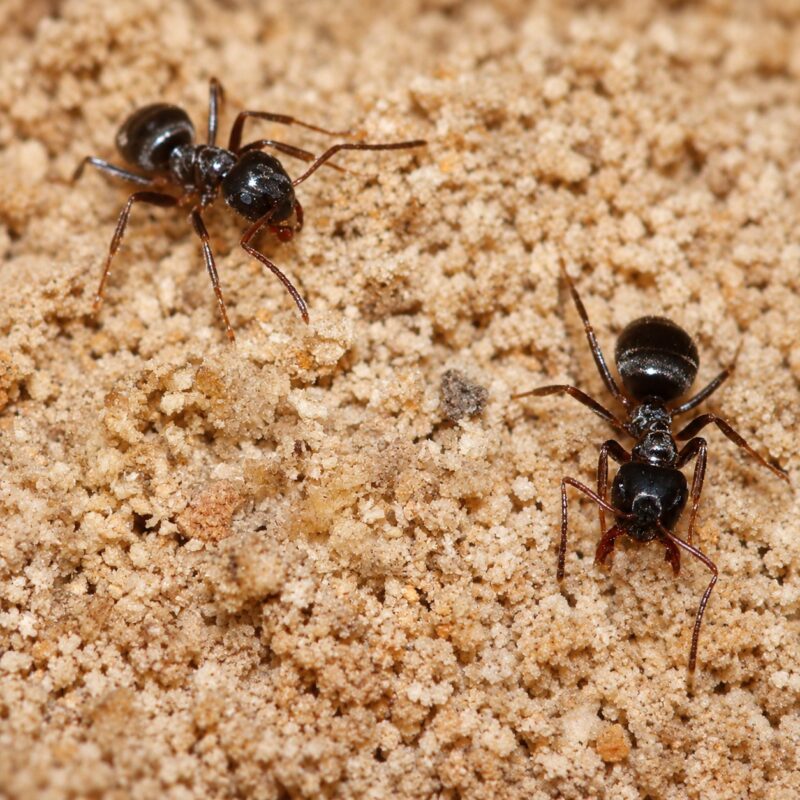





Carebara diversa: The Asian Marauder Ant — Wild Biology and Complete Care Guide

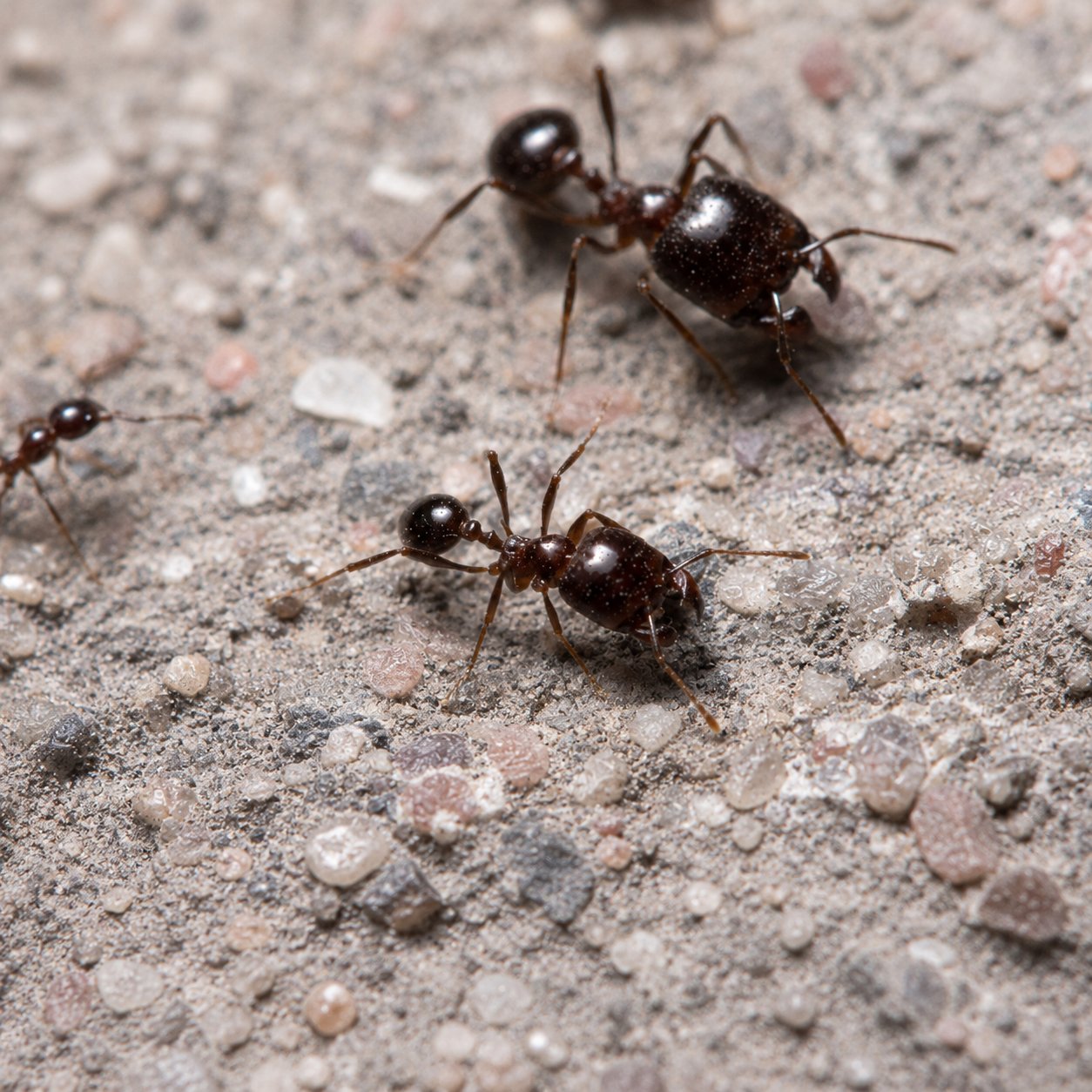
Some species test how much an antkeeper can take. And then there’s Carebara diversa.
The queen weighs three hundred times more than her smallest worker. A supermajor’s head is twelve times bigger. Mature wild colonies can hit a million ants. The raid columns are so wide they look like a moving carpet on the forest floor. If a care guide doesn’t warn you up front, throw it out.
This is the deepest dive on Carebara diversa I could put together for 2026. What they are in the wild, how the caste system actually works, why so many keepers lose their colony in the first six months, and what a setup that survives a year looks like. If you’re thinking about buying a queen, read the whole thing first. If you already have one and you’re scrambling, jump to the setup and mistakes parts.
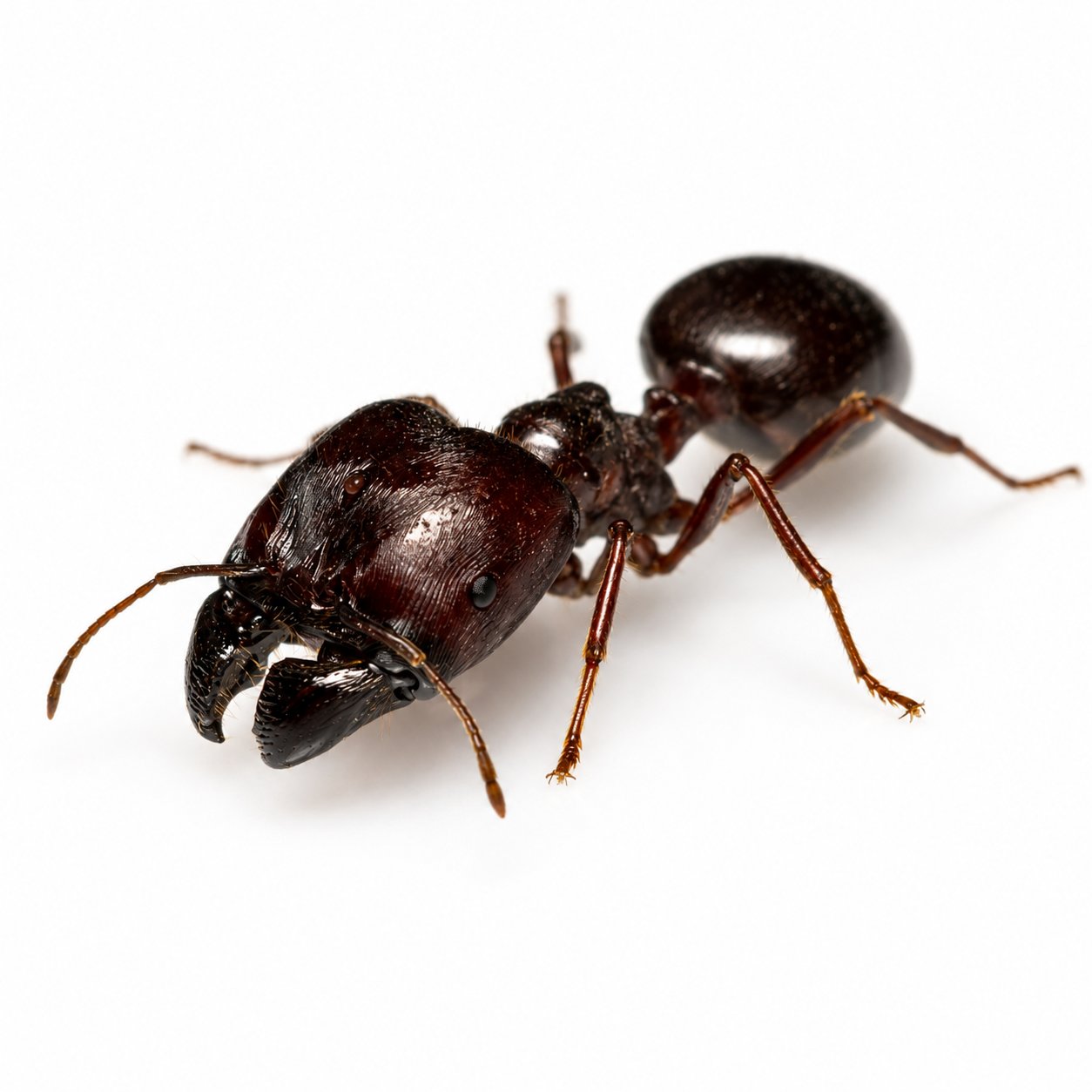
Browse Carebara diversa colonies in stock at ANTonTOP →
Quick answer
Carebara diversa is the most polymorphic ant species you’ll regularly see in the hobby. Queens hit 25 mm and live 10 to 15 years. Workers range from 2 mm minors all the way up to 15 mm supermajors with crushing jaws. Wild colonies hold anywhere from 100,000 to a million ants and forage in dense raid columns. Keeping them is expert-only: 27 to 33 °C, 70 to 90 % humidity, daily feeding, no hibernation, and they punish every gap in your escape-proofing. Founding is semi-claustral, and the first workers show up at about day 28.
What is Carebara diversa?
Carebara diversa was described by Thomas Jerdon back in 1851, from southern India. For most of the twentieth century it sat in a different genus called Pheidologeton, and you’ll still see the old name Pheidologeton diversus in older books and forum threads. In 2014, taxonomists rolled Pheidologeton into Carebara. The new name is what current sources use, but a lot of hobbyists never made the switch.
The English common name is Asian Marauder Ant. Older texts also call them East Indian harvesting ants. The “marauder” part is about their most famous behaviour: huge, organised columns of workers that sweep across the forest floor and overwhelm prey just by sheer numbers. Like army ants, but not actually army ants. They have permanent nests, the queens have wings and fly, and they don’t go on the cyclical nomadic raids that real army ants do. Still, when you see one of those columns moving, you understand why old-school entomologists called them pseudo-army ants.
Where they live
You’ll find wild Carebara diversa across the warm parts of Asia:
- India and Sri Lanka
- Southern China (Yunnan, Hainan)
- Thailand, Vietnam, Cambodia, Laos
- Malaysia and Indonesia
- Taiwan and the Philippines
- Japan, but only the southern islands (Okinawa and the Ogasawara group, and even there some populations probably arrived via trade)
Habitat is tropical and subtropical lowland forest, plantations, and open soil at the edges of villages. They’re completely absent from Europe in the wild, which is one reason a few EU countries treat them as a regulated exotic. Check your country’s rules before you order across borders.
The most extreme polymorphism in the ant world
Polymorphism, meaning workers come in different sizes and shapes, isn’t rare. Pheidole, Atta, Messor, Camponotus all do it. None do it on Carebara‘s scale.
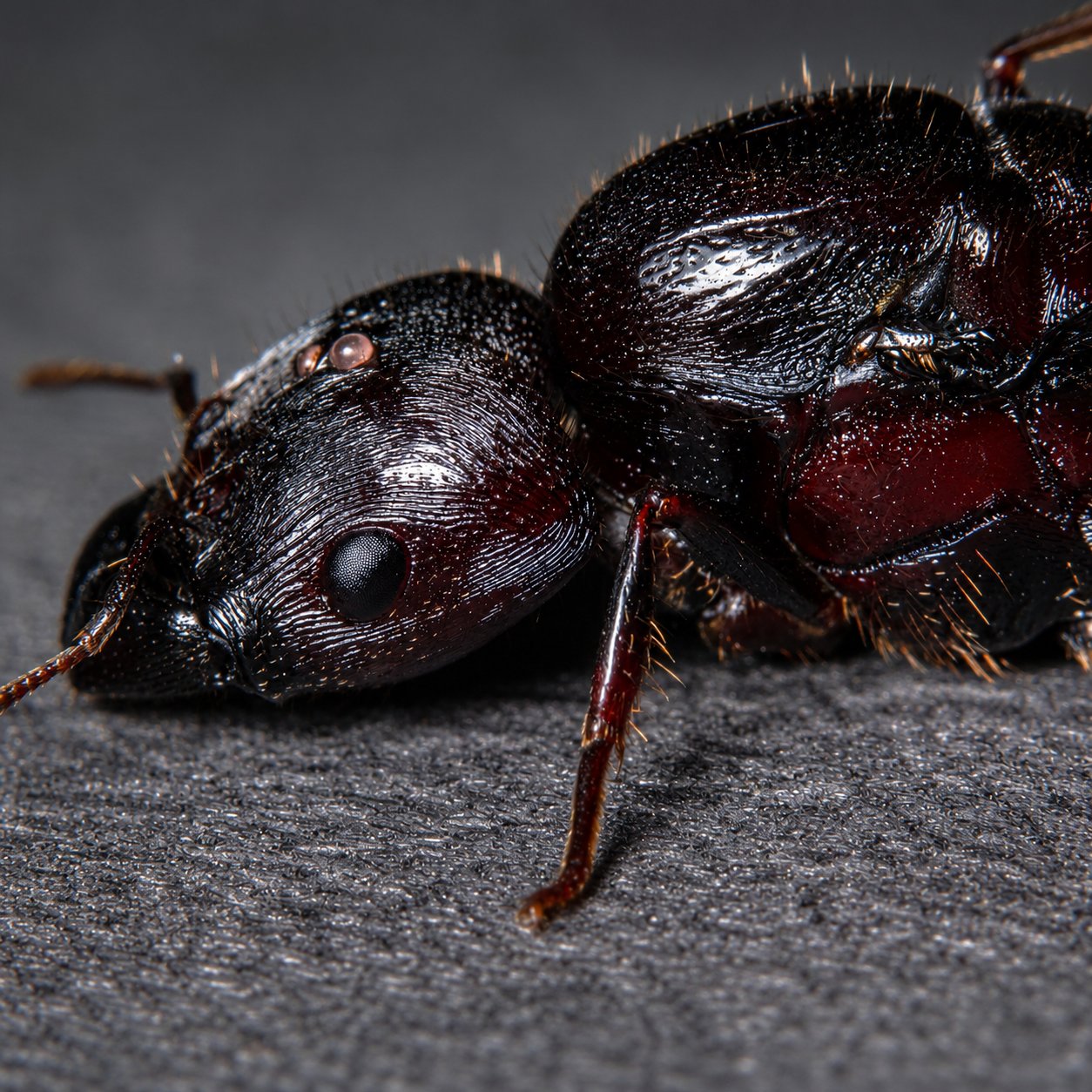
Inside one colony you’ll find:
- Minor workers at 1.3 to 2.5 mm. Pale reddish-brown, almost translucent. Five-toothed mandibles. They genuinely look like a different species.
- Major workers at 6 to 9 mm. Darker, with broader heads and triangular jaws.
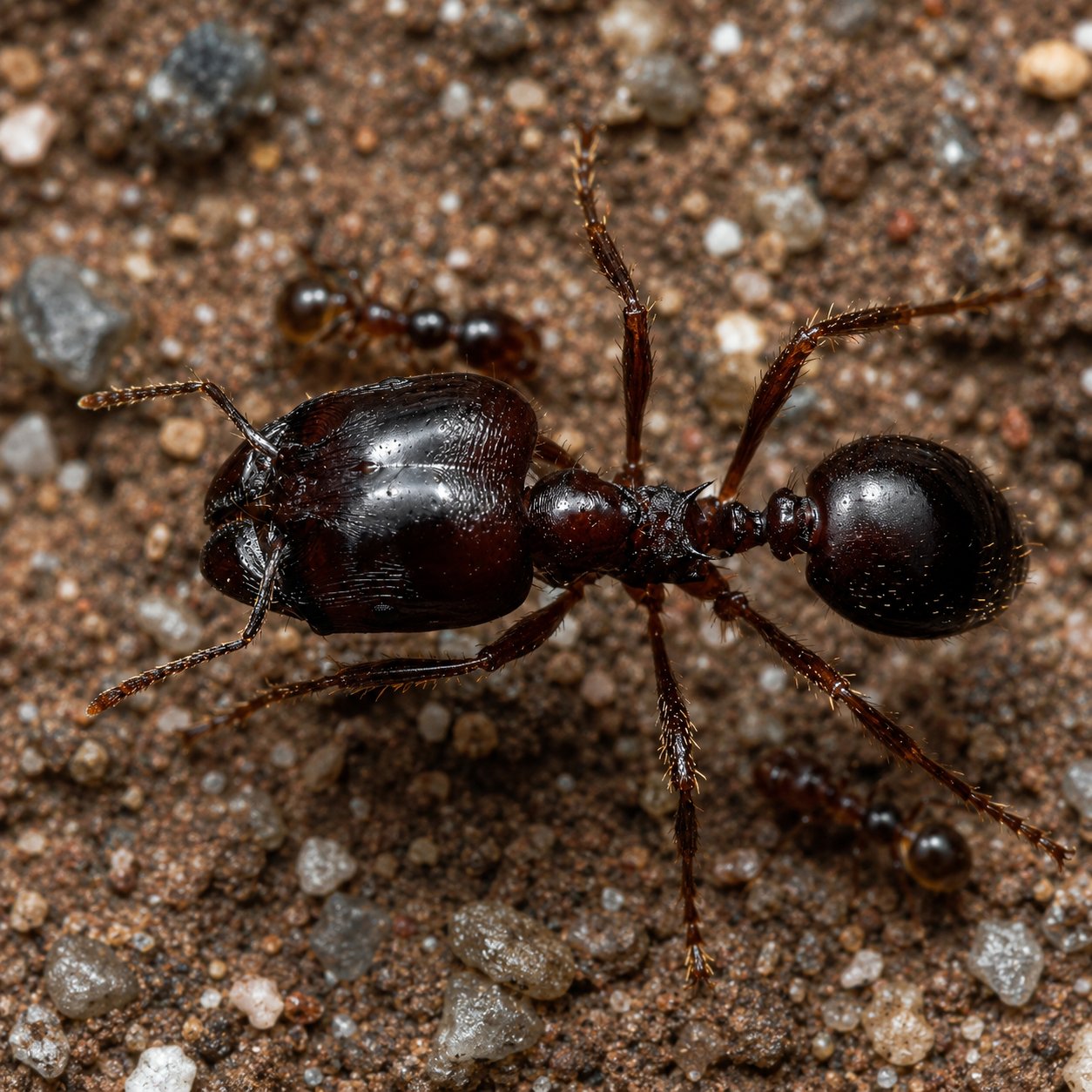
- Supermajors at 12 to 18 mm. Dark brown to black. Head capsules so big they walk with their jaws slightly open. Their mandibles can shear a beetle’s wing case in half.
The numbers behind the gap:
- A supermajor’s head is roughly 12 times bigger than a minor’s head.
- A supermajor weighs around 500 times more than a minor. That’s from Moffett’s 1987 and 1988 papers, still the foundational work on the species.
- By mass, this is the most polymorphic worker caste known in any ant species. More extreme than the famous Pheidole, more extreme even than the leafcutter Atta.
If you watch a feeding session, the caste system clicks into place. Minors break down small prey and ferry sugar water back to the nest grain by grain. Majors carry the bigger pieces and form the defensive ring around the column. Supermajors stand at the front of raid columns and guard chokepoints inside the nest. They’re not delicate. They shear cricket exoskeletons in one bite and lop the heads off bigger arthropods on contact. In captivity I’ve watched one supermajor pin a half-dead cockroach for long enough that minors could disassemble it around her.
One detail catches every new keeper off guard the first time: minors ride on top of majors. When a raid column moves, dozens of minors hitch a ride on the head and thorax of a major. Saves energy and lets them get carried straight into prey-rich areas. The first time you see it, it looks straight out of a war movie. It’s one of the most photogenic behaviours in the whole hobby.
The queen (or sometimes, queens)
The Carebara diversa queen is one of the largest ant queens on the planet. Sources disagree by a couple of millimetres (Jerdon’s 1851 description, later revisions, modern hobbyist measurements), but a healthy laying queen lands somewhere in the 23 to 28 mm range. The 25 mm figure people quote most often is a fine working number.
By mass she’s about 300 times heavier than her smallest minor. No other ant in the hobby comes close to that ratio. She isn’t the longest queen out there, but she’s one of the bulkiest you’ll ever see, with a gaster swollen for the egg output the whole colony runs on.
Her egg production is just as wild. A laying queen pumps out around 100 eggs per day in good conditions. That’s why mature colonies blow past six and seven figures so fast, and why a colony you bought as a starter often outgrows its housing inside the first year.
Carebara diversa is also polygynous. Multiple queens can live and lay in the same nest. Field studies have found colonies with up to 16 queens. Some Asian sellers offer multi-queen founders for this reason. In the EU market, single-queen colonies are the norm because they ship more reliably.
The queen herself lives 10 to 15 years if you keep conditions stable. That’s a real commitment. Longer than most rodents, comparable to a parrot in workload.
Their nuptial flights happen during the rainy season. Around Bangkok it’s roughly once a year. Closer to the equator (Sumatra, Borneo, southern Philippines), they fly every three months because the wet season never really ends. The queens are heavy enough that takeoffs look clumsy. Jerdon’s original notes from 1851 mention queens that “could scarcely fly,” and modern field observers still report the same thing. If you want to know when European species fly, our European Nuptial Flight Calendar 2026 has the full schedule.
Marauder raids: how they hunt
The behaviour that earned the English name is the raid column. In a mature wild colony, you can stand at the edge of a forest path at dawn and watch a column of workers pour out of the nest, several centimetres wide, moving at two or three metres per hour. Recorded columns have hit 100 metres long.
What makes the column more than a regular foraging trail:
- Soil arcades. Workers build small tunnels and ridges of earth along the edges of the column. These cut down on predation and shield the column from sun and wind. In rainforest soil the arcades are sometimes still visible the morning after the column has moved on.
- Pheromone discipline. The trail pheromone is strong enough that workers keep following it even when the column breaks or something drops in the way. A single ant is actually pretty bad at crossing a gap on its own, in one study most individuals failed at obstacles they couldn’t handle alone, which is exactly why the column builds bridges and arcades instead of detouring around them.
- Carpet behaviour. When the column hits a prey patch (termites, beetle larvae, fallen fruit) it spreads out into what genuinely looks like a moving brown carpet. Dozens of workers swarm a single insect at the same time and tear it apart.
That’s why raid footage of Carebara hits different from a Camponotus foraging trail. There’s no decision tree about what to attack. Whatever’s in the column’s path becomes food.
In captivity the carpet behaviour scales down to your arena. A 200-worker colony fed five live crickets at once will produce a tight forager mass that swarms each cricket in seconds. It’s one of the best feeding shows in the hobby. It’s also why a casually-closed lid leaves crickets in your kitchen and supermajors on your wallpaper inside two hours.
Should you keep Carebara diversa?
Honest checklist before you click buy:
- ☑️ Can you keep the room at 27 to 33 °C year-round? Not “we heat in winter.” The species can’t tolerate sustained drops below about 22 °C.
- ☑️ Will you feed daily? A laying queen with 500 workers eats more in a day than most beginners feed their whole collection in a week. Skip two days of protein and you’ll see workers die.
- ☑️ Do you have a dedicated, sealed, ventilated formicarium that can scale into housing for tens of thousands of workers within 18 months?
- ☑️ Are you in it for 10+ years? Because the queen is.
- ☑️ Have you raised at least one tropical species already? Beginners who go straight to Carebara lose queens at a rate that’s genuinely sad to read on forum journals.
If any of those is a “not really,” start with something easier and more forgiving. We carry several beginner-friendly exotics in Tropical Ants. Come back to Carebara once you’ve raised a colony to a few thousand workers without disaster.
If all five boxes are checked, you’ve got one of the most rewarding species in the hobby ahead of you. Let’s set it up properly.
Setup: the founding stage
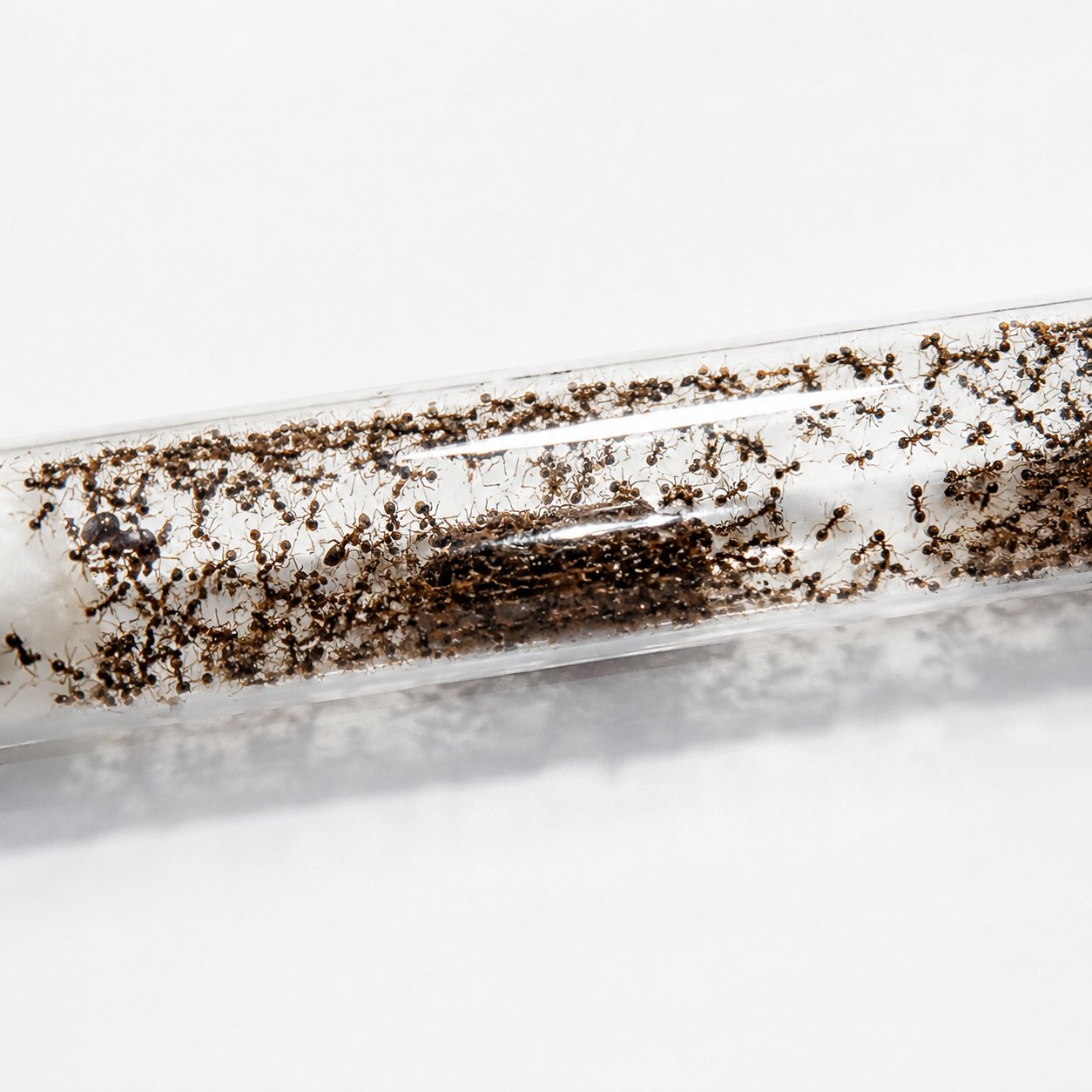
In the wild, a freshly-mated Carebara diversa queen lands, breaks off her wings, and digs a small chamber where she lays her first brood. She’s semi-claustral, meaning she’ll occasionally pop out to scavenge if food is around. In captivity though, founding queens stay sealed in a test tube. Keep the chamber dark and stable.
Test tube founding setup:
- A standard 16×160 mm glass test tube is the gold standard for founding this species. The diameter gives the queen room to turn around, and the length lets you keep a generous water reservoir behind the cotton plug.
- Fill about a third of the tube with water, then push a tight cotton plug in. The plug holds the water but lets humidity diffuse into the chamber.
- A second cotton plug at the open end seals the queen in.
- Keep the tube horizontal in a dark, warm spot. A drawer works. A test tube rack works. A cardboard sleeve works.
Founding queens stress easily. Leave the tube alone except for one humidity-and-brood check per week. No “just a quick peek” daily. Stress-induced brood loss is the single most common reason a Carebara founding fails. I’ve watched it happen on more than one forum journal.
Feeding the founding queen. Honestly, almost nothing. A fresh queen develops fine on her own in a test tube with moist earth or cotton-held water. She doesn’t need much. If you want to offer something, a tiny drop of sugar water once every couple of weeks is enough. Don’t flood the tube with insects. Rotting protein kills founding queens faster than hunger does, and the disturbance of opening the tube to feed her costs her more than the food gives back. Leave her alone and let the biology work.
When do the first workers show up? At a steady 28 to 30 °C the queen lays her first egg cluster within a few days. Larval development takes about 9 days. Pupal stage is another 10 days. From the first egg, count on the first minor workers appearing in roughly four weeks.
When you move them depends on your formicarium. A small starter nest can take a colony of 20 to 30 workers. But honestly, 100+ workers is the better number for moving in. By then the colony has the bodies to handle the new space, establish trails, and shake off the move-in stress fast. Smaller transfers work, but they’re riskier and the colony spends weeks adjusting instead of growing.
Setup: the formicarium
The species needs three things from its main housing: stable deep humidity, escape-proofing, and room to grow fast.
Setups that work:
- Digfix or natural-substrate formicaria. A soil-and-clay nest the colony excavates themselves. Carebara are strong diggers and they genuinely enjoy a substrate they can shape. The trade-off is that you can’t see the brood. (Digfix formicaria →)
- Gypsum formicaria with a vertical chamber layout. Gypsum holds humidity well and the heft makes minor escapes through the lid edge rare. (Gypsum formicaria →)
- Acrylic-on-Ytong hybrids. Experienced keepers build these for visibility. They need an external humidifier and I wouldn’t recommend them for someone’s first Carebara.
Size. A 200-worker colony needs at least a small-to-medium chamber footprint plus an outworld at least 25×15 cm. By month nine, you should be ready to bolt on a second module. By month eighteen, you should be running a multi-module setup.
Outworld. Seal the lid edges with foam strips. Re-apply a fresh band of Fluon (PTFE) or talc-and-alcohol slurry to the top 3 cm of the inside walls every six weeks. Minors will find every smudge and every gap. I’ve seen a colony escape through a 0.6 mm gap in a Tupperware lid seal.
Ventilation. Cut at least two mesh-covered vent holes (3 to 4 mm steel mesh, minors push straight through fabric mesh). High waste output means an unventilated outworld grows mould inside a month.
Heating, humidity, and climate
This is where most colonies die. Carebara diversa doesn’t forgive climate mistakes.
Temperature:
- Nest target: 27 to 33 °C, constantly. Brood develops fastest around 30 °C.
- Arena: 22 to 35 °C is fine.
- Day/night cycle: a gentle 33 °C day / 27 °C night mimics their native range and keeps activity rhythms healthy. Flat 30 °C also works.
- Lower limit: short drops below 22 °C cause visible brood damage. Sustained drops below 18 °C will kill a colony. There’s no hibernation phase to fall back on.
How to heat. A 12 V self-regulating heating cable under one side of the nest, controlled by a digital thermostat, is the right tool. Plain heating mats lack the precision and they tend to bake the bottom of the nest. Place the heat source under one half of the formicarium so the colony can pick their own thermal sweet spot.
If you have to start with a heating mat, run it through a thermostat probe in the nest, set it conservatively to 30 °C, and upgrade to a cable as soon as the colony hits a few hundred workers.
Humidity:
- Nest: 70 to 90 %. Deep humidity matters more than misting. A soil-based or gypsum nest with a charged reservoir holds humidity better than an acrylic nest you mist daily.
- Arena: 60 to 80 %.
- Mist at least twice a day for the first six months. Use a fine atomiser. Heavy droplets drown minors.
- Track it. A combined thermometer/hygrometer inside the outworld is the cheapest insurance you’ll ever buy.
Feeding the marauder
A Carebara colony eats. Not “a piece of cricket once a week” eats. Actually eats.
Protein:
- Start with dead, not live. In the first months a small colony can actually be stressed and killed by live prey thrashing around the arena. Their strength is numbers, and they don’t have the numbers yet. Use frozen-thawed crickets, roaches, or mealworm pieces. Once the colony is past 500 to 1000 workers and confident, you can introduce live prey for the feeding-show factor.
- Live crickets, dubia roaches, mealworm pieces, locust hatchlings (for established colonies).
- Small pieces of unsalted cooked chicken or tuna (sparingly, protein left out grows mould fast).
Carbohydrates:
- A constant source of sugar is non-negotiable. The Energy Ant Jelly set is the easiest way to keep stable sugar around without spilling honey or syrup. I’ve seen Carebara arenas where workers walk a permanent loop between the brood pile and the jelly cup for days on end.
- Honey water (1:1) or 20 % sugar water in a small dish also works. Spills attract mould.
Schedule:
- Founding queen: small protein every 7 to 10 days, sugar drop once a week.
- 20 to 100 workers: small live or thawed insect every 2 to 3 days, sugar always available.
- 100 to 1000 workers: 3 to 5 prey items every 1 to 2 days, two sugar sources at once.
- 1000+ workers: daily protein. Consumption climbs with the brood pile.
The skipped-day warning. Past the six-month mark, miss one day and you’ll see it. Miss two and you’ll start losing workers. This isn’t like other species in the hobby, where you can skip a week for a holiday and the colony coasts. Carebara keepers need an automated feeder, a sitter, or a partner who knows the routine before any trip longer than 48 hours.
Growth timeline: month by month
Rough trajectory at steady 30 °C with enough food:
- Month 1: 1 queen → first 5 to 15 minor workers visible.
- Month 2: 30 to 60 workers. First media workers (4 to 6 mm) show up in the brood pile.
- Month 3: 100 to 200 workers. Move to the main formicarium.
- Month 6: 500 to 1500 workers. First true majors (>8 mm) emerge.
- Month 9: 3000 to 6000 workers. First supermajor head capsule appears in the brood. Most keepers remember this moment for years.
- Month 12: 10,000 to 20,000 workers, depending on feeding.
- Month 18: 30,000 to 60,000 workers. Multiple modules needed. Colony now eats more than most household terrariums.
- Year 3+: well past 100,000 if you’ve kept up the feeding.
None of those numbers are guaranteed. They’re what a well-fed, climate-stable captive colony tends to do. You can also slow growth on purpose by feeding less, which is what plenty of keepers do to keep the colony manageable.
Six mistakes that kill Carebara colonies
The same mistakes show up in forum journals over and over. Avoid these and your odds of getting past month six go way up.
1. Heating mat with no thermostat. A bare mat under glass climbs past 40 °C on summer afternoons. I’ve read more than one journal that ended with a queen cooked in her own test tube. Run heat through a thermostat. Always.
2. Founding-stage disturbance. Daily peeks, moving the tube, bright light on the queen. Founding queens have a stress budget. Burn through it and they reabsorb their brood and stop laying for weeks. Leave them alone.
3. Minor escapes through a “sealed” lid. A 1.5 mm Carebara minor will walk through any gap a hair fits in. Foam-seal every edge. Re-apply Fluon every six weeks. Inspect the outworld lid weekly, especially after you’ve dropped food in.
4. Damp protein left out. Crickets that aren’t eaten within 24 hours start moulding in an 80 % humid arena. Mould attacks the colony’s outworld surfaces and triggers respiratory problems. Pull uneaten protein after a day.
5. Mite infestations from dirty live food. Crickets from a pet shop sometimes arrive with parasitic mites. Mites in a Carebara colony can wipe everything except the queen within two weeks. Quarantine new live food in a separate container for 72 hours before you feed it.
6. Substrate that dries out. A gypsum or soil nest that’s been allowed to dry, even once, can crack and lose its hygroscopic properties. A thirsty Carebara colony will eat its own larvae before it dehydrates. Visible white piles disappearing is the early warning. Keep at least one chamber humid and refill the reservoir every 7 to 10 days.
Carebara diversa vs other polymorphic species
How they stack up against the other polymorphic ants people keep:
| Species | Minor : Major size | Polymorphism | Difficulty | Hibernation | Pace |
|---|---|---|---|---|---|
| Carebara diversa | 2 mm vs 15 mm | Extreme (500× mass) | Expert | None | Very fast |
| Pheidole indica | 2 mm vs 4 mm | Moderate (worker + soldier) | Beginner-friendly | None | Fast |
| Atta sexdens | 2 mm vs 14 mm | Strong (leafcutter castes) | Expert | None | Very fast |
| Messor barbarus | 4 mm vs 13 mm | Moderate (minor/major) | Beginner-friendly | Light | Medium |
| Camponotus ligniperda | 7 mm vs 14 mm | Moderate | Intermediate | Required | Slow |
If you want the experience of a polymorphic species without the Carebara difficulty, Pheidole is the closest entry point. If you want huge workers and don’t mind slow growth, Camponotus species forgive a lot. Carebara is what you graduate to.
Where to buy Carebara diversa in Europe
Two non-negotiables for buying this species:
- A health-certified queen with confirmed laying. A queen sold without proof of egg production is a coin flip. Plenty of Carebara queens on second-hand listings stopped laying months ago.
- Tracked shipping with a heat pack. Carebara in cold transit dies. Reliable sellers ship on Monday or Tuesday only, in insulated packaging, with thermal packs.
We carry Carebara diversa colonies at ANTonTOP in single-queen and multi-queen variants, anywhere from a queen alone up to a queen with 1000 workers. Every colony ships from our Polish facility with InPost or DHL, in thermal packaging, with our 24-hour unboxing video guarantee. If this is your first Carebara, the queen + 50 workers tier is the sweet spot. Big enough that the first months at your place are stable, small enough that you can scale your setup alongside their growth.
A couple of buying notes:
- The species isn’t legally importable into some EU countries without permits. It’s not on the strict invasive list, but customs in Norway, Switzerland, and the UK occasionally hold shipments. Check your country’s rules before ordering across borders.
- Watch for Carebara affinis sold as C. diversa. They look similar but affinis has a much smaller queen (~17 mm vs diversa‘s 25 mm). Reliable EU sellers don’t mix them up. Second-hand listings sometimes do.
FAQ
Is Carebara diversa suitable for beginners?
No. The species needs constant warmth, very high humidity, daily feeding, and a sealed formicarium. Most beginner failures happen in the first six months. Start with something forgiving like Lasius niger, Messor barbarus, or Pheidole indica first.
How big does a Carebara diversa queen get?
A mature laying queen is typically about 25 mm long, with field measurements ranging from 23 to 28 mm. By body mass she’s about 300 times heavier than her smallest minor worker. One of the most extreme size ratios in the ant world.
Do Carebara ants need hibernation?
No. They’re tropical and active year-round. Keep them at 27 to 33 °C constantly. Any sustained drop below 22 °C damages the colony.
What do Carebara diversa eat in captivity?
Live or thawed insects (crickets, roaches, mealworms), small pieces of unsalted cooked meat, and a constant sugar source. Sugar water, honey water, or ant jelly all work. Mature colonies need daily feeding.
How long does it take to grow a large colony?
With stable climate and good feeding, expect 100 workers by month three, 1000 by month six, and 10,000+ by year one. Supermajors appear in the brood around month nine.
What’s the difference between Carebara diversa and Pheidologeton diversus?
None. Same species. Pheidologeton was merged into Carebara in 2014. Older literature uses the old name, current scientific work uses Carebara diversa.
Can Carebara diversa sting?
Yes. The species has a working sting. Most stings are mild and feel more like a strong pinch from a supermajor than a real burn. Allergic reactions are rare but possible. Handle the colony carefully.
How long does a Carebara queen live?
10 to 15 years in stable captive conditions. Long-term commitment. Longer than most rodents, comparable to a parrot.
Ready to start? Browse Carebara diversa colonies → · More tropical species → · Read: European Nuptial Flight Calendar 2026 →
Did you like this article?
Thanks for your feedback!