




How to Care for an Ant Colony – Beginner Ant Keeping Guide

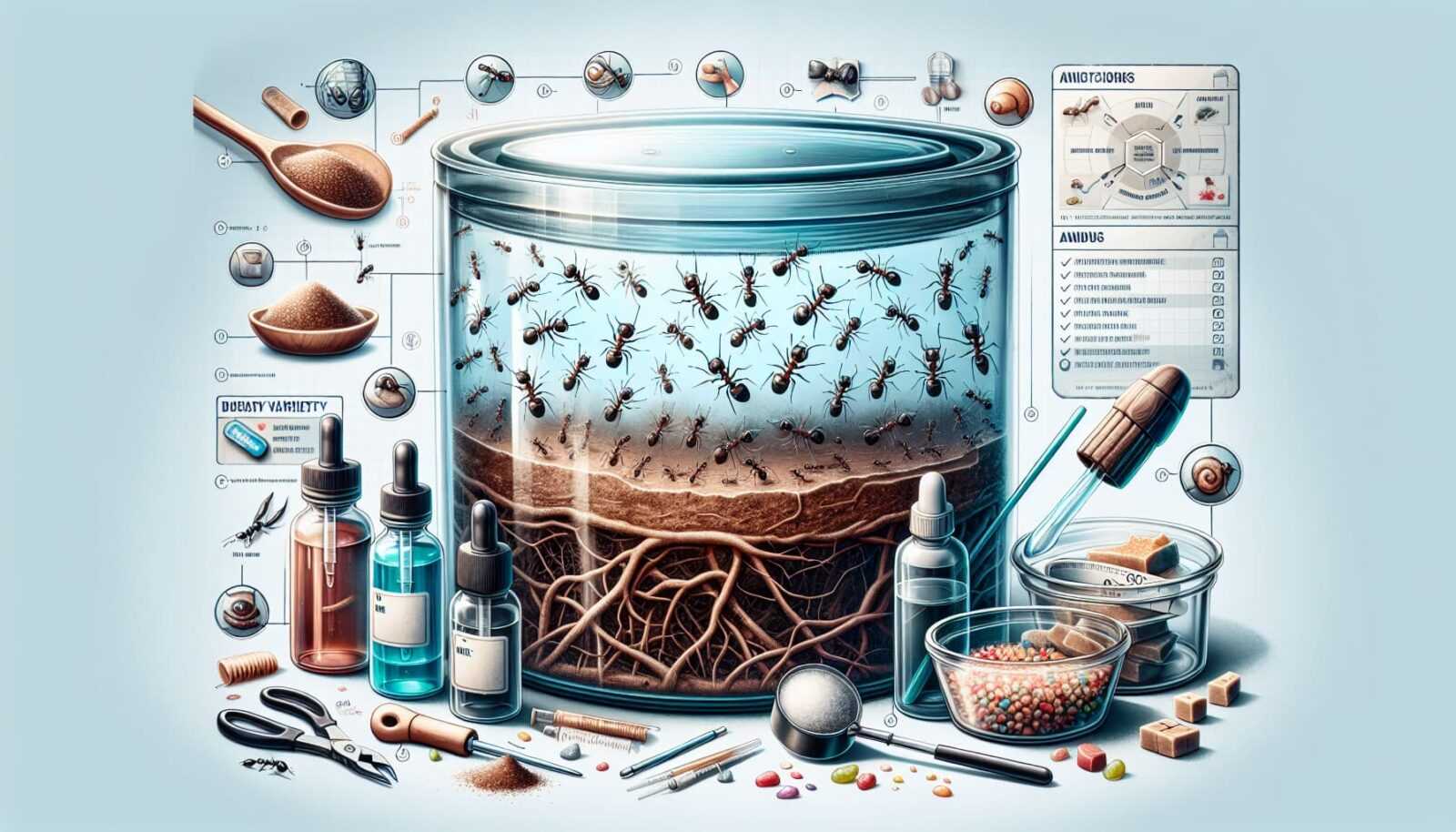
I’ll be honest about why this post exists: the original version was a 1,600-word wall of small advice that tried to be a feeding guide, a moving guide, a hibernation guide and a troubleshooting guide all at once. None of it was deep enough to actually solve a problem. So this rewrite is a hub — short overviews of every daily-care topic, with links to the deeper guides where each one is properly covered.
If you are looking for a single page to bookmark and come back to, this is it. Each section below tells you what matters at a glance, and where to read the full thing when you need it.
The four things that actually keep a colony alive
Strip away every variable, and ant keeping comes down to four things kept consistently:
- Temperature in the right range for your species
- Humidity in the nest (separately) and arena (separately)
- Food in correct amounts and balance (protein vs carbohydrate)
- Quiet — no constant disturbance, no constant changes
Get those four right and the colony grows. Get any of them wrong for more than a few weeks and the colony declines. Most beginner failures are not exotic problems — they are one of these four basics, neglected.
Feeding — the daily question
Ants need protein (for brood growth) and carbohydrates (for adult worker energy). The ratio shifts with the colony stage and species, but the rule of thumb is: protein every 2-3 days, carbs every 1-2 days, in tiny portions.
Common foods, in order of how universally accepted they are:
- Protein: mealworm pieces, fly, cricket leg, fresh-thawed daphnia, hard-boiled egg yolk (small smear)
- Carbohydrate: diluted honey water (1:3), apple, banana, grape, sugar water (1:4)
- Seeds (harvester species only): mixed grass seed, sesame, poppy, sunflower kernel
The cardinal rule: remove uneaten food within 24 hours. Excess food rots, attracts mites, and breeds parasites. If you find yourself removing the same protein piece untouched every morning, you are feeding too much.
Deep dive: complete feeding guide by species with weekly schedules.
Humidity — the silent killer
Most beginner colony deaths trace back to humidity. Too low and brood desiccates. Too high and mould kills everyone.
Universal humidity targets, by species type:
- Steppe / dry-tolerant (Messor, Lasius): nest 50-70%, arena 40-55%
- Forest / temperate (Camponotus, Formica): nest 65-75%, arena 55-65%
- Tropical (Pheidole, Polyrhachis, Camponotus nicobarensis): nest 70-85%, arena 60-75%
- Rainforest (Gigantiops, Harpegnathos, Dinomyrmex): nest 80-90%, arena 70-80%
Buy a digital hygrometer. Place it where you can read it from outside the formicarium. Check daily for the first two months, then weekly.
Adjust by adding small amounts of water to the nest’s reservoir, not by spraying inside. Spraying causes mould.
Temperature — gradient, not constant
Most species prefer a slight thermal gradient — one warm corner, one cooler. Workers move brood to the optimum spot themselves, which is more reliable than guessing a single setpoint.
Practical setup: place a small heating pad or warm cable under one third of the nest base. The colony will move brood toward or away from it as conditions change. Do not heat the whole formicarium uniformly.
Never use a desk lamp as a heat source. The temperature swings cooked many colonies before LED heating became standard.
Moving the colony — when and how
Most colonies move themselves from the test tube into the formicarium within 4-12 weeks. If they have not moved by month 3 and the formicarium humidity is correct, you can encourage the move by darkening the new nest and exposing the old test tube to light.
Larger moves (between formicaria, into a bigger nest) follow the same logic but require more preparation. Never force-transfer ants with tweezers — the stress causes weeks of stopped egg-laying.
Deep dive: complete moving protocol with photos and species-specific tips.
Hibernation — for the species that need it
European species (Lasius, Formica, native Messor structor) require an annual dormancy period at 5-12°C for 3-4 months. Without it, the queen’s lifespan collapses and the colony degrades over 2-3 years.
Tropical species (Pheidole, Camponotus nicobarensis, Polyrhachis, all rainforest species) never hibernate. Putting them through a cold period kills them.
Confused about your species? The default is: if the species is native to a region with real winters, it hibernates. If it is from a tropical or subtropical area, it does not.
Deep dive: hibernation guide by species + temperature ramp schedule.
Travel and vacation
Most colonies do better when left alone than when over-fussed. For trips of up to two weeks, leave a small amount of long-lasting food (a piece of fruit, an insect prey item, a sealed honey drop), confirm the water reservoir is full, and walk away. The colony will be fine.
For longer absences, plan a sitter or extended water reservoir.
Deep dive: vacation playbooks for 3, 7, 14, 21 days.
Cleaning the arena
Most arenas need light cleaning every 1-2 weeks: remove dead workers, remove uneaten food, wipe up obvious waste. Use long tweezers, do not reach in with hands.
Avoid soap, detergent, alcohol. Plain warm water on a clean cloth is fine. The colony does not need a sterile environment — it needs an environment without rot.
The nest itself rarely needs cleaning. Workers handle internal waste and move it to a designated arena spot. If the nest looks dirty inside, leave it alone — the colony is managing it.
When something is wrong
Two patterns of problem:
Acute symptoms — dead workers piling up, sudden activity drop, escapees, mould. Quick triage: why are my ants dying?
Slow decline — colony not growing for months, brood pile shrinking, no new workers emerging. Root-cause analysis: why do ant colonies develop poorly or die?
The general rhythm
For a stable colony past the first month:
- Daily: glance at the hygrometer and thermometer. No interaction.
- Every 2-3 days: feed (protein or carb, alternating). Tiny portion. Remove yesterday’s.
- Weekly: clean the arena lightly. Check water reservoir. Look for activity changes.
- Monthly: closer observation — count brood stages, watch worker emergence rate, note any patterns.
- Seasonally: for hibernating species, ramp temperatures starting October; bring them out starting March.
- Annually: assess formicarium space; plan expansion if crowded.
This is the entire job. Beyond it, the colony does its own work — and the less you do, the better most species do.
If you are new to all of this, the place to start is the colony biology primer — the rest of the daily care makes more sense once you understand what the colony is.
Did you like this article?
Thanks for your feedback!