




Why Ant Colonies Develop Poorly or Die

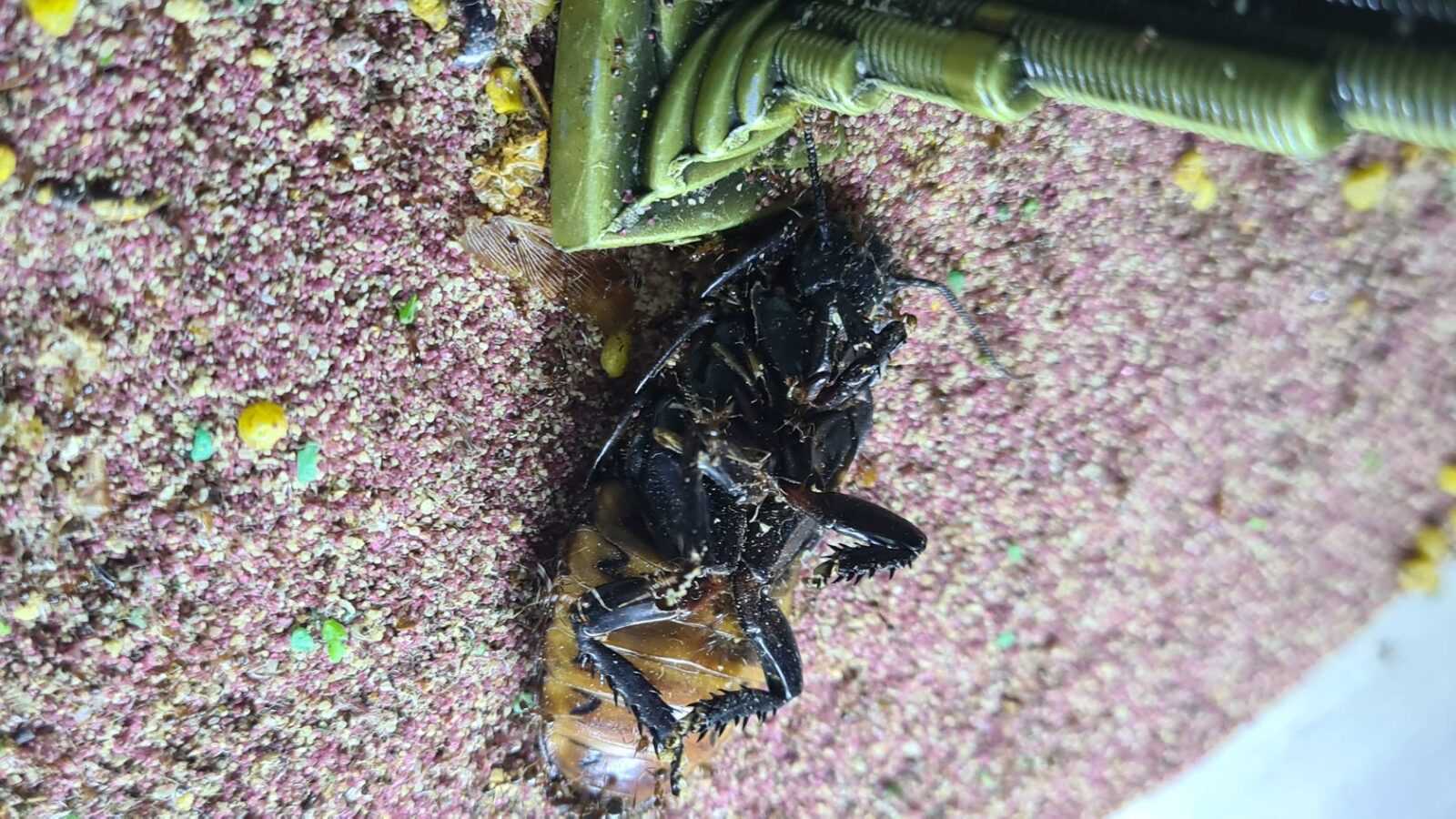
A colony that is acutely dying, workers piling up, queen visibly distressed, mould spreading, is a problem you can usually identify and fix in a few days. The harder problem is the colony that simply does not grow. Six months pass and the worker count looks the same as month one. The brood pile is small and unchanging. The queen is alive. Everything looks fine. And yet, nothing is happening.
This is the slow-decline case, and it kills more colonies than any acute crisis. The reason it is so dangerous: by the time you notice, the underlying cause has been operating for months. Recovery is possible but slow, and only if the diagnosis is correct.
This essay walks through the four root causes that produce stagnant colonies, in the order they appear in real keeper situations.
Cause 1: The queen is alive but not laying productively
The most common cause of long-term stagnation is a queen who is technically alive but functionally underperforming. She may have been damaged in shipping. She may be older than the seller indicated. She may have been mated insufficiently. Or, most often, the keeping conditions over months have shut down her egg-laying response below what the colony needs to sustain itself.
A healthy queen of a small-to-medium species lays anywhere from a few dozen to several hundred eggs per week during peak periods. If you cannot see any new eggs over a 3-4 week period, the queen is the problem. Egg production is not constant, there are slow weeks, but a productive queen produces visible new brood every month.
Diagnostic steps:
- Confirm the queen is alive and visible. Hidden queens are not necessarily a problem, but absent ones definitely are.
- Check that she is being attended to, surrounded by workers, fed regularly. An isolated queen is a colony in crisis.
- Note environmental conditions for the past 3 months. Has anything been chronically wrong? Slightly too cool, slightly too dry, lighting too bright, room too noisy?
If the queen is alive, attended, and conditions have been roughly correct, but no egg production, wait two more months in absolute quiet, then make a single environmental change (raise temperature 2°C, deepen darkness, eliminate vibration). If still nothing, the queen herself may be the limit.
A failing queen cannot be replaced in most species. In Harpegnathos and a handful of ponerines, a worker can take over (gamergate); in everything else, a failed queen is a closed colony. Some keepers in this situation merge the workers with another colony of the same species, but the success rate is variable.
Cause 2: Chronic environmental drift
The second most common cause is small environmental problems that no single check would catch, but which compound over months.
Examples of chronic drift:
- Room temperature 2°C below target every winter. The colony survives but never thrives.
- Humidity 10% below target consistently. Brood develops but slowly, with higher mortality.
- Lighting from a window that hits the formicarium for two hours of late afternoon. Sun-induced heating and disturbance, but only briefly each day.
- A heater that cycles on and off, producing temperature swings the colony adapts to but never thrives in.
- Vibration from a nearby appliance, washing machine, fish tank pump, or speaker. Low-level constant stress.
Chronic drift produces a colony that looks “OK” on any given day but never grows. The fix is structural: identify the consistently-wrong variable and correct it. The colony will respond within 1-3 months, slow but real recovery.
To diagnose, log temperature and humidity twice a day for a week. Patterns emerge. The reading you take when you are home (typically morning and evening) may differ from the reading at 2 a.m. or 2 p.m., exactly when no one is monitoring.
Cause 3: Insufficient food or wrong food balance
Some colonies are slowly starved. Not dramatically, you feed regularly, but consistently below what the colony actually needs.
Common patterns:
- Feeding too little protein. Brood cannot grow. Larvae starve and die quietly without being noticed.
- Feeding too much carbohydrate. Workers are well-fed but no protein means no new generation. Colony is active but not growing.
- Feeding food the species does not actually want. Some keepers offer fruit to ponerine carnivores and wonder why the brood does not develop.
- Feeding food the colony cannot reach. Prey items too large for the workforce. Food placed where ants do not forage.
The diagnostic is observation. Watch a feeding from start to finish. Do workers find the food within 30 minutes? Do they carry it back to the nest? Does it disappear within 12 hours? If yes to all three, food is reaching the colony. If no, particularly if food sits for 24+ hours untouched, something is wrong with the food or the placement.
Adjust by swapping food types for 2-3 weeks and observing changes. A colony that was being underfed often responds with visible brood expansion within a month of dietary correction. The full feeding guide by species covers what each genus actually needs.
Cause 4: Over-attention
This is the cause keepers most resist accepting. The keeper themselves is the problem.
Daily nest checks. Frequent rearrangement of arena decorations. Repeated transfers to “test” different formicaria. Bright lights for photography. Open lids to take video. Hand-feeding instead of arena-feeding. Counting workers regularly. Tapping the glass to “see if they react”.
Each individual action is small. The cumulative effect, over months, is a colony in chronic stress. Workers do not feed the queen properly because they are constantly relocating brood away from disturbance points. The queen reduces egg-laying because pheromonal stress signals are constant. The colony goes into a permanent defensive posture.
The diagnostic question is uncomfortable: how often, honestly, do you interact with the colony? If the answer is “every day, sometimes multiple times”, that is the cause.
The fix is to walk away. Genuinely walk away. Set a rule: no interaction with the formicarium for two full weeks except feeding at scheduled times. No nest inspection. No moving anything in the arena. No photographs requiring open lids. No “just checking on the queen”.
Most over-attended colonies show clear recovery signs by week 3-4 of complete quiet. The brood pile grows visibly. The queen lays again. Activity returns to normal.
The lesson, when it sinks in: ants do best when ignored. The hobby is about observation, not interaction.
What recovery looks like
A correctly-diagnosed stagnant colony usually shows signs of recovery within 4-8 weeks of the cause being addressed. The first sign is new eggs appearing in the brood pile. Then larvae develop normally to pupation. Then new workers emerge, month 3 or 4 from the corrected change.
By month 6, a colony that was previously stagnant looks like a normal growing colony.
If you have made an environmental correction and there is no progress at all by month 3, the diagnosis is probably wrong. Re-check the queen. Check temperature and humidity logs. Consider that there may be a second cause operating in parallel, humidity AND food, for example.
The cases where recovery is not possible
Some stagnant colonies cannot be saved.
- Queen-failure cases in species without gamergate behaviour. The colony will fade over 6-18 months as workers age out.
- Colonies where chronic stress has persisted beyond 18-24 months. Queen damage is sometimes permanent at that scale.
- Colonies where multiple causes were operating simultaneously and the keeper cannot isolate any single one.
If you are in one of these situations, the kindest action is to let the colony live out its remaining time as comfortably as possible, feeding lightly, maintaining humidity, no further attempts at intervention. Workers will live their natural lifespan, the colony fades, and you will have learned what to do differently next time.
If the problem is acute rather than slow, the symptom triage guide is the right starting point.
Did you like this article?
Thanks for your feedback!