




What You Need to Know Before Starting an Ant Colony

The single biggest reason new ant keepers fail is not bad equipment, bad species choice, or even bad luck. It is misunderstanding what they bought.
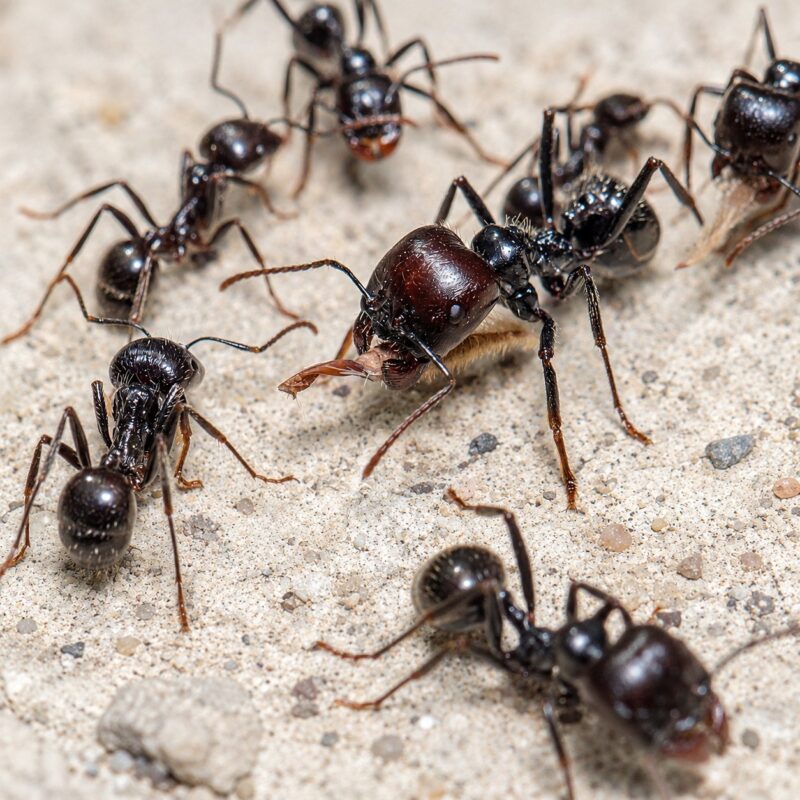
A colony is not a queen with some pets. It is a single biological organism distributed across hundreds of bodies. The queen does not command anyone. The workers do not take instructions. The whole system runs on chemistry, pheromone gradients, feedback loops, age-based job rotation, and once you see it as one connected machine instead of a group of separate animals, the care decisions that follow become obvious.
This is the short, accurate version of what a beginner needs to know before buying their first colony.
What a queen actually is
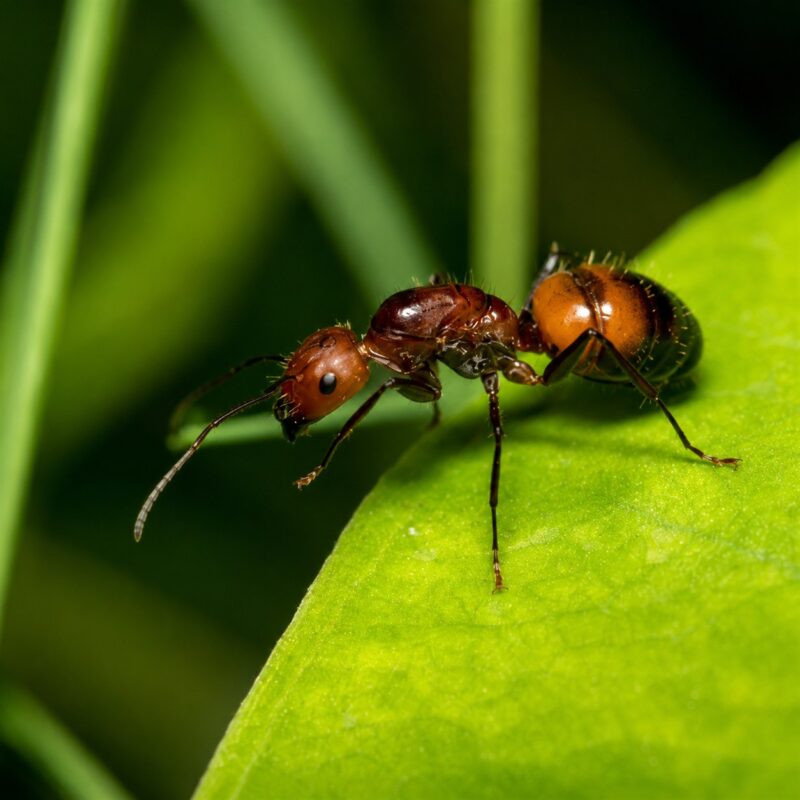
The queen is not the brain of the colony. She is the only female in the nest with functional ovaries, the rest of the workers are her daughters, sterile, and genetically programmed to support her offspring rather than reproduce themselves. Once a queen is established and laying, she becomes the slowest-moving, most-protected resident of the nest. Workers feed her, clean her, move eggs away from her, and react to her chemical signals.
A healthy queen lays eggs for the entire span of her life, which can be 15 to 25 years for European species like Lasius niger, and 6 to 12 years for many tropical species. If a queen dies, the colony cannot replace her. Workers will keep going for weeks or months on stored brood, but eventually the colony fades to nothing. There is no path back without a new mated queen.
This is why every care guide warns against disturbing the queen. She represents the entire future of the colony, and stress can shut down egg-laying for weeks.
The four life stages
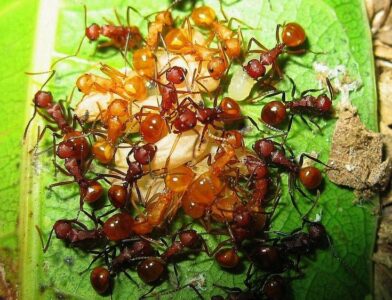
Every ant moves through the same four stages: egg, larva, pupa, adult.
Eggs are tiny, less than a millimetre, sticky, usually laid in clumps. They hatch in 1-2 weeks at room temperature, faster at higher heat.
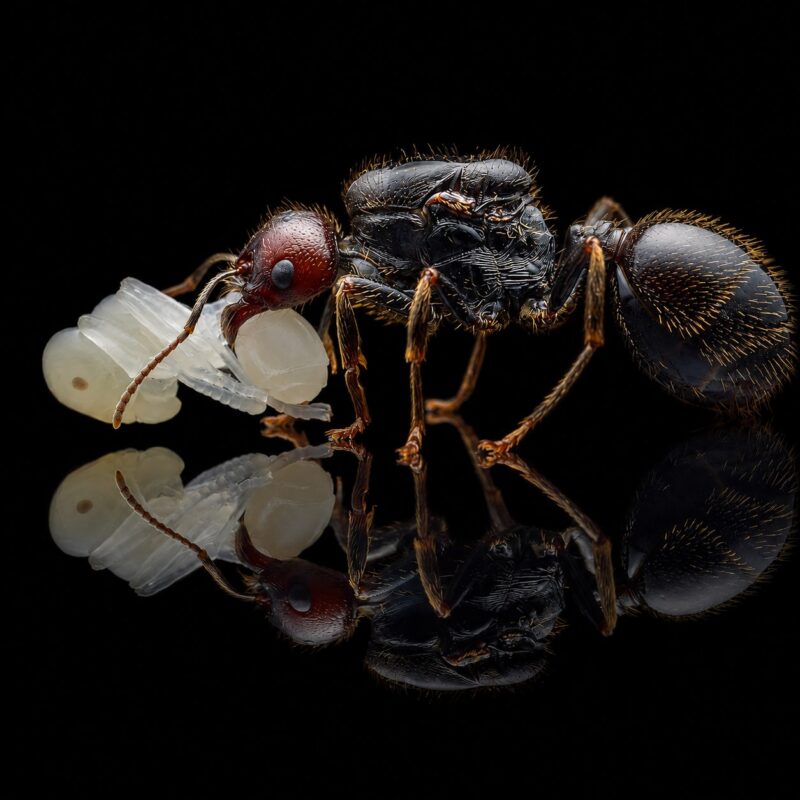
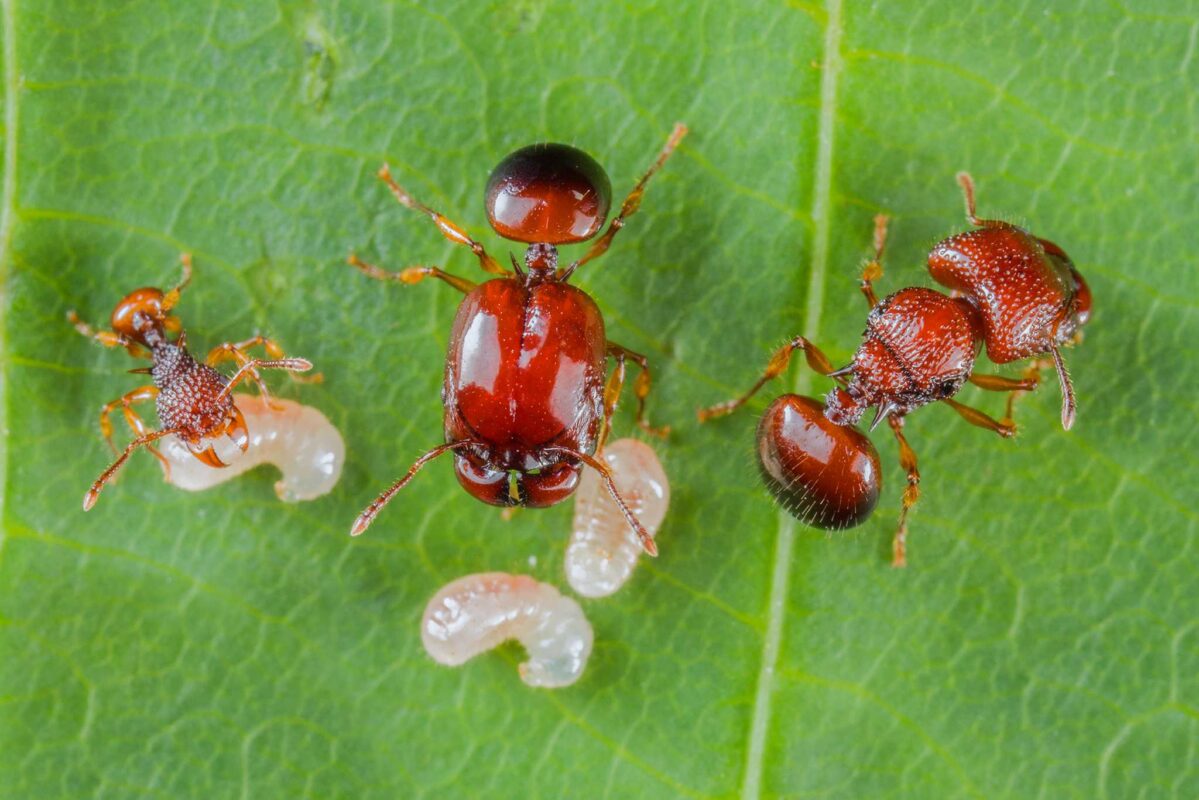
Larvae are the legless, grub-shaped feeding stage. They have no eyes, no real movement, but powerful jaws. This is the only stage that eats solid protein, adult workers cannot digest large pieces of food, so they hunt prey, cut it up and feed it to larvae, who then digest it and pass nutrients back through liquid trophallaxis to the rest of the colony. Larvae are the colony’s stomach.
Pupae are the transformation stage. The larva has stopped feeding, sealed itself either in a silken cocoon (depending on species) or developed an exposed white pupa. Inside, the adult ant is forming. This stage is highly sensitive, temperature swings, vibration, light, and mould all damage pupae. Two to four weeks later, an adult worker emerges, soft and pale, and hardens over the next few days.
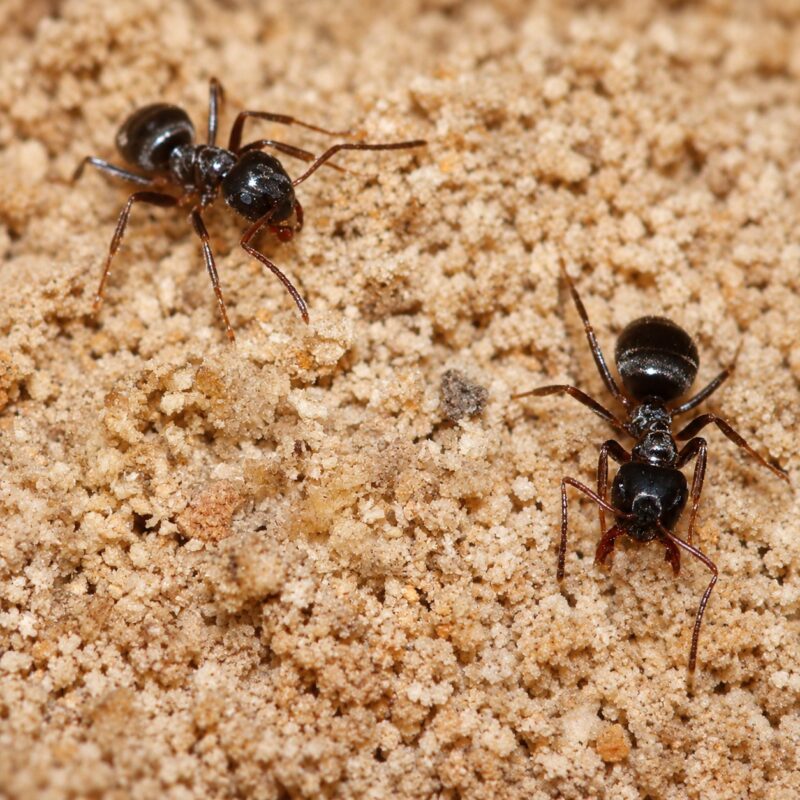
Adults live anywhere from 1 to 5 years depending on species and caste. Workers go through age-based job rotation: when young, they care for brood; in middle age, they handle nest construction and food storage; in old age, they leave the nest to forage, the dangerous job, given to the most expendable members.
If you only remember one thing, remember this: brood is the colony’s heartbeat. No brood means the queen has stopped laying or eggs are dying. That is the first thing to check when something feels wrong.
The founding stage, and why it kills so many colonies
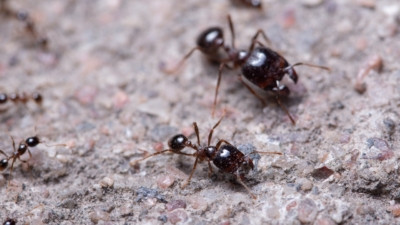
When you receive a starter colony, usually a queen plus 5-15 workers in a test tube, you are not buying a thriving colony. You are buying the founding stage of one.
In nature, after the nuptial flight, a single queen lands, breaks off her wings, finds a crevice, and seals herself in. She lays her first batch of eggs and raises them entirely on her own body’s reserves, she does not eat, she does not drink, she does not leave. Her wing muscles, no longer needed, are metabolised into eggs and larval food. Three to six months later, the first workers emerge, and only then does the founder break the seal and let the workers forage.
This is fragile. In the wild, 95-99% of founding queens die before producing their first workers. Predators, dehydration, fungal infection, or simply running out of body reserves. In captivity, when you receive a queen who already has a few workers, you have skipped the worst part, but the colony is still in the founding stage and still extraordinarily vulnerable.
What this means practically: the first 3-6 months in your home are about giving the queen quiet, humidity, and almost nothing else. Do not feed too much. Do not move the test tube. Do not check on her every day. The instinct to nurture is the most common cause of early colony death, keepers who cannot leave the queen alone, and who add stress until she stops laying. Roughly 60% of solo queens we sell die in the first six months in customer homes. The number for queens with workers is much lower, around 10-15%, but most of those deaths are also from over-attention.
What this changes about your setup
Once the biology is in your head, the equipment list writes itself.
The test tube needs a damp cotton plug because the queen does not drink, she absorbs moisture through humidity. The arena should be dark or covered because the founding queen prefers darkness. The food schedule should be minimal because the queen and her first workers are surviving on stored reserves. The formicarium should be smaller than your instinct says because a tiny founding colony in a huge nest cannot maintain humidity or temperature.
This is the order in which most colony decisions make sense: biology first, then equipment, then schedule.
If you have read this far, the next step is choosing which species fits your room, your patience and your budget. The beginner species shortlist walks through six options ranked by ease.
Did you like this article?
Thanks for your feedback!