




Leaving for Vacation? How to Care for Your Ant Colony


Ants are one of the easiest pets to leave alone, and one of the easiest to over-prepare for. Both errors are common. The colony does not need a sitter, a feeder, or a daily check-in for a week-long trip. It also does not need entirely zero preparation. The middle ground is straightforward, and it changes with trip length.
Pick your trip length below. Follow the playbook. Come home to a colony that has barely noticed your absence.
3 days or less, do nothing
This is the no-preparation case. Genuinely no preparation.
- The colony will not starve in 3 days. Workers store food internally and feed each other through trophallaxis.
- Humidity reservoirs last weeks, not days. Confirm before you leave: nest humidity reading in range.
- Do not over-feed before leaving. A “farewell feast” rots in 24 hours and creates problems.
Walk out the door. Three days from now, you will return to an unchanged colony.
4-7 days, one preparation step
The week-long trip is still essentially no-preparation, but with one addition.
- Two days before leaving, feed a normal protein meal. Remove uneaten food the next morning as usual.
- Morning of departure, place a single piece of long-lasting carbohydrate: a 1-cm cube of apple, or a drop of honey water on a small stone. This is the “slow release” food for the week.
- Confirm the water reservoir is full. Top up to the indicated mark.
- Confirm the room temperature will stay in range while you are away, heating off, air conditioning off, windows closed. A sudden cold snap is the only real risk.
Total preparation time: 5 minutes. The colony will be fine.
8-14 days, more deliberate prep
Two weeks is the longest a small colony can comfortably go with only static food. Larger colonies (200+ workers) need more thought.
- Three days before: a substantial protein meal. Let them clean it up.
- One day before: top up the water reservoir to the maximum mark. If you are using a wettable substrate, fully saturate it.
- Morning of departure: place two long-lasting foods, one apple cube, one honey-water drop. Position them at opposite ends of the arena so the food is not all in one corner.
- Confirm a backup water source for the arena. A small dish of clean water with a few pebbles (so workers don’t drown) lasts the trip.
- Confirm room temperature will hold in your absence. For longer trips, smart plugs or basic temperature monitoring give peace of mind.
You are still not asking anyone to visit. Two weeks is within solo-colony tolerance for almost every species.
15-21 days, DIY autofeeder or sitter
Beyond two weeks, the food situation becomes more relevant. Static food rots after a week or two regardless of placement. Two options:
Option A, DIY long-release feeder
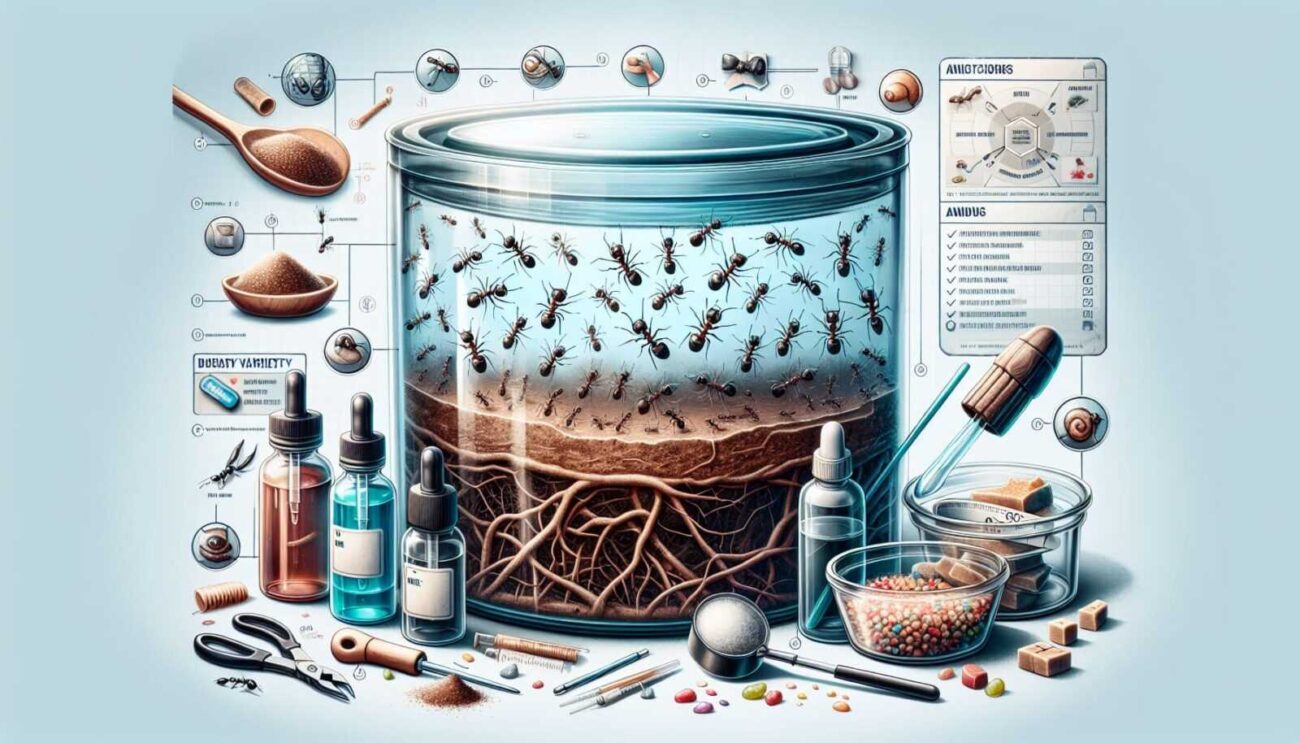
- Sugar water in a sealed dish with a small wick exposed: works for 3+ weeks. Use a clean cotton wick or a small piece of natural sponge.
- Frozen protein cube (one cricket frozen into a small ice cube): thaws over a day or two, becomes accessible to foragers, less mould risk than fresh.
- Sealed honey reservoir with a small drinking access port: many keepers DIY these from medicine droppers or small bottles.
Option B, sitter for one visit, mid-trip
- A friend, family member, or paid pet-sitter who is willing to do one 5-minute visit at the trip’s midpoint.
- Instructions: open the arena lid, place one piece of protein (mealworm, fly), close lid, leave. No other interaction needed.
- Provide written instructions because most people are unfamiliar with ants and will overdo it. “One mealworm. Nothing else. Do not open the nest. Close the lid carefully.” in large text.
For trips this long, also confirm: room temperature will stay stable, water reservoir is at maximum, no construction or building work scheduled in your absence (vibration triggers panic).
21+ days, sitter mandatory, or skip the species
Beyond three weeks, leaving a small colony entirely alone is risky. The food rots, the water reservoir runs low, and small daily issues compound over a month without anyone to notice.
If your travel pattern includes regular month-long absences, the honest answer is: pick species and setups that handle it.
- Larger formicaria with bigger water reservoirs handle long absences better. The formicarium guide covers reservoir capacity.
- Slow-growing species (Lasius, slow Camponotus, Polyrhachis) tolerate long quiet periods better than fast-growers (Pheidole) which slow down without food.
- Hibernating species through their dormancy period genuinely need almost nothing, a long winter trip is well-timed for European species in diapause.
If you travel a lot for work and cannot adjust species choice, hire a sitter for weekly visits during long absences. The cost is reasonable; the alternative is a fading colony.
Coming home, what to check first
On return:
- Check the hygrometer reading first. If humidity dropped, refill the reservoir before doing anything else.
- Look at activity in the arena. A healthy colony bounces back to normal activity within an hour of seeing you near the formicarium.
- Remove any old food. Replace with a fresh small portion.
- Check for dead workers. A handful in the arena over two weeks is normal; a pile suggests food or humidity issues.
- Look at the brood pile. If brood has visibly shrunk, the colony was under stress. Resume normal feeding and humidity, and most colonies recover within a few weeks.
What not to do before a trip
- Do not over-feed. A “stockpile” of food is a stockpile of mould.
- Do not clean the formicarium. Disturbing the colony right before two weeks of absence is the worst possible combination.
- Do not change the room or location. Stability matters more than anything else; the trip itself is enough variable.
- Do not turn off the heating in winter. The colony’s room must stay in temperature range. Use a smart plug or programmable thermostat if you usually rely on manual control.
The trip ends. The colony does not notice. That is the goal.
Browse water dishes and reservoirs if you want a more travel-friendly setup. The daily care hub covers the rest of the maintenance routine.
Did you like this article?
Thanks for your feedback!