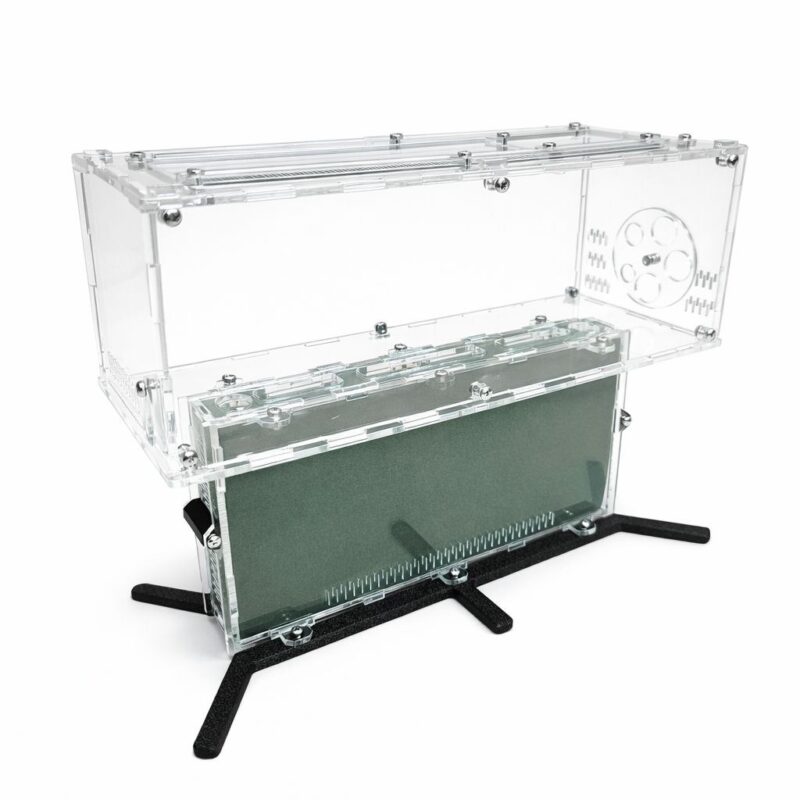





How to Set Up Your AntOnTop Ant Farm – Step-by-Step Beginner Guide

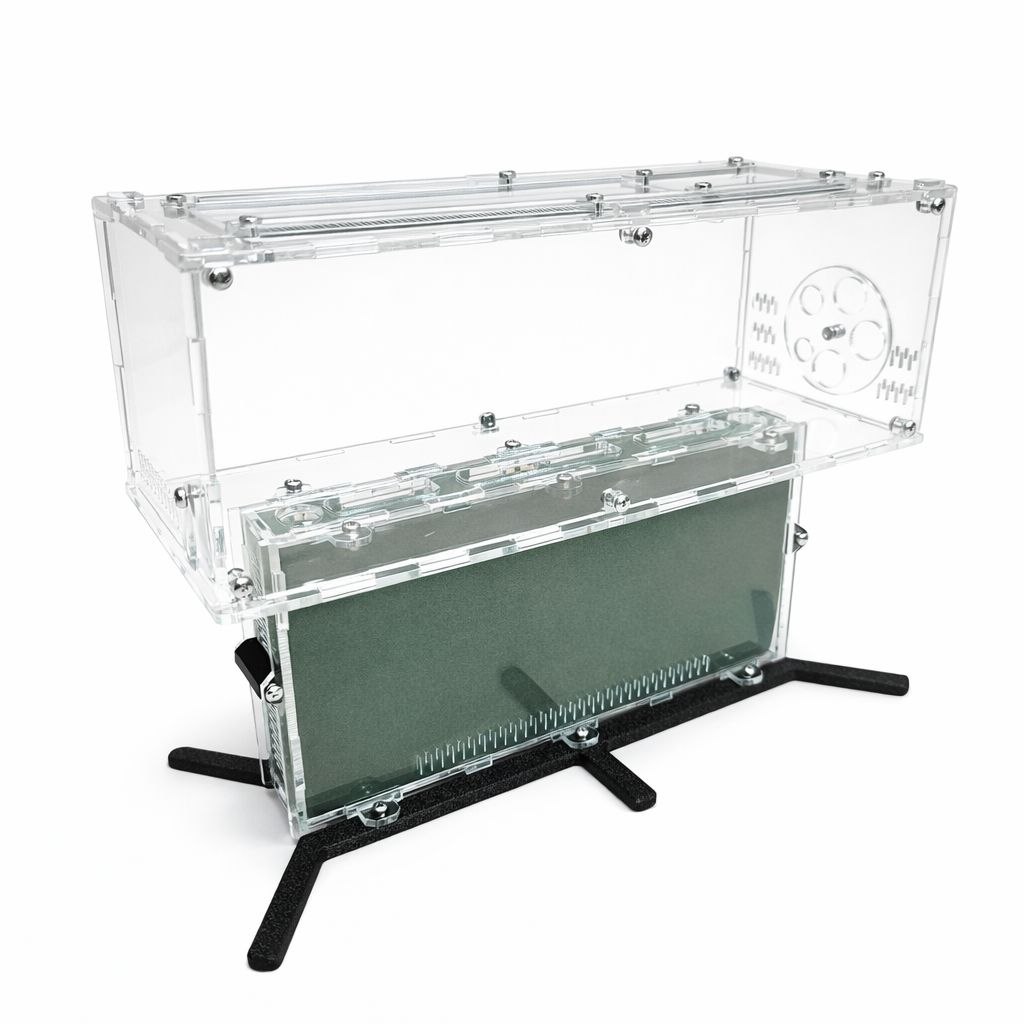
This guide walks through setting up an ANTonTOP starter kit from the moment the box arrives to the moment the colony moves in. It assumes you bought one of our standard kits, formicarium, arena, sand, accessories, and shows the order we recommend for putting it together.
Every step is something we have watched customers do wrong and then have to redo. Going in order, slowly, prevents most of those mistakes.
Before you start, what should be in the box
Open the package and lay everything out on a clean surface. A standard starter kit contains:
- Formicarium (acrylic, gypsum or 3D-printed, depending on the kit)
- Arena (outworld) with a tight-fitting lid
- Connection tube between formicarium and arena
- Small bag of fine sand
- Small bag of decorations (stones, dried bark, sometimes moss)
- Hygrometer and thermometer (combined unit)
- Small water syringe
- Talc powder or PTFE liquid for escape-proofing
- Feeding dish (ceramic or acrylic)
- Written care guide for your selected species
If anything is missing, do not improvise, message us with your order number. We send replacements within a day, and missing pieces are usually packing oversights rather than your problem to solve.
Step 1, Wash everything that will touch the ants
Plain warm water. No soap. No detergent. No alcohol.
Why: residue from cleaning agents lingers on acrylic and gypsum and can stress or kill ants for days after the colony arrives. Tap water at room temperature is enough to remove dust and packaging residue.
Items to wash: formicarium (gently rinse interior chambers), arena, connection tube, feeding dish, decorations (stones can take a slightly stronger rinse).
Dry everything fully before assembly. Lay on a clean towel for 1-2 hours.
Step 2, Decide the final location
Once the formicarium is assembled in its spot, you will not move it again for months. Choose carefully now.
Good spots: a stable interior shelf, away from windows, away from heating sources, away from speakers or appliances that vibrate, at a height where you can see the formicarium from outside without bending.
Bad spots: kitchen (temperature swings), bathroom (humidity swings), south-facing windowsill (sun cooks colonies), next to a TV or speaker (constant vibration), on a wobbling shelf, on the floor where pets or vacuums can reach.
Mark the spot before moving on.
Step 3, Assemble the formicarium
The exact assembly depends on the kit. For most ANTonTOP formicaria:
- Place the formicarium on its chosen spot.
- If the formicarium has a separate water reservoir, leave it dry for now. We will fill it in step 5.
- If the formicarium has a removable cover, ensure it sits flat without forcing.
Step 4, Prepare the arena
- Add a 3-5 mm even layer of sand to the arena floor. Smooth it out. The substrate gives ants foraging traction and a place to deposit waste.
- Place 2-3 decorations in the arena, a small flat stone for feeding, perhaps a piece of bark or a moss cluster. Do not crowd the arena; leave at least two-thirds of the floor open for foraging.
- Place the feeding dish in a visible corner where you can reach it easily.
Step 5, Hydrate the formicarium
This is the step that most commonly goes wrong. The nest needs to be humid, but not flooded.
- Use the syringe to add water to the formicarium’s water reservoir. Most kits have a marked “max” line, fill to that point, no further.
- Wait one hour. The water needs to absorb into the gypsum or wick into the chambers (depending on formicarium type).
- Check the hygrometer reading. Compare to your species’ nest target (in the care guide).
- If humidity is below target, add a small amount more water. If above, do nothing, it will equilibrate over the next 24 hours.
Step 6, Connect the arena
- Attach the connection tube between the formicarium and the arena. The fit should be snug, no visible gap.
- Verify the tube is fully seated on both ends. A gap of just 1 mm is enough for small species to escape.
- If your kit uses a flexible silicone connector, double-check the seal by gently pulling on the tube, it should resist removal without forcing.
Step 7, Apply escape-proofing
- Apply a 1-cm band of talc powder on the inside upper rim of the arena. The band should be continuous, no gaps.
- Alternative: PTFE liquid, applied with a small brush. Wait 30 minutes to dry before continuing.
- Test the barrier. Place a small piece of paper at the arena rim and confirm it does not stick. If the talc smears or the PTFE is patchy, reapply.
Escape-proofing is the single most failure-prone part of the setup. Verify before the colony arrives, fixing escape routes after is far harder.
Step 8, Position the hygrometer
- Place the hygrometer where you can read it from outside the formicarium without opening anything.
- If the kit includes a separate hygrometer for the arena, position that one too.
- Let the readings stabilise for 24 hours before introducing the colony.
Step 9, Final pre-arrival check
Before the courier knocks:
- ☐ Nest humidity in range
- ☐ Arena humidity in range
- ☐ Room temperature in range
- ☐ Connection tube sealed, no gaps
- ☐ Talc / PTFE barrier continuous on arena rim
- ☐ Arena lid sits flat, can be opened and re-sealed cleanly
- ☐ Feeding dish and decorations placed but not crowded
- ☐ The room is the colony’s permanent location, no more moves
Step 10, When the colony arrives
Open the courier package within an hour of delivery, gently. Inside is a sealed test tube with the queen, workers, and brood.
- Place the test tube horizontally inside the arena, with the cotton plug end facing the formicarium’s entrance.
- Do not open the test tube. Do not transfer the ants. Leave the cotton plug in place.
- Cover the formicarium with a dark cloth for 24 hours.
- Do not feed. Do not check inside. Do not photograph with flash.
- Walk away. The colony settles for 48-72 hours before showing any external activity.
The colony will move from the test tube to the formicarium chambers on their own schedule, usually within 4-12 weeks. Force-moving them earlier causes weeks of stopped egg-laying.
Common setup mistakes
- Skipping the wash. Acrylic dust irritates ants. Always rinse.
- Over-hydrating. The reservoir fill line is a hard limit, not a starting point. More water means more mould.
- Skipping the barrier test. A “looks fine” talc layer that smears under the rim is not a barrier. Test before the colony arrives.
- Opening the test tube on day 1. The ants need to settle. Forced transfers cause weeks of trauma.
- Adding food on day 1. The colony will not eat for 48-72 hours. Food placed early rots.
The first 30 days guide covers what to expect after the colony settles in. The daily care hub ties everything together for the months that follow.
Browse our complete kits or message us with your species and we will recommend the right setup for you.
Did you like this article?
Thanks for your feedback!