




How to Identify a Queen Ant

Every spring, someone messages us a photo of an ant they found on a sidewalk and asks: “is this a queen?”
The answer is sometimes yes, sometimes no, and the difference matters, a found queen can be the start of a new captive colony, while a worker or a male will not produce anything. Below is the visual guide we send back, with the key features that separate the three castes.
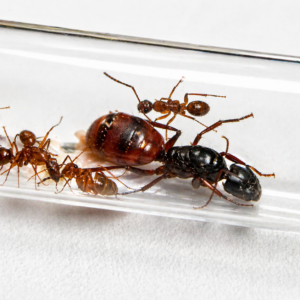
The classic comparison: a queen, a major worker, a minor worker, and a male, of the same species, lined up.
Queen features:
- Largest body of the three female castes
- Distinct, prominent thorax with visible flight muscle bulges
- Wings present (before flight) or wing scars visible on the thorax (after flight)
- Distended gaster (the abdomen), wider than a worker’s
- Three ocelli (simple eyes) on top of the head, visible as small dots
Worker features:
- Smaller body
- Smooth, flat thorax with no flight muscle bulges
- Never wings, never wing scars
- Slim gaster proportional to body
- Usually no ocelli, or very reduced
Male features:
- Smaller than queen, often similar in size to a major worker
- Very small head, large eyes that occupy most of the face
- Wings (males die shortly after the nuptial flight, so post-flight males are rare)
- Slim body, long legs, antennae often more delicate than female antennae
- The thorax is the largest part of the body
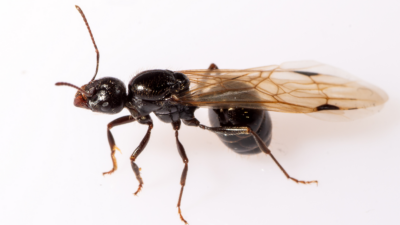
A virgin queen, before her nuptial flight, has four functional wings and looks dramatically different from any worker. She is the largest female in the colony, with a thorax engineered for flight muscles.
Pre-flight queens are normally seen swarming from a parent colony on warm, humid summer days, the famous “ant rains” when thousands take flight simultaneously. If you find a winged ant on the ground in the morning after such a day, it is almost certainly a queen who has either mated and landed, or a male.
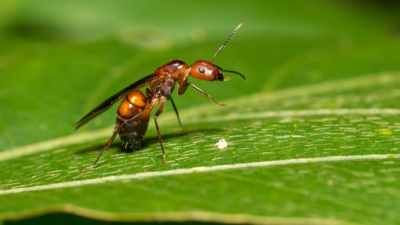
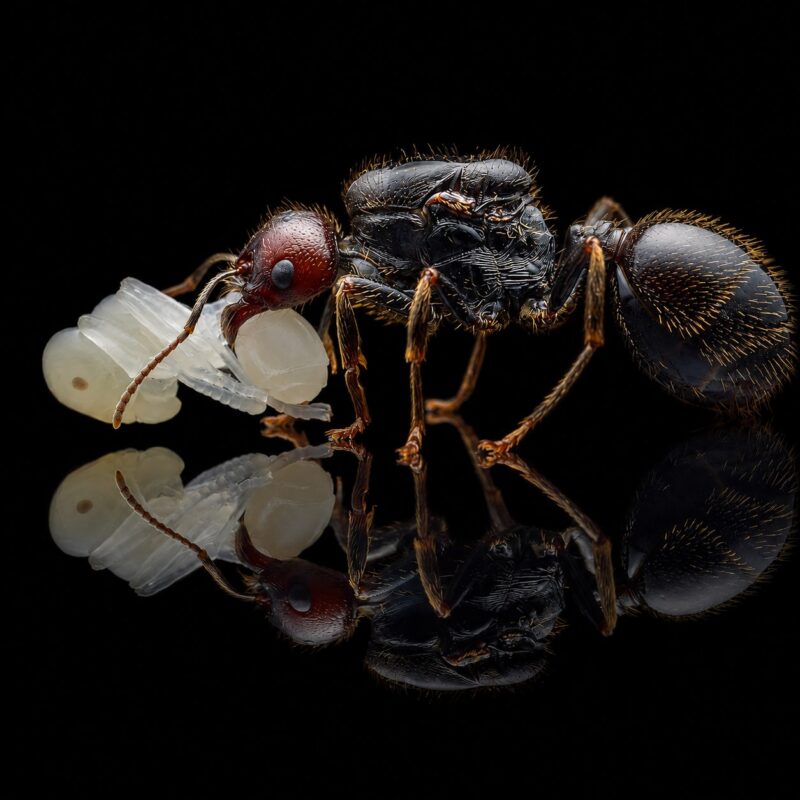
This is the version most keepers encounter, a queen who has mated and broken off her own wings. The wings drop off voluntarily at four bases on the thorax, leaving small wing scars that look like tiny stumps.
Wing scars are the single most reliable post-flight identification feature. If you see them, you have a mated queen. If you do not, the individual either never had wings (worker), is currently winged (virgin queen or male), or recently lost them through an unusual circumstance.
The thorax still shows the muscular contours of a flying ant, it does not flatten to the worker shape just because the wings are gone.
Males are sometimes mistaken for small queens. The differentiators:
- The eyes are huge, they dominate the face. Females have proportionally smaller eyes.
- The head is small relative to the thorax. Females have proportionally larger heads.
- The body is typically narrower and the legs longer than in females.
- Males die within hours to days after the nuptial flight. A male found alive on the ground 24 hours after a flight is unusual.
Males will never start a colony. They lack the reproductive system for sustained egg laying. If you collect a “queen” from the ground and she turns out to be male, she will die within days regardless of your care.
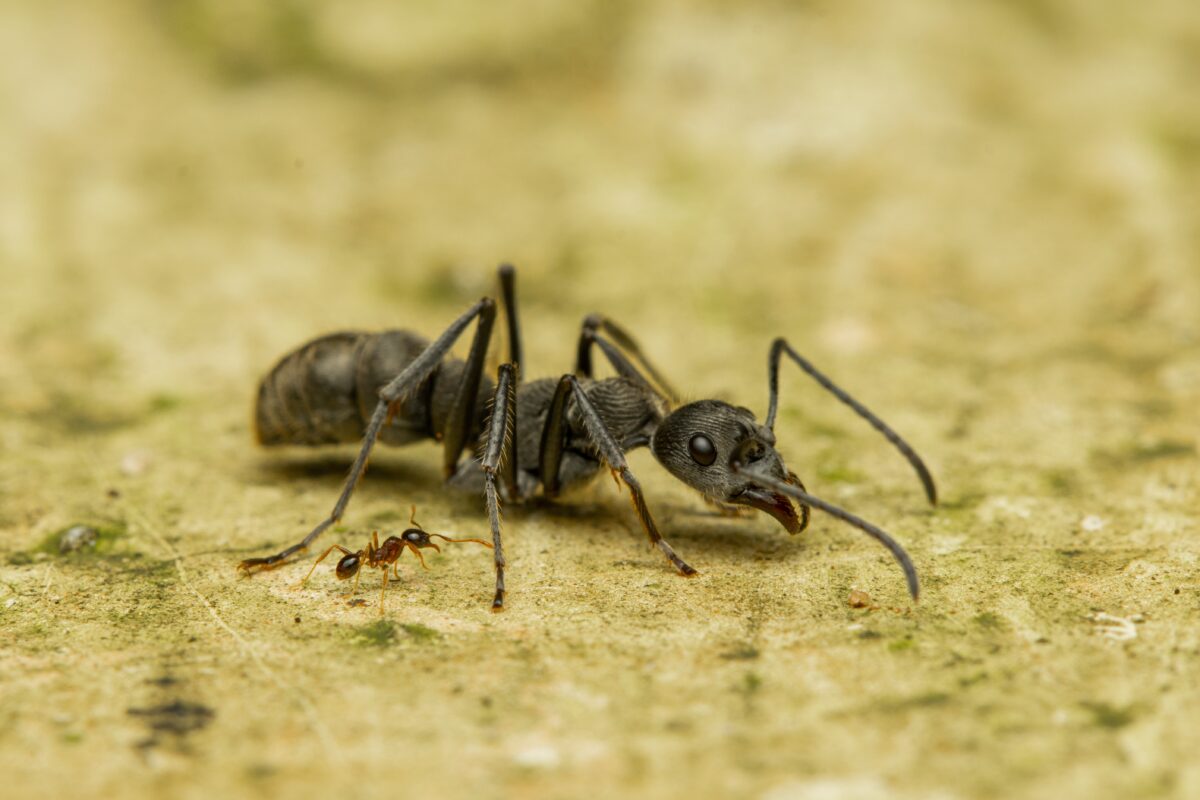
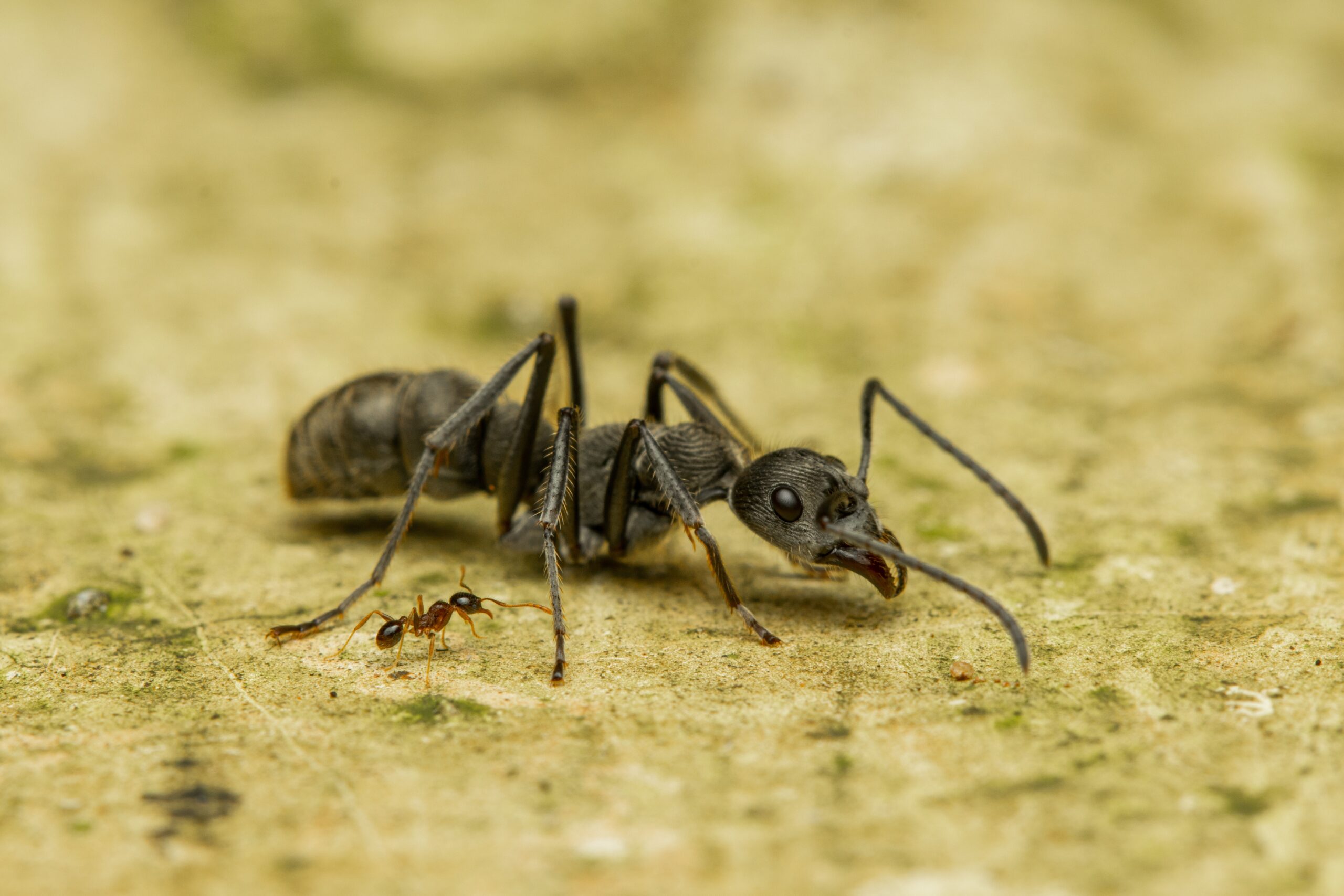
The standard worker ant has a flat thorax, no wing scars, and is the smallest body type in the colony (with exceptions for major-caste workers, which can be larger than queens in some species, see Pheidole).
A worker found on the ground will never become a queen. Her reproductive system is non-functional. The species cannot produce a replacement queen from a worker, except in Harpegnathos and a handful of ponerines, where a worker can become a reproductive (gamergate).
Identifying species from a found queen is harder than identifying caste. The most common queens encountered in central and southern European gardens, with rough size:
- Lasius niger, 7-9 mm, dark brown to black, queens fly mid-July to mid-August
- Lasius flavus, 7-9 mm, yellow-orange, queens fly late August
- Lasius emarginatus, 7-9 mm, two-tone (reddish thorax, dark gaster), queens fly mid-summer
- Tetramorium caespitum, 6-8 mm, dark brown, queens fly mid-summer
- Formica fusca, 9-11 mm, mostly black with a slight reddish tint, queens fly early summer
- Messor structor, 9-12 mm, dark brown, queens fly late summer
If species-level identification matters (for example, you want to keep her), capture her in a small ventilated container, photograph from multiple angles, and consult species reference photos. The genus is usually obvious from body shape; the species often requires fine details (mandible shape, hair patterns).
The top five identification mistakes
- Calling any large ant a queen. Some species’ major workers are larger than other species’ queens. Size alone is not reliable.
- Assuming wings mean queen. Males also have wings. Check head and eye proportions.
- Ignoring wing scars on a thorax. The single most reliable clue that you have a mated, post-flight queen.
- Confusing major workers with queens, especially in Pheidole. Major workers have oversized heads but flat thoraces and no wing scars.
- Misidentifying species from one photo. A side photo often does not reveal the diagnostic features. Use top-down plus side-on for confident IDs.
If you found a queen, what next?
Place her in a clean small container with a tiny piece of damp cotton. Keep her in a dark, warm place (20-25°C). Do not feed her. Watch over the next two weeks for signs of egg laying, small pearly white eggs at the back of the container.
If she lays, she is mated and viable. The founding stage begins. The colony biology primer covers what to expect over the next six months.
If she does not lay within 3-4 weeks, she is either unmated, a worker mistaken for a queen, or a queen of a species that requires specific conditions you have not provided. The most common outcome with found queens is one of these, most do not produce a colony.
If you want a more reliable path to a colony, buying a ready-mated queen with starter workers from a vetted seller skips most of the risk. Browse live colonies.
Did you like this article?
Thanks for your feedback!