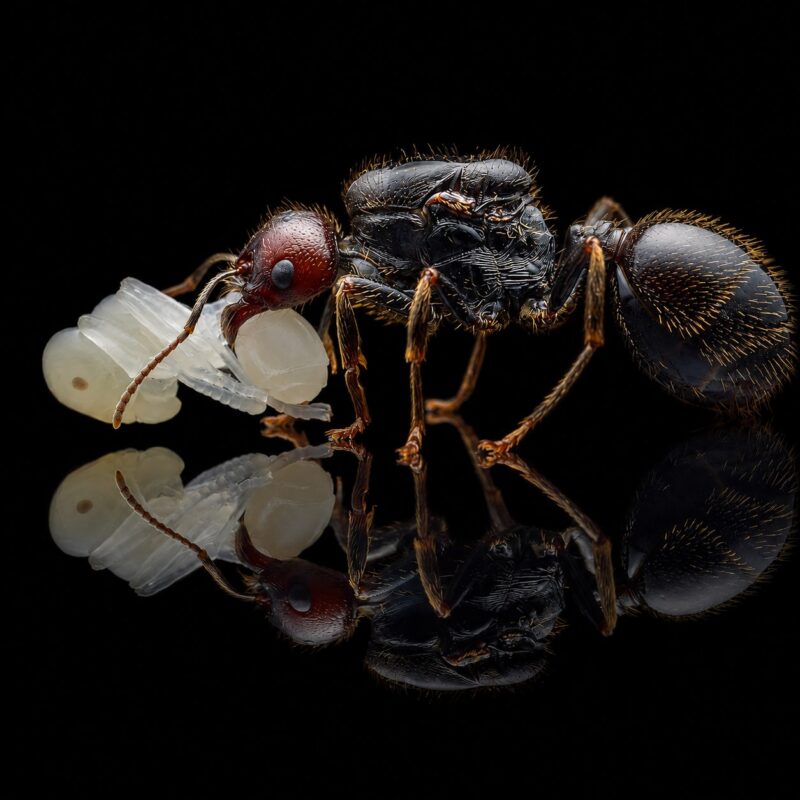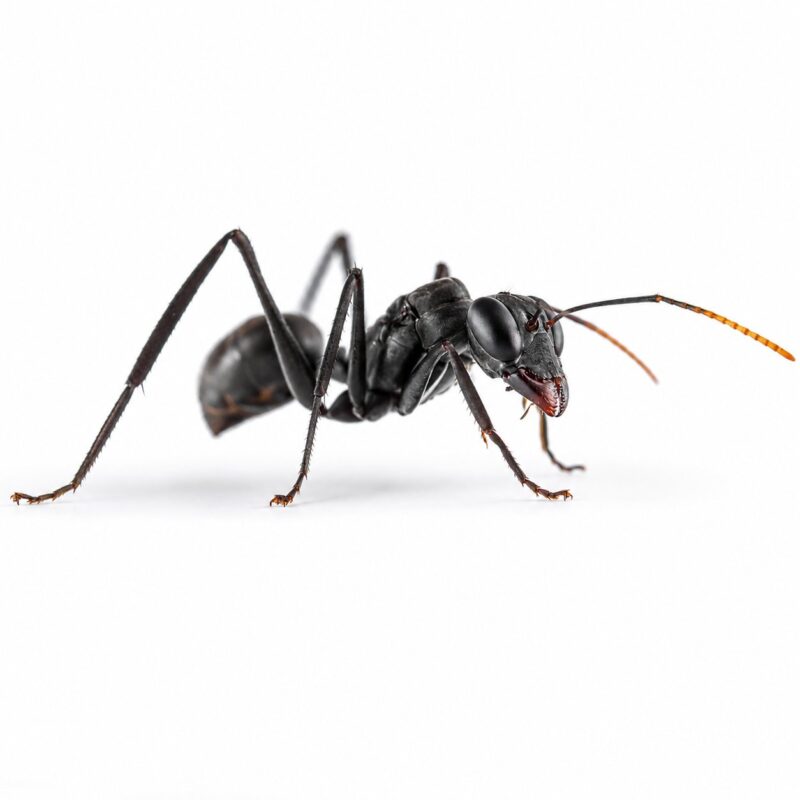





Cataglyphis aenescens – Complete Care Guide for the Speedy Desert Ant


The Sahara at midday is one of the few terrestrial environments where almost nothing moves. Surface temperature passes 60°C. Air shimmers. Reptiles burrow. Even the camels go still.
And then, with no warning, dozens of small silver ants pour out of a hole in the sand and run.
Cataglyphis is the desert ant genus that took an evolutionary path no other ant did. While their relatives evolved bigger colonies, larger workers, or more elaborate chemical communication, Cataglyphis evolved speed — and the ability to time their entire foraging window to the brief minutes when the sand is too hot for predators but still survivable for the ant. The result is one of the most scientifically interesting genera in myrmecology, and a worthwhile species to keep if you can match its conditions.
The biology
Cataglyphis aenescens is the central-Asian member of the genus, found from the Caspian basin east through Mongolia. Smaller and darker than the famous Saharan species, but the same evolutionary strategy: solo foraging, thermal tolerance, and navigation by polarised light.
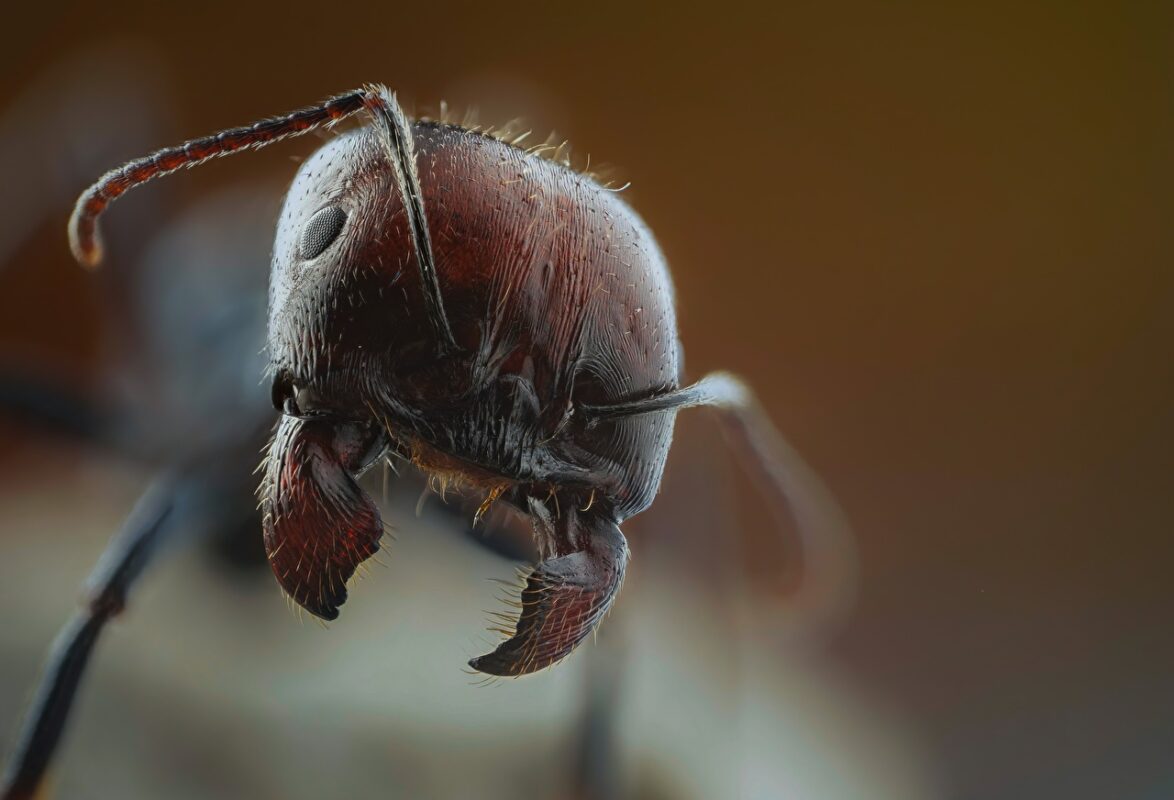
The body is built for heat. Long legs lift the body high above the ground — every additional millimetre of clearance drops the perceived temperature by 1-2°C. Reflective hairs on the abdomen scatter sunlight. Internal heat-shock proteins activate at higher temperatures than almost any other insect. Together, these adaptations push the upper survival limit past 50°C in surface conditions.
Speed compounds the thermal advantage. Cataglyphis can run at over 1 metre per second relative to body size — the fastest of any ant, and one of the fastest among all insects when scaled. A worker spending 90 seconds on the burning sand surface is a worker who probably makes it home. Two minutes is the threshold beyond which mortality rises sharply.
How they find their way home
This is the part that earned the genus a place in textbooks. A foraging Cataglyphis can leave the nest, wander 300 metres in a featureless desert, find food, and return in a straight line to within a few centimetres of the burrow. No pheromone trail. No landmark sequence. No GPS.
The mechanism: a combination of step counting (the ant has internal counters that integrate the number of steps it has taken in each direction) and celestial navigation. Specialised photoreceptors in the eye detect the polarisation pattern of the sky — the way sunlight scatters through the atmosphere creates an invisible compass that points consistently to the sun’s azimuth, even when the sun itself is hidden by haze. The brain combines step count and direction into a vector, and at any moment the ant “knows” the direction back to the nest.
Experiments where workers are picked up mid-forage and moved several metres reveal the strategy. Released in the new spot, the ant heads off in the direction the nest would be relative to its original position, runs the correct distance, and then begins searching when it does not find the entrance. The internal compass and odometer are separate from any environmental cues — which makes them robust in places where pheromone trails would evaporate within seconds.
Keeping them in captivity
Cataglyphis aenescens is not a beginner species. It can be kept successfully by an attentive intermediate keeper, but the conditions are non-trivial.
Temperature. Nest 22-26°C, arena 28-35°C during the active day. They need a thermal gradient — a hot patch and a cool one — to behave naturally. Without a basking zone, foraging activity is muted.
Humidity. Dry, very dry. Arena 30-40%, nest 50-60%. Too humid and the colony stops laying.
Arena size. Bigger than most beginner species need. A 30 × 20 cm arena is the minimum, and 50 × 30 cm allows realistic foraging behaviour. The genus is built to cover ground; cramped arenas suppress the most interesting behaviours.
Diet. Mostly protein — insect prey, freshly killed or freshly thawed. They are scavengers in nature, feeding on insects that died from heat exposure. Sugar water as a secondary carbohydrate.
Hibernation. Required. C. aenescens from the central Asian steppe overwinters at 2-8°C for 3-4 months. Without a proper diapause, the queen’s longevity collapses within 2-3 years.
What you actually watch
The behavioural payoff of keeping Cataglyphis is unlike any other captive ant. Solo foragers leave the nest at irregular intervals, sprint to the food, and return in a near-straight line. They do not follow pheromone trails like most ants because their species does not lay any — every worker navigates independently. You can see the polarised-light navigation in action if you place the formicarium under a window that gets indirect daylight: workers head outbound in the direction of the prey, and back along the corrected vector after pickup, even when the sun is not visible directly.
A small colony with 30-80 workers in a well-sized arena gives you the full repertoire. Larger colonies are spectacular but rarely necessary — the species’ interest is in the individual behaviour, not the swarm.
Why this species, not others
If you are choosing among desert ants, Cataglyphis is the one that pays back study. Other thermophilic genera (Cataulacus, Ocymyrmex) have similar tolerances but smaller behavioural ranges. The navigation work alone makes Cataglyphis worth a careful keeper’s attention — there is a small library of academic papers you can read alongside your own colony.
Browse current Cataglyphis colonies in stock. We sell only EU-bred colonies, never wild-caught. If you want to read more on the diversity behind genera like this, the diversity of ants covers the evolutionary context.