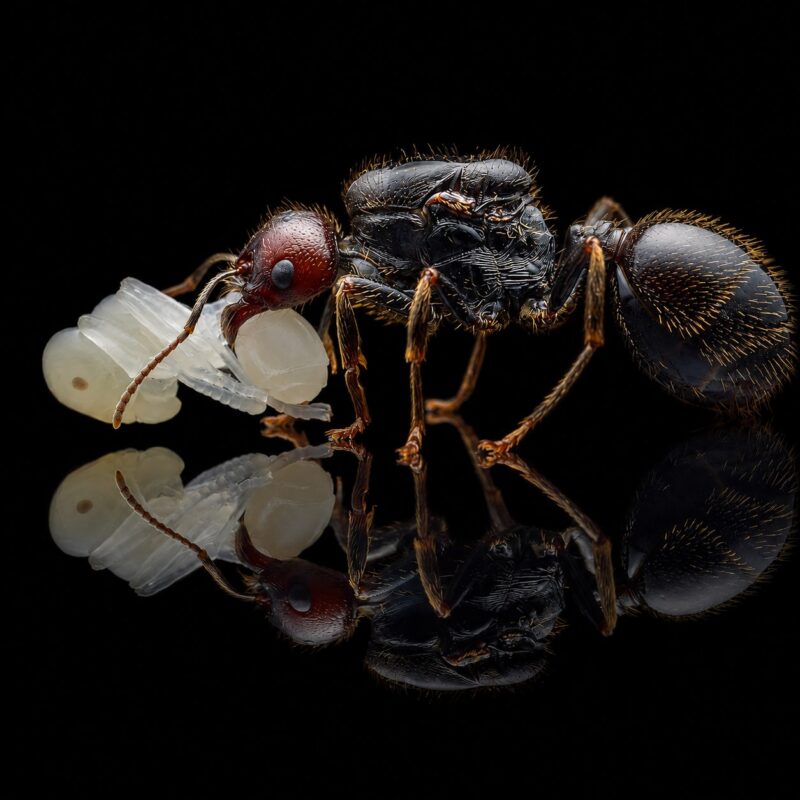





Giganthiops Destructor Care Guide – Giant-Eyed Tropical Ant Species

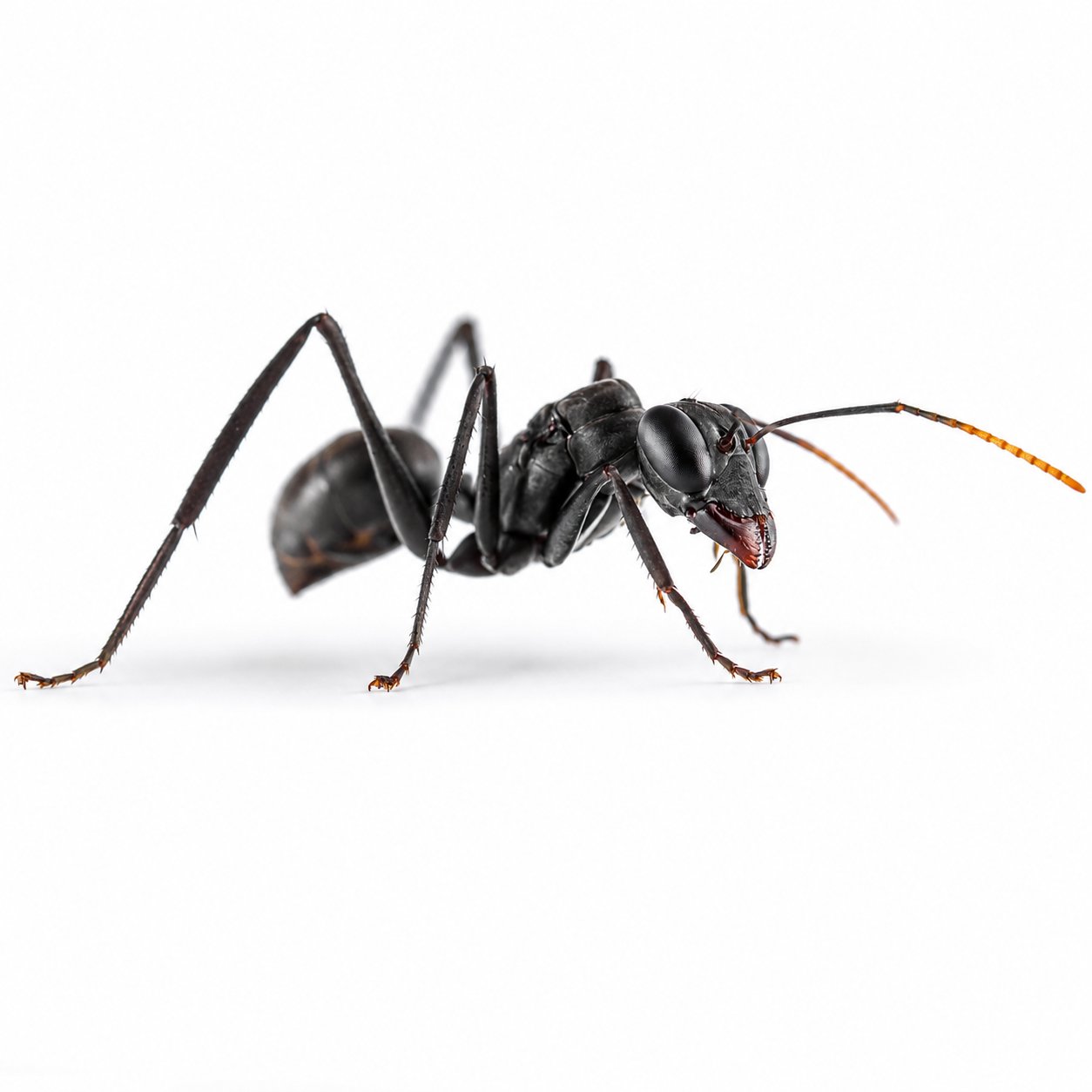
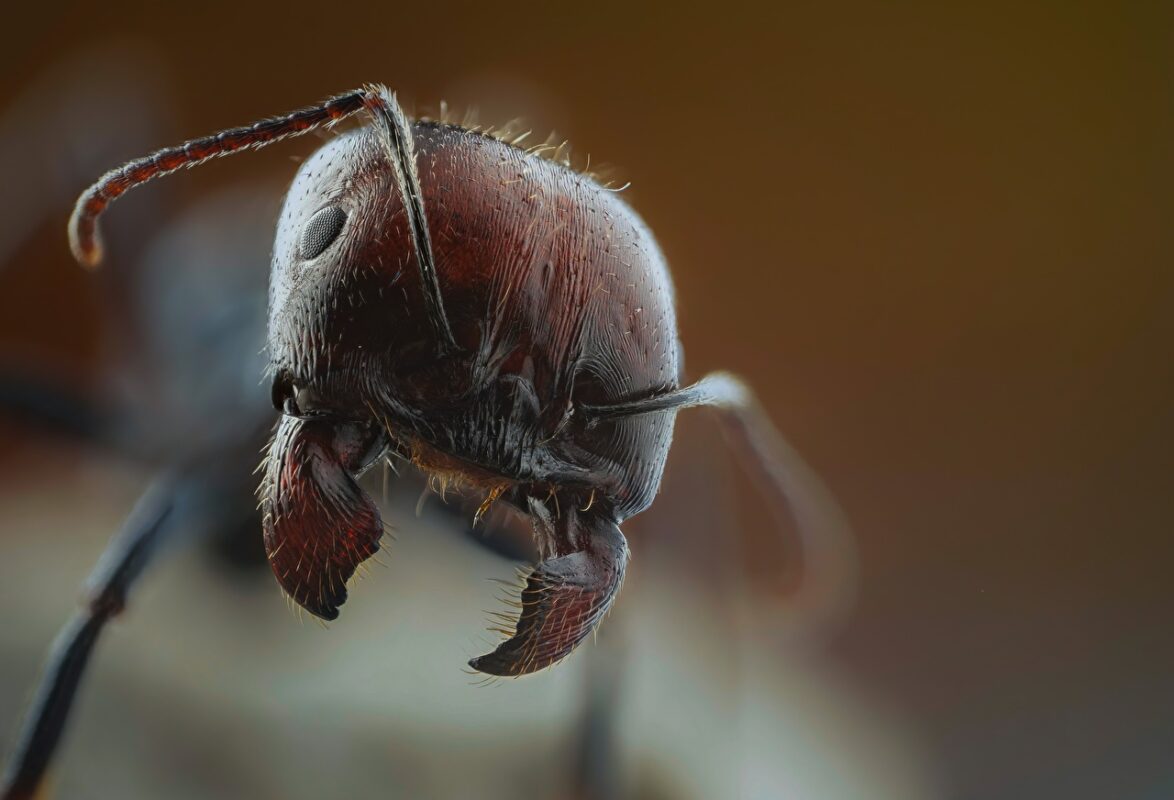
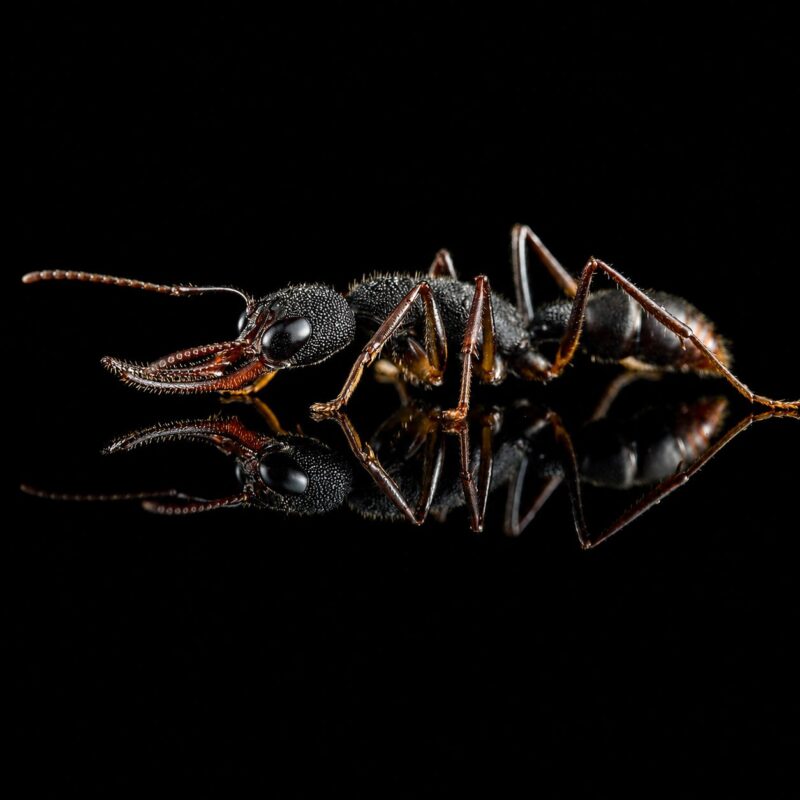
Most ants live in a world of chemistry. They taste, they smell, they touch, and the eyes are almost a formality. Then there is Gigantiops destructor, whose eyes occupy roughly a quarter of the head capsule and dominate every photograph of the species. Vision is the entire hunting strategy, and it shows.
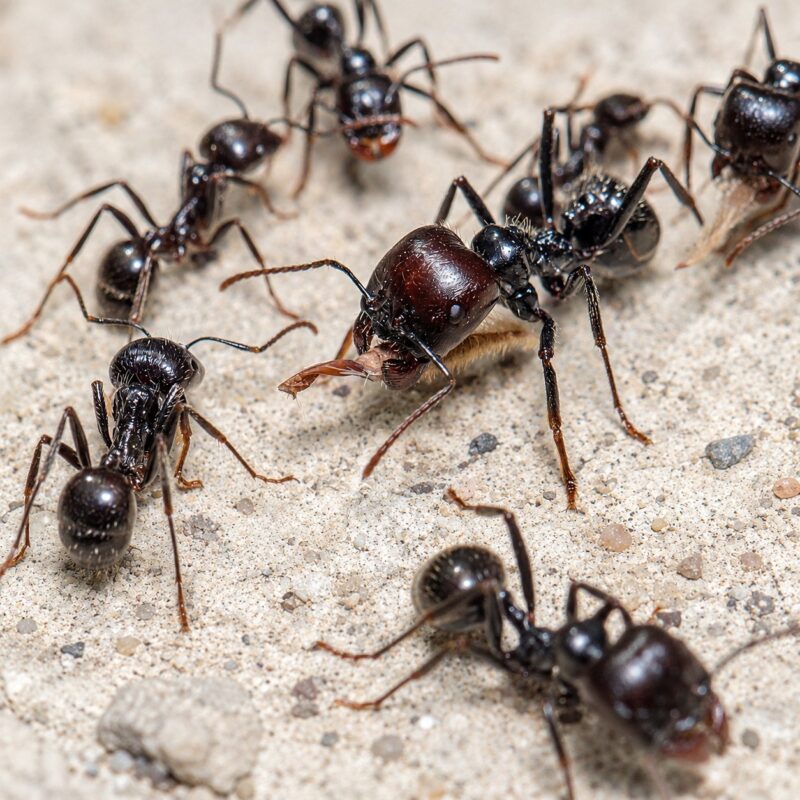
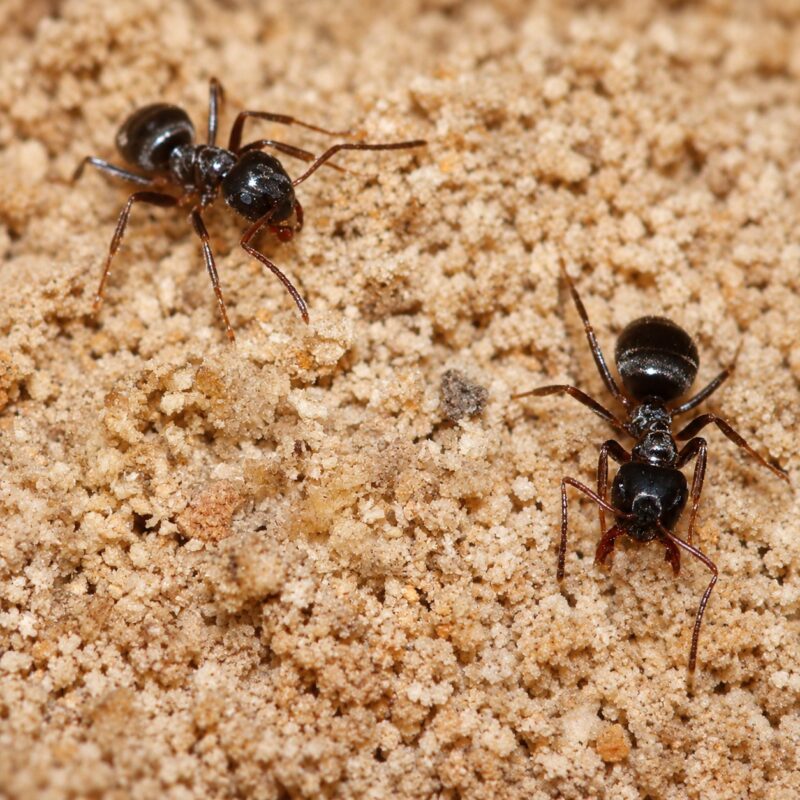
Below is the species in pictures and the care detail attached to each one. Gigantiops is intermediate, not beginner, but for a keeper looking for a visually striking second or third species, few options match it.
The defining feature. Compound eyes that wrap around the front of the head, giving close to 200° of forward and lateral vision. For comparison, most ants have 90-120° of useful vision and rely on antennae for the rest.
What this means behaviourally: Gigantiops tracks moving prey by sight, not by pheromone trail. Workers hunt alone, spot prey from distances unusual for ants (5-8 cm easily, sometimes more), and adjust their attack vector in real time. Watching one stalk a cricket leg is closer to watching a mantis than a typical ant.
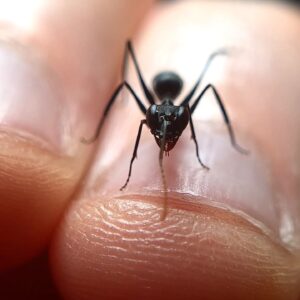
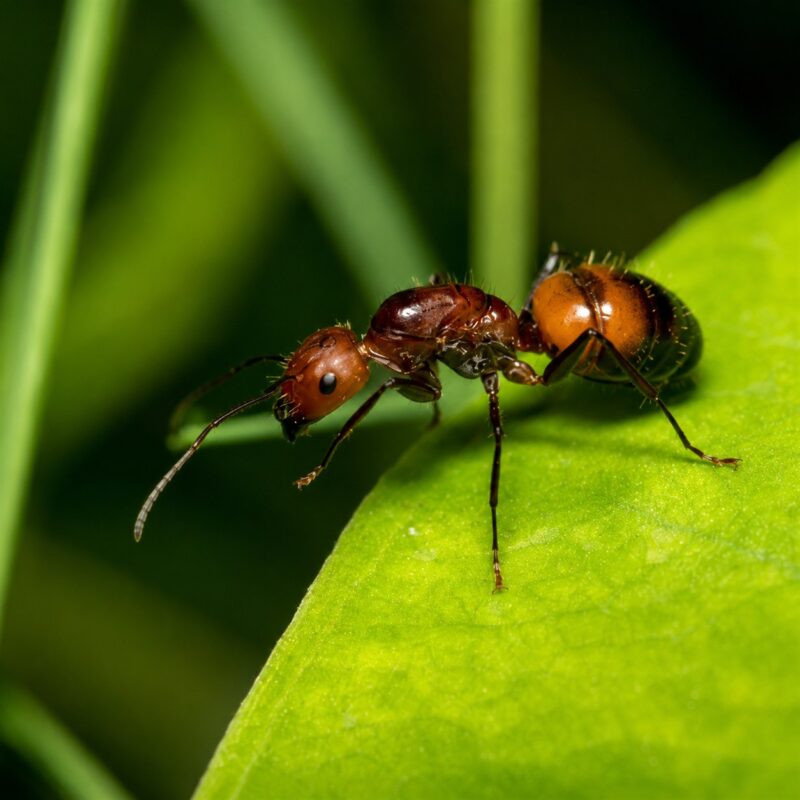
Workers are 1.0-1.3 cm long. Relatively slim build with long legs that allow rapid acceleration. The body is dark brown with subtle metallic glints on the gaster, not as obviously colourful as some tropical species, but striking under good light.
Adult lifespan: 1-3 years per worker. Queen lifespan: 8-12 years in good conditions.
Gigantiops jumps. Not as dramatically as Harpegnathos, the leaps are 1-2 cm rather than 2-3 cm, but they are frequent and used both offensively and defensively. The jumping mechanism uses the powerful hind legs, similar to how a flea launches, combined with a slight thoracic snap.
Practical implication for housing: formicarium lids must be sealed. An open arena will lose workers. Glass or smooth acrylic walls are fine, they cannot climb smooth surfaces well, but the lid must close fully.
Unlike most ants, Gigantiops does not lay foraging trails. Each worker leaves the nest, hunts independently, and returns alone. This is unusual and has a behavioural consequence: the colony does not recruit a swarm to a single food source. You can offer multiple small prey items in different parts of the arena, and different workers will tackle each one.
For observation, this means a single prey item attracts one or two workers, not a stream. The species is best watched over longer sessions with smaller meals scattered around the arena.
Gigantiops originates from the Amazonian and Guianan rainforest. Native humidity is high and stable, roughly 80% year-round. Captive colonies need that range to thrive.
Humidity: nest 80-90%, arena 70-80%. Lower humidity causes brood loss within days.
Temperature: nest 24-28°C, arena 26-30°C. Slight gradient is welcome.
Hibernation: none. True tropical species, keep warm year-round.
Eggs and larvae are kept in a humid central chamber. Pupae are exposed (no cocoon). Brood is unusually visible in this species because Gigantiops tends to cluster brood compactly rather than spreading it.
Egg-to-adult time: 6-9 weeks. Colony growth is moderate, a starter colony of 10-20 workers reaches 50-100 by year 1, and 150-250 by year 2.
Mostly insectivorous in nature. Captive diet:
- Small to medium insects (fly, mealworm, small cricket, roach nymph) 2-3 times per week
- Diluted honey water as carbohydrate, every few days
- Occasional fruit (banana, mango), not the primary food
They do not eat seeds. Do not offer them.
The eyes are not decoration. A worker that detects movement in the arena pivots its head to track, freezes for a moment, and either approaches or retreats based on what it sees. You can test this gently with a slowly moving piece of tweezer, many keepers find the visual responsiveness to be the most engaging aspect of the species.
Avoid bright sudden lights when feeding. The colony stresses easily from flashing or strong light. Steady ambient light is fine.
Quick care summary
- Temperature: nest 24-28°C, arena 26-30°C
- Humidity: nest 80-90%, arena 70-80%
- Hibernation: none
- Diet: insects + honey water; no seeds
- Growth rate: moderate, 100 workers by year 1
- Difficulty: intermediate (humidity-sensitive)
- Stings/bites: bite mild, no sting; sprays formic acid in defence
If you are deciding between this and other large tropical species, see the side-by-side notes in the Dinomyrmex gigas guide. Browse current exotic species in stock, write to us if you want to see specific colony photos before ordering.
Did you like this article?
Thanks for your feedback!