




Dinomyrmex gigas — The Giant Ant of Southeast Asia | Complete Care Guide


The first time you put a worker Dinomyrmex gigas next to a 1-euro coin, the size still surprises you. Scale photos do not prepare you. This is the largest ant most keepers will ever own, workers reach 2-3 cm long, majors approach 3 cm, and the queen tops out around 3.5 cm. They make every other ant in your collection look like a different category of animal.
This guide is built around what the species actually looks like rather than what care guides usually focus on. Each photo below is paired with the practical detail a keeper needs.
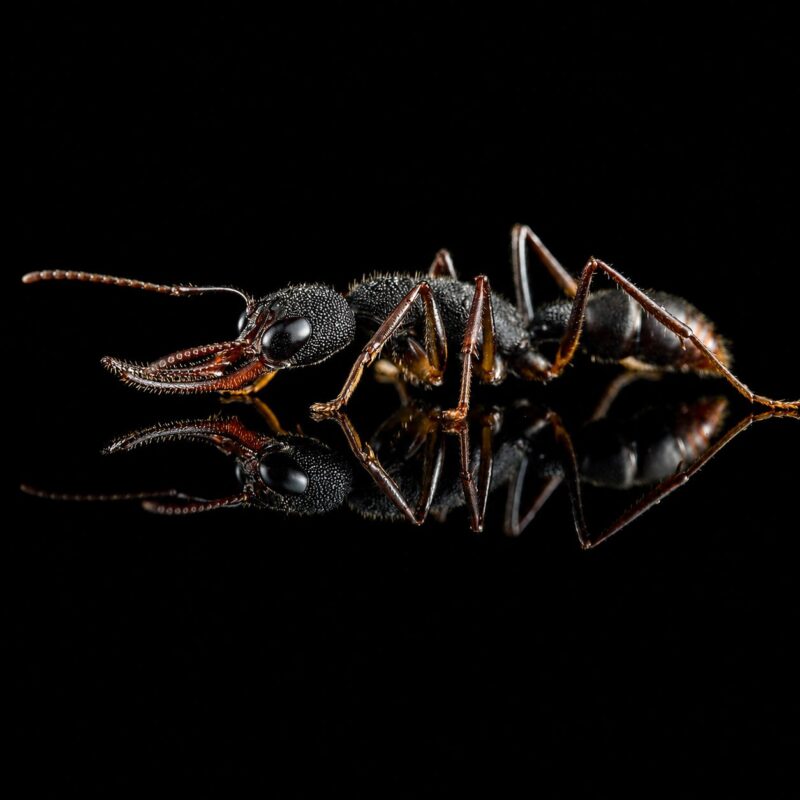
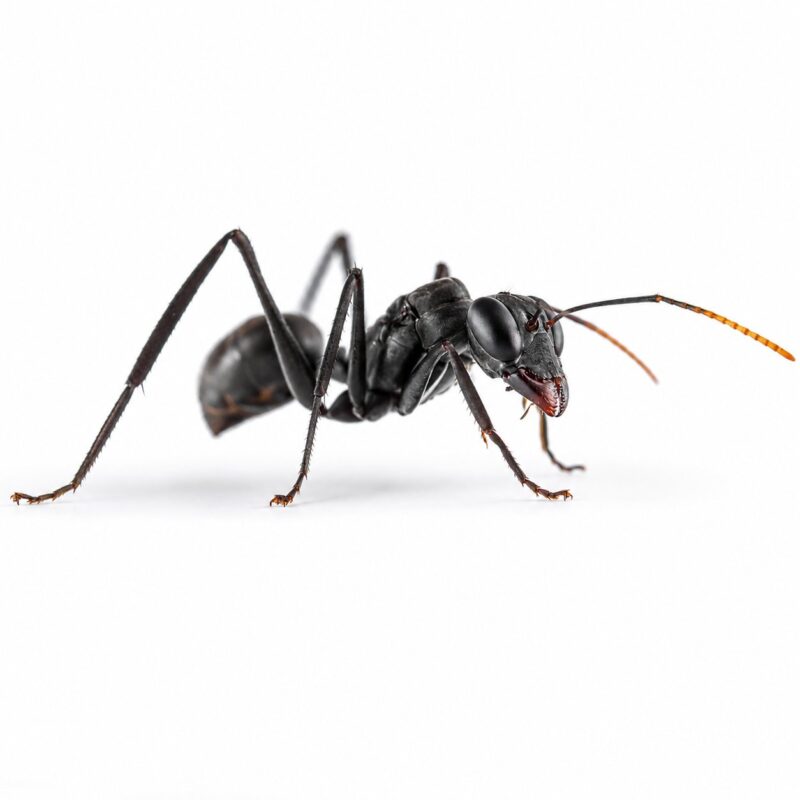
The major worker in this image is 2.8 cm long. A 1-euro coin is 2.3 cm in diameter. This is not a trick of perspective, the body, from mandible tip to gaster, is wider than the coin. Most beginner ants are 4-8 mm.
What this means for the formicarium: chambers must be larger than for any beginner species. Standard 1 × 1 cm chamber heights do not allow workers to turn comfortably. A 2 × 2 cm chamber is the minimum, and 3 × 3 cm is preferred. Most off-the-shelf formicaria sized for beginners are too small for this species.
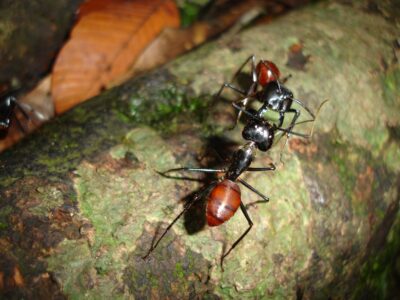
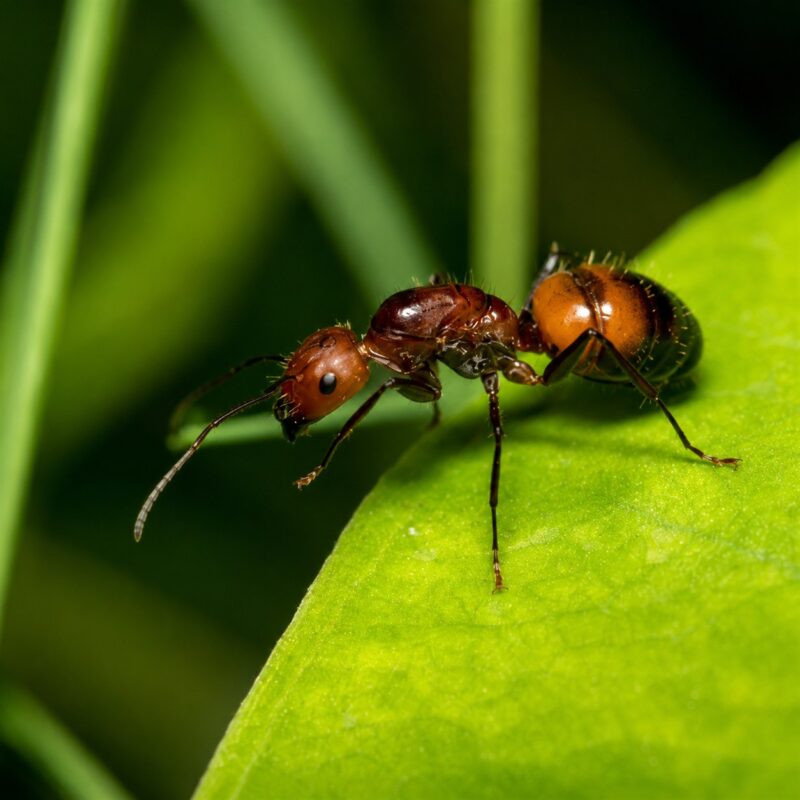
The queen is unmistakable. Larger than any worker, with a visibly distended gaster (egg-bearing abdomen) and a darker, almost glossy thorax. Her movement is slow and deliberate.
Lifespan: 15-20 years in good captive conditions. Queen replacement is impossible, there is no second queen and no gamergate behaviour in this species.
Egg-laying rate: low. A healthy queen lays a few eggs per week. The slow growth is normal, do not interpret it as a problem. Colonies cross 100 workers around year 2-3, and 300 around year 5.
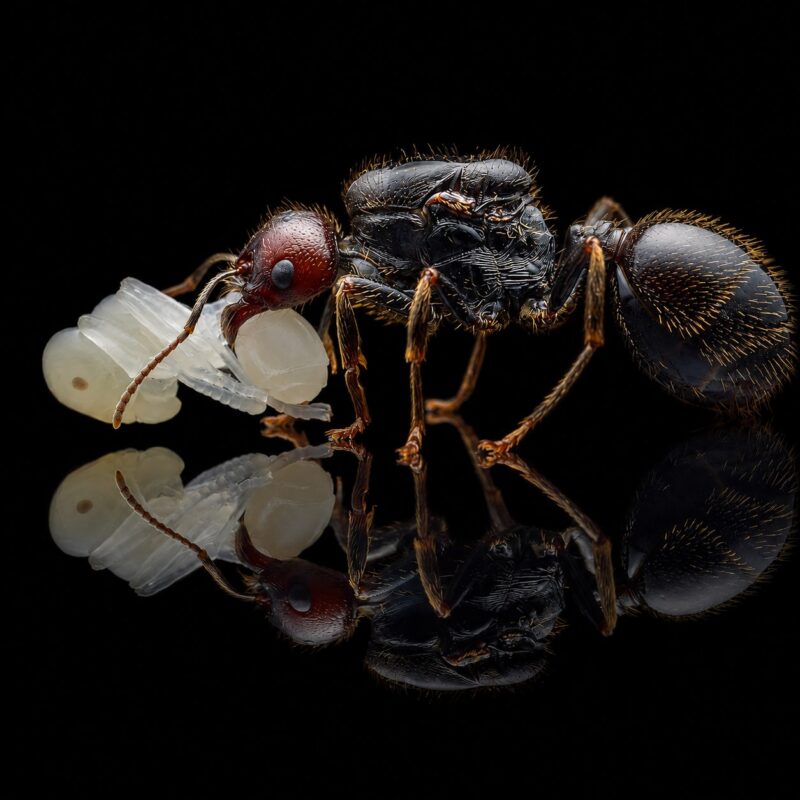
Eggs are tiny relative to body size. Larvae are c-shaped, white, and grow surprisingly large before pupating, a near-mature larva can be over 2 cm. Pupae are exposed (no cocoon in this species) and look like immature ants in stasis.
Brood development time: 8-14 weeks from egg to adult. Compared to Pheidole‘s 3-5 weeks or Lasius‘s 6-8 weeks, this is slow. Plan accordingly.
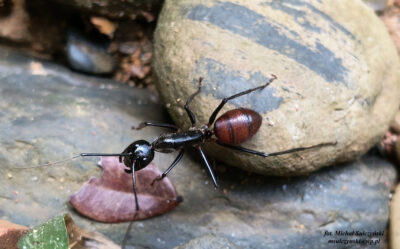
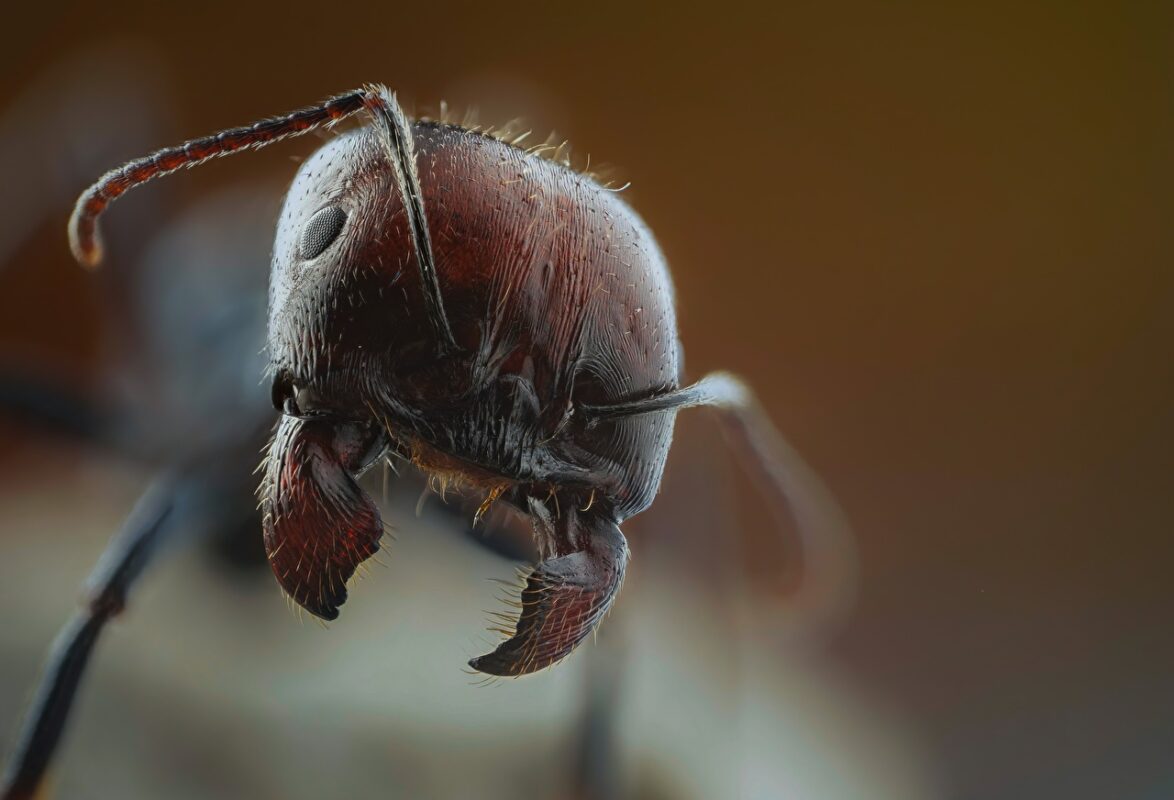
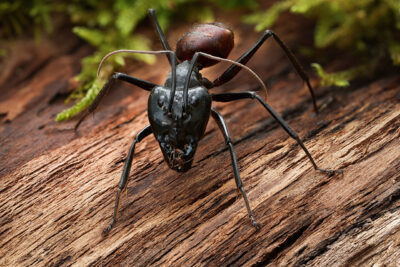
The major caste has a head almost twice the width of the thorax. Mandibles are large enough to deliver a noticeable bite, not dangerous, but pinching. Used in defence and in cracking hard prey.
When do soldiers appear? Once the colony reaches 30-60 workers, usually 8-14 months in. The first soldiers are noticeably smaller than mature ones in long-established colonies.
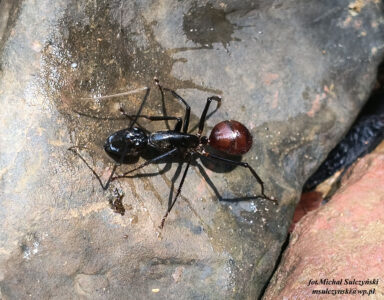
Dinomyrmex gigas is crepuscular and nocturnal. In the wild, they forage at dusk and through the night, retreating to the nest during the heat of the day. In captivity, this means most observable activity happens in the evening and early morning.
Lighting: never illuminate the arena with bright white light during their active hours. A dim red filter shows you the colony without disrupting them. If you want to photograph activity, use a low-intensity red headlamp.
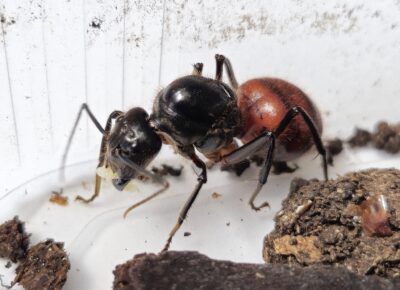
In nature, Dinomyrmex eats insects, fallen fruit, and the secretions of plant-feeding insects. In captivity:
- Protein: medium to large insects (mealworms, cockroaches, crickets) 2-3 times per week. Pre-killed is fine. Live prey is enjoyed but not necessary.
- Carbohydrate: diluted honey water, fruit juice, ripe banana or mango. They love sugar.
- Quantity: a single colony of 50 workers consumes 1-2 crickets per week plus carbs. Bigger than beginner species but not extreme.
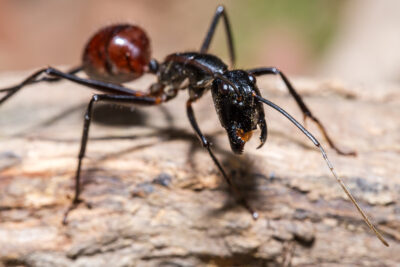
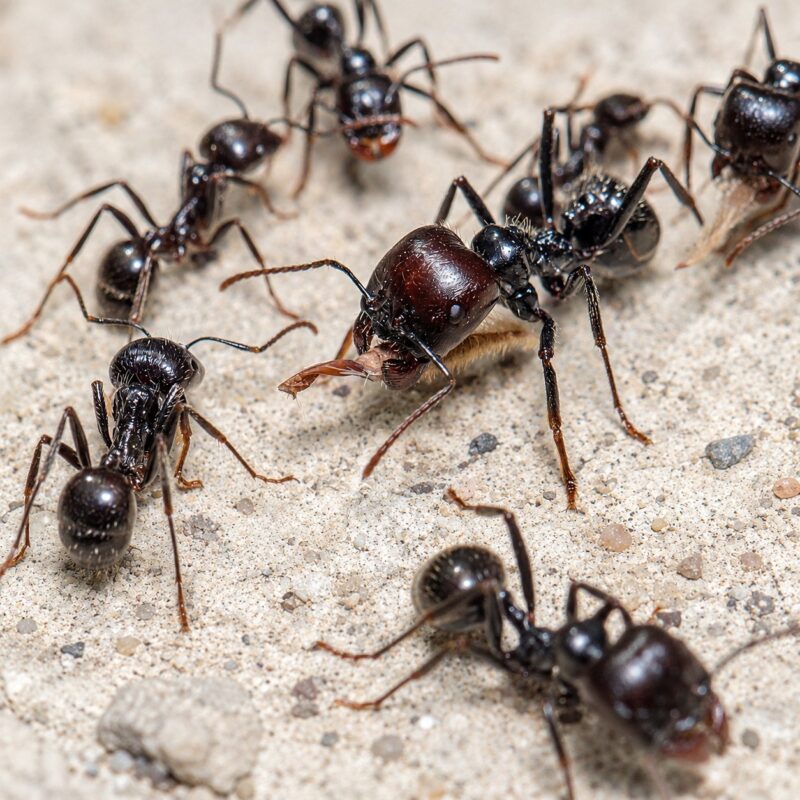
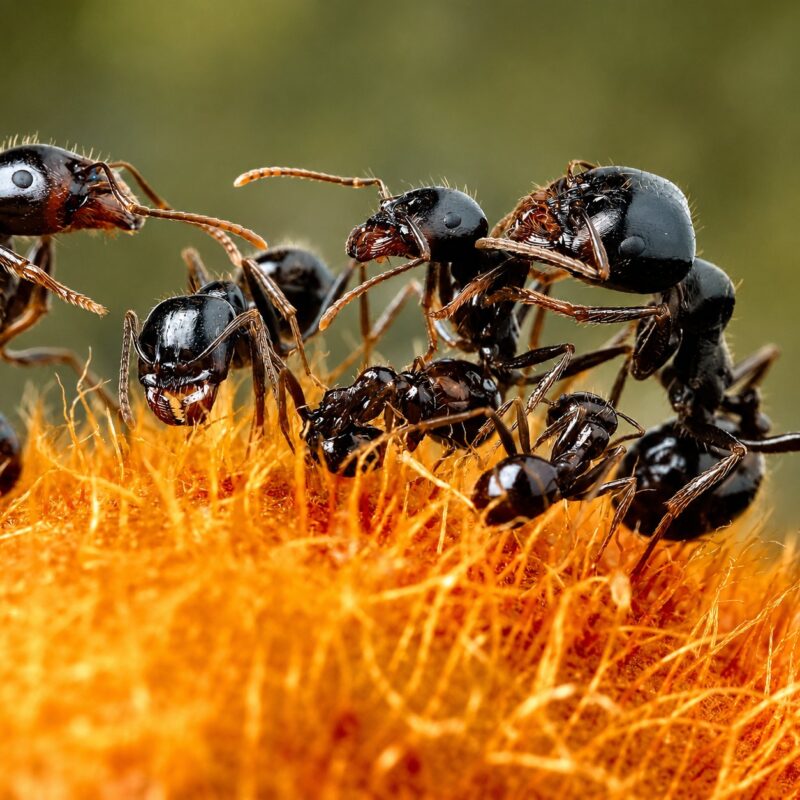
A well-set-up nest shows the colony clustered around brood, the queen toward the deepest chamber, and a few workers patrolling the entrance. Chamber humidity matters: too dry and brood desiccates, too wet and mould kills larvae.
Humidity targets: nest 75-85%, arena 65-75%. Dinomyrmex is a true tropical species, Bornean rainforest is their native habitat, and they tolerate dryness poorly.
Temperature: nest 24-28°C, arena 26-30°C. A small temperature gradient (one warm corner, one slightly cooler) lets the colony choose where to place brood.
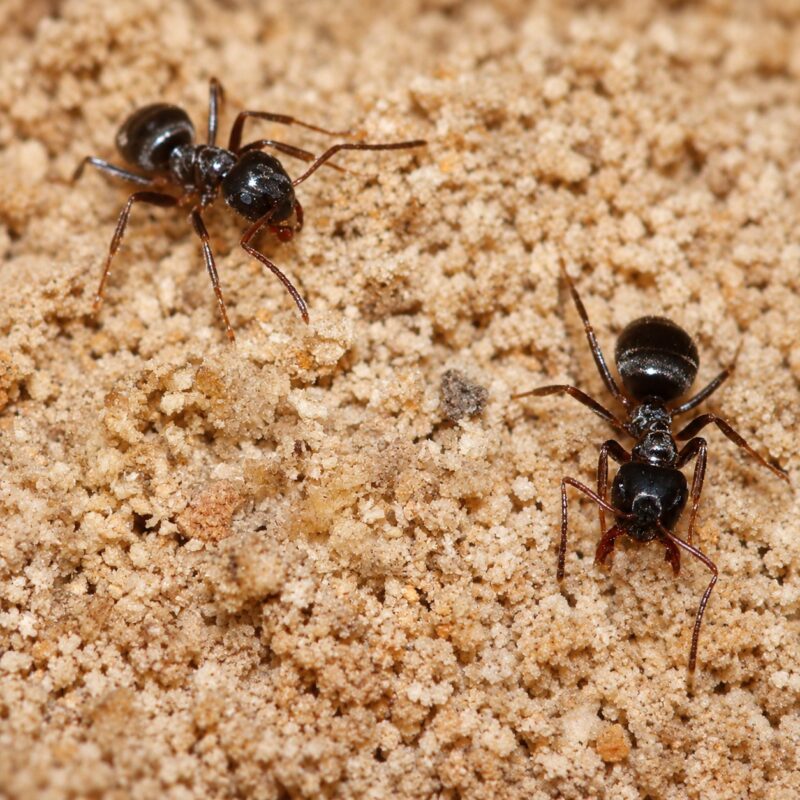
A side-by-side photo of Dinomyrmex gigas next to Messor structor highlights why the species is in a different category. The Messor major is 5-6 mm. The Dinomyrmex major is 28-30 mm, five times longer, with proportional volume.
What this means for keeping: everything scales up. Formicarium size, arena size, prey size, water reservoir capacity. Plan and budget accordingly.
Quick care summary
- Temperature: nest 24-28°C, arena 26-30°C
- Humidity: nest 75-85%, arena 65-75%
- Hibernation: none, true tropical
- Diet: insects + sugar water, 2-3 feeds per week
- Growth rate: slow, 50 workers by year 1, 200 by year 3, 500+ by year 5
- Difficulty: intermediate, not beginner, not advanced
- Sting: no sting, but bite is sharp; sprays formic acid in defence
If you are choosing among the giant species, Dinomyrmex gigas and Gigantiops destructor are the two most commonly compared. Both are large, but Dinomyrmex wins on raw size and brood drama, while Gigantiops wins on speed and visual character.
Browse the large-species shop for current colonies. We ship only EU-bred Dinomyrmex, never wild-caught, and we are happy to send photos of the specific colony before shipping.
Did you like this article?
Thanks for your feedback!