




Best Ant Species for Beginners (2026 Guide)

Six species. That’s the honest answer for a beginner.
Out of more than 14,000 ant species described, only a handful tolerate a first-time keeper’s mistakes, wrong humidity, forgotten feedings, the urge to peek into the nest every evening. The rest are either too fast, too aggressive, too fragile, or need conditions no apartment can deliver.
This guide is the shortlist, ranked by what actually matters when you’re starting: how long the colony survives if you slip up, how visible the ants are while you watch, and how much you’ll spend in the first year. It is not a care guide, once you’ve picked a species, follow the link to the dedicated care page.
If you haven’t decided whether ant keeping fits your life, the honest pros and cons are a better starting point. If you’re unclear how a colony works internally, queen, workers, brood, founding stage, read how a colony actually works first. Otherwise, jump in.
Quick comparison, at a glance
| Species | Ease (1-5) | Climate fit | Visible activity | First-year cost | Hibernates? |
|---|---|---|---|---|---|
| Messor structor | ★★★★★ | Cool flat (16-24°C) | High, granary, foraging | €35-60 | Yes (mild) |
| Messor barbarus | ★★★★★ | Warm flat (22-28°C) | Very high, large workers, red+black | €45-80 | Optional |
| Lasius niger | ★★★★☆ | Cool flat (16-22°C) | Medium, small ants, slow start | €15-30 | Yes (required) |
| Camponotus nicobarensis | ★★★★☆ | Warm flat (24-28°C) | High, large, calm, polygynous | €55-90 | No |
| Crematogaster scutellaris | ★★★☆☆ | Warm flat (22-26°C) | Very high, acrobatic abdomen | €35-60 | Light |
| Pheidole pallidula | ★★★☆☆ | Warm flat (22-28°C) | Extreme, majors vs minors | €30-55 | No |
Use this as a filter. If your room sits around 18°C in winter, anything tropical is off the table. If you want fast visible action, skip Lasius niger, beautiful colony, slowest start. If you have €30 to spend, focus on the harvesters or Lasius.
1. Messor structor, the forgiving starter
If a friend asked me which species to get tomorrow, this is the one. Messor structor tolerates a wide humidity range, eats mostly seeds (no fussy protein schedule), and the workers carry food back to a visible granary inside the nest, you watch the whole supply chain through the acrylic.
The queen lays well, the brood develops over a few weeks rather than a few months, and a small colony of 50-100 workers builds within the first year. Light hibernation (12-15°C for 2-3 months) keeps the queen healthy long-term but isn’t strictly mandatory.
Skip if: you can’t keep the room cooler than 28°C in summer.
→ See live Messor structor colonies

2. Messor barbarus, the same logic, larger and prettier
Same family, same simple seed diet, same easy schedule, but workers are roughly twice the size, and the colony develops the red-headed major caste that makes barbarus photogenic. They warm up faster than structor, so this is the choice for someone in a warmer apartment or someone who wants the visual payoff sooner.
Hibernation is optional. Many keepers run barbarus through the winter at room temperature and the colony keeps growing.
Skip if: you prefer slow-growth, “quiet” pets, barbarus is busy.
→ See live Messor barbarus colonies
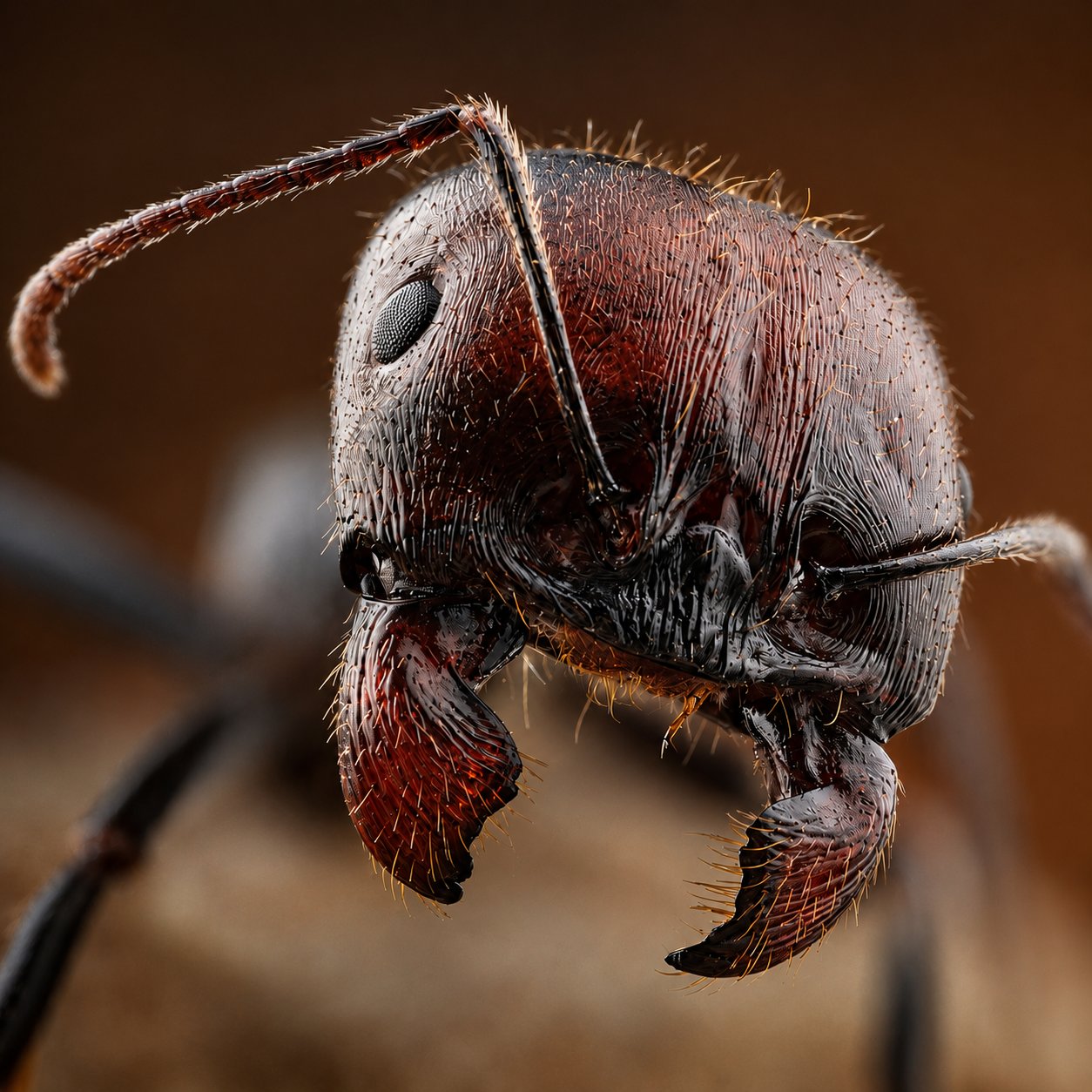
3. Lasius niger, the long game
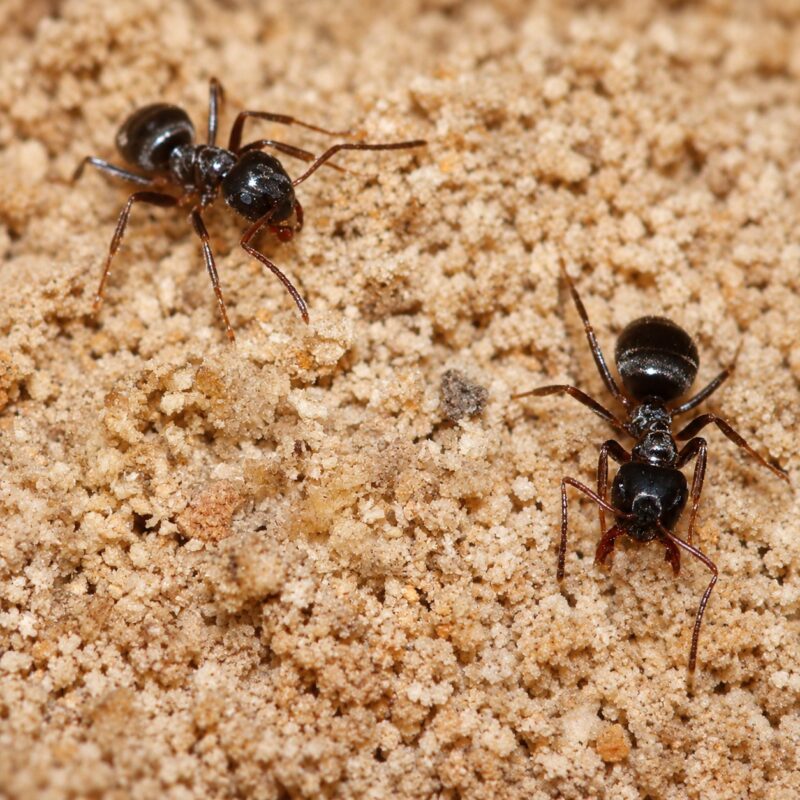
The black garden ant is the most common European species and the cheapest entry point. A single queen with a handful of workers costs under €20, the colony is hardy, and a healthy Lasius niger lineage can live 15+ years.
The trade-off is patience. The first six months feel slow, the queen builds a small worker force, hibernates, then explodes in year two. If you want activity in week one, this isn’t the species for you.
Hibernation is required. Without 3-4 months at 5-12°C in autumn-winter, the colony degrades within two years.
Skip if: you don’t have a cool space (garage, cellar, fridge corner) for winter.
→ See live Lasius niger colonies

4. Camponotus nicobarensis, the calm giant
Most Camponotus species are slow-growing, months between brood batches, a queen who lays cautiously. Nicobarensis is the exception. Multiple queens can coexist (polygyny), which means the colony grows faster than monogynous carpenter ants, and workers reach an impressive 7-12 mm.
The species is calm, they don’t sprint when you open the formicarium, they don’t pile out aggressively. A reasonable first carpenter ant if you’ve spent six months with harvesters and want to step up.
Skip if: you can’t maintain 24-28°C year-round.
→ See live Camponotus nicobarensis colonies
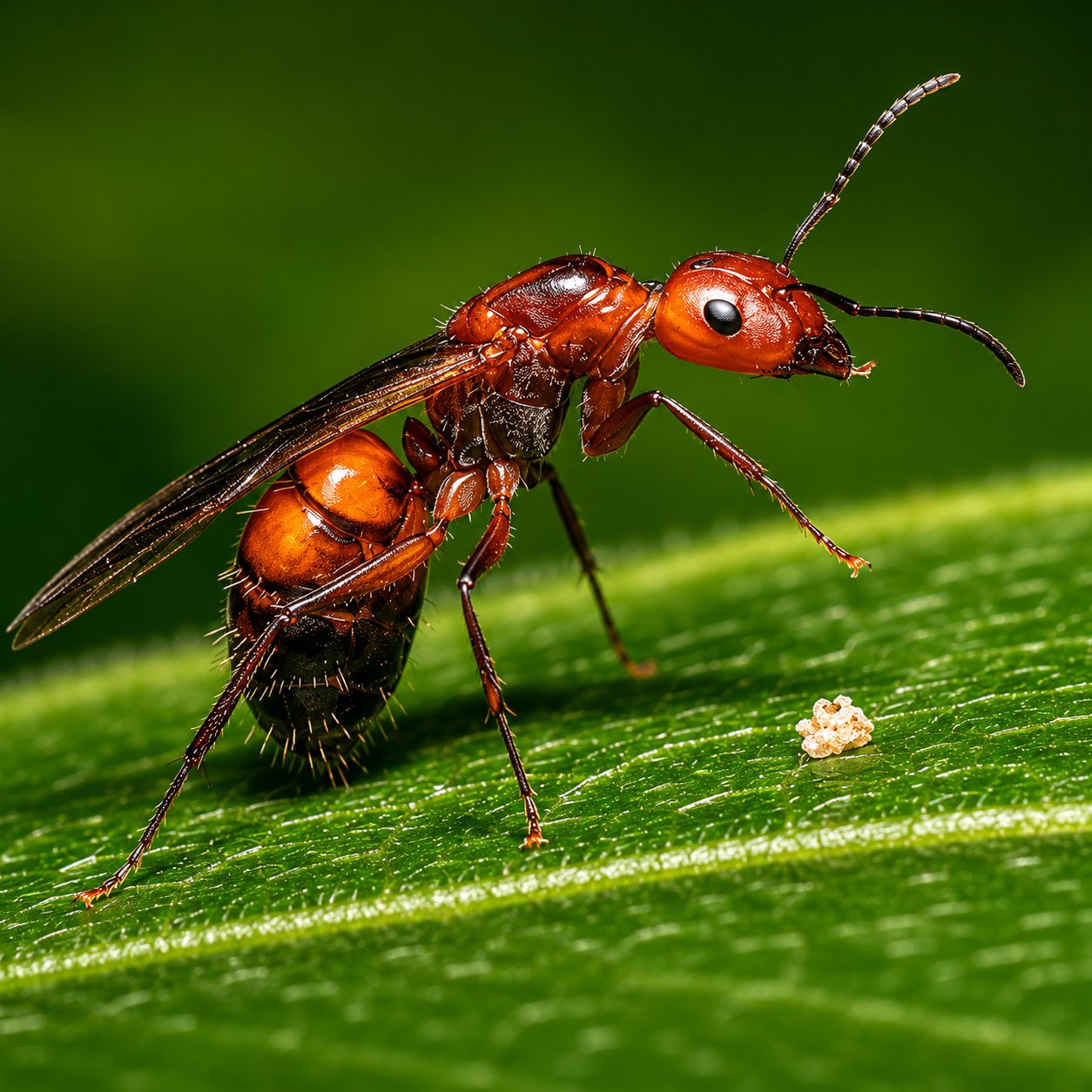
5. Crematogaster scutellaris, the acrobat
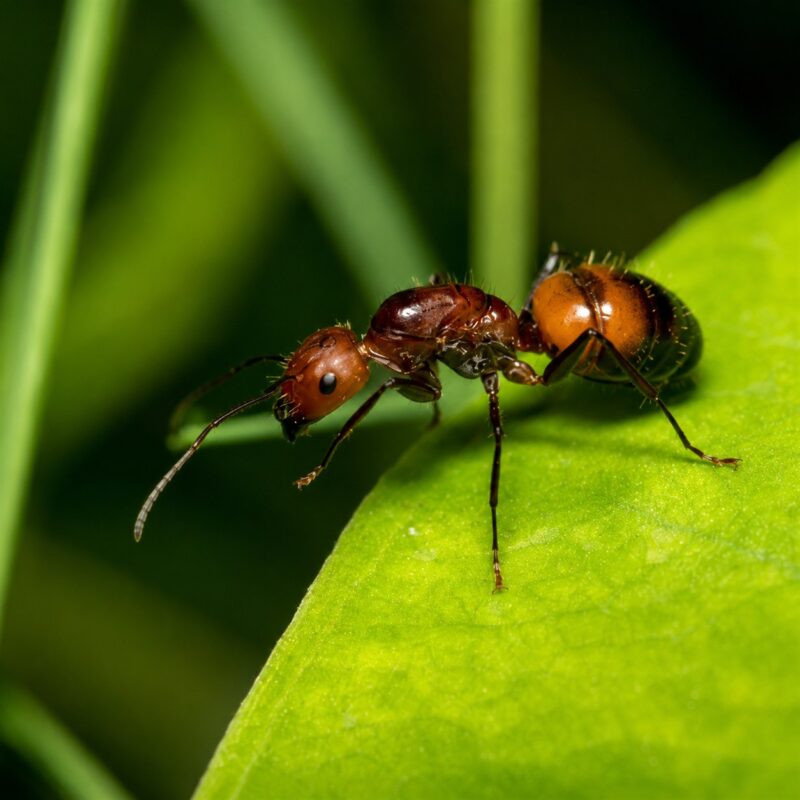
The signature move, abdomen flipped over the back, like a tiny scorpion, makes Crematogaster scutellaris the most-photographed beginner ant on Reddit. Colonies are active, the workers patrol every inch of the arena, and they take both sweet and protein food without drama.
One catch: they’re escape artists. If your formicarium has any gap above 0.5 mm, expect to find acrobat ants on your ceiling within a week. Talc or PTFE barrier is mandatory.
Skip if: you don’t trust your formicarium’s seal.
→ See live Crematogaster scutellaris colonies

6. Pheidole pallidula, majors and minors
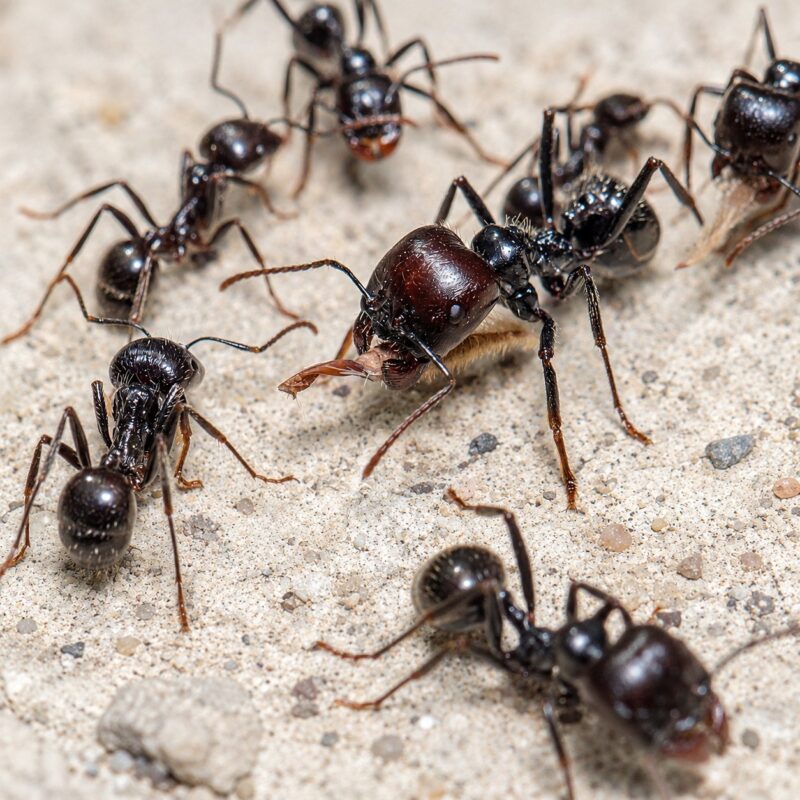
Pheidole pallidula develops two visibly different worker castes: regular minors (small, fast) and majors with disproportionately huge heads, used to crack hard seeds and intimidate intruders. Watching a 6 mm major guard a tunnel while 3 mm minors stream around it is one of the most rewarding observations in the hobby.
Why only ★★★ ease? They’re tiny, fast, and prolific, a colony of 500 workers happens within a year, and if your formicarium isn’t sized for that growth, you’ll be moving them mid-year (which always carries risk).
Skip if: you want to keep the same setup unchanged for years.
→ See live Pheidole pallidula colonies

What about Tetramorium, Formica, Polyrhachis?
Good species, not on this list. Tetramorium colonies bite (mild but persistent), Formica fusca needs hibernation conditions most apartments can’t deliver, and Polyrhachis needs higher humidity than a beginner can reliably maintain. They become great second or third colonies once you’ve kept harvesters or carpenter ants for a year.
Your next step
Pick one species from the table, then prepare the environment before the colony arrives. A formicarium, sand, a hygrometer and some decorations take 1-2 weeks to source, and ants shipped to an unprepared setup is the most common avoidable mistake we see in support tickets. The pre-purchase setup checklist walks through it.
If you’re still torn between two species, write to us, we ship every species above and we’ll tell you which fits your apartment, schedule, and patience level honestly.
Did you like this article?
Thanks for your feedback!