




The Incredible Diversity of Ants


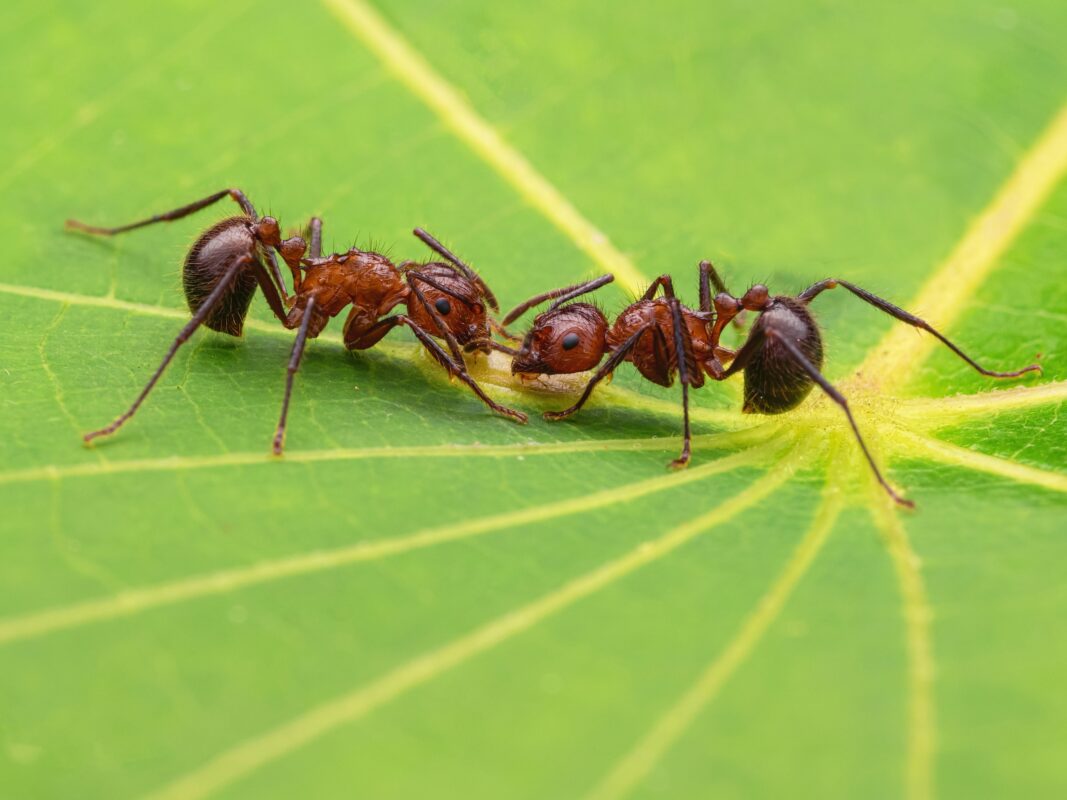
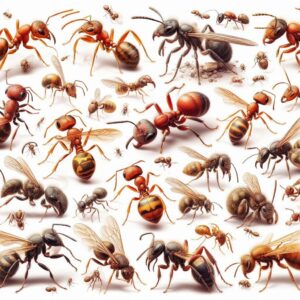
The diversity of ants is hard to grasp at human scale. Fourteen thousand described species. Probably another ten thousand undescribed. Bodies ranging from under a millimetre to thirty millimetres. Colonies of dozens or of billions. Diets from leaves to other ants.
The way to understand the range is chronologically: what nature tried, when it tried it, and what stuck. Below is the 140-million-year timeline of ant evolution, with the moments that produced today’s range of species.
140 million years ago: the wasp-ant transition
The earliest ants appear in the fossil record during the late Cretaceous, around 140 million years ago. They are not yet recognisably the ants we know. Early lineages had wasp-like body proportions, weak social structure, and lived in small colonies of a few dozen individuals.
The defining moment of ant evolution was the appearance of permanent sterile worker castes, not the appearance of sociality (other Hymenoptera have that). The earliest ant lineages still had reproductive flexibility among workers; the more derived lineages lost it entirely. This is when ants stopped being solitary insects with social tendencies and became true superorganisms.
100 million years ago: the angiosperm explosion
The diversification of flowering plants in the Cretaceous transformed ant evolution. New floral resources (nectar, fruit, pollen) created new niches for sugar-feeding ants. The structural complexity of flowering plant communities created new microhabitats: leaves, bark, fallen litter, soil layers. Ant lineages diversified rapidly into these niches.
By the end of the Cretaceous, the major modern subfamilies were already present, including Ponerinae (primitive predators, today represented by Harpegnathos, Odontomachus, and others), Myrmicinae (the most diverse modern subfamily, including Pheidole, Messor, Tetramorium), and the precursors of what would become Dolichoderinae and Formicinae.
66 million years ago: the K-Pg boundary
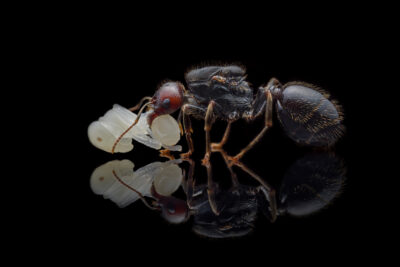
The mass extinction that ended the dinosaurs did not end the ants. Existing ant lineages survived, and the resulting ecological reset gave them new opportunities. In particular, the spread of grasslands and the diversification of mammalian herbivores created new habitat structures that favoured certain ant lineages.
The harvester ants (Messor and others) likely diversified in this period, evolving the granivorous lifestyle that allowed them to occupy semi-arid grassland and steppe ecosystems where other ants struggled.
50 million years ago: fungus farming begins
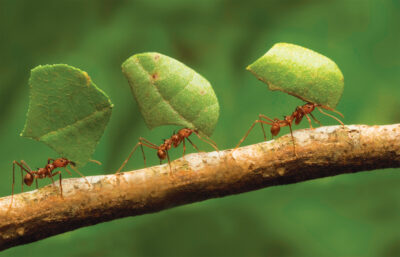
The leafcutter and fungus-growing ants (Attini tribe) emerged around 50 million years ago in South America. The relationship with cultivated fungus is one of the longest-established mutualisms in the animal kingdom. Modern Atta and Acromyrmex colonies show specialised behaviours (leaf selection by chemical assay, antibiotic management of pathogens, fungal garden curation) that took tens of millions of years to evolve.
The fungus-growing lineage is largely confined to the Neotropics today. They are spectacular but require conditions captive keepers struggle to provide, so they are rare in the pet trade.
30 million years ago: the supercolony origin
Several ant lineages independently evolved the ability to form supercolonies: networks of nests where workers from any nest are accepted by any other nest within the network. This breaks the normal ant rule of nest identity and inter-colony aggression.
Modern examples include the Argentine ant (Linepithema humile), which has formed a single supercolony spanning the Mediterranean coast for thousands of kilometres, and several invasive species (red imported fire ant, crazy ants) that show similar behaviour.
The supercolony strategy is enormously successful for invasive species, but it produces ecosystems with collapsed biodiversity wherever it spreads.
20 million years ago: the desert specialists
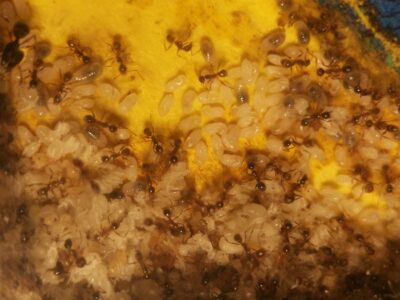
The diversification of Cataglyphis (Saharan and Asian deserts), Pogonomyrmex (American deserts), and Cataulacus (African dry regions) happened in this period. Each lineage independently evolved the same suite of traits (thermal tolerance, fast locomotion, polarised-light navigation) through convergent evolution. Different starting genetics, same problem, similar solutions.
This is one of the cleanest examples of convergent evolution in any animal group.
5 million years ago: modern biogeography settles
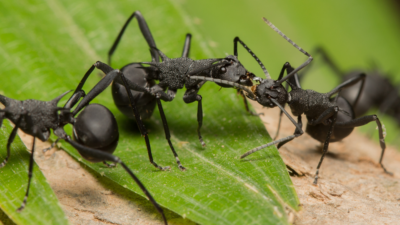
By 5 million years ago, the global distribution of ant lineages had largely settled into what we see today. The major biogeographic zones (Holarctic (Europe + North America), Neotropical (Central + South America), Afrotropical (sub-Saharan Africa), Indomalayan (South + South-East Asia), Australasian) each developed distinctive ant faunas through long isolation.
Today’s biogeography:
- Holarctic: Lasius, Formica, native Camponotus, Messor structor, Tetramorium, temperate species, often hibernating
- Neotropical: Atta, Acromyrmex (leafcutters), Paraponera (bullet ant), Gigantiops, army ants (Eciton)
- Afrotropical: driver ants (Dorylus), weaver ants (Oecophylla), Cataglyphis, Atta-relatives
- Indomalayan: Dinomyrmex, tropical Pheidole, weaver ants, Harpegnathos
- Australasian: Myrmecia (bull ants), Iridomyrmex, distinct radiation of Polyrhachis
The recent past: human impact
Globalisation has scrambled the natural distribution. Invasive ant species (Argentine ant, red imported fire ant, Asian needle ant, crazy ant, electric ant) now occupy ecosystems thousands of kilometres from their native ranges. Local biodiversity has collapsed in many of these areas.
Pest control and climate change continue to reshape ant distribution. Some lineages are expanding (Argentine ants extending poleward as climate warms); others are contracting (specialist mountain species losing habitat).
Why so many species?
Several reasons compound:
- Long evolutionary history, 140 million years of speciation produces a lot of species, even at modest speciation rates.
- Small body size, small animals can occupy more distinct microhabitats than large ones, supporting more species in the same physical space.
- Eusociality enables specialisation, a colony can specialise on a narrow niche because the queen and workforce share genetics; the entire colony succeeds or fails as a unit.
- Global presence, ants colonised every continent except Antarctica long ago, so independent radiations occurred in every region.
- Co-evolution with plants and fungi, every plant lineage, every fungal lineage, every other insect lineage potentially supports a specialist ant lineage. The interaction web is huge.
The result is the most species-rich group of insects per kg of body mass on Earth. More species than mammals, birds, reptiles and amphibians combined.
If a region or species in this timeline caught your attention, the species-specific guides cover them in more depth. Browse the live colony shop by region and lifestyle, or read the 50 ant facts for the more specific points across this evolutionary range.
Did you like this article?
Thanks for your feedback!