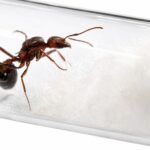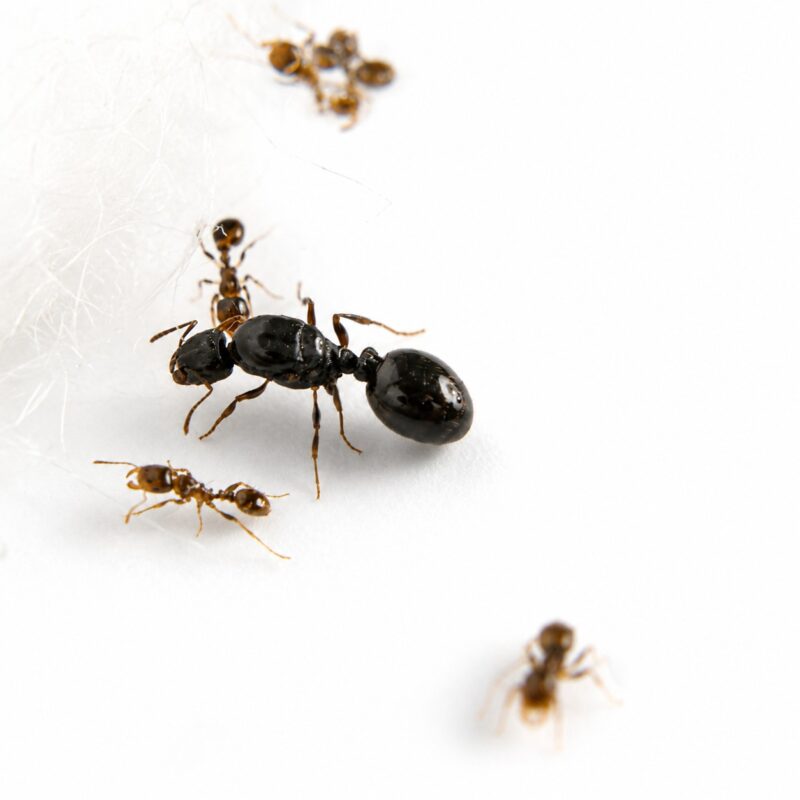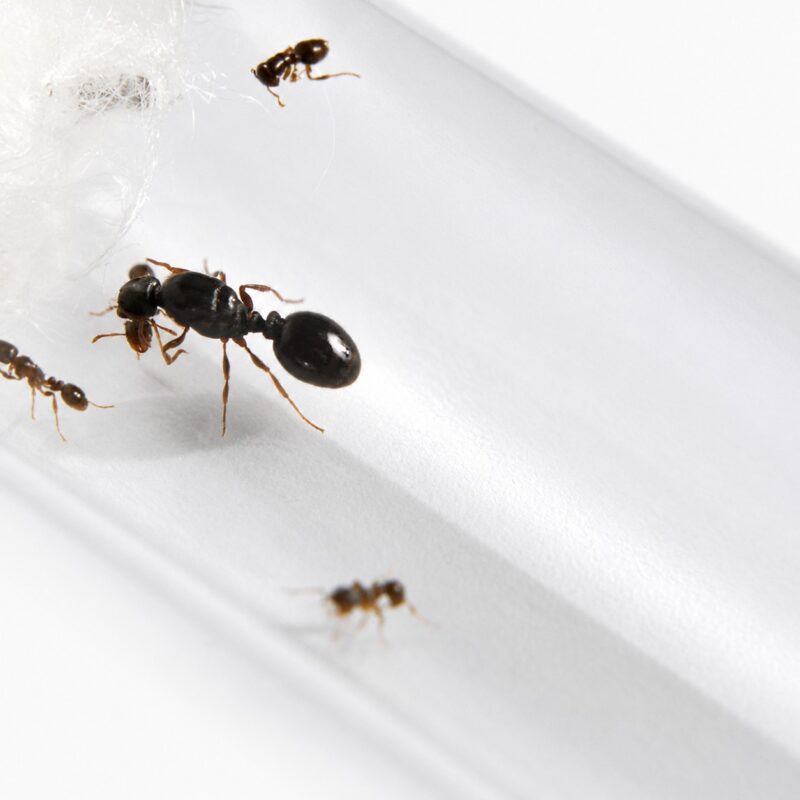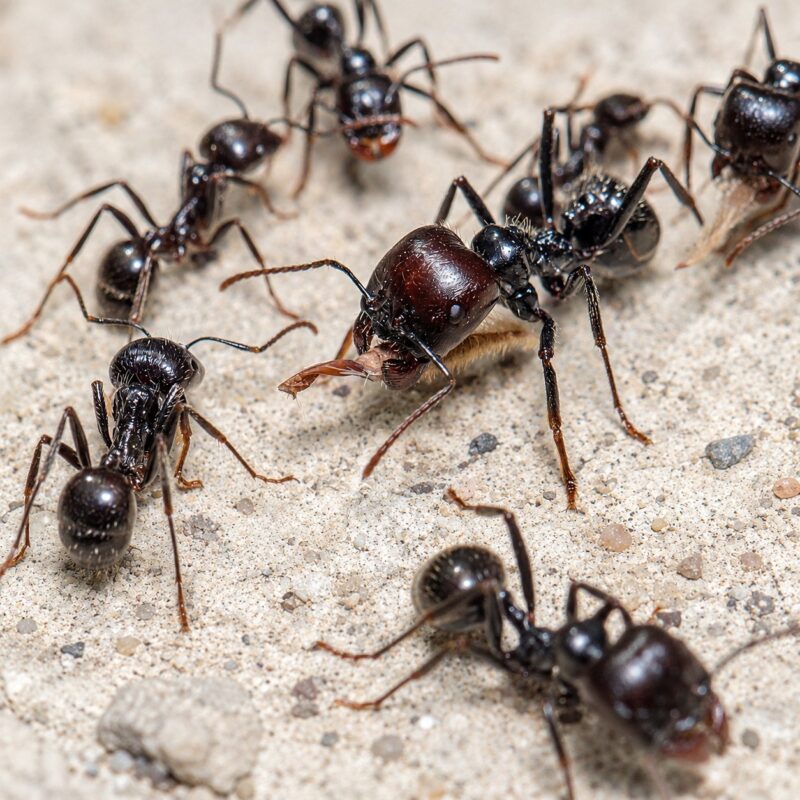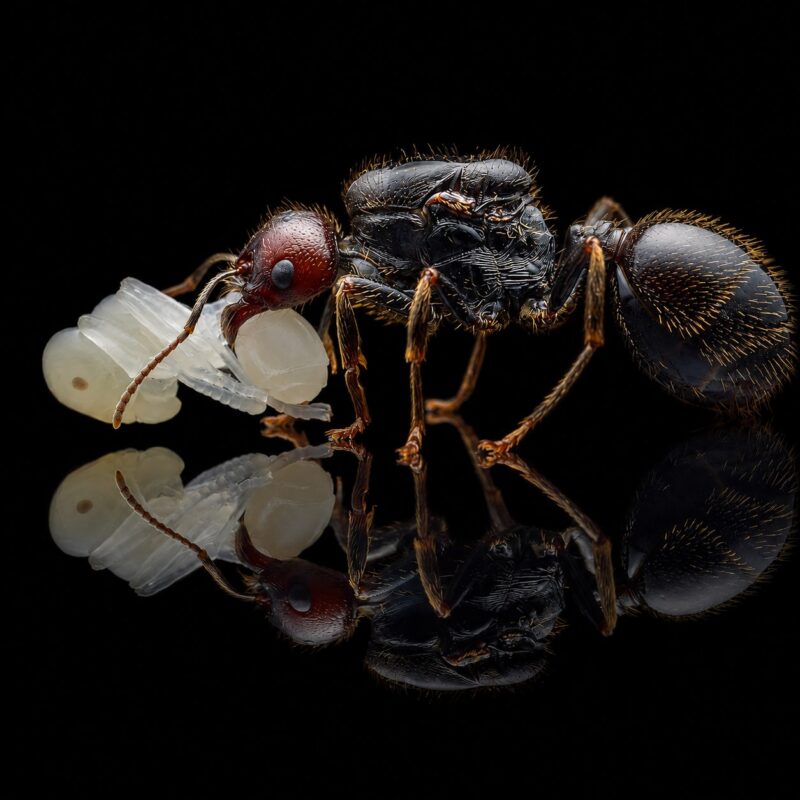

Novomessor albisetosus
369,90 zł
Live Queen Guarantee
Heat Pack & Summer Cooling
Fertilised Queen in Every Colony
Ships Within 24 h
Free Care Guide
24/7 Expert Support
Description
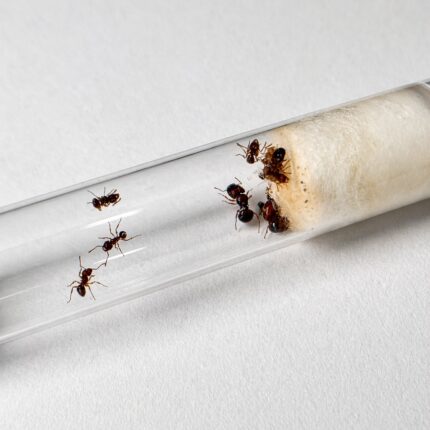
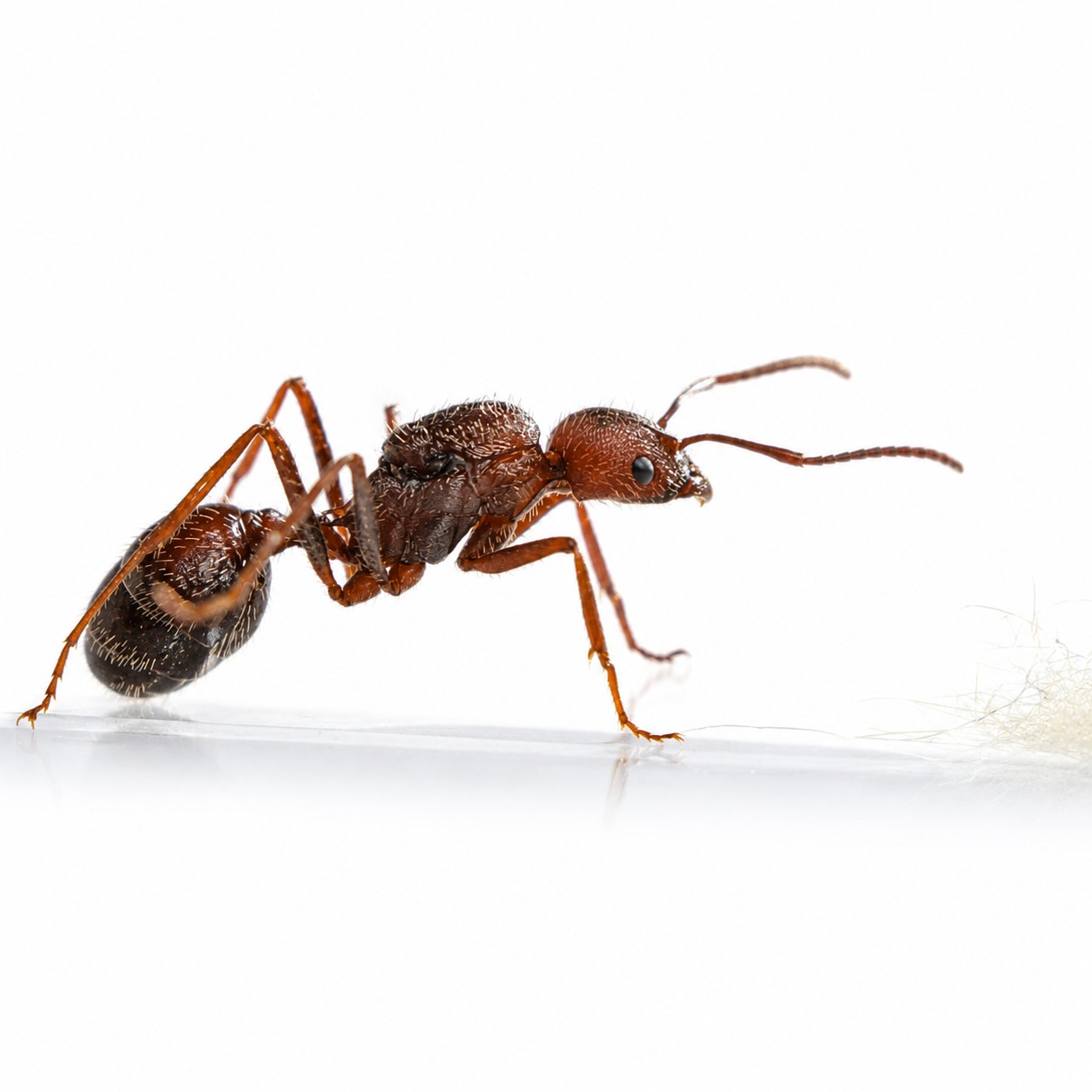
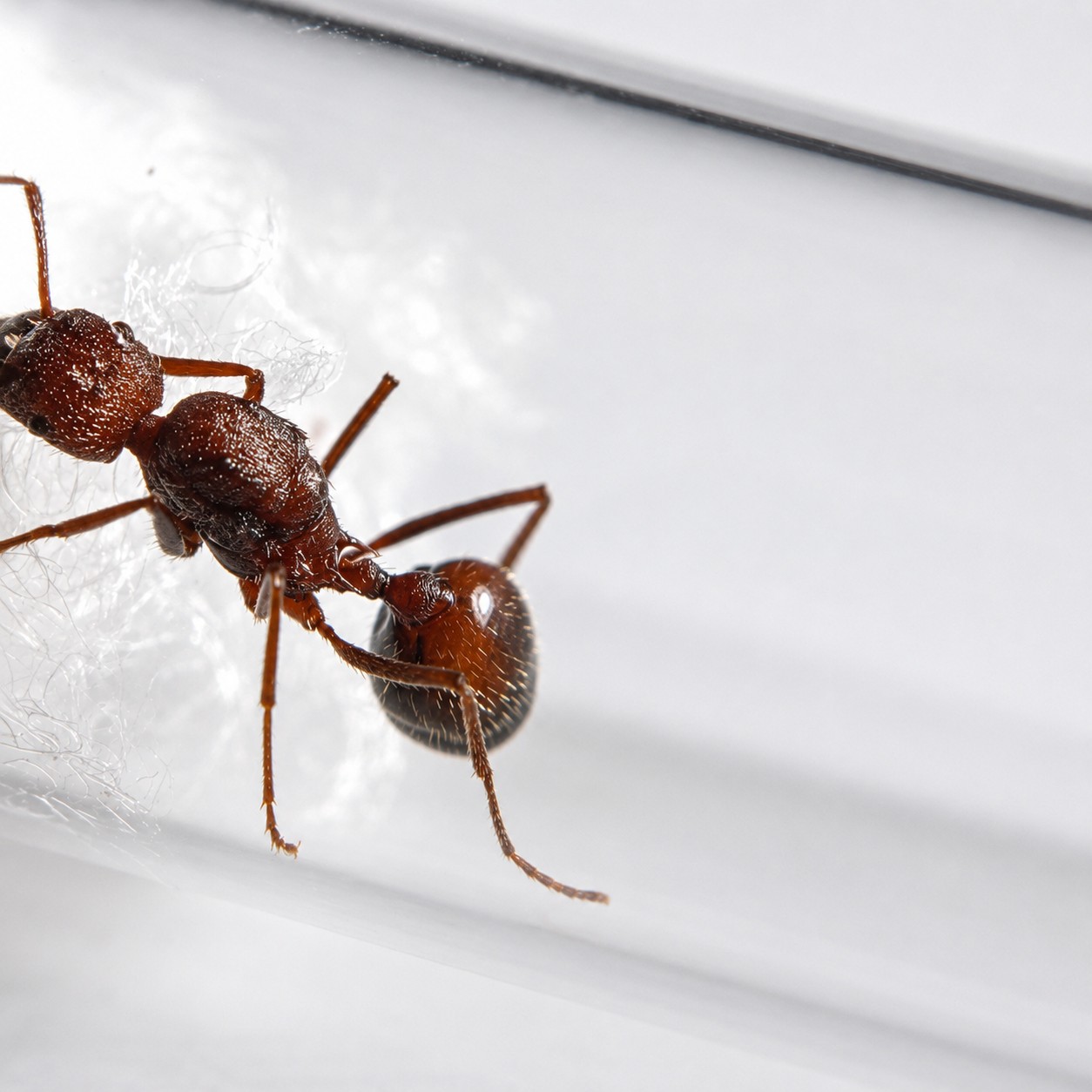
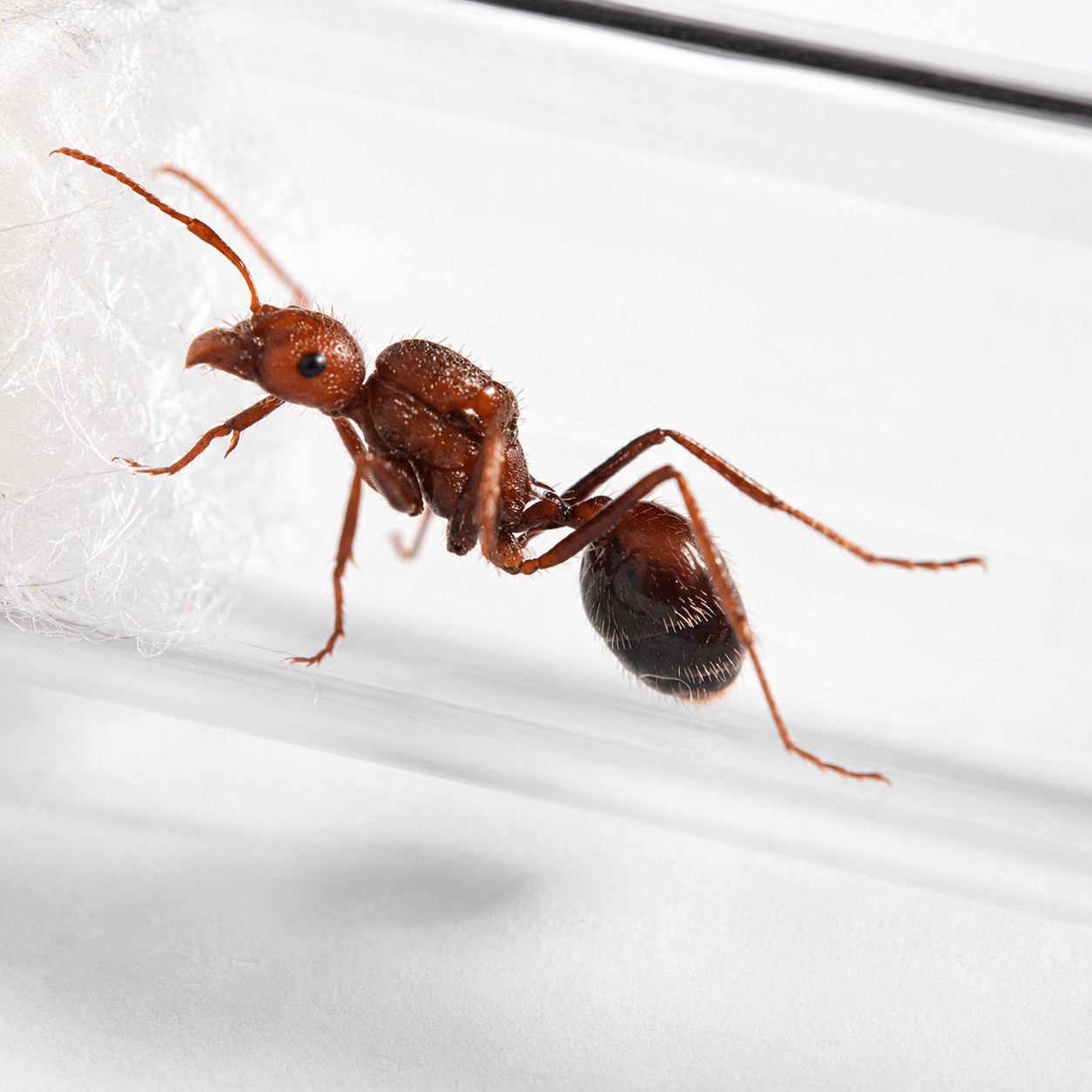
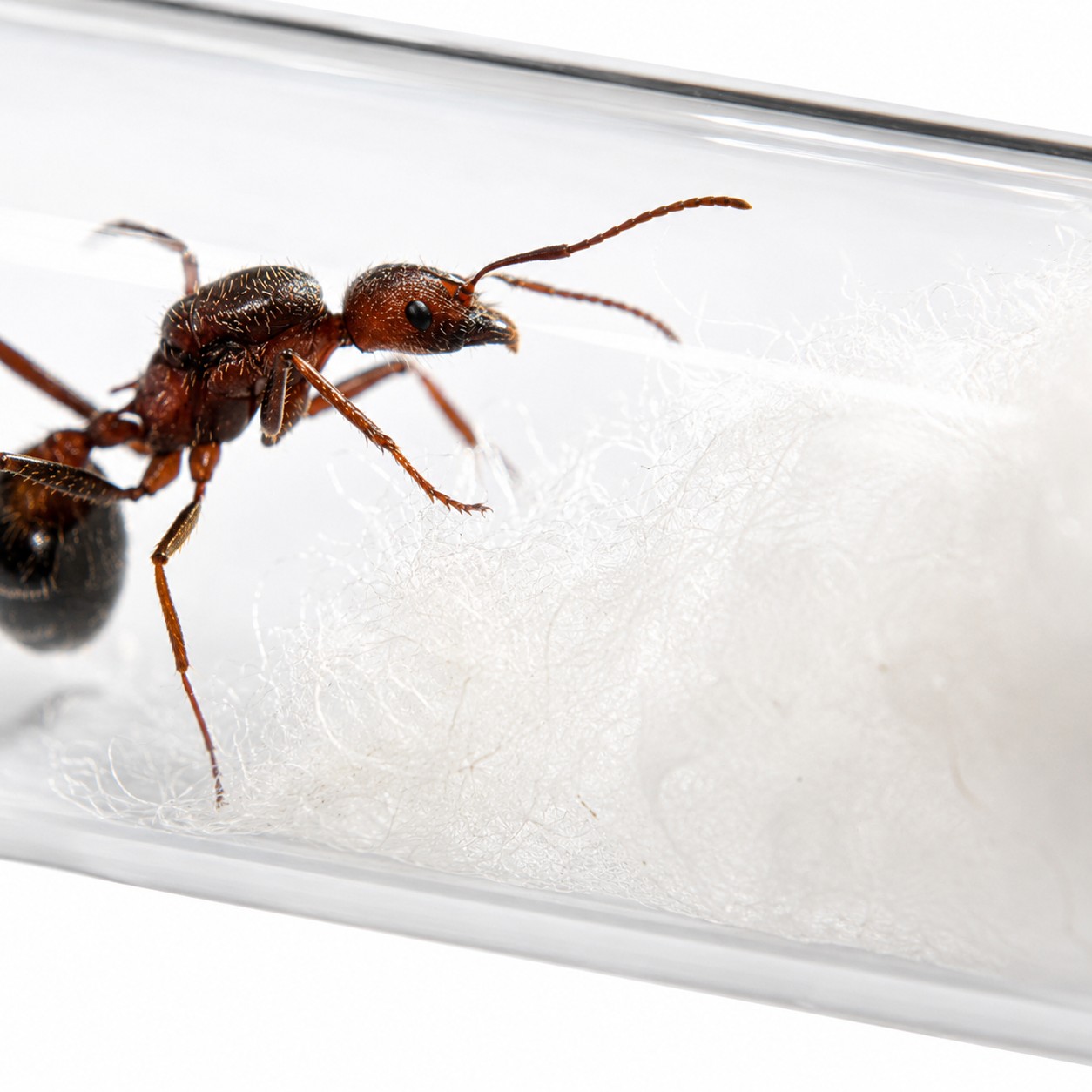
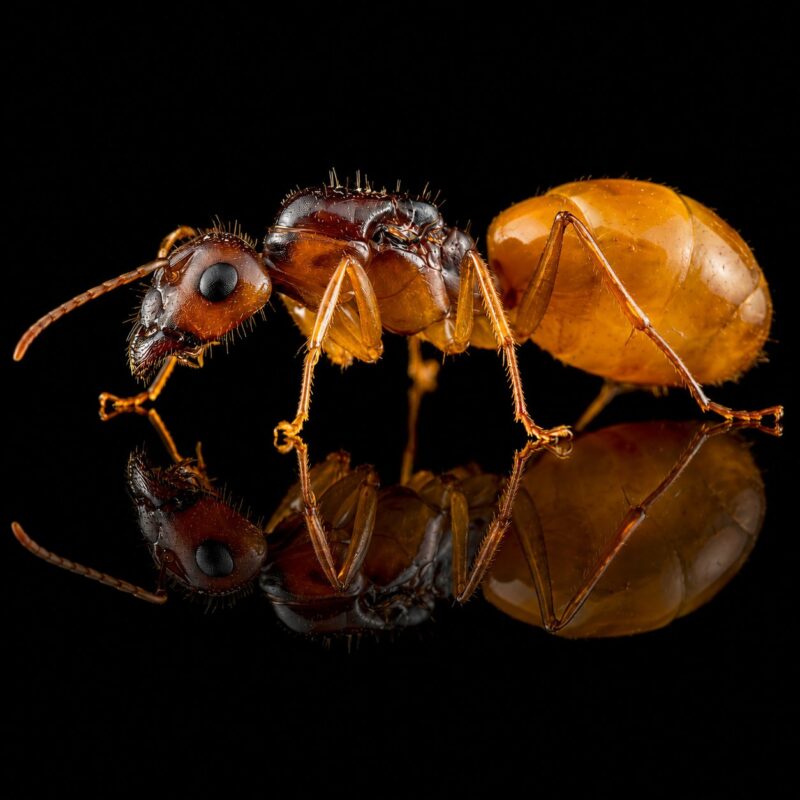
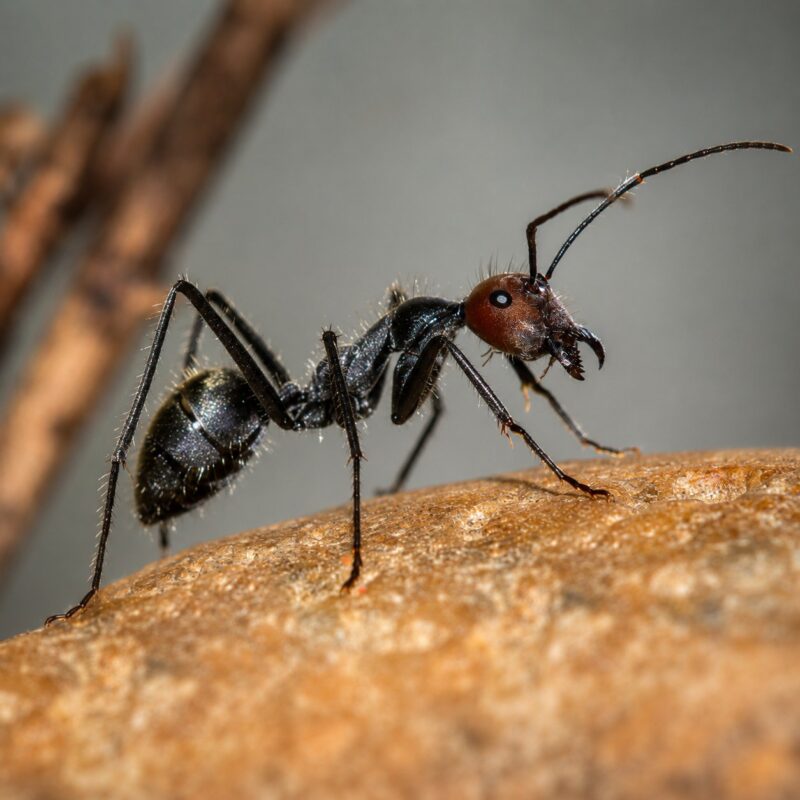
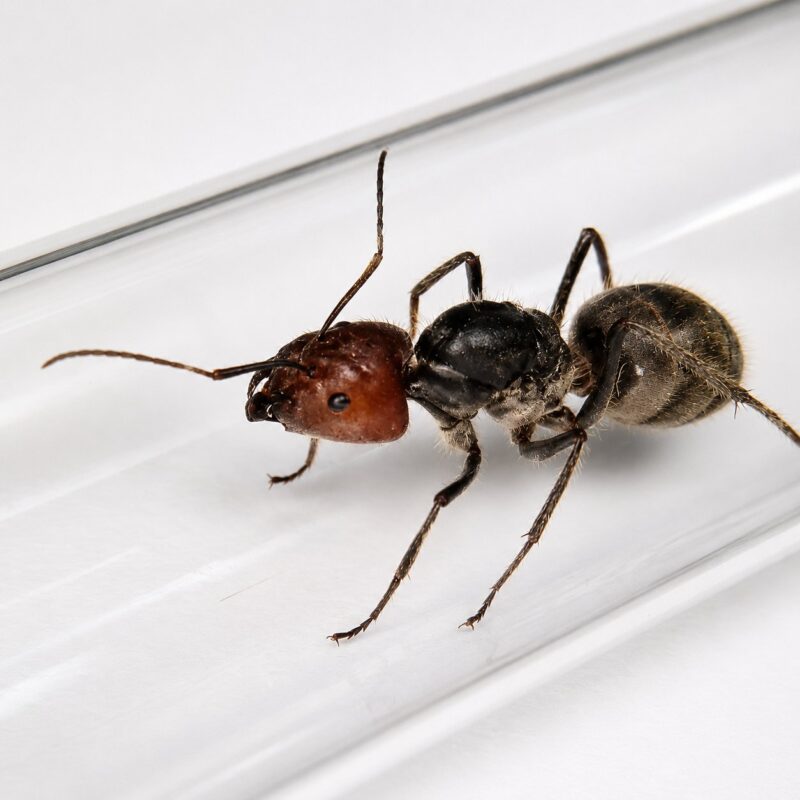
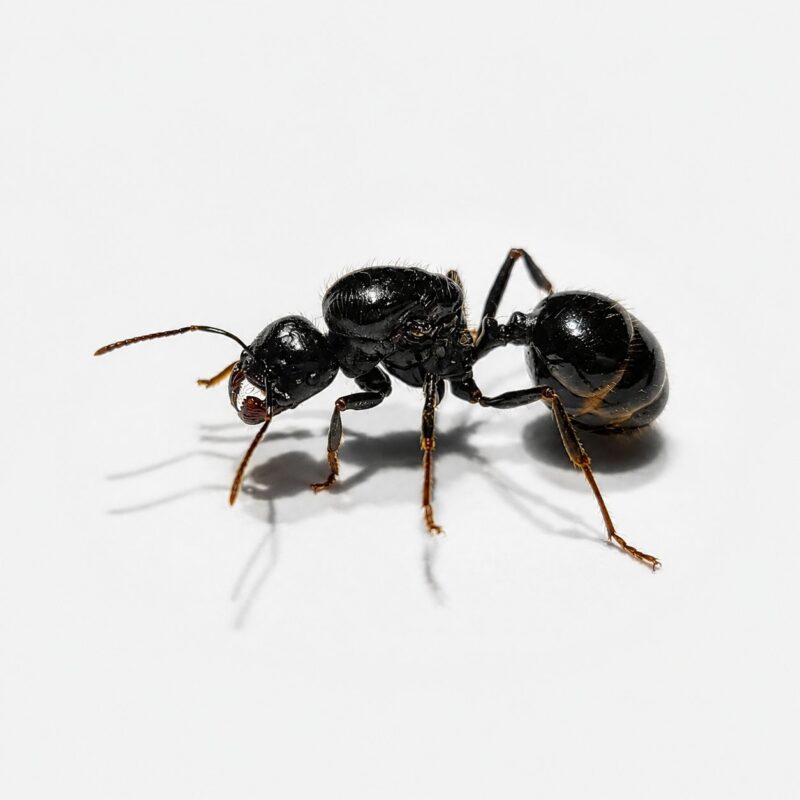
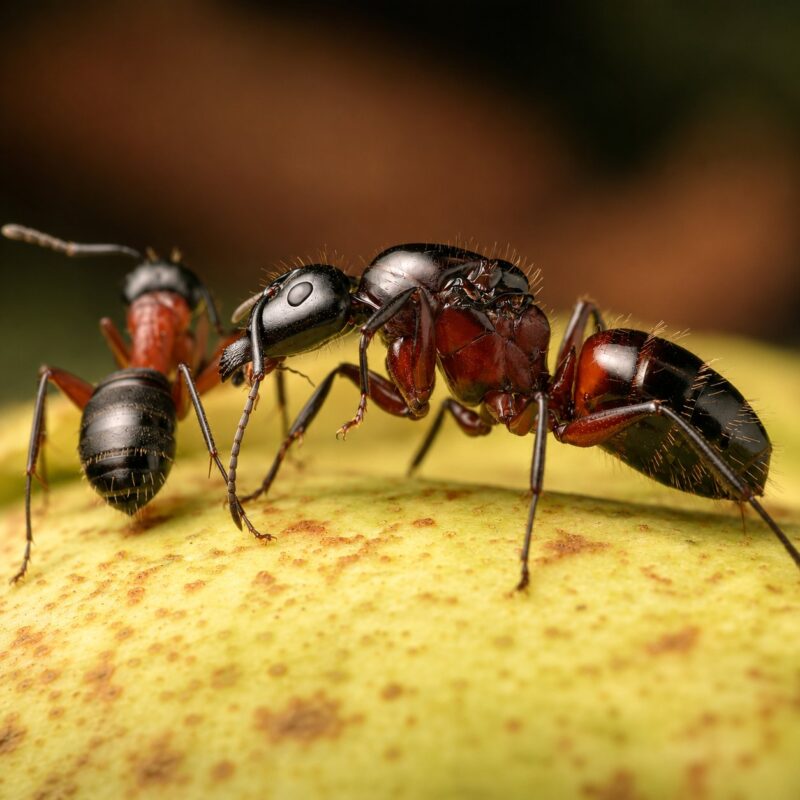
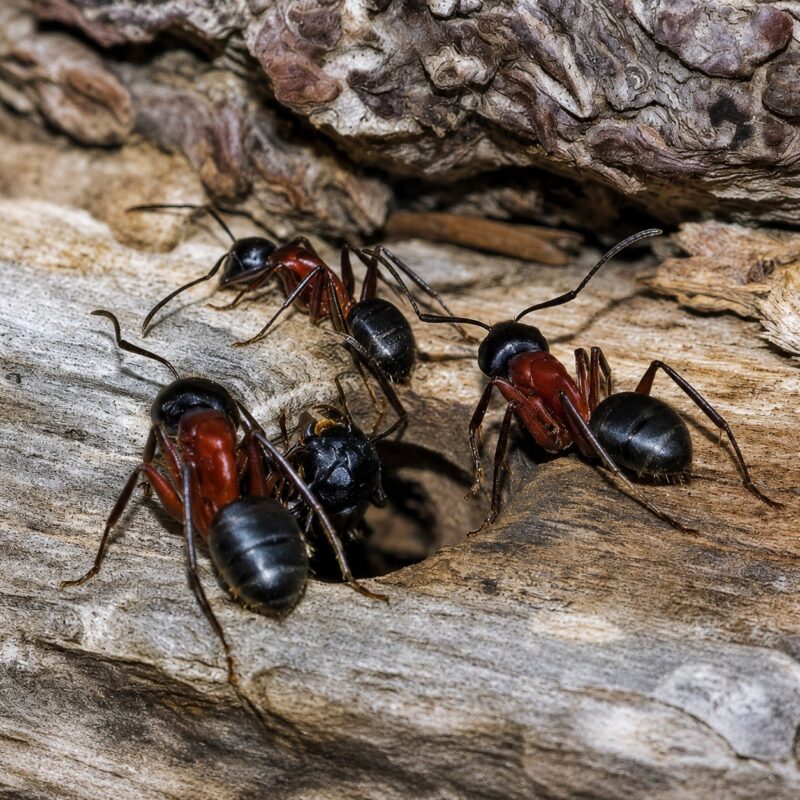
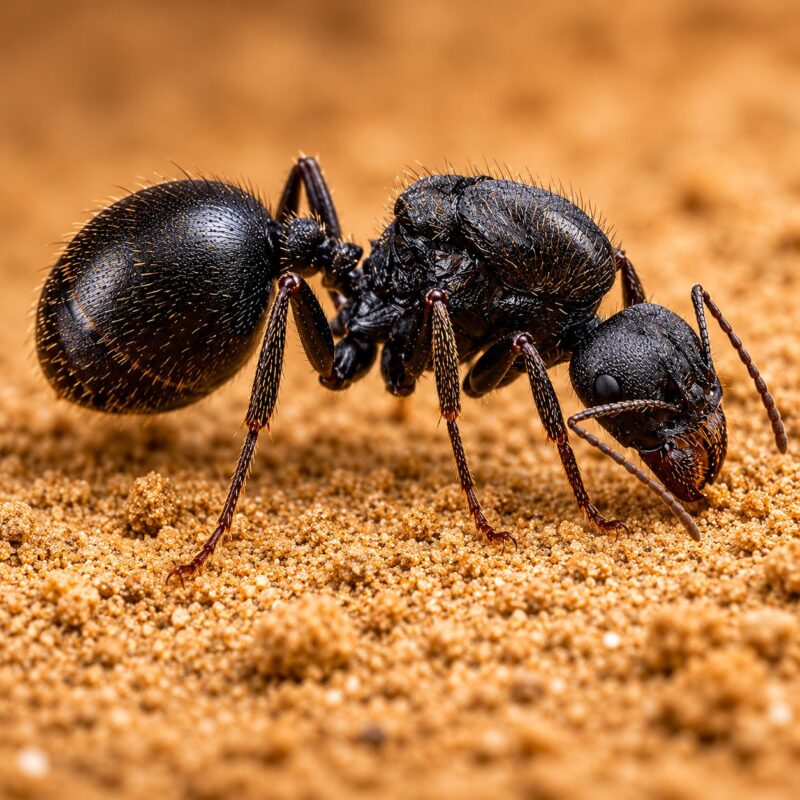
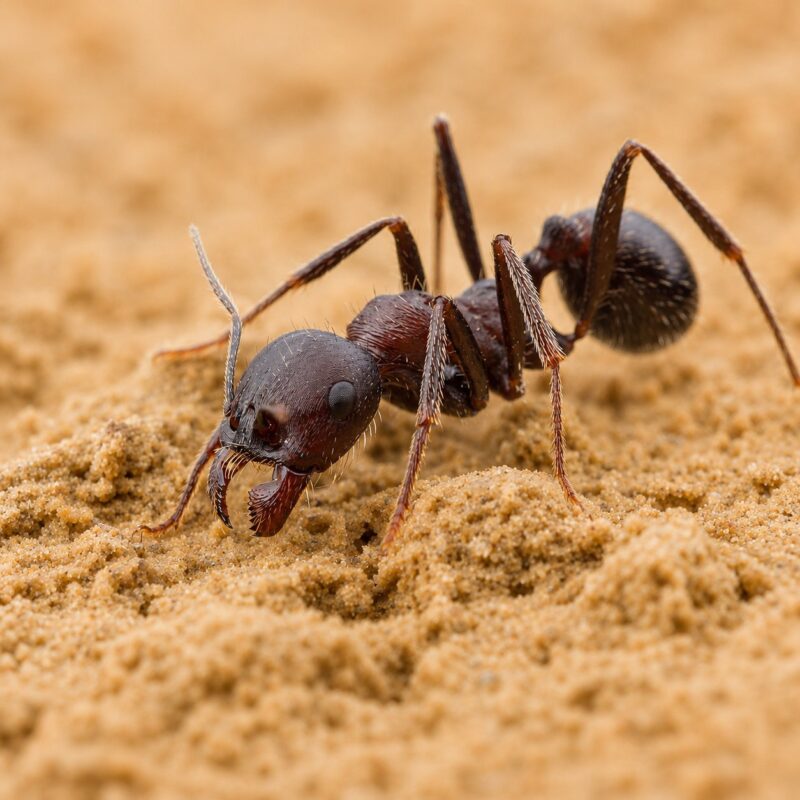
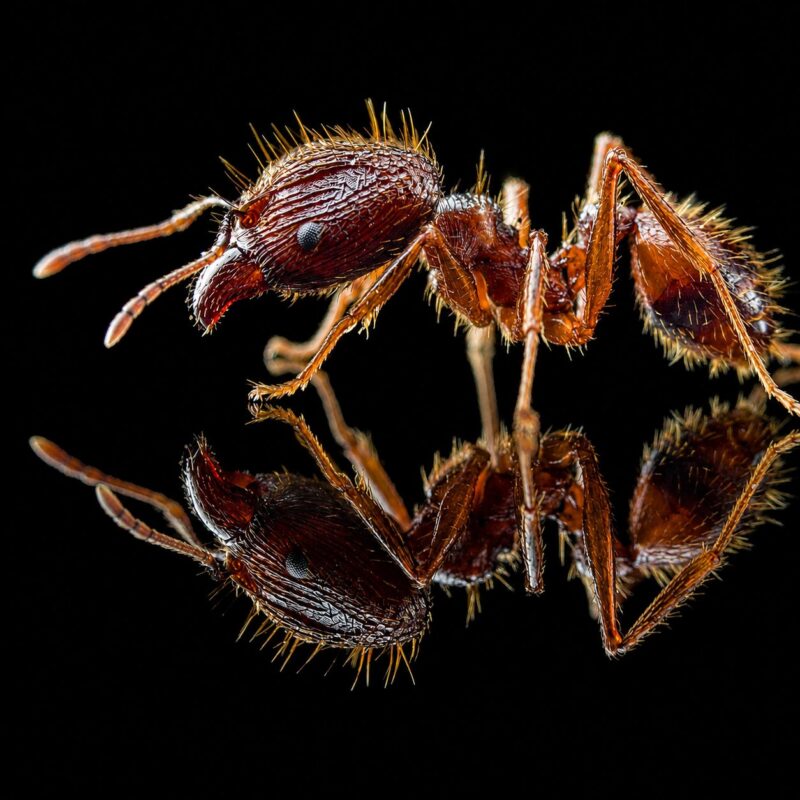
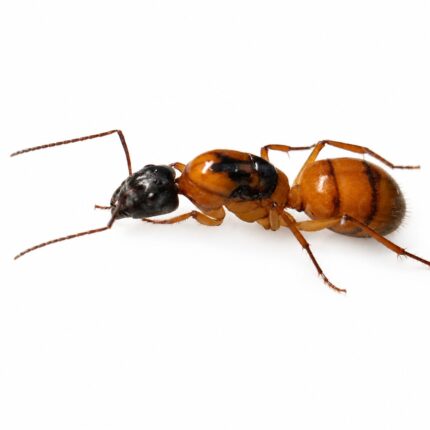
Novomessor albisetosus is a long-legged, hairy desert harvester with a rusty red body, a fast-growing scavenger that takes almost any food and needs no winter rest. An easy, characterful colony for a first-time keeper who can keep it warm. Start yours at ANTonTOP.
Free shipping across Europe over 1299 zł.
DHL / InPost / EMS · ships the EU & worldwide.
Beginner · Q 12-14 mm / W 6-8.5 mm · Up to ~5,000 workers · No hibernation (kept warm year-round) · Omnivore / scavenger · Southwestern USA & Mexico · No functional sting; bites
Additional information
| Origin | |
|---|---|
| Ant size | |
| Hibernation | |
| Behavior | |
| Sting |
No sting |
| Keeping difficulty |
Novomessor albisetosus — Long-legged desert harvester ant
| Origin | Southwestern USA (Texas, New Mexico, Arizona) and Mexico |
|---|---|
| Difficulty | Beginner |
| Colony form | Monogyne (one queen) |
| Max workers | Up to ~5,000 |
| Queen | 12-14 mm |
| Worker | 6-8.5 mm; monomorphic |
| Soldier / major | No distinct soldier caste (workers monomorphic) |
| Founding | Claustral |
| Temperature | 27-32 °C (heat-loving) |
| Humidity | 60-75% |
| Hibernation | None — kept warm year-round |
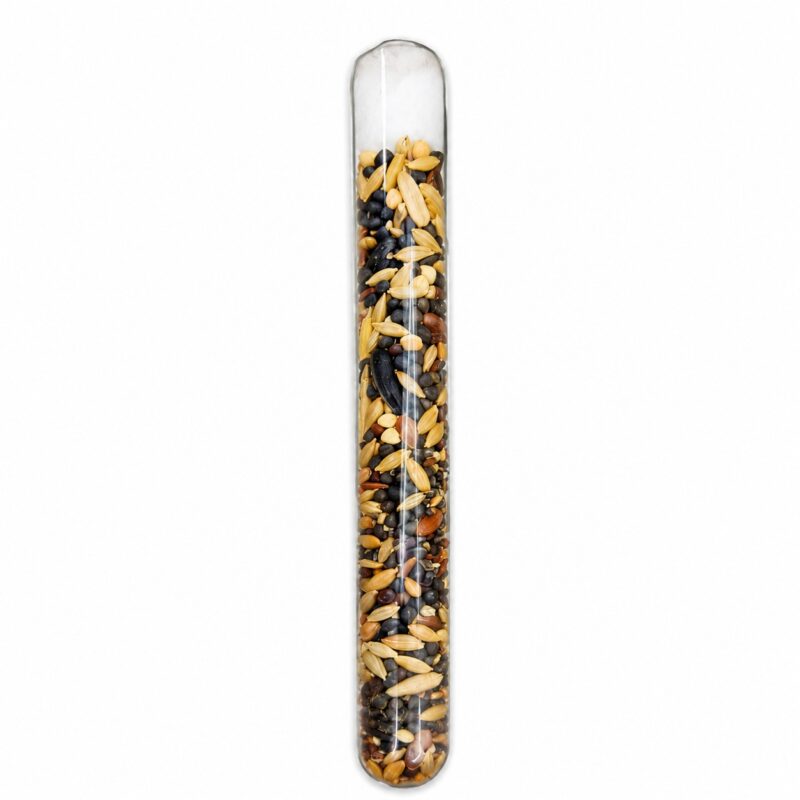
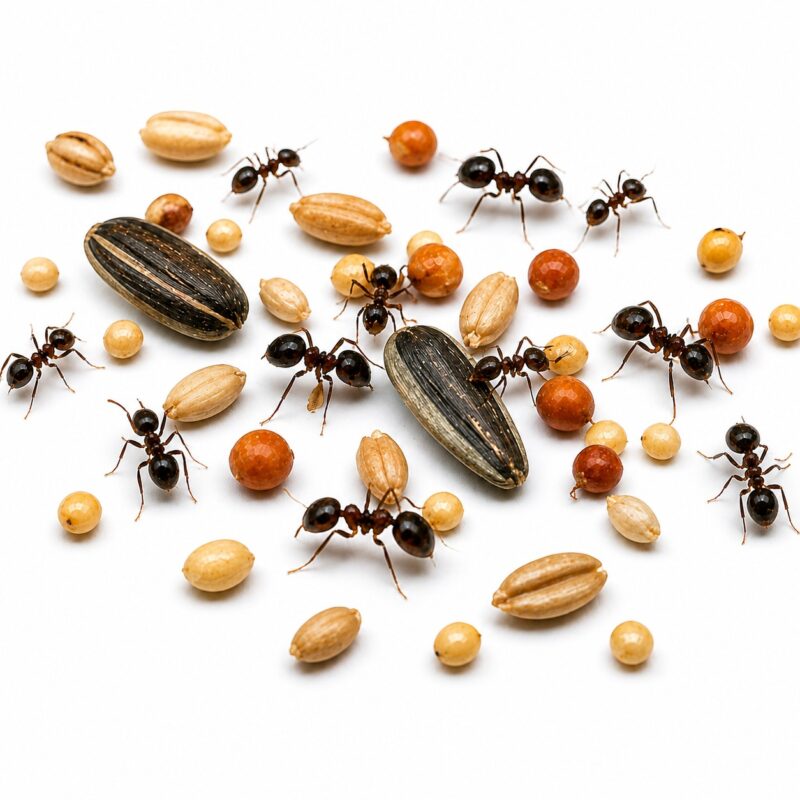
| Diet | Omnivore / scavenger: insects and sugars, plus a few soft seeds |
| Sting / bite | No functional sting; bites |
| Egg to first worker | ~4-6 weeks (heat-dependent) |
| Queen lifespan | – |
| Nuptial flight | – |
| Activity | Crepuscular to diurnal (active in the cooler morning and evening) |
Novomessor albisetosus is a long-legged, hairy scavenger ant from the deserts of the southwestern USA and northern Mexico. It founds fully claustral, grows quickly in the warmth, and takes almost any food you offer, which makes it a forgiving and rewarding colony for a first-time keeper who can hold a warm setup.
Why this species
This is one of the more characterful desert ants you can start with. The workers run on long legs and are covered in fine pale hairs, giving them a leggy, alert look as they patrol the arena. They are monomorphic, so every worker is roughly the same size, and the colony gets its interest from behaviour rather than a big soldier caste. Founding is claustral and growth is fast when kept warm, so you see workers within about a month and a busy nest before long. It is not fussy about food and does not need a winter rest, which removes two of the things that trip up new keepers. Give it heat and steady feeding and it largely looks after itself.
Feeding
An easy-going scavenger that takes insects, sugars, and a few soft seeds. Offer a constant carbohydrate source alongside regular protein from live or freshly thawed insects, and drop in the occasional soft seed. It is an opportunist rather than an active hunter, so it will happily clean up feeders that other ants ignore.
| Crickets | ★★★ |
| Cockroaches (Dubia / Turkish) | ★★★ |
| Mealworms | ★★★ |
| Sugar water / honey water | ★★★ |
| Houseflies | ★★ |
| Fruit flies | ★★ |
| Ant nectar / sugar jelly | ★★ |
| Soft fruit | ★ |
| Boiled egg yolk | ★ |
| Soft seeds | ★ |
| Hard seeds | ✗ |
★★★ readily · ★★ moderately · ★ occasionally · ✗ not eaten
Housing & formicarium
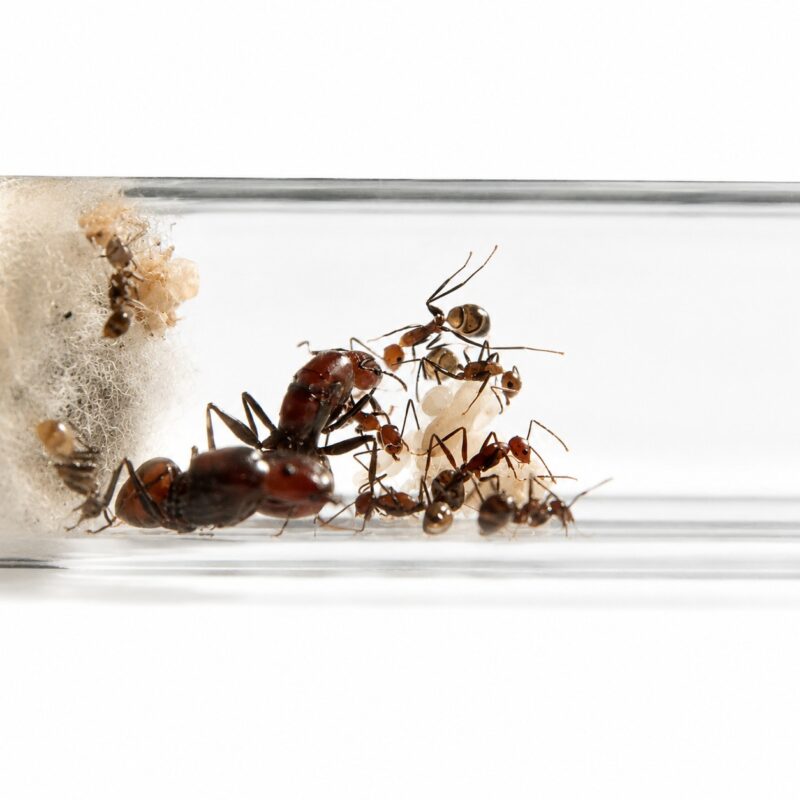
Start the founding queen in a water test tube and leave her undisturbed through the first brood, since she founds claustral and raises the first workers on her own reserves. As the colony grows, move it into a firm gypsum or aerated-concrete nest with a warm, well-drained layout, paired with a spacious outworld for foraging and feeding. Seal every open rim with fluon (PTFE), oil, or a talc-and-water mix and fit a tight, fine-mesh lid, because active desert foragers are persistent at finding a way out. ANTonTOP formicaria and starter kits supply a scaled nest, arena and barrier in one ready set.
Climate & wintering
Keep this ant warm. Aim for 27-32 °C with humidity around 60-75%, giving a moist zone and a drier corner so the colony can choose. Heat one side of the nest only and leave a cooler side, rather than holding the whole setup at one temperature. This is a desert species, so it does not hibernate: keep it warm year-round and do not cool or refrigerate it. There is no winter rest to plan, which is one less thing to get wrong.
Growth forecast + what you receive
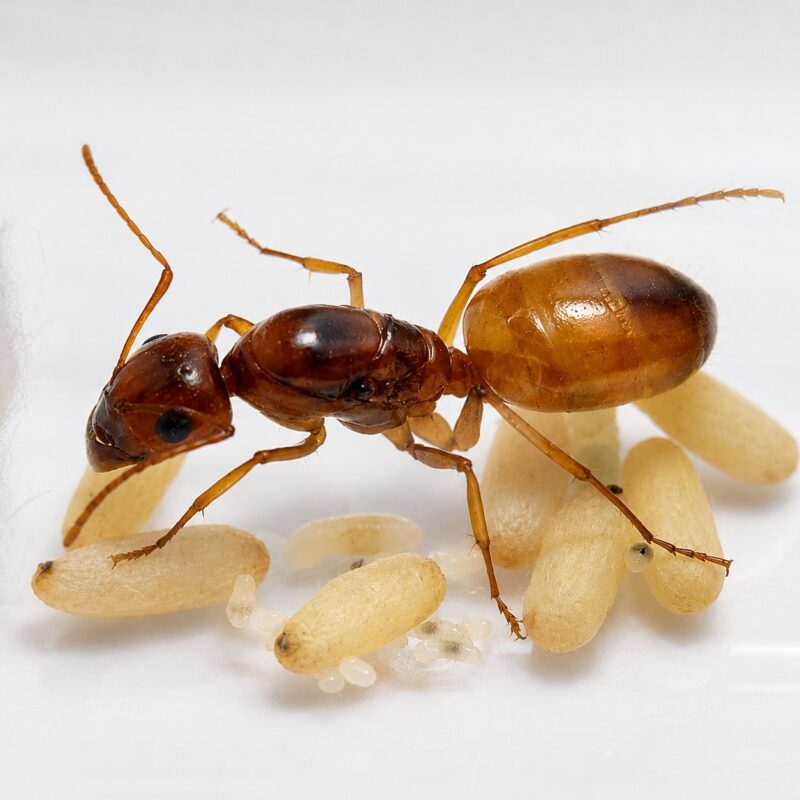
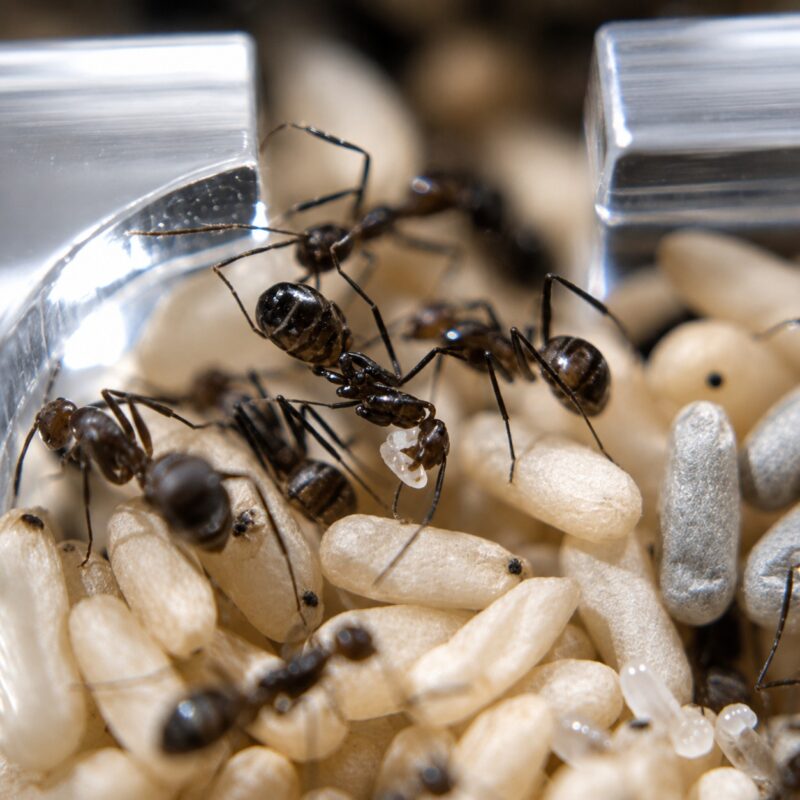
Growth is fast for the hobby. With claustral founding and steady warmth, expect first workers in about four to six weeks, and a colony that can climb toward several thousand workers over time. Keep the heat up and the food coming and it builds quickly. What you receive is a laying queen with a group of workers and brood, a complete colony ready to move into its first nest and grow on.
Did you know
- It was described by Gustav Mayr in 1886 as Aphaenogaster albisetosa, then moved to Novomessor, lumped back into Aphaenogaster, and finally placed back in Novomessor when a 2015 phylogenetic study revived the genus.
- Workers use stridulation, vibrational signals made by the body, to recruit nestmates for cooperative group transport of large prey.
- That teamwork lets small colonies out-compete mass-recruiting ants at a food find, moving items no single ant could shift.
- It is native to the deserts of the southwestern USA and northern Mexico, nesting underground or under stones behind a wide, irregular entrance.
- It is a scavenger and opportunist rather than an active predator, foraging in the cooler hours of the morning and evening.
Frequently asked questions
Is Novomessor albisetosus suitable for beginners?
Yes. It is rated Beginner: claustral founding, fast growth, a broad diet, and no winter rest make it forgiving, as long as you can keep it warm.
Does it need a winter rest?
No. This is a desert species kept warm year-round. Do not cool or refrigerate it.
Does it sting or bite?
It has no functional sting. It defends itself by biting, which is fast and can be irritating, but it is not medically significant.
How big are the workers?
Workers are 6-8.5 mm and monomorphic, so they are all a similar size. The queen is larger at 12-14 mm.
How big does the colony get?
Up to around 5,000 workers over time, so it becomes a busy, populous colony from a single queen.
What should I feed it?
A constant sugar source plus regular insects such as crickets, roaches, and mealworms, with the occasional soft seed. It is a scavenger and takes almost anything.
How fast does it grow?
Quickly for the hobby. Expect first workers in about four to six weeks when kept warm.
Will my colony arrive alive?
Yes. You receive a queen with workers and brood, shipped with a heat or cold pack to suit the season, under our live-arrival guarantee.
Keeping & shipping essentials
Escape prevention. Coat the inner rim of every open arena with fluon (PTFE), or use talc-and-water or an oil barrier as a backup, and keep a tight, fine-mesh lid on top. Check the barrier regularly, since dust, condensation, and feeding debris break a fluon line over time. Active desert foragers test every gap, so keep tubing connectors tight and seal any weak points.
Keeping reminders. Always offer fresh water and never let the nest dry out completely. Give carbohydrates continuously and live or thawed protein a few times a week, and remove uneaten prey within 24 hours before it moulds. Keep the formicarium out of direct sunlight and away from constant vibration, which stresses the colony.
Before you buy – do not rehouse too early. Have a test-tube setup or a small formicarium with an outworld and a working barrier ready before your colony arrives. Moving a small colony into a large nest too soon invites mould, mites, and stress. Keep the colony in its test tube on the arena and open up the next chambers only once it fills its current space.
What we ship. Every colony ships with a live-arrival guarantee, backed by our 24h unboxing-video guarantee: if the queen does not arrive alive, we reship free. Parcels travel with DHL, InPost (PL) or EMS, with a heat or cold pack to suit the season, packed discreetly and securely. We ship across the EU and worldwide, with free shipping over the Europe threshold.
Category: Ants For Beginners (ID: 2635)
Video URL: none
Video ID: none
Product Video URL: none
Product Video ID: none
No video found for this product or category

Reviews
Clear filtersThere are no reviews yet.