




Ants at Home – Beginner Guide to Ant Keeping

The first thirty days with a new colony are the most anxious for any new keeper. You watch the test tube. The ants do nothing. The queen does nothing. Are they dying? Are they fine? Should you feed them? Should you turn down the light? Should you peek?
The answer to almost every “should I” question in the first month is: no. Leave them alone. But “leave them alone” is not very useful as advice, so here is what to expect, day by day, with the small set of things you actually do need to do.
Day 0, Arrival
The colony arrives in a test tube, sealed with cotton at both ends. The queen, workers, and brood are inside. The tube is humid and dark, exactly what they need.
What you do: place the test tube inside the formicarium’s arena, horizontally, with the cotton end facing the nest entrance. Do not open the tube. Do not transfer the ants. Do not light the room. Cover the formicarium with a dark cloth if the room is bright.
What you do not do: feed them, water them, photograph them with flash, show them to friends. They have been in transit for 24-48 hours and need to settle.
Day 1-2, Quiet stress
The ants will stay in the test tube. They are not exploring, not foraging, not moving brood. The queen is at the back of the tube, motionless or making small movements. Workers cluster around the brood.
This is normal. Stress hormones in ants take 48 hours to subside after shipping. They do not eat, they do not explore, they barely move.
What you do: check the temperature reading once, check humidity once, then leave the room. Do not open the formicarium at all on these two days.
Day 3-5, First worker emerges
Somewhere between day 3 and day 5, one or two workers will come out of the cotton plug and tentatively explore the arena. They walk to the edge, back, around the test tube, back. This is reconnaissance.
What you do: place a tiny piece of protein (a fly leg, a small piece of cooked egg yolk, a quarter of a cricket leg) on the feeding dish. Add one drop of sugar water on a clean stone. That is the entire first feeding.
What you watch for: a worker carries food back to the test tube within an hour or two. If yes, the colony has accepted the setup. If no, leave the food until the next morning, then remove it and try again on day 7.
Day 6-10, Cautious foraging
By the end of the first week, 2-4 workers will be coming out regularly. They are still living in the test tube. The brood is still inside. The queen has not moved.
What you do: feed every 2-3 days. Tiny portions, what they can eat in 24 hours, no more. Remove uneaten food the next morning. Check humidity. Add water to the nest’s reservoir if the hygrometer drops below 60%.
What you do not do: still no opening of the formicarium. Still no transferring ants from the test tube. They will move when they are ready, and “when they are ready” might be next month.
Week 2, Egg-laying resumes
Around day 10-14, two things often happen at once: foraging activity doubles, and the queen starts laying again. You will see a small new pile of white eggs against the older brood. This is the single best sign in the first month, it means the queen has accepted the environment and recovered from shipping stress.
What you do: nothing different. Keep feeding small amounts every 2-3 days. Keep the humidity stable. Keep the room temperature in range.
What you watch for: aggression between workers (rare but possible if the seller mixed colonies, not normal, contact the seller), mould inside the test tube (humidity too high, leave the cotton plug uncovered for a few hours), no foraging at all after day 10 (humidity or temperature is wrong, check both).
Week 3, Brood expansion
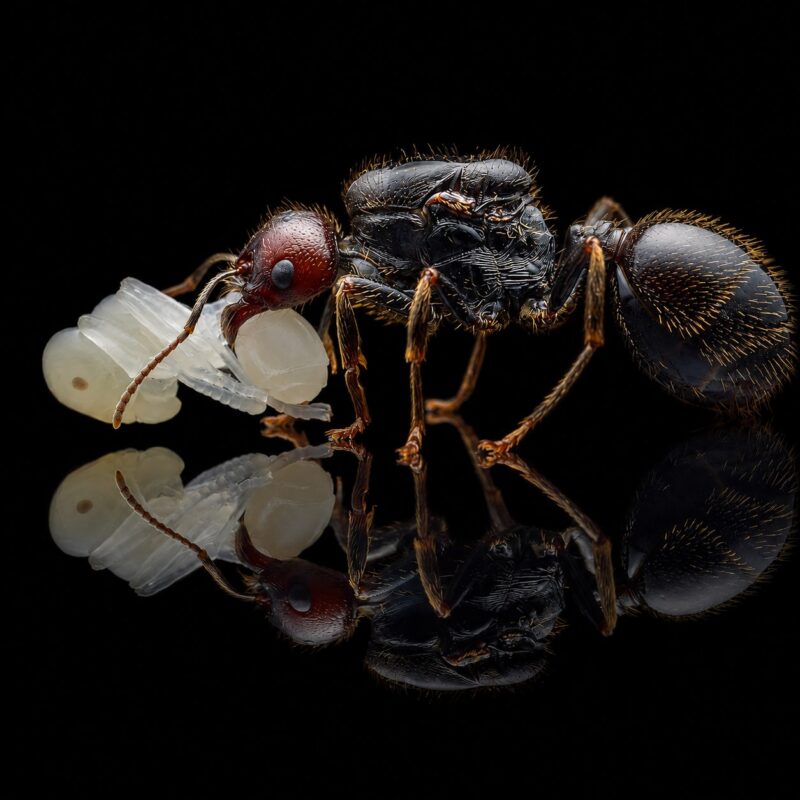
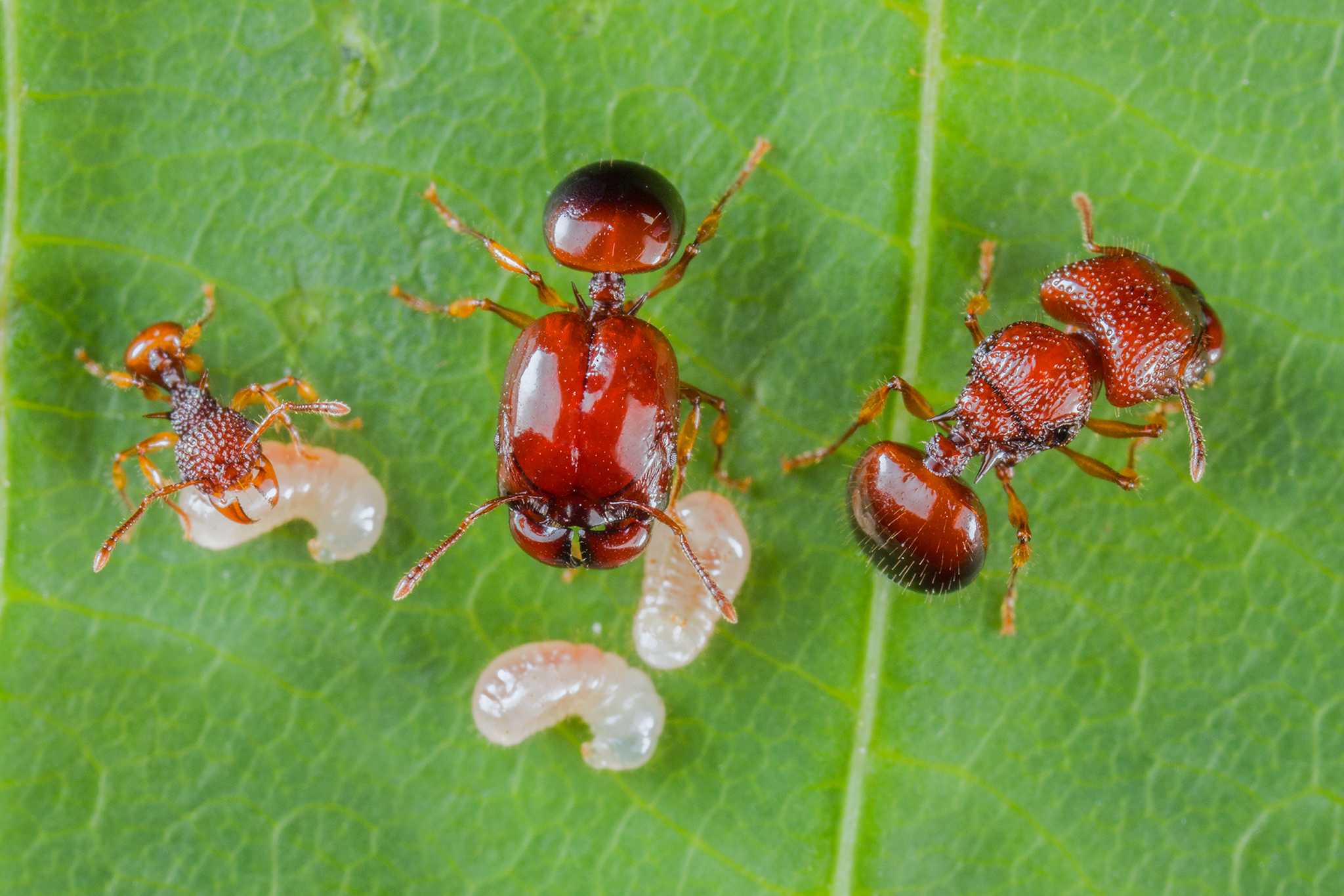
By the end of week three, the brood pile inside the test tube has visibly grown. New larvae are visible, slightly larger than eggs, c-shaped, pearly white. The colony has stabilised.
What you do: shift to a regular feeding rhythm, protein every 3 days, carbs (sugar water, honey, fruit) every 2 days. Tiny portions. The full feeding guide covers what to actually offer.
What you watch for: the test tube humidity. Around now, it can start to dry out as the cotton at the water end ages. If the chamber walls look dry instead of slightly fogged, the queen may stop laying. Refresh the test tube’s water reservoir or, if your setup allows, switch to a moisture-fed formicarium chamber.
Week 4, First pupae
By the end of the first month, the earliest eggs from week 2 are pupating. You can see two distinct brood stages: small new eggs and white pupae. This is the first generation of workers that will be born in your home. They emerge as adults 2-4 weeks later.
What you do: keep the rhythm. Do not change the formicarium. Do not move the test tube. Do not introduce decorations or change the substrate. Stability is the entire goal of the first month.
What you watch for: the colony is now self-sustaining as long as conditions hold. Failures from this point onward are almost entirely caused by keeper changes, moving the formicarium, swapping the heating, opening the nest to “check on them”, changing the food schedule. Trust the system.
Panic checklist, when something is actually wrong
Most “is this normal?” questions answer themselves with patience. These are the few cases where you do need to act.
- Dead workers piling up daily. One or two dead workers in a month is normal. Daily mortality means humidity, temperature, or food is wrong. Re-check conditions against the species’ care guide.
- Queen visibly stopped laying for more than 3 weeks. Could be too much disturbance, wrong temperature, or queen failure. Reduce all checking, dim the room, and wait two more weeks before contacting the seller.
- Mould growing inside the test tube. Humidity too high. Replace the cotton plug, increase ventilation slightly.
- Escapees on the wall above the formicarium. Talc barrier failed. Re-apply, find the escape route, return any wandering workers if findable.
- Larvae shrinking instead of growing. Workers cannot feed them. Check that the food is reaching the larvae, sometimes a single bottleneck worker dies and the chain breaks. Offer easier foods (mashed mealworm, fly larva) for a week.
Month two onwards, the colony grows on its own. You shift from anxious watching to weekly maintenance, and the hobby starts feeling rewarding instead of stressful. The year 1 trajectory guide covers what comes next.
Did you like this article?
Thanks for your feedback!