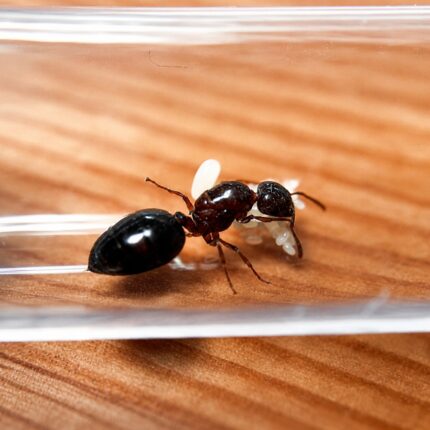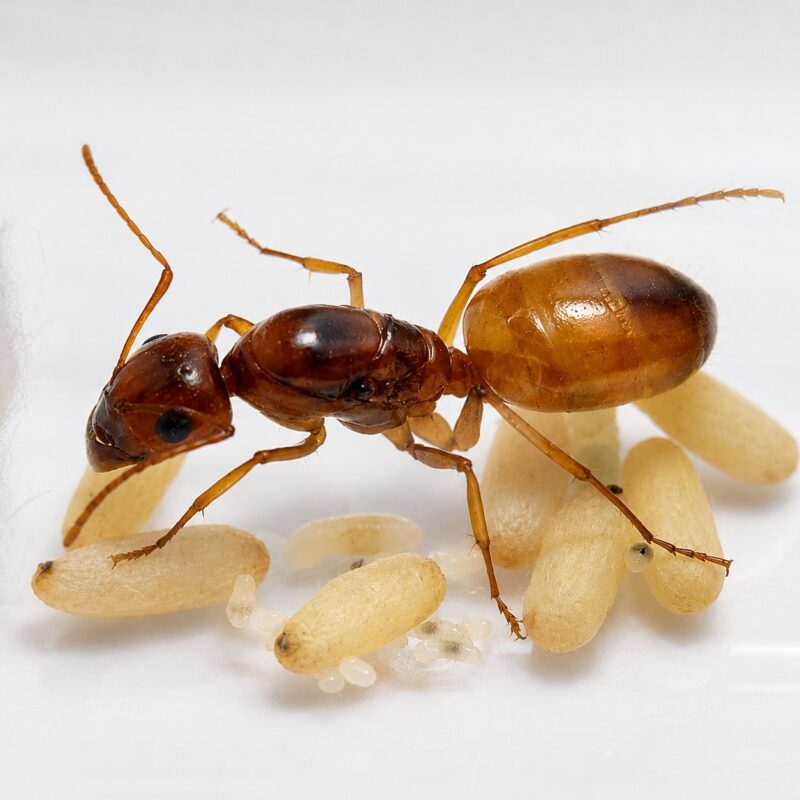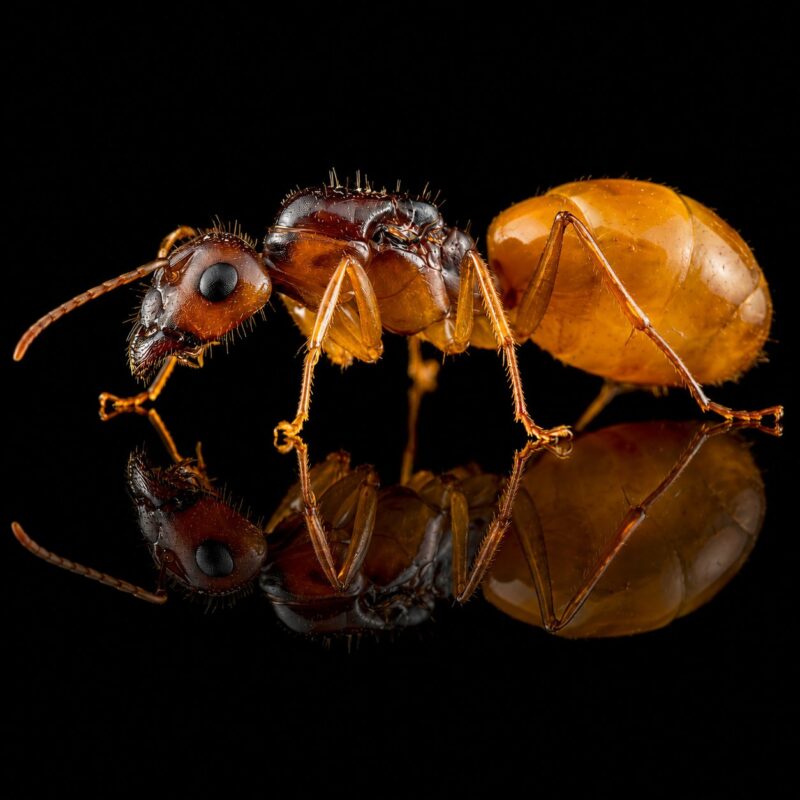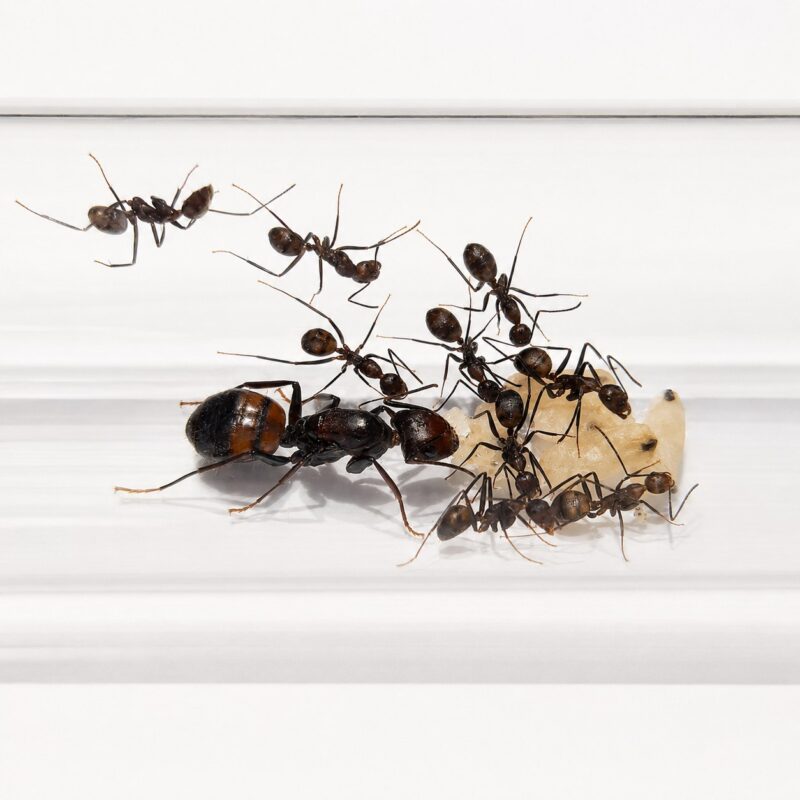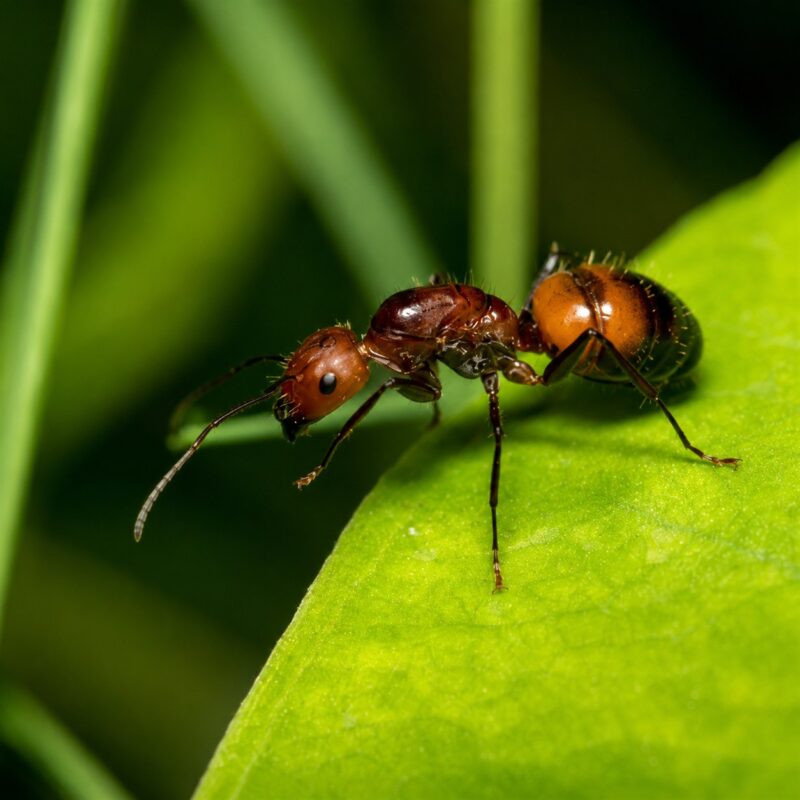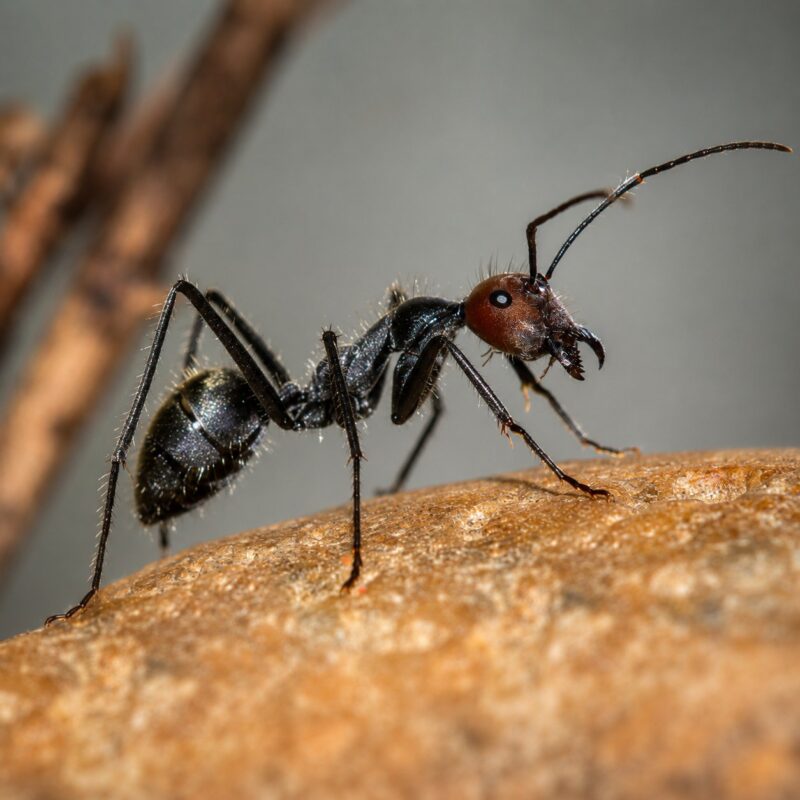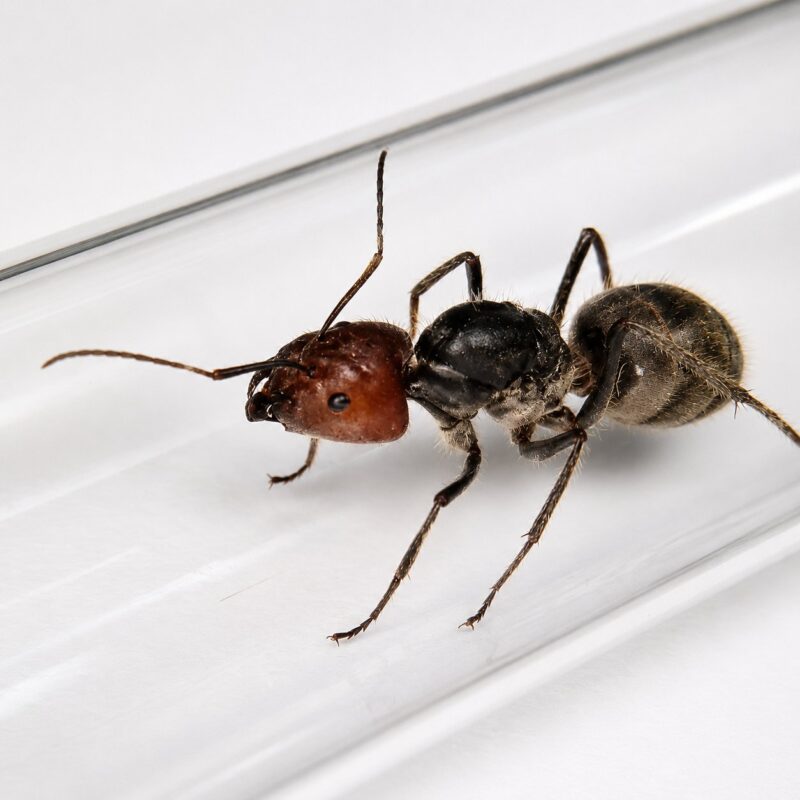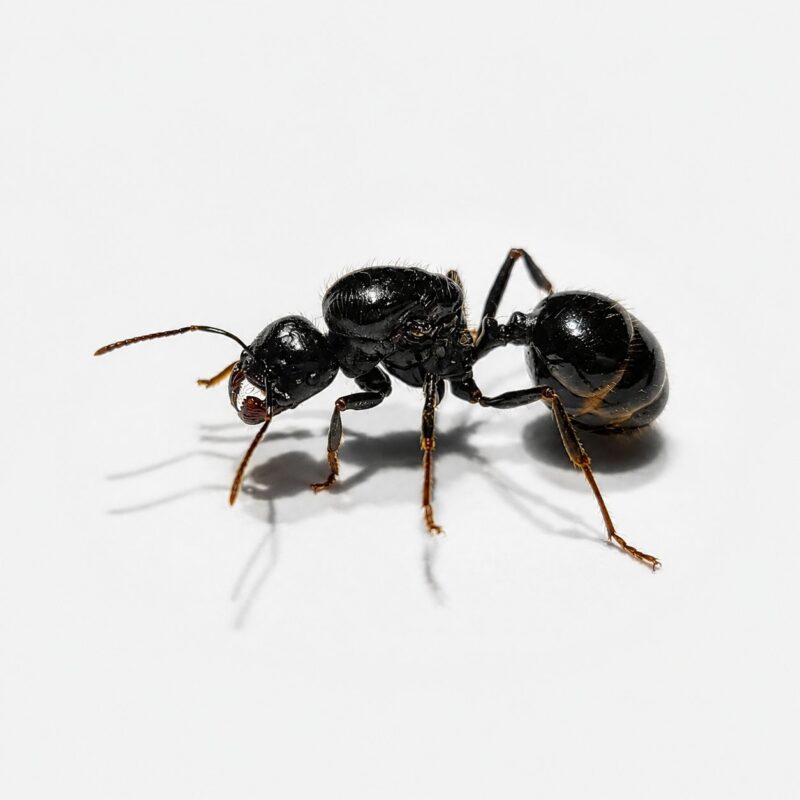

Crematogaster minutissima
309,90 zł – 429,90 złPrice range: 309,90 zł through 429,90 zł
Live Queen Guarantee
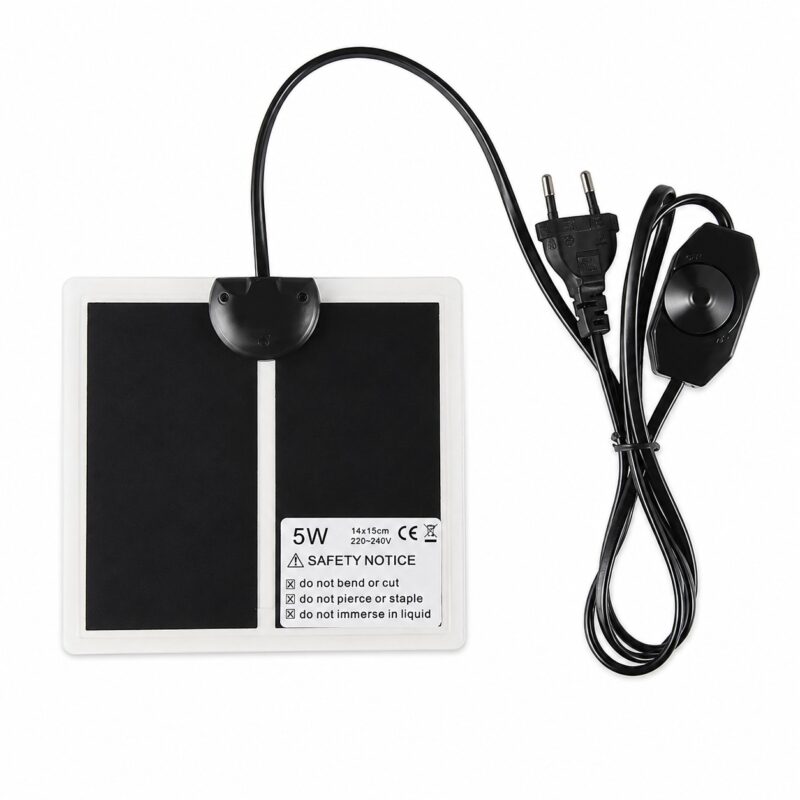
Heat Pack & Summer Cooling
Fertilised Queen in Every Colony
Ships Within 24 h
Free Care Guide
24/7 Expert Support
Description
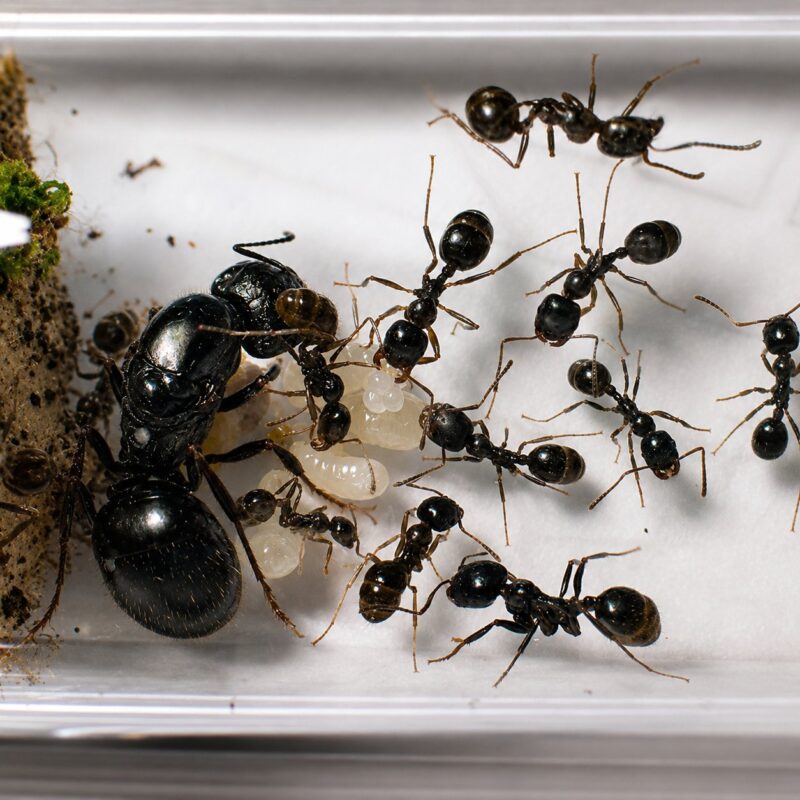
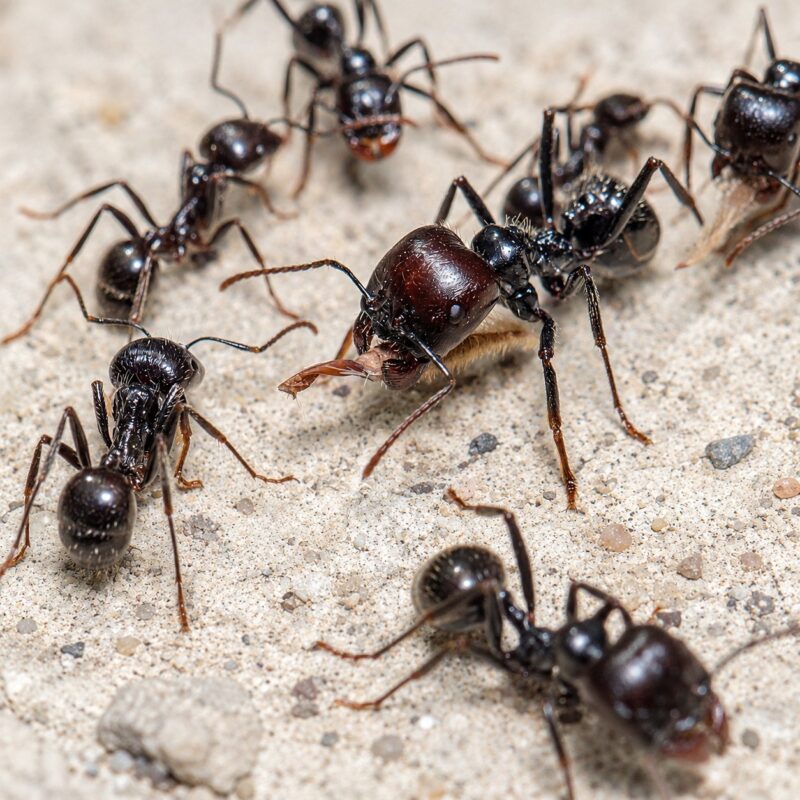
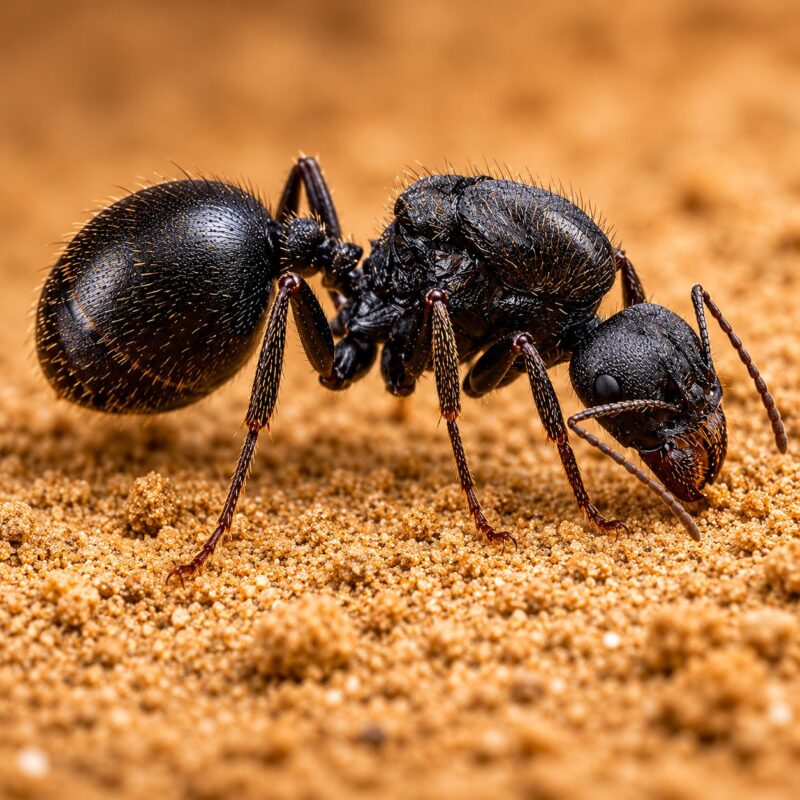
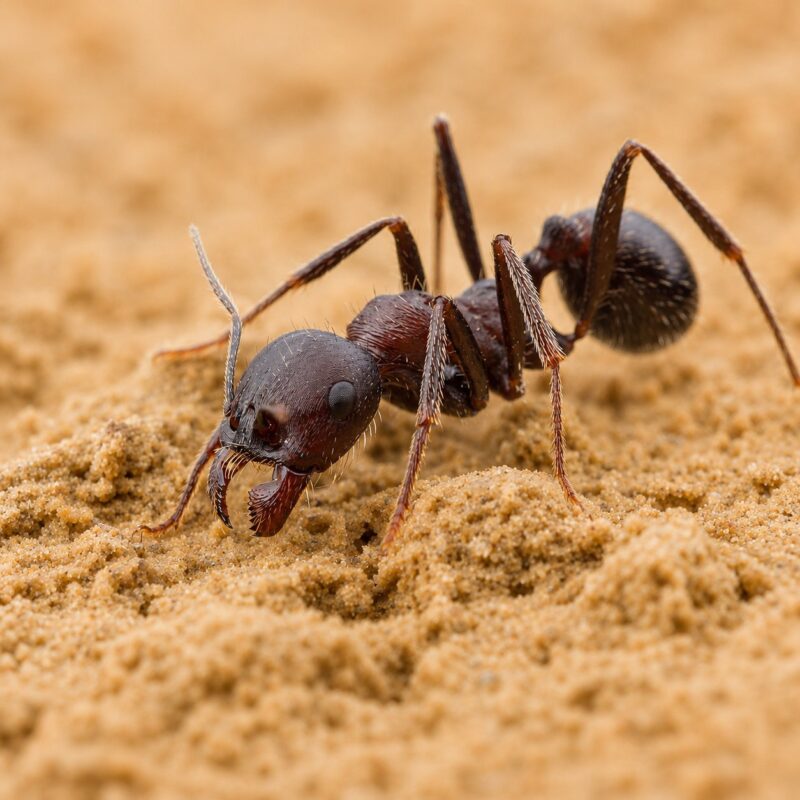
Some of the smallest acrobat ants in North America, near-microscopic workers that still flip the heart-shaped gaster overhead and swarm into the thousands under a magnifier. A jewel-box colony for the keen-eyed keeper. Add a Crematogaster minutissima colony from ANTonTOP.
Free shipping across Europe over 1299 zł.
DHL / InPost / EMS · ships the EU & worldwide.
Intermediate · Q 5-7 mm / W 2-3.5 mm · Up to 20,000 workers · Light diapause – brief cool rest · Omnivore · USA (North America) · Sting (mild), mild bite
Additional information
| Behavior | |
|---|---|
| Keeping difficulty | |
| Origin | |
| Ant size | |
| Hibernation | |
| Sting |
Has sting |
Crematogaster minutissima – Acrobat ant
| Origin | USA (North America) |
|---|---|
| Difficulty | Intermediate |
| Colony form | Polygyne (2+ queens) |
| Max workers | Up to 20,000 workers |
| Queen | 5-7 mm |
| Worker | 2-3.5 mm |
| Soldier / major | – |
| Founding | Claustral |
| Temperature | Nest 21-25 °C / Arena 22-27 °C |
| Humidity | Nest 55-70% / Arena 40-60% |
| Hibernation | Light diapause – brief cool rest |
| Diet | Omnivore |
| Sting / bite | Sting (mild), mild bite |
| Egg to first worker | 5-7 weeks |
| Queen lifespan | ~10-15 years |
| Nuptial flight | late July-early September |
| Activity | both (forages day & night) |
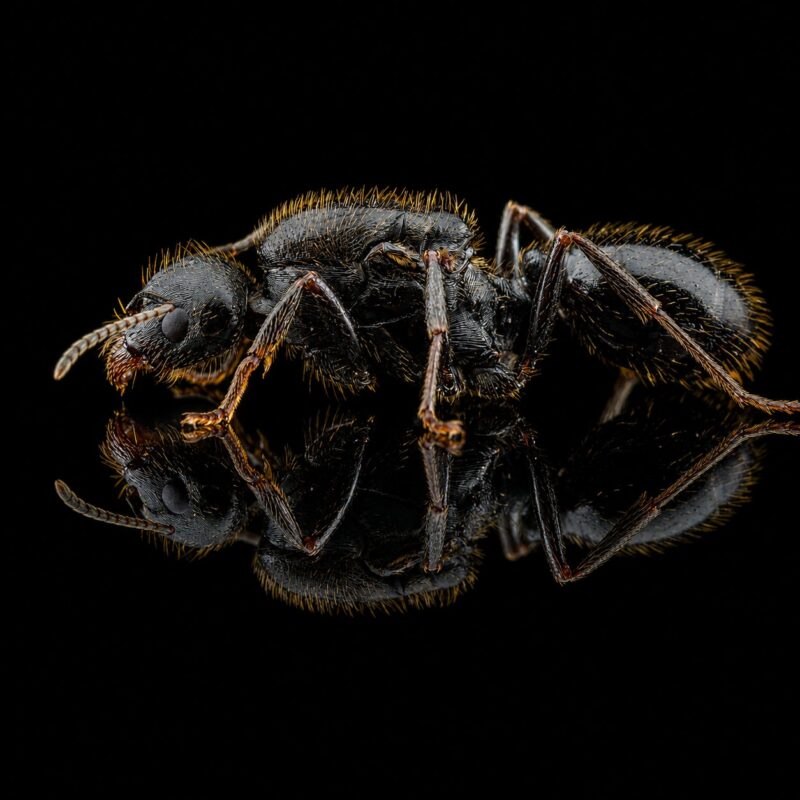
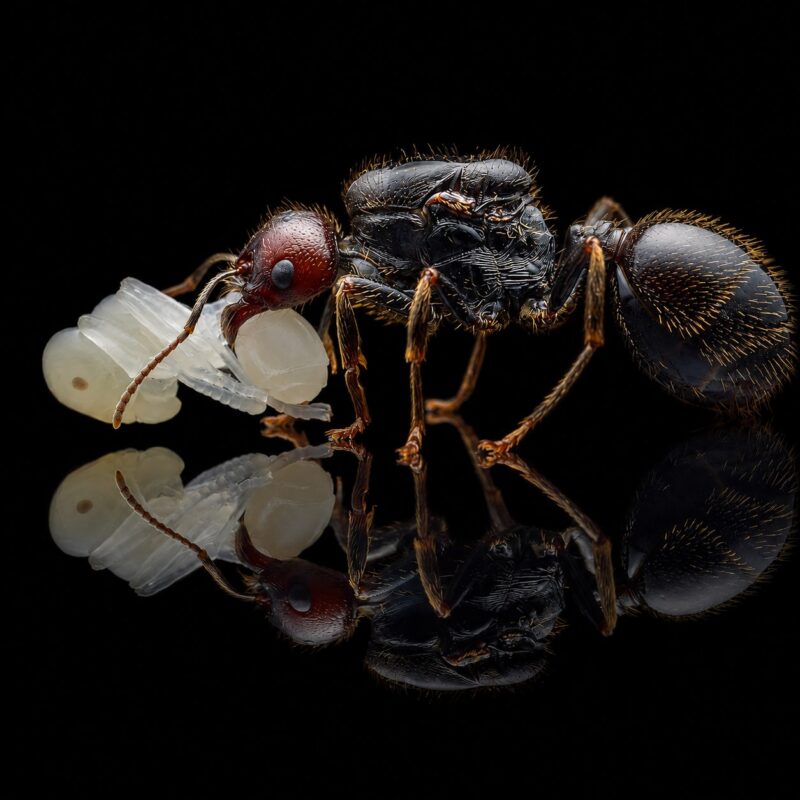
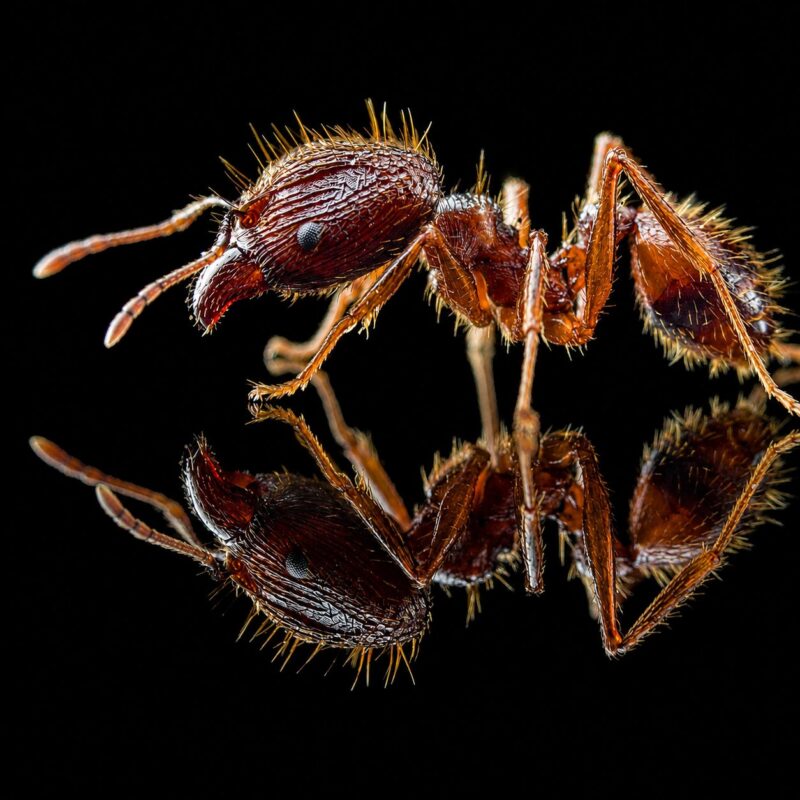
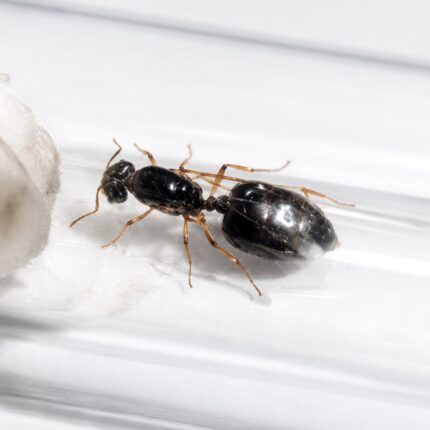
Crematogaster minutissima is one of the smallest acrobat ants in North America, a multi-queen colony of near-microscopic workers that still tip the gaster overhead when alarmed. A neat step up for the keeper moving past absolute beginner.
Why this species
The charm of minutissima is sheer miniature scale: the workers are so tiny they read more like a moving dust of ants than individual bodies, yet the colony behaves like any other Crematogaster, gaster-flip and all. The multi-queen structure gives it resilience and a steady pace of growth. The reason it sits a notch above beginner is practical rather than fragile, since feeding and observing ants this small takes a little care and a steadier hand, so a touch of experience helps. The mild sting is a non-issue in normal handling.
Feeding
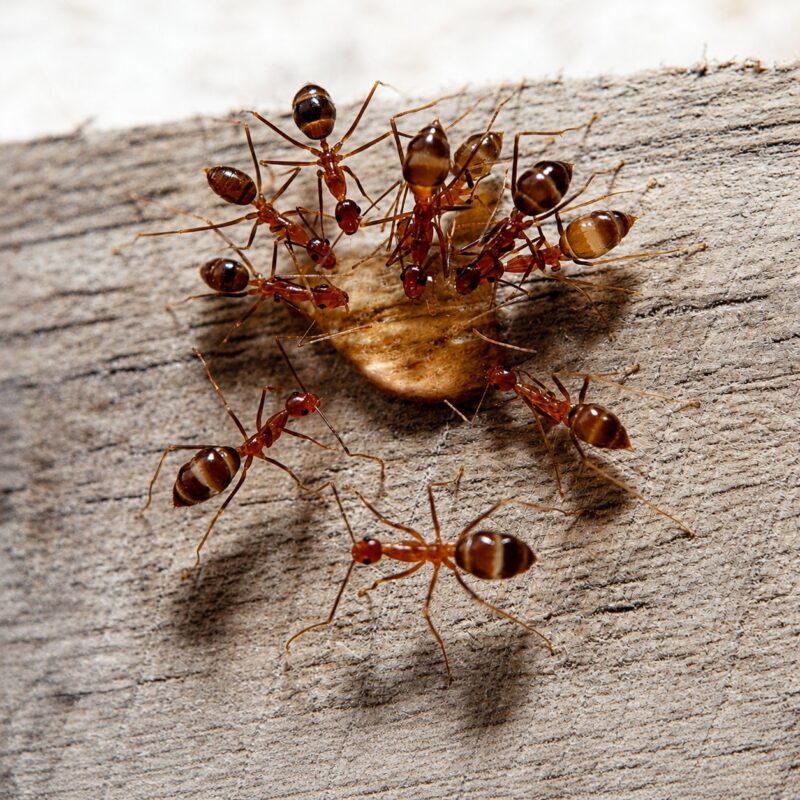
A tiny-bodied omnivore that leans on liquid carbohydrates, taking honeydew from sap-feeding insects and nectar wherever it can reach it, with small insect prey feeding the brood. Keep sugar on tap and offer modest protein for steady larval growth.
| Sugar water / honey water | ★★★ |
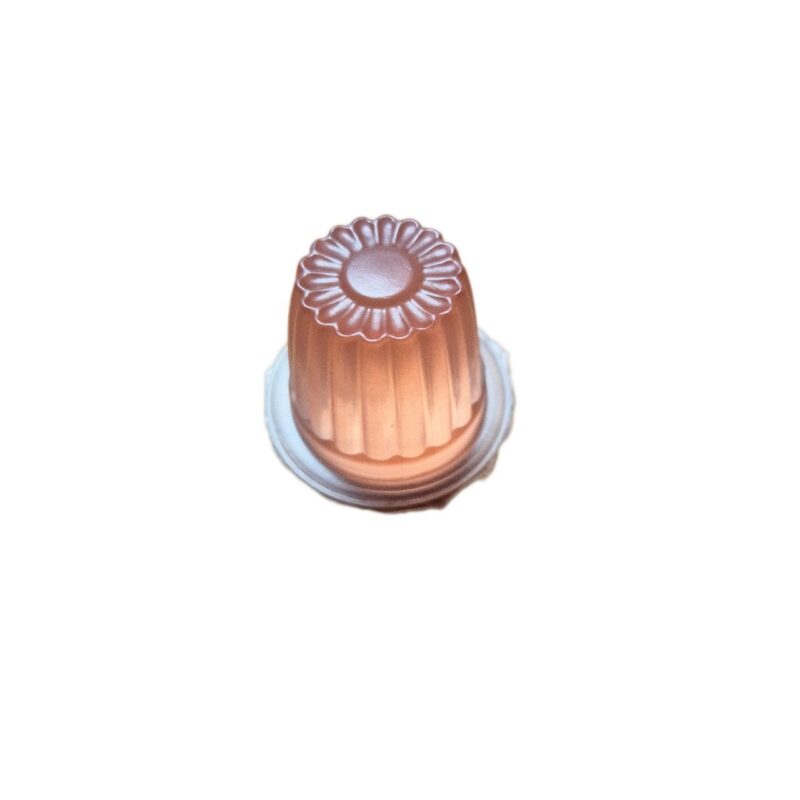
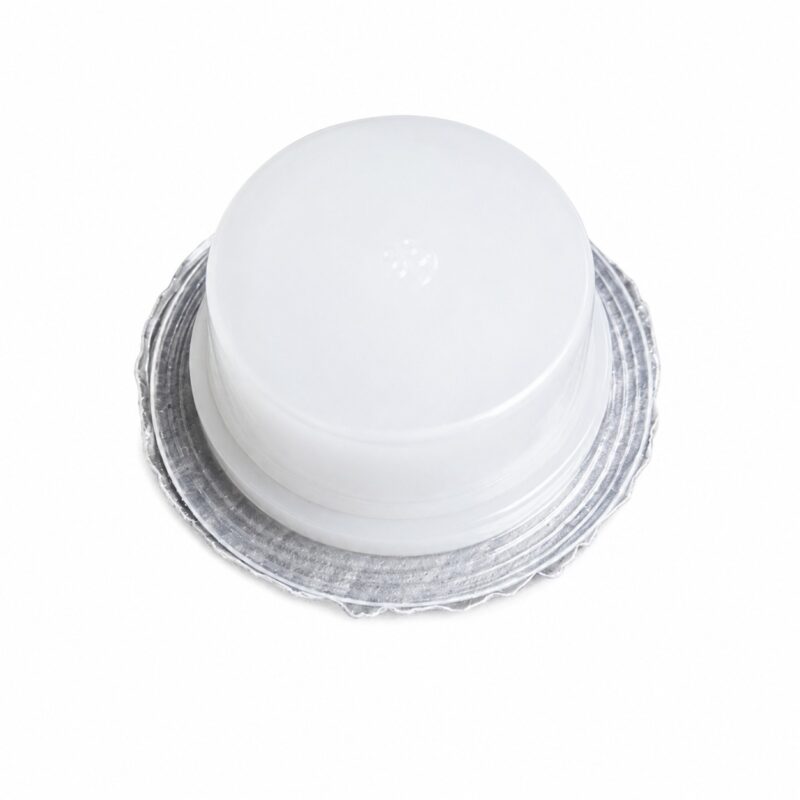
| Ant nectar / sugar jelly | ★★★ |
| Honey | ★★★ |
| Protein jelly | ★★★ |
| Crickets | ★★★ |
| Cockroaches (Dubia / Turkish) | ★★★ |
| Fruit flies (Drosophila) | ★★★ |
| Houseflies | ★★★ |
| Locusts | ★★ |
| Boiled egg yolk | ★★ |
| Mealworms | ★ |
| Superworms | ★ |
| Boiled lean chicken / shrimp / meat | ★ |
| Soft fruit (apple, pear, banana) | ★ |
| Dried insects | ★ |
| Soft seeds (poppy, sesame, chia) | ✗ |
| Hard seeds (canary, millet, sunflower) | ✗ |
★★★ readily · ★★ moderately · ★ occasionally · ✗ not eaten
Housing & formicarium
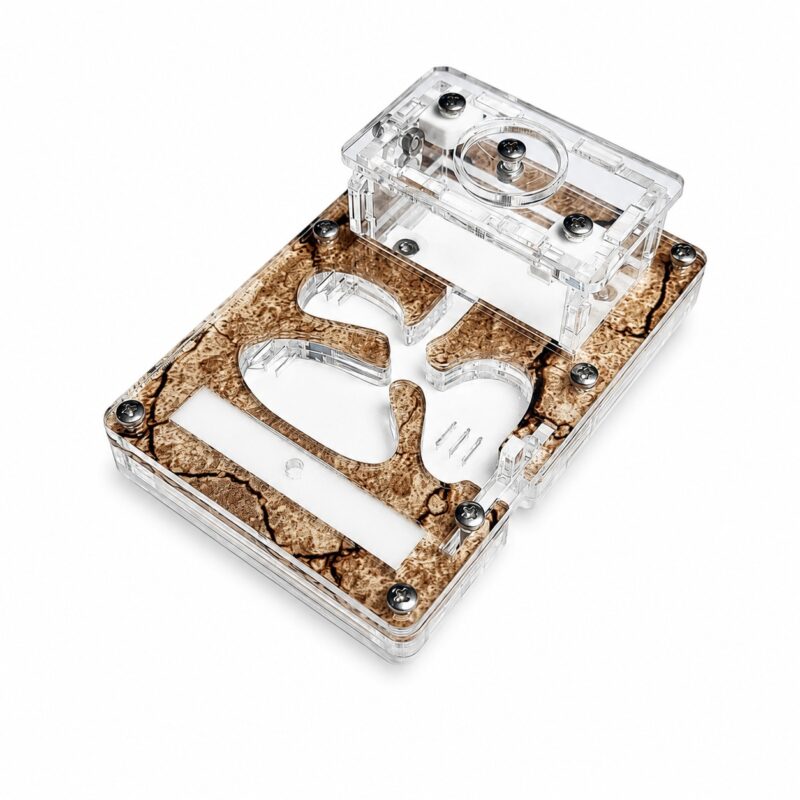
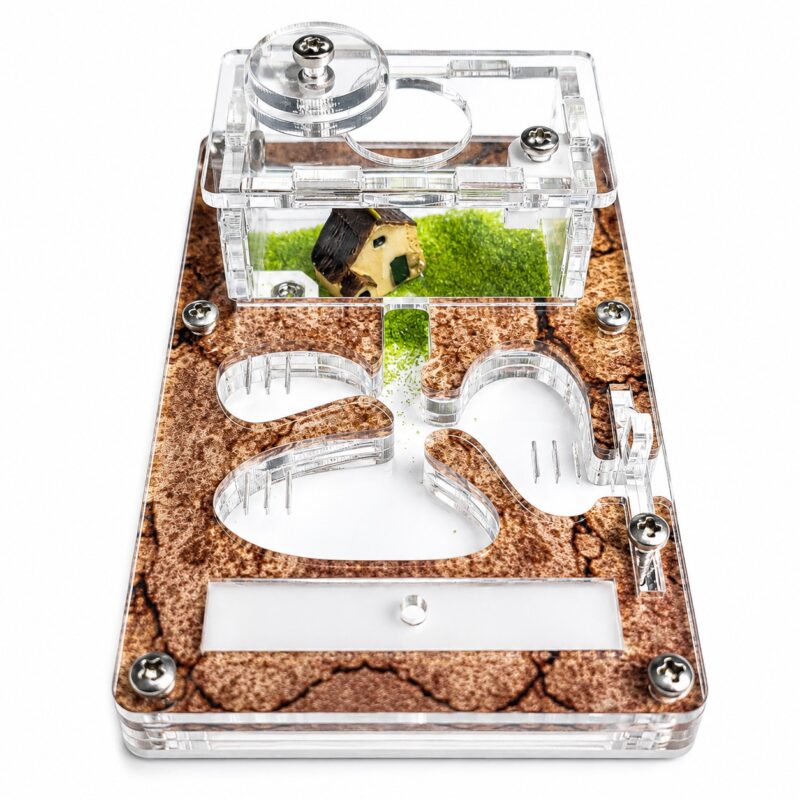
Start this tiny species in a test tube and resist upgrading early; a small colony rattles around in a big nest. When workers cover the tube floor, step up to a compact ytong or acrylic nest held at a gentle 55-70%, with a snug arena rather than a cavernous one. Because the workers measure only 2-3.5 mm, choose tight tolerances or fine mesh so none slip away, and keep a well-maintained fluon (PTFE), oil, or talc-and-water rim. An ANTonTOP formicarium or beginner kit scaled for small species supplies a fitting nest, arena, and barrier together.
Climate & wintering
These ants suit a temperate room, so set the nest to 21-25 °C and the arena to 22-27 °C, with nest humidity of 55-70% and the arena at 40-60%. A gentle warm side and cool side let this small colony pick its spot. It takes only a light diapause rather than a full cold rest, so let activity ease off for a short spell but keep feeding; there is no need to drop the temperature hard.
Growth forecast + what you receive
Even with such minute workers the colony scales surprisingly far, building toward 20,000 over time at a moderate, steady pace. Brood needs about 5-7 weeks from egg to worker, and the several queens help the population find its feet early. You get a queen, her workers and brood as the colony stands.
Did you know
- Acrobat ants are also called cocktail ants, for the raised gaster, and Saint Valentine ants, for its heart-shaped silhouette.
- The signature flip is structural: the postpetiole meets the top of the gaster and there is no dorsal petiole node, so the abdomen folds forward over the back.
- The Crematogaster sting is blunt-tipped and spatulate, used to paint a defensive secretion onto rivals rather than to pierce them.
- Despite being among the smallest acrobat ants, colonies can still grow large, a reminder that worker size and colony size are not linked in this genus.
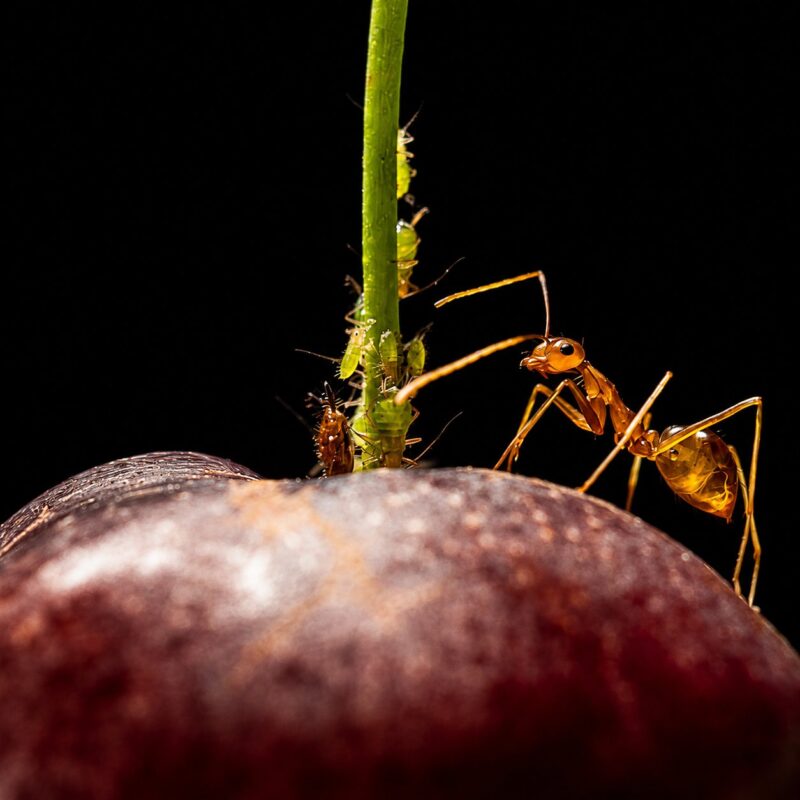
- Like its relatives it tends honeydew-producing bugs, guarding them in return for a steady sugar supply.
Frequently asked questions
Is this tiny North American acrobat ant good for beginners?
It carries an Intermediate rating, so it best suits a keeper with a little experience, mainly because of its tiny size.
Does Crematogaster minutissima need a winter rest?
It takes a light diapause and may slow down for a brief cool rest; keep feeding and you need not lower the temperature sharply.
Does the acrobat ant sting or bite?
It has a mild bite and a sting, neither a real concern in normal handling.
How big can the colony get?
Up to 20,000 workers.
How large is the queen and how small are the workers?
Between 5 and 7 mm, with very small workers of 2-3.5 mm.
How fast does a multi-queen micro-colony grow?
At a moderate, steady pace, helped by its multi-queen founding.
What does it eat?
Sugar water or nectar for the workers and small insects such as crickets and flies for the brood.
How is it shipped?
With a queen, workers and brood, a heat or cool pack, dispatched within 24 h with tracking for live arrival.
Keeping & shipping essentials
Escape prevention. Coat the inner rim of every open arena with fluon (PTFE), or use talc-and-water or an oil barrier as a backup, and keep a tight, fine-mesh lid on top. Check the barrier regularly, since dust, condensation and feeding debris break a fluon line over time. Keep tubing connectors tight and seal any gaps in the nest.
Keeping reminders. Always offer fresh water and never let the nest dry out completely. Give carbohydrates continuously and protein a few times a week, and remove uneaten insect prey within 24 hours before it moulds. Keep the formicarium out of direct sunlight and away from constant vibration, which stresses a young colony. A water-filled test tube plugged with cotton makes an ideal spare incubator whenever you need one.
Before you buy – do not rehouse too early. Have a test-tube setup or a small formicarium with an outworld and a working barrier ready before your colony arrives. A founding colony grows slowly at first, which is normal. Moving a small colony into a large nest too soon invites mould, mites and stress, and the workers die off one by one. Keep the colony in its open test tube on the arena, plug the nest entrance with cotton, and open up the next chambers only once the colony fills roughly 10-15% of the space.
What we ship. Every colony ships with a live-arrival guarantee, backed by our 24h unboxing-video guarantee: if the queen does not arrive alive, we reship free. Parcels travel with DHL, InPost (PL) or EMS, with a heat or cold pack to suit the season, packed discreetly and securely. We ship across the EU and worldwide, with free shipping over the Europe threshold.

Reviews
Clear filtersThere are no reviews yet.