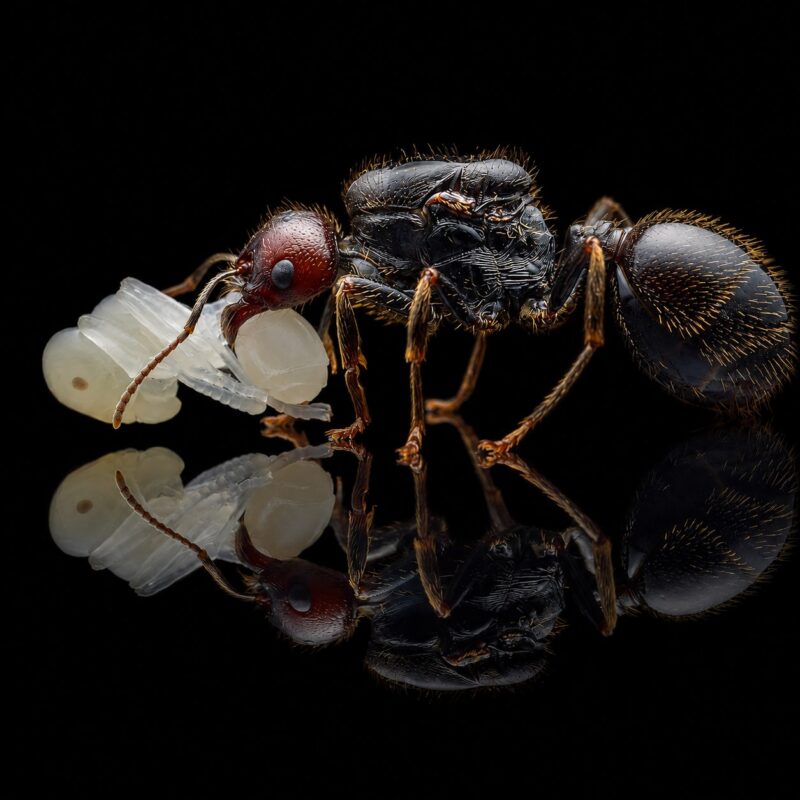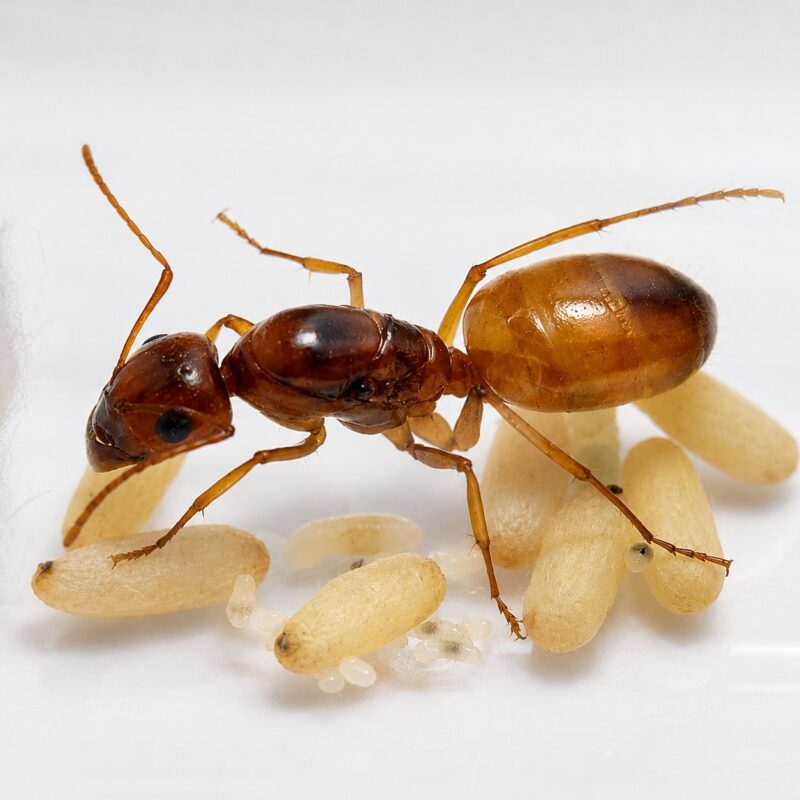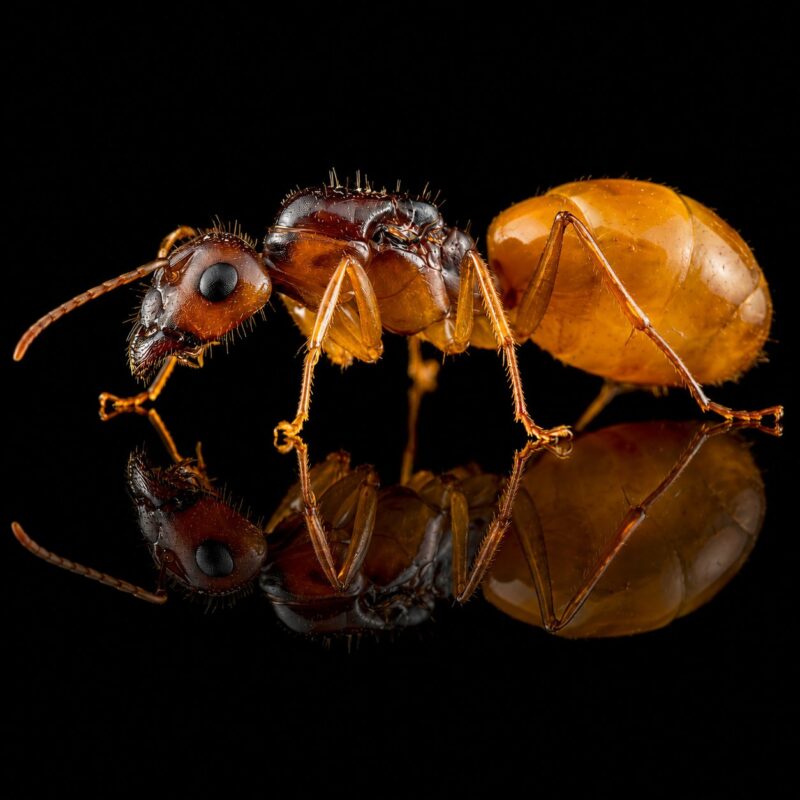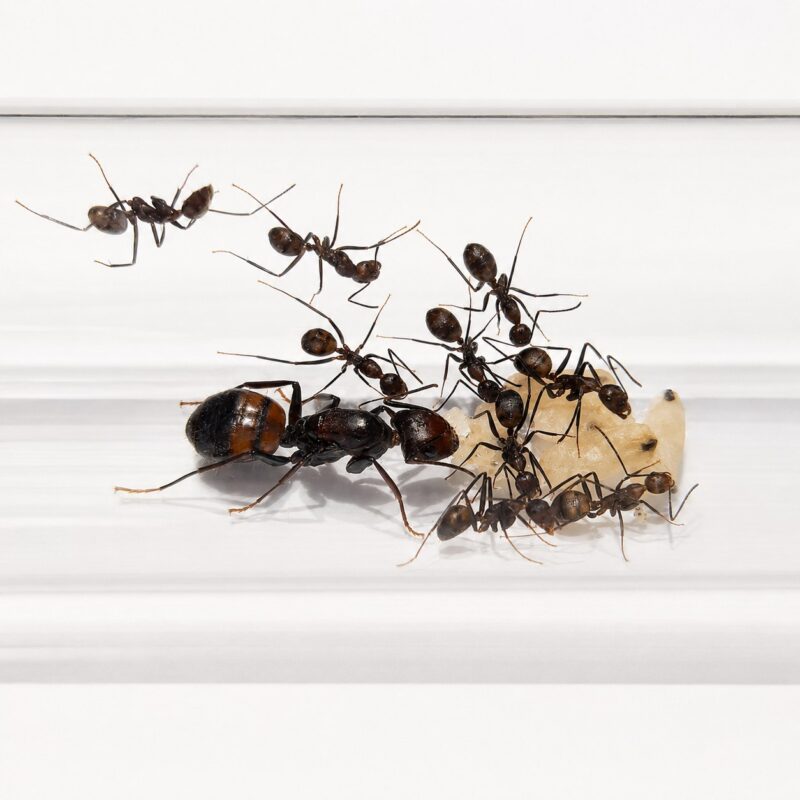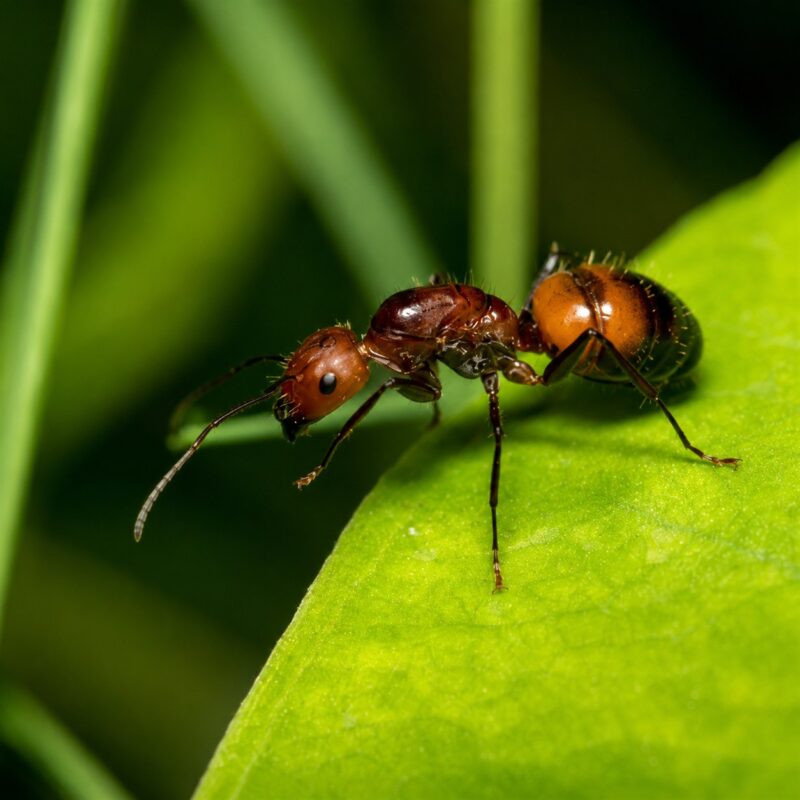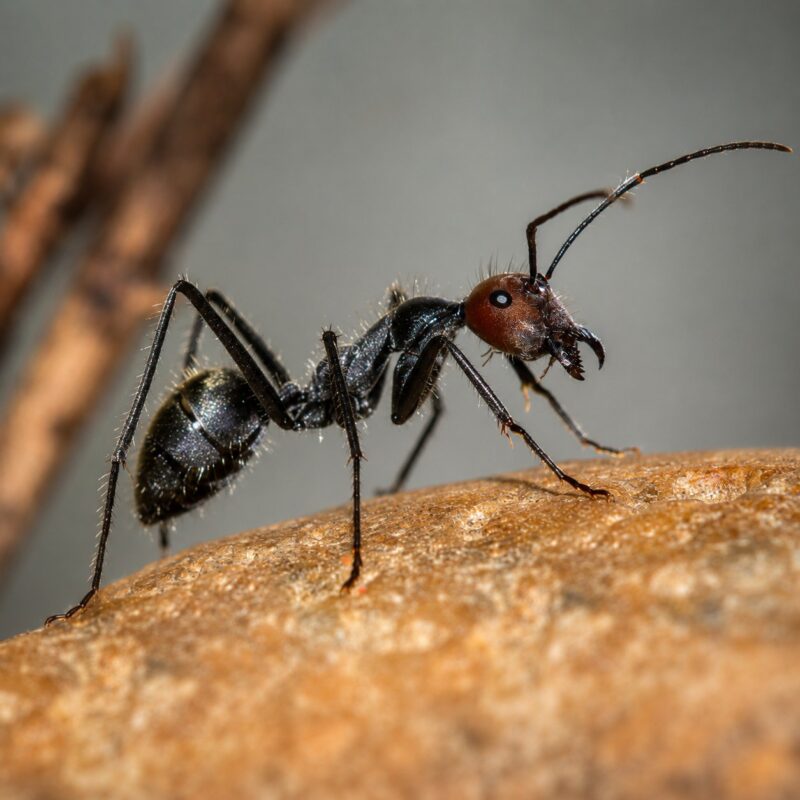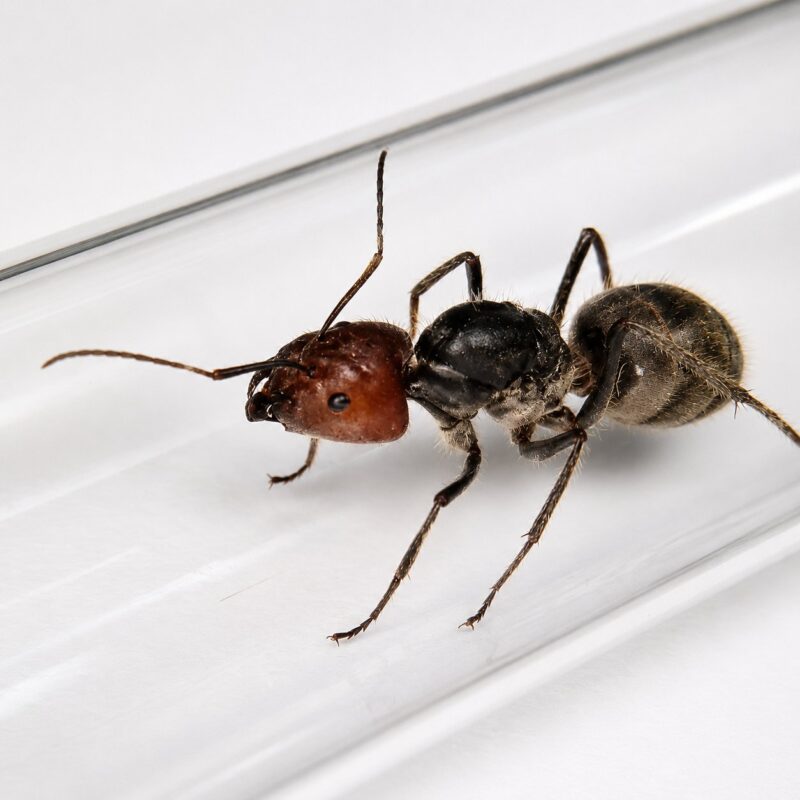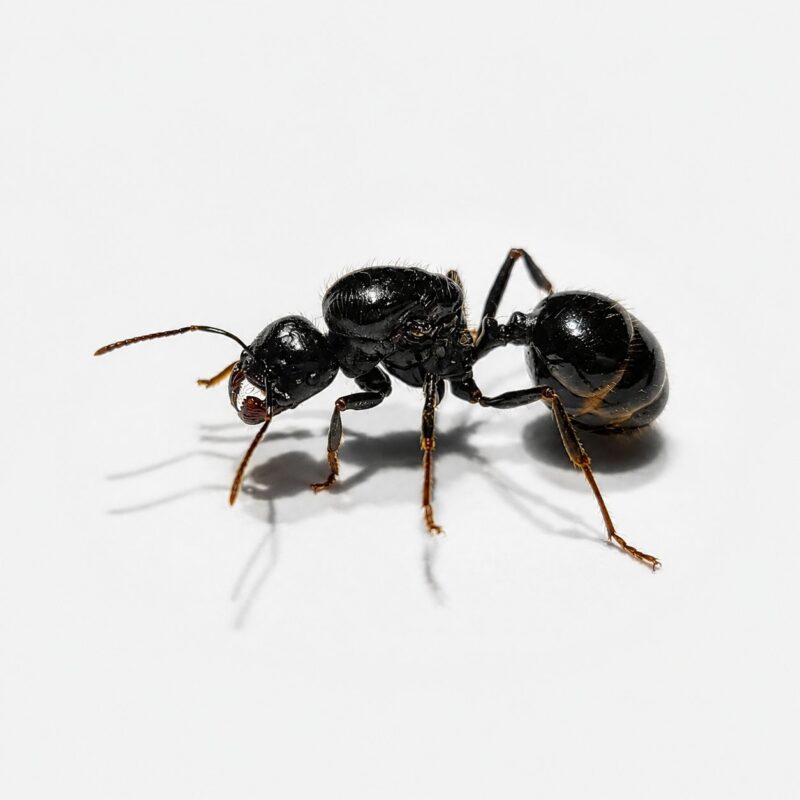

Dorymyrmex pogonius
399,90 zł – 449,90 złPrice range: 399,90 zł through 449,90 zł
Live Queen Guarantee
Heat Pack & Summer Cooling
Fertilised Queen in Every Colony
Ships Within 24 h
Free Care Guide
24/7 Expert Support
Description
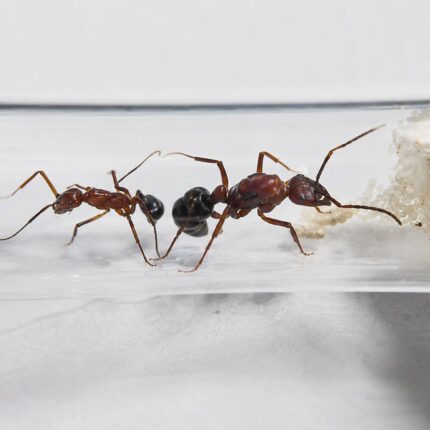
Quick, day-active foragers you can watch race across the arena: Dorymyrmex pogonius is an Argentine cone ant whose nimble colonies build toward 5,000 workers, a lively step up once you are past your first colony. Add a colony of Dorymyrmex pogonius at ANTonTOP.
Free shipping across Europe over 1299 zł.
DHL / InPost / EMS · ships the EU & worldwide.
Intermediate · Q 9-10 mm / W 4-6 mm · Up to 5,000 workers · Light diapause – brief cool rest · Omnivore · Argentina (South America) · No sting, mild bite
Additional information
| Behavior | |
|---|---|
| Keeping difficulty | |
| Origin | |
| Ant size | |
| Hibernation | |
| Sting |
No sting |
Dorymyrmex pogonius
| Origin | Argentina (South America) |
|---|---|
| Difficulty | Intermediate |
| Colony form | Monogyne (1 queen) |
| Max workers | Up to 5,000 workers |
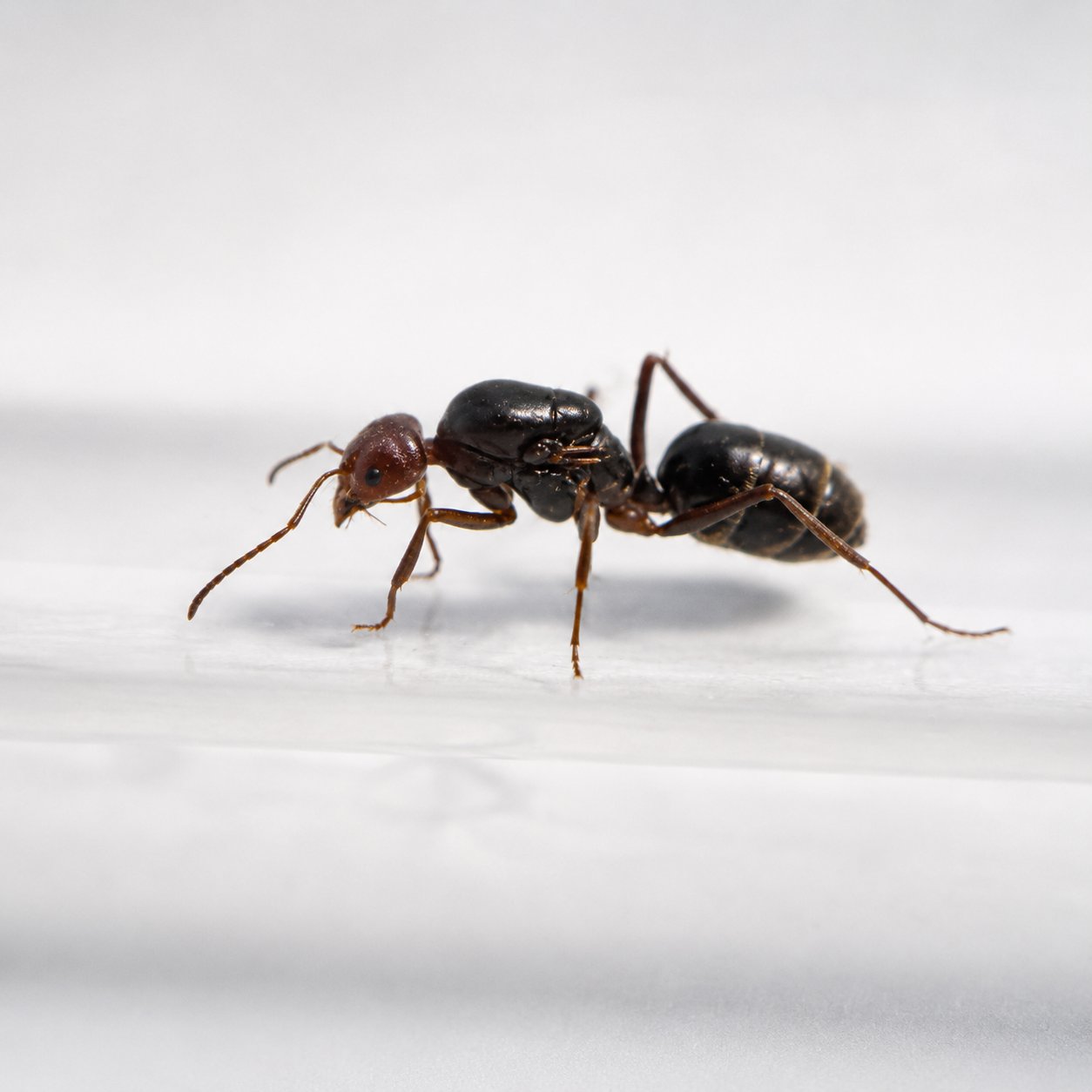
| Queen | 9-10 mm |
| Worker | 4-6 mm |
| Soldier / major | – |
| Founding | Claustral |
| Temperature | Nest 24-28 °C / Arena 26-32 °C |
| Humidity | Nest 40-55% / Arena 25-45% |
| Hibernation | Light diapause – brief cool rest |
| Diet | Omnivore |
| Sting / bite | No sting, mild bite |
| Egg to first worker | 8-10 weeks |
| Queen lifespan | 5-10 years |
| Nuptial flight | summer |
| Activity | diurnal |
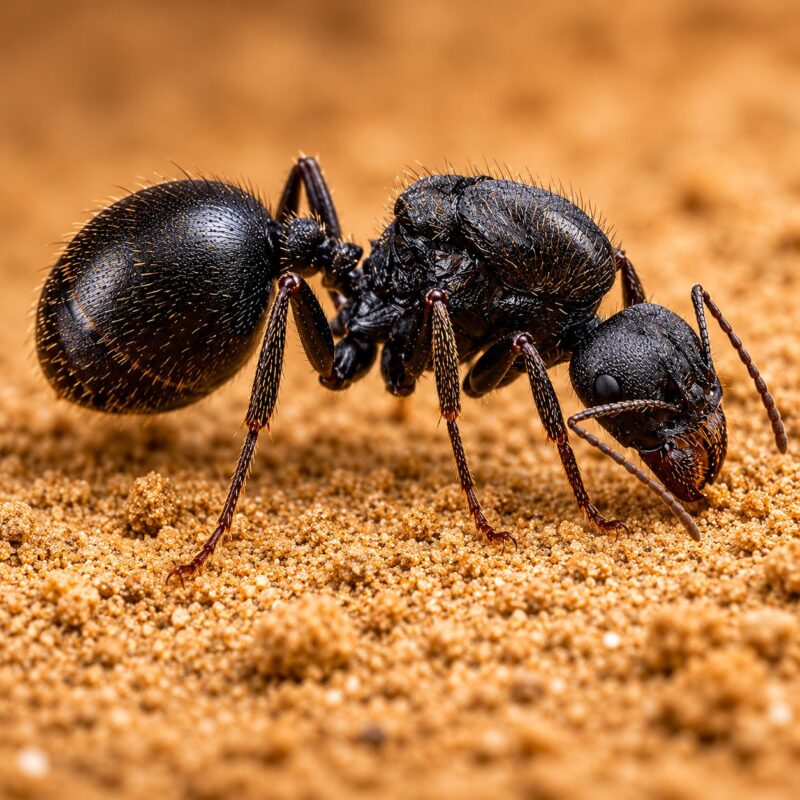
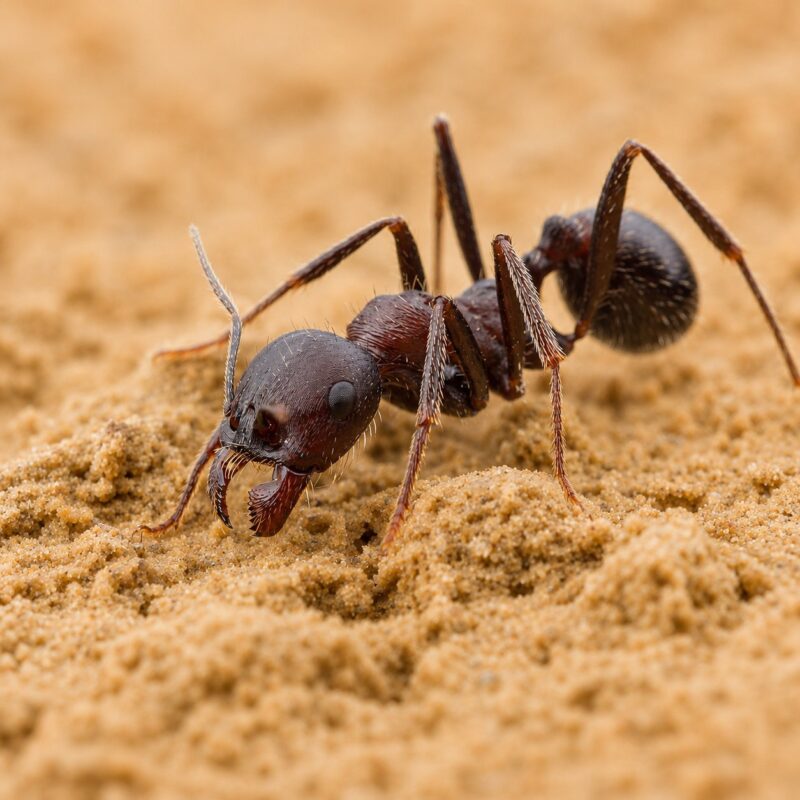
Dorymyrmex pogonius is a fast, ground-running Argentine ant that builds a neat cone-shaped nest mound, a lively pick for keepers ready to move past their first colony.
Why this species
The appeal here is constant motion. These are quick, ground-foraging ants that rarely sit still, so the arena stays busy and the colony reads as energetic from the off, and in the wild they raise a tidy little volcano-like cone over the entrance. The clear size gap between queen and worker is easy to follow as the colony grows. It is rated Intermediate mainly because development is slow at the founding stage, so it rewards a keeper who can stay patient through the early months before the numbers and the activity really pick up. It has no sting and only a mild bite.
Feeding
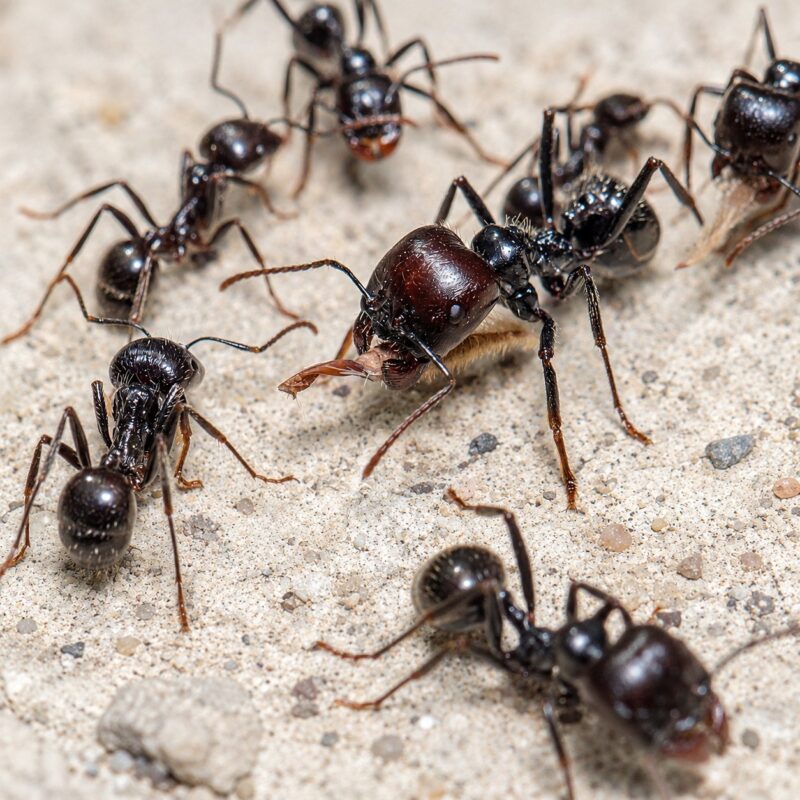
An opportunistic omnivore that runs fast and forages by day: workers take sugars and honeydew for energy and gather insect prey to feed the brood. Keep a carbohydrate source available and offer protein for steady larval growth.
| Sugar water / honey water | ★★★ |
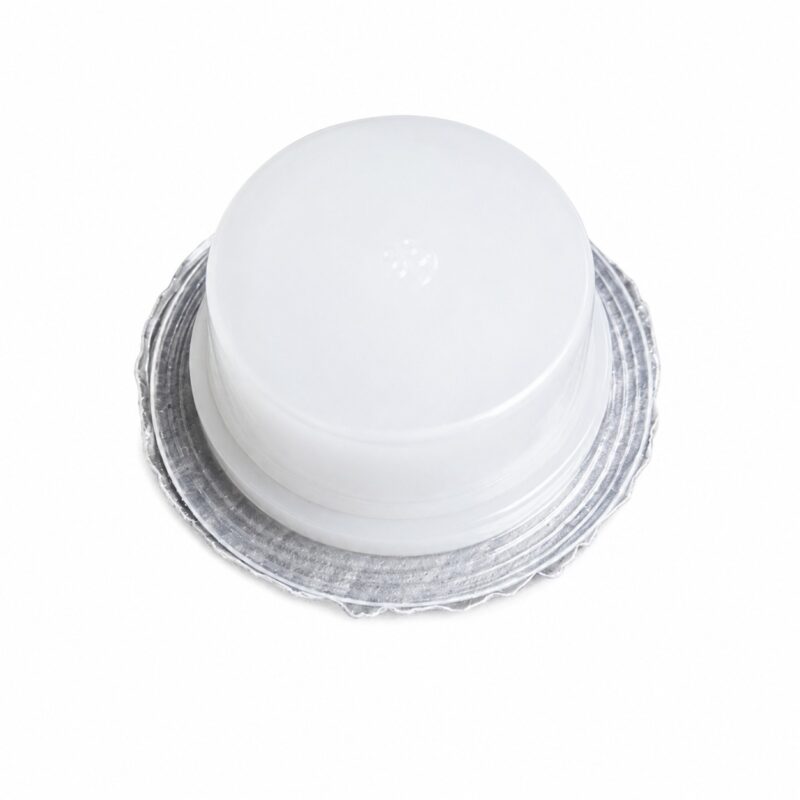
| Ant nectar / sugar jelly | ★★★ |
| Honey | ★★★ |
| Protein jelly | ★★★ |
| Crickets | ★★★ |
| Cockroaches (Dubia / Turkish) | ★★★ |
| Fruit flies (Drosophila) | ★★★ |
| Houseflies | ★★★ |
| Locusts | ★★ |
| Boiled egg yolk | ★★ |
| Mealworms | ★ |
| Superworms | ★ |
| Boiled lean chicken / shrimp / meat | ★ |
| Soft fruit (apple, pear, banana) | ★ |
| Dried insects | ★ |
| Soft seeds (poppy, sesame, chia) | ✗ |
| Hard seeds (canary, millet, sunflower) | ✗ |
★★★ readily · ★★ moderately · ★ occasionally · ✗ not eaten
Housing & formicarium
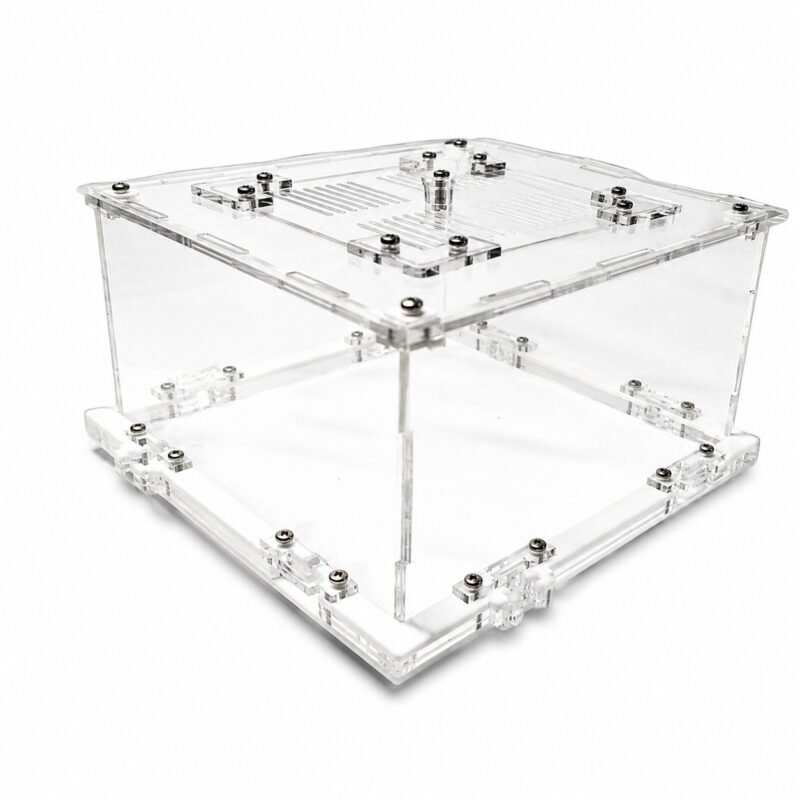
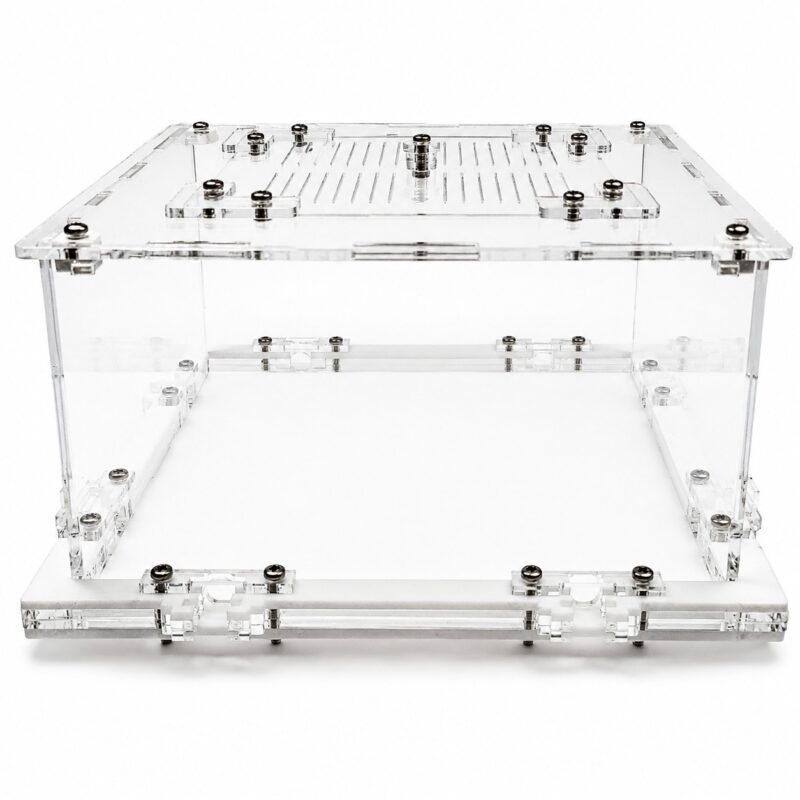
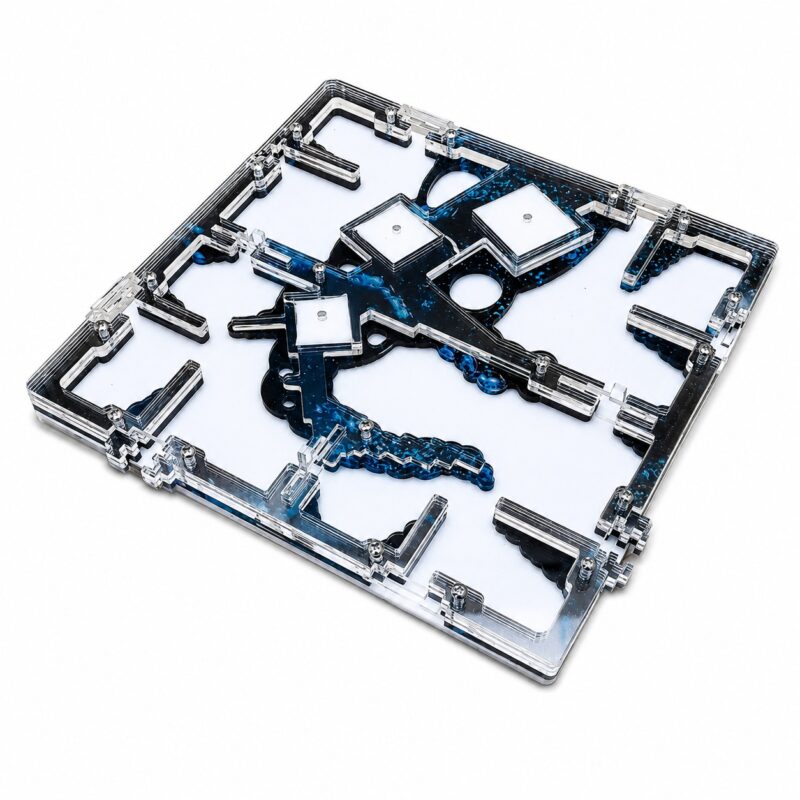
This is a dry-ground digger, so keep humidity low and the nest well aerated. Start the colony in a test tube or compact nest and move up only once workers fill the space, then choose a sand-type, ytong, or aerated nest held at a dry 40-55%, paired with a roomy arena. Avoid a wet block, which would not suit this desert-edge genus. They are quick climbers, so line the arena rim with fluon (PTFE), oil, or talc and water. ANTonTOP formicaria and kits give you a matched dry nest, arena, and barrier with room to expand toward full size.
Climate & wintering
This is a dry-ground ant, so keep humidity low, 40-55% in the nest and 25-45% in the arena, with the nest at 24-28 °C and a warmer arena at 26-32 °C. Set a warm-to-cool gradient so the colony can choose rather than baking under one even temperature. It takes only a light diapause, so let it slow for a brief cool spell while keeping water available.
Growth forecast + what you receive
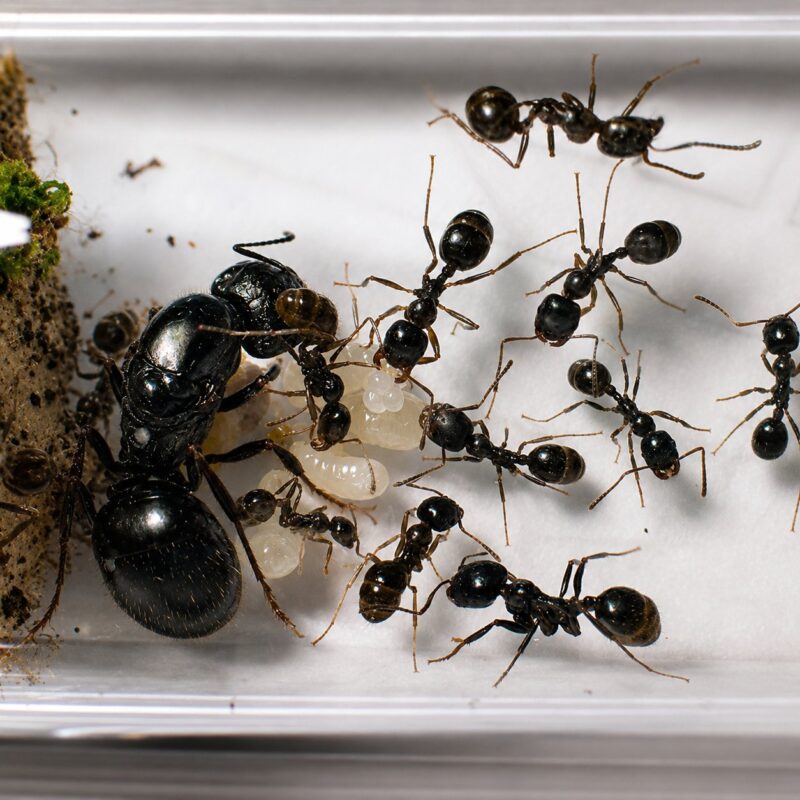
Founding is slow, so expect a quiet opening phase before the colony picks up pace toward 5,000 workers. Brood takes about 8-10 weeks from egg to worker, after which numbers climb steadily. You receive a queen with her first workers and brood.
Did you know
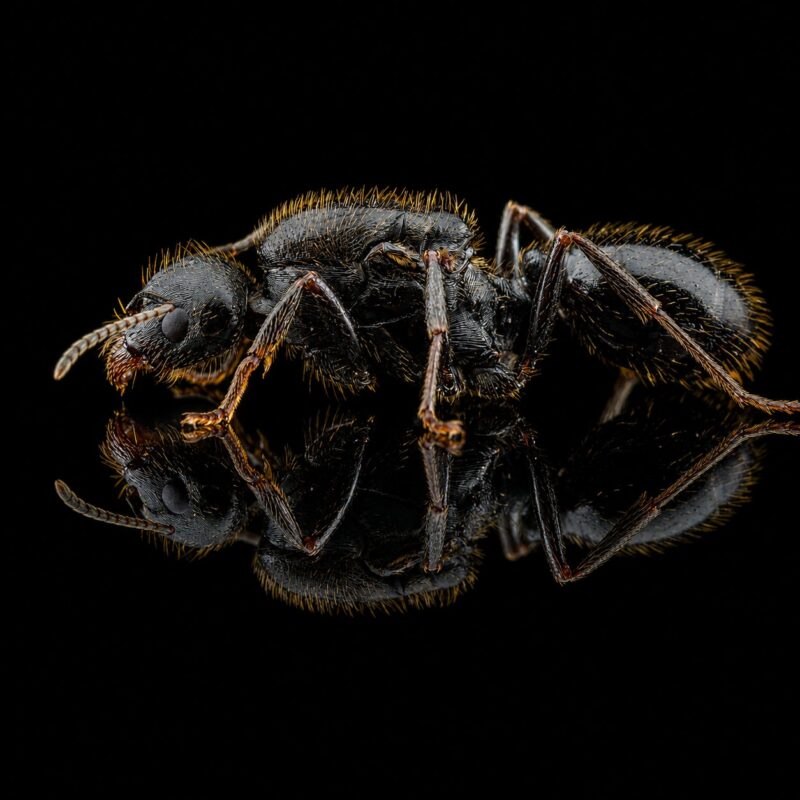
- This genus is known as the cone ant or pyramid ant, named for a small cone-like bump on the rear of the thorax that gives the body a pyramid profile.
- It builds conspicuous crater-shaped nest entrances, ringing the hole in the bare soil with a low circular rim of excavated grains.
- It belongs to the Dolichoderinae and was once placed in the genus Conomyrma before being folded into Dorymyrmex.
- These are quick, heat-tolerant ants of open, arid and sandy ground across the Americas, foraging actively in the daytime.
- It has no sting and relies on speed and chemical defence rather than a painful jab.
Frequently asked questions
Is the Argentine cone ant good for beginners?
It is rated Intermediate; slow founding means it suits a keeper with some patience rather than a first-timer.
Does Dorymyrmex pogonius need a winter rest?
It takes a light diapause, just a brief cool rest, then back to normal.
Does the cone ant sting or bite?
No. It has no sting, only a mild bite.
How big does the colony get?
Up to 5,000 workers.
How large is the queen?
The queen is 9-10 mm; workers are 4-6 mm.
How fast does it grow?
Development is slow at first, then the colony speeds up as worker numbers climb.
What does it eat?
Sugar water or jelly for energy plus insect protein such as crickets and flies for the brood.
Will the ants arrive alive?
Colonies ship with a queen, workers, and brood plus a heat or cool pack, sent within 24 h with tracking for a safe, live arrival.
Keeping & shipping essentials
Escape prevention. Coat the inner rim of every open arena with fluon (PTFE), or use talc-and-water or an oil barrier as a backup, and keep a tight, fine-mesh lid on top. Check the barrier regularly, since dust, condensation and feeding debris break a fluon line over time. Keep tubing connectors tight and seal any gaps in the nest.
Keeping reminders. Always offer fresh water and never let the nest dry out completely. Give carbohydrates continuously and protein a few times a week, and remove uneaten insect prey within 24 hours before it moulds. Keep the formicarium out of direct sunlight and away from constant vibration, which stresses a young colony. A water-filled test tube plugged with cotton makes an ideal spare incubator whenever you need one.
Before you buy – do not rehouse too early. Have a test-tube setup or a small formicarium with an outworld and a working barrier ready before your colony arrives. A founding colony grows slowly at first, which is normal. Moving a small colony into a large nest too soon invites mould, mites and stress, and the workers die off one by one. Keep the colony in its open test tube on the arena, plug the nest entrance with cotton, and open up the next chambers only once the colony fills roughly 10-15% of the space.
What we ship. Every colony ships with a live-arrival guarantee, backed by our 24h unboxing-video guarantee: if the queen does not arrive alive, we reship free. Parcels travel with DHL, InPost (PL) or EMS, with a heat or cold pack to suit the season, packed discreetly and securely. We ship across the EU and worldwide, with free shipping over the Europe threshold.

Reviews
Clear filtersThere are no reviews yet.