





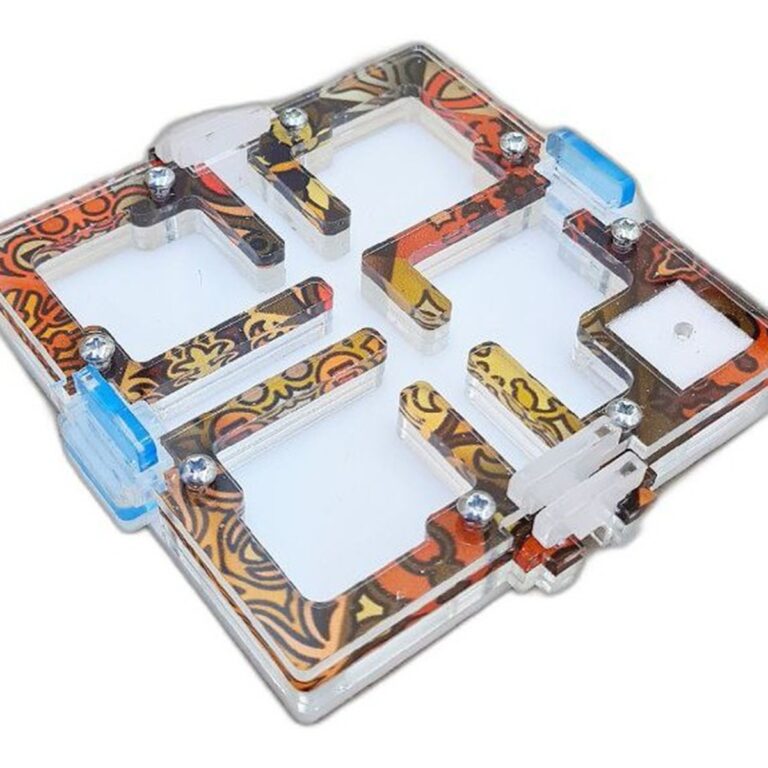
Buy one module today, build a whole system later — that is the idea behind the Modular Nest Nebula (10 × 10 cm). A wide central gallery splits into two side corridors, a branching path small-to-medium colonies of up to ~350 workers adopt fast. Lockable nut-and-screw entrances, a sponge humidity chamber and standard ports slot it straight into a growing setup. Fits Lasius, Tetramorium, Messor and most popular species; 9 mm chamber height.
Build the colony’s home module by module — order your Nebula today.
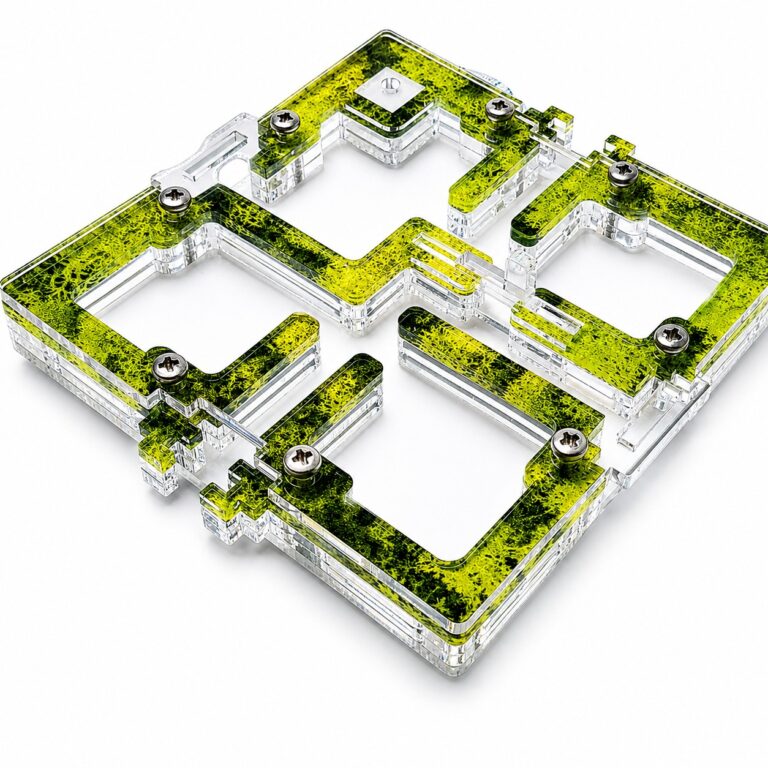
A square grid of rooms gives the colony clean lines to organise from day one: brood here, food stores there, quarters apart. The Quad 10×10 cm suits the orderly, zone-keeping species especially well. Lockable nut-and-screw ports, a sponge chamber and 9 mm rooms hold up to ~350 Lasius, Tetramorium, Messor or smaller Camponotus, with a 20×10 version for when it outgrows this one.
A tidy, organised home from day one.
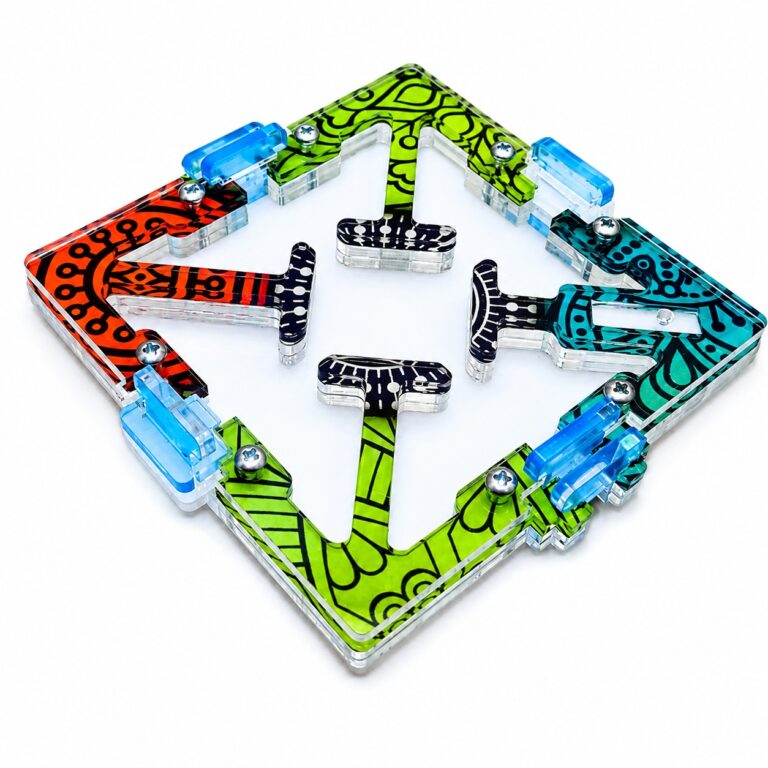
When shelf space is the constraint, the Prism 10×10 cm wins on density: tightly packed chambers cram an unusually generous amount of nest into the smallest footprint, and the close walls trap a steadier warmth and humidity. Lockable nut-and-screw ports, a sponge chamber and 9 mm rooms suit up to ~350 Lasius, Tetramorium, Messor or smaller Camponotus.
Maximum nest, minimum shelf space.
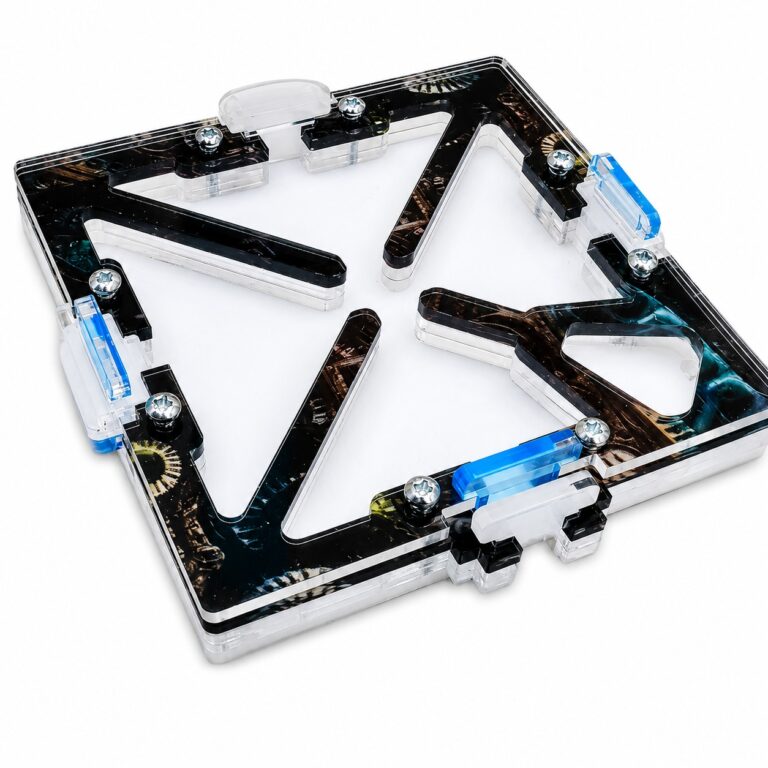
Run the corridors on a diagonal and you fit the longest connected path a 10×10 footprint allows. That’s the Nova 10×10 cm: more usable run than a straight grid the same size, so a founding colony settles it evenly from the start. Lockable nut-and-screw ports, a sponge chamber and 9 mm rooms suit up to ~350 Lasius, Tetramorium, Messor or smaller Camponotus.
Start small, grow module by module.
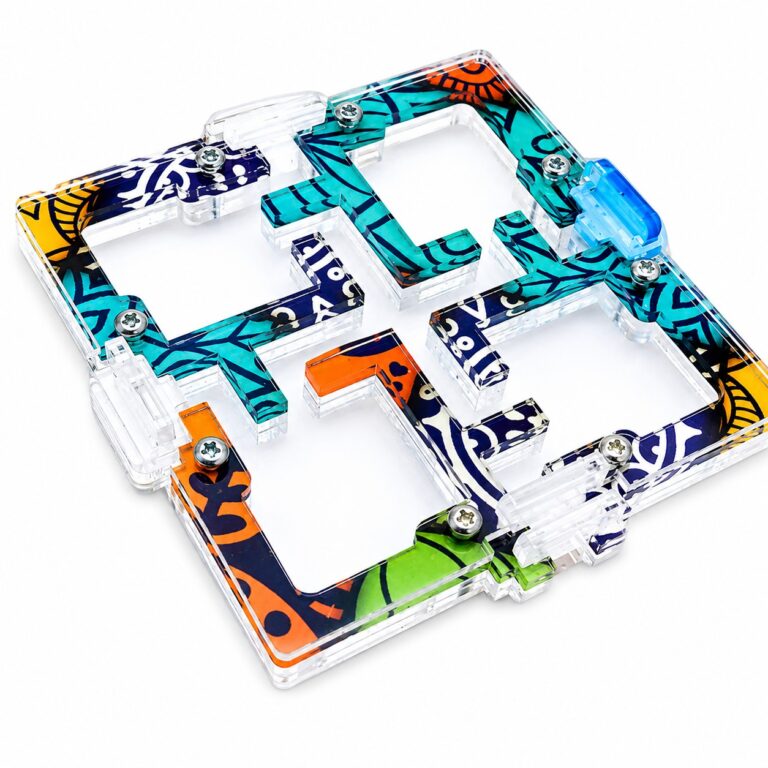
Ants don’t want every room the same — some dark and enclosed for brood, others open for traffic. The Quartz 10×10 cm gives them that with offset, asymmetric chambers instead of a uniform grid, so the colony gives each little space its own job. Lockable nut-and-screw ports, a sponge chamber and 9 mm rooms suit up to ~350 Lasius, Tetramorium, Messor or smaller Camponotus.
Varied rooms a colony actually uses differently.
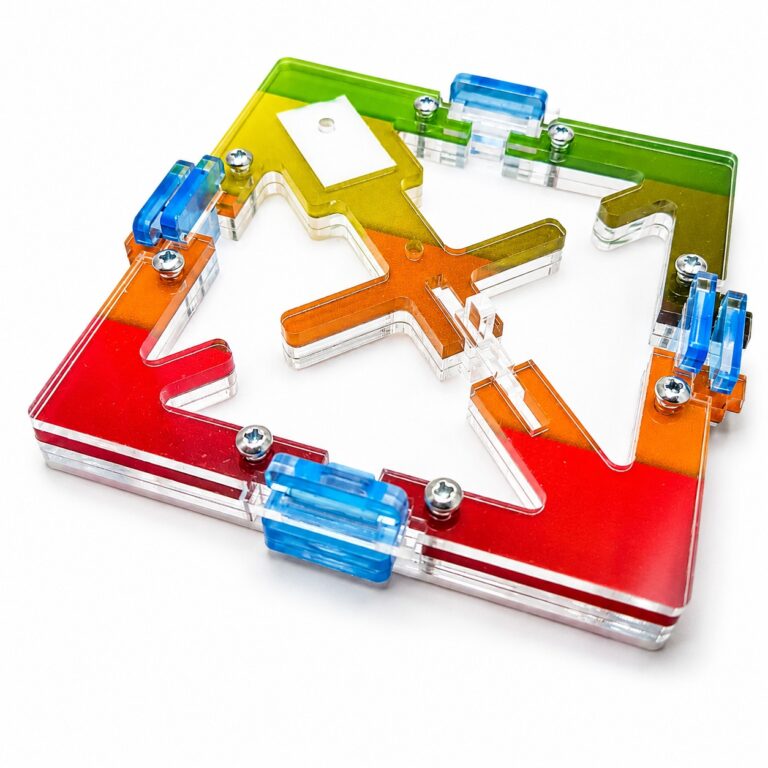
Four arms of chambers meet at one junction, so nothing in the Pulsar 10×10 cm sits more than a short hop from the centre, so traffic stays quick and brood care stays efficient. Lockable nut-and-screw ports (one per arm), a sponge chamber and 9 mm rooms suit up to ~350 Lasius, Tetramorium, Messor or smaller Camponotus, and it links into a growing modular setup.
Short routes, busy colony, easy to watch.
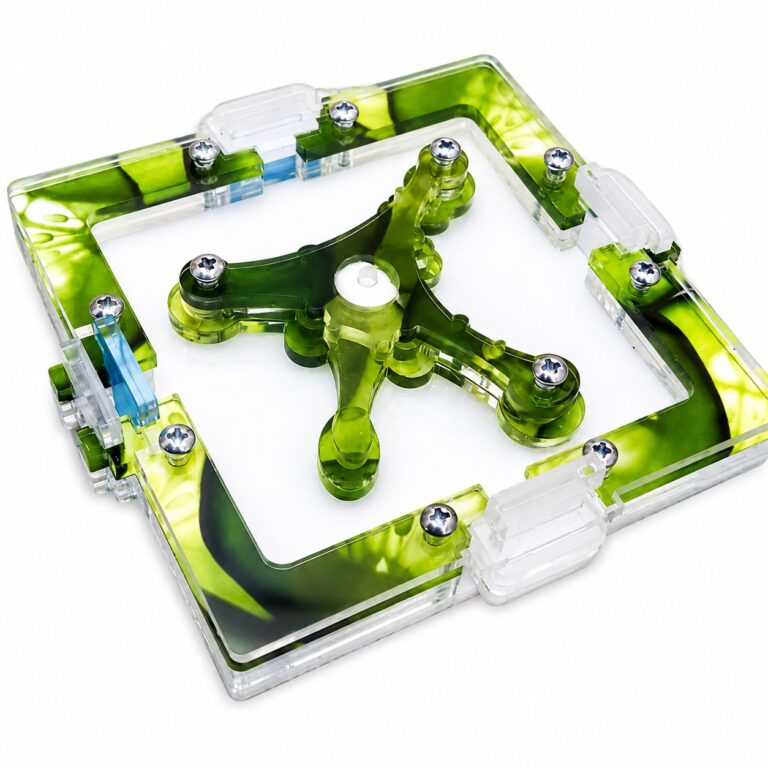
Some colonies need a moment to read a new nest. The Nexus 10×10 cm isn’t one of those puzzles: a large central room ringed by smaller chambers gives an obvious heart, and the colony settles almost on arrival. Lockable nut-and-screw ports, a sponge chamber and 9 mm rooms suit up to ~350 Lasius, Tetramorium, Messor or smaller Camponotus, and it links into a growing modular setup.
Give the colony a heart and rooms around it.
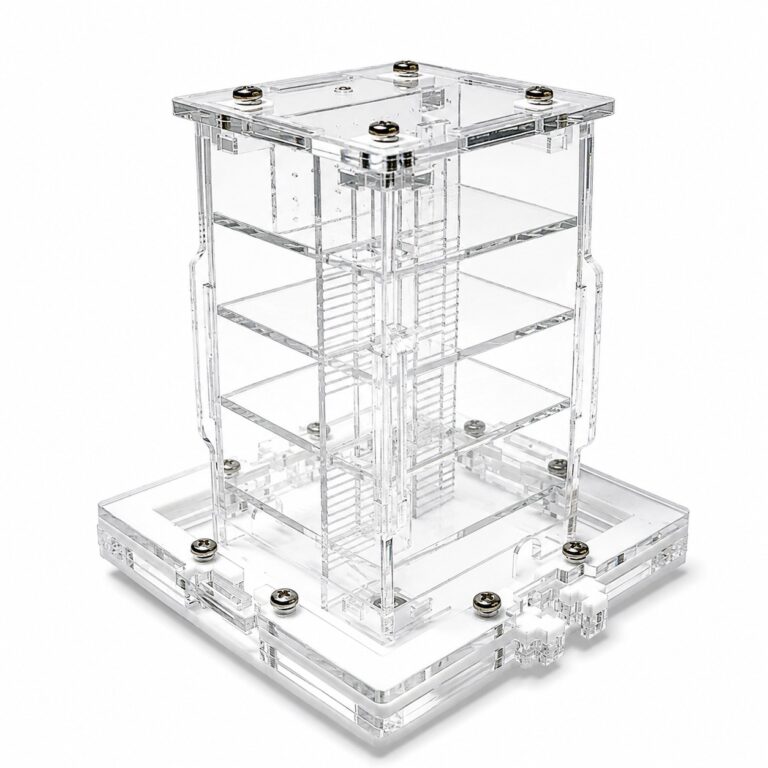
Most 10×10 nests are flat. The Tower stacks four floors onto that same footprint, so the colony moves brood up and down the levels to chase the warmth it wants. Lockable nut-and-screw ports, a sponge chamber and 9 mm rooms suit up to ~350 Lasius, Tetramorium, Messor or smaller Camponotus, and it links into a growing modular setup.
Let the colony pick its floor by climate.
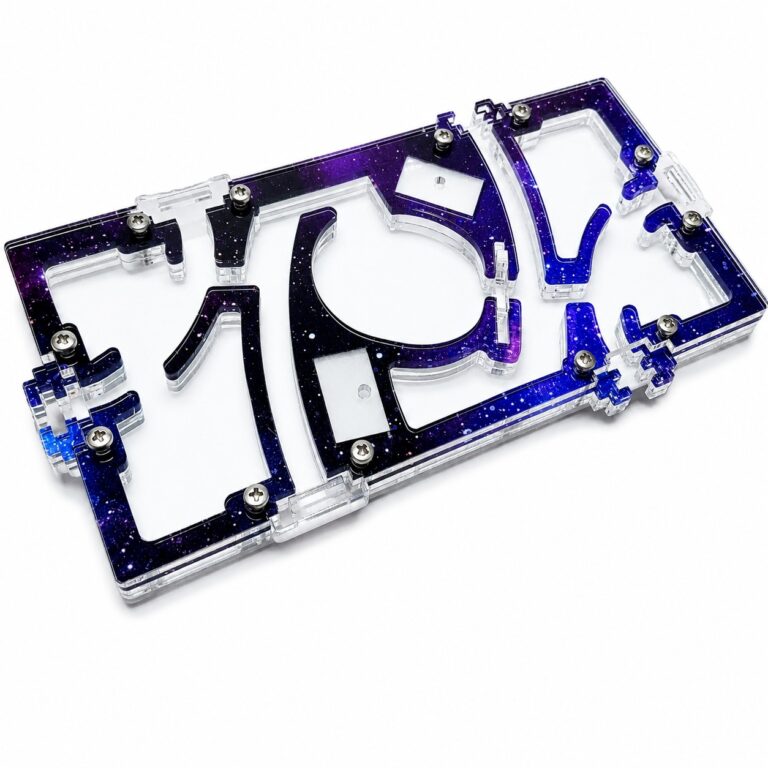
A loop runs the outer edge of the Orbit 20×10 cm and ties every inner chamber into a circle, so workers patrol it constantly and the colony fills the whole nest fast and evenly, with no dead-end rooms left empty. Six lockable ports, two sponge chambers, one internal latch and 9 mm rooms house ~400–800 Lasius, Tetramorium, Messor or smaller Camponotus.
The natural step up from a 10×10 starter.
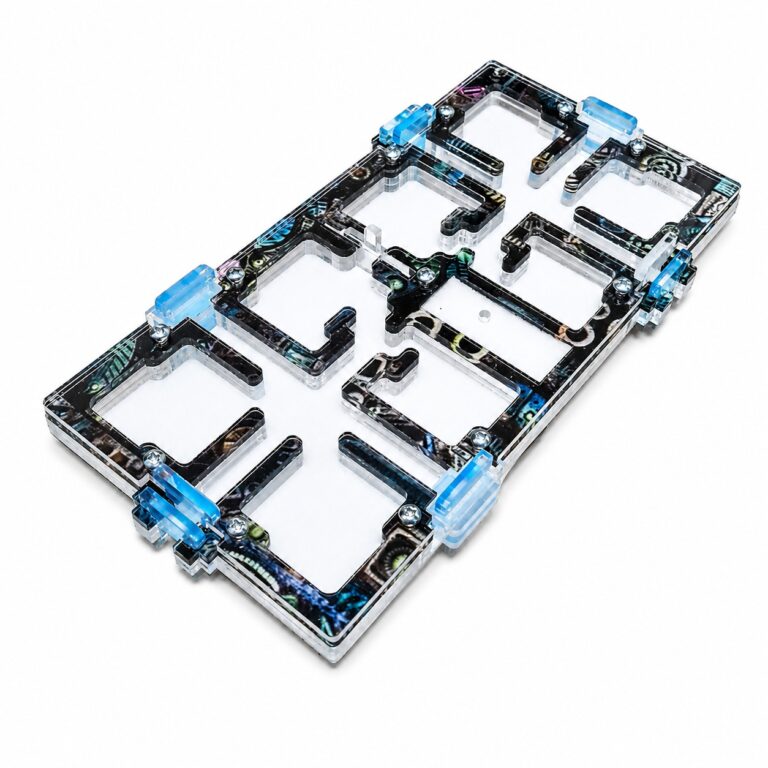
Your colony loved the orderly Quad grid and simply outgrew it. The Quad 20×10 cm carries the same clearly-zoned rooms onto a wider footprint — more of them, so a bigger colony keeps brood, food and waste apart without crowding. Six lockable ports, two sponge chambers, one internal latch and 9 mm rooms house ~400–800 Lasius, Tetramorium, Messor or smaller Camponotus.
The Quad grid, sized for a bigger colony.
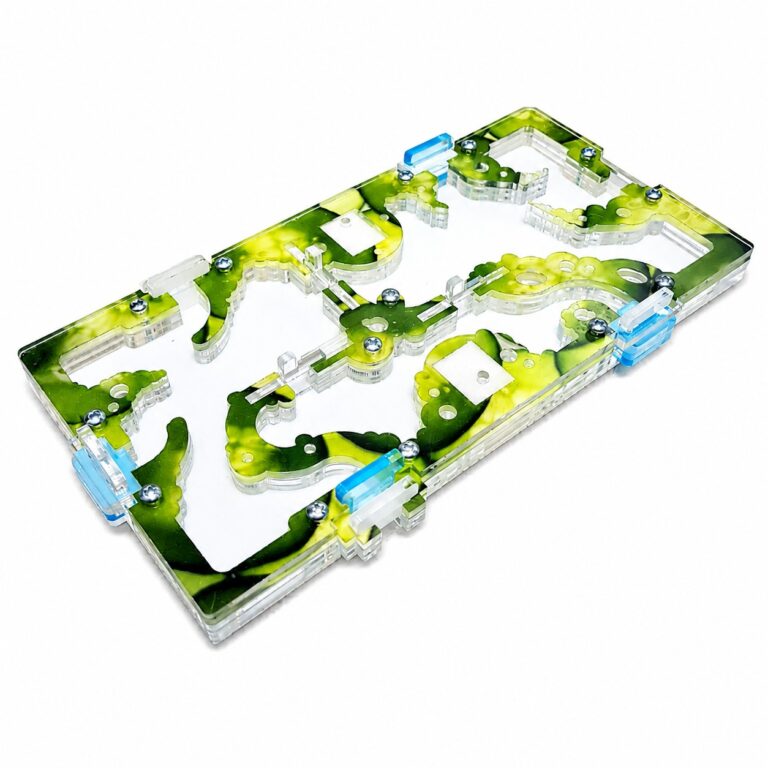
Growing colonies turn messy when they rattle around an oversized nest. The Vortex 20×10 cm answers that with three parallel zones the colony fills one at a time, plus an internal latch to hold it back until it’s ready. Six lockable ports, two sponge chambers and 9 mm rooms house ~400–800 Lasius, Tetramorium, Messor or smaller Camponotus, all linkable into a bigger formicarium.
Grow the colony zone by zone, stay tidy.
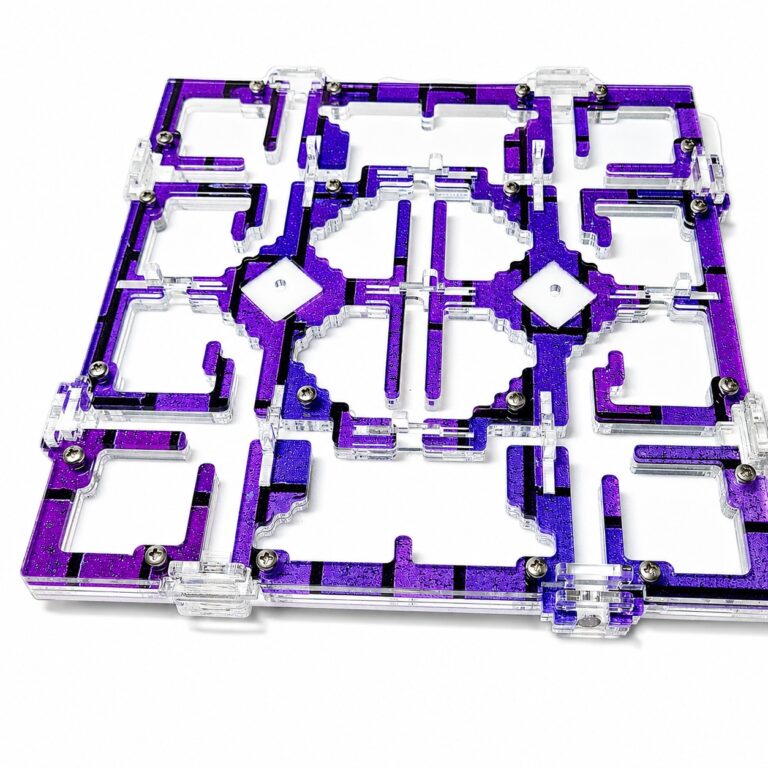
Watch a big colony run like a city. The Matrix 20×20 cm lays out rows and columns of interconnected rooms: dozens of defined cells the colony zones into brood, stores and quarters, readable like a street map behind clear acrylic. Eight lockable ports, two sponge chambers, four internal latches for staged release and 9 mm rooms for Lasius, Tetramorium, Messor and smaller Camponotus.
Watch a colony run its own city.
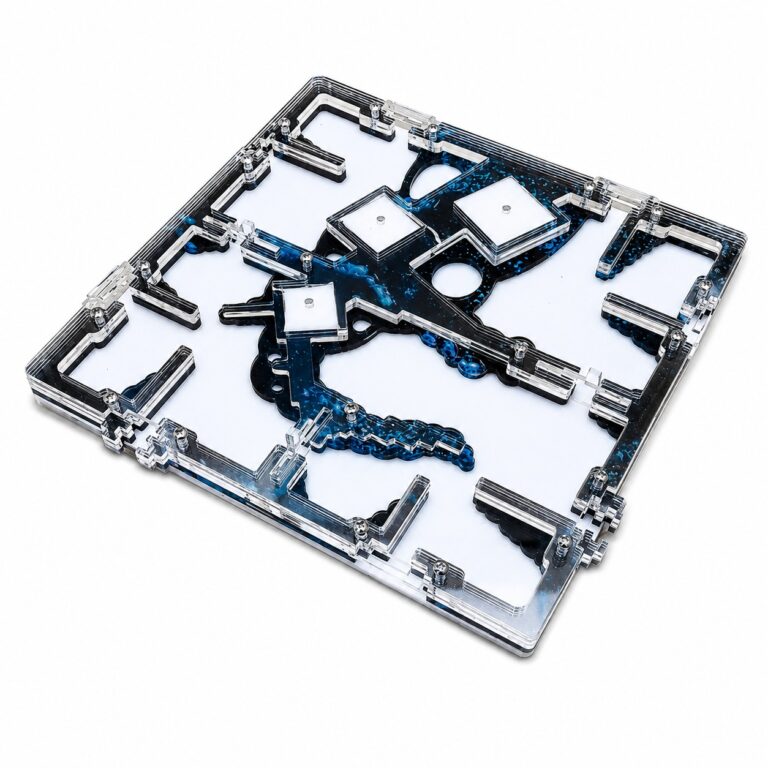
No wild colony digs a grid. The Helix 20×20 cm honours that with sculptural, irregular chambers that read like the branching galleries of a real underground nest: a living cross-section behind clear acrylic, sized for a large established colony. Eight lockable ports, two sponge chambers, four internal latches for staged release and 9 mm rooms for Lasius, Tetramorium, Messor and smaller Camponotus.
Give a big colony a wild, natural home.