

Showing all 13 results
Formicaria for Sale — Ant Farms, Nests & Arenas for Every Colony
Buy formicaria online from ANTonTOP — ant farms, nests, and arenas in acrylic, gypsum, ytong, wooden, cork, and digfix builds, shipped across the EU and the UK. 48 formicarium models in stock. Live arrival guarantee on every paired colony. Year-round shipping with thermal packaging.
Browse the formicaria catalogue
By material: Acrylic · Gypsum · Ytong · Wooden · Cork · Digfix · Unique & Mix
By component: Standalone Nests · Arenas & Terrariums · Tube Holders
- Accessories
- Ants
- Ants For Beginners
- Camponotus species
- Carebara species
- Carpenter ants
- Crematogaster species
- Exotic Ants
- Formica species
- Harvester Ants
- Hibernating Species
- Honeypot ants
- Large Ant Species
- Lasius species
- Messor species
- Monomorium species
- Myrmecia species
- Myrmecocystus species
- No Hibernation Needed
- Odontomachus species
- Pheidole species
- Pogonomyrmex species
- Polyrhachis species
- Small Ant Species
- Trap-Jaw Ants
- Tropical Ants
- Book Atlas
- Cataglyphis species
- Decorations
- Food
- Formicaria
- Kits
- Other
- SALE
- Toys
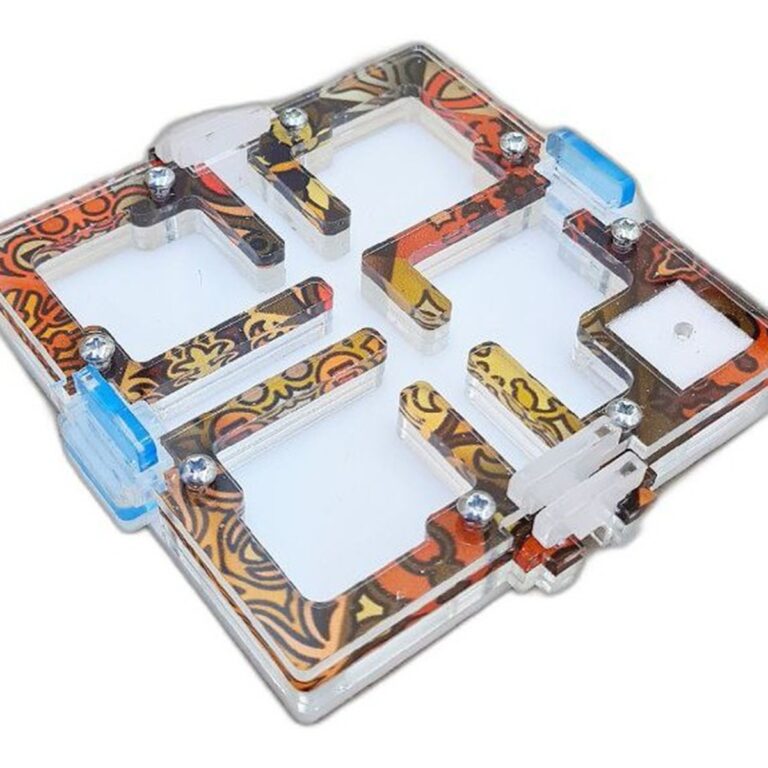
Buy one module today, build a whole system later — that is the idea behind the Modular Nest Nebula (10 × 10 cm). A wide central gallery splits into two side corridors, a branching path small-to-medium colonies of up to ~350 workers adopt fast. Lockable nut-and-screw entrances, a sponge humidity chamber and standard ports slot it straight into a growing setup. Fits Lasius, Tetramorium, Messor and most popular species; 9 mm chamber height.
Build the colony’s home module by module — order your Nebula today.
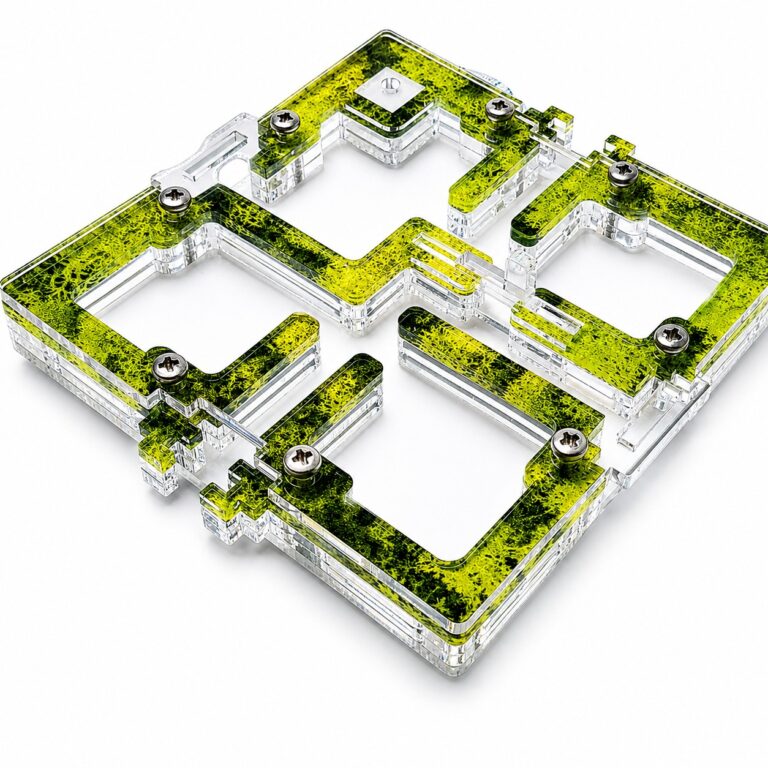
A square grid of rooms gives the colony clean lines to organise from day one: brood here, food stores there, quarters apart. The Quad 10×10 cm suits the orderly, zone-keeping species especially well. Lockable nut-and-screw ports, a sponge chamber and 9 mm rooms hold up to ~350 Lasius, Tetramorium, Messor or smaller Camponotus, with a 20×10 version for when it outgrows this one.
A tidy, organised home from day one.
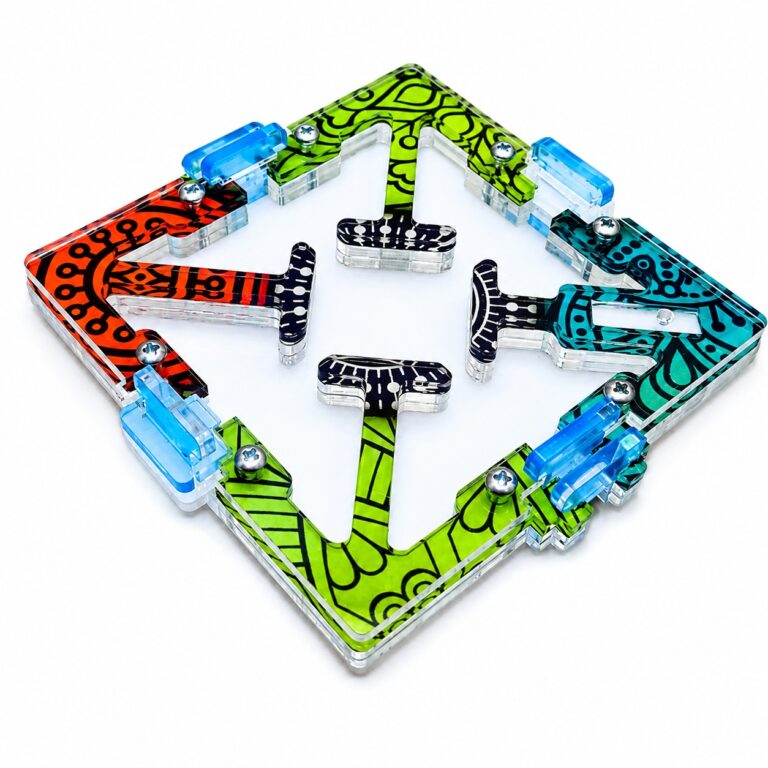
When shelf space is the constraint, the Prism 10×10 cm wins on density: tightly packed chambers cram an unusually generous amount of nest into the smallest footprint, and the close walls trap a steadier warmth and humidity. Lockable nut-and-screw ports, a sponge chamber and 9 mm rooms suit up to ~350 Lasius, Tetramorium, Messor or smaller Camponotus.
Maximum nest, minimum shelf space.
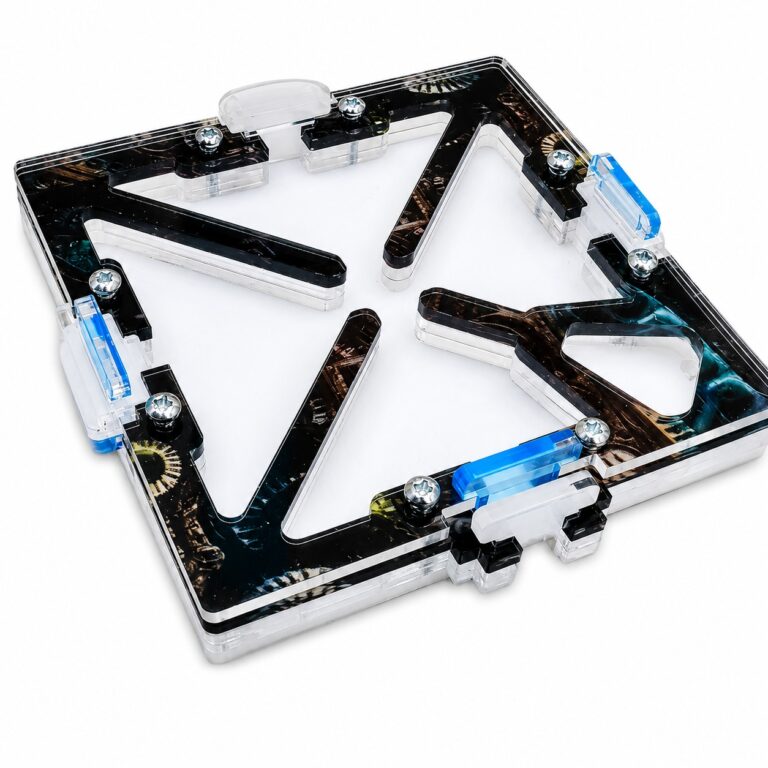
Run the corridors on a diagonal and you fit the longest connected path a 10×10 footprint allows. That’s the Nova 10×10 cm: more usable run than a straight grid the same size, so a founding colony settles it evenly from the start. Lockable nut-and-screw ports, a sponge chamber and 9 mm rooms suit up to ~350 Lasius, Tetramorium, Messor or smaller Camponotus.
Start small, grow module by module.
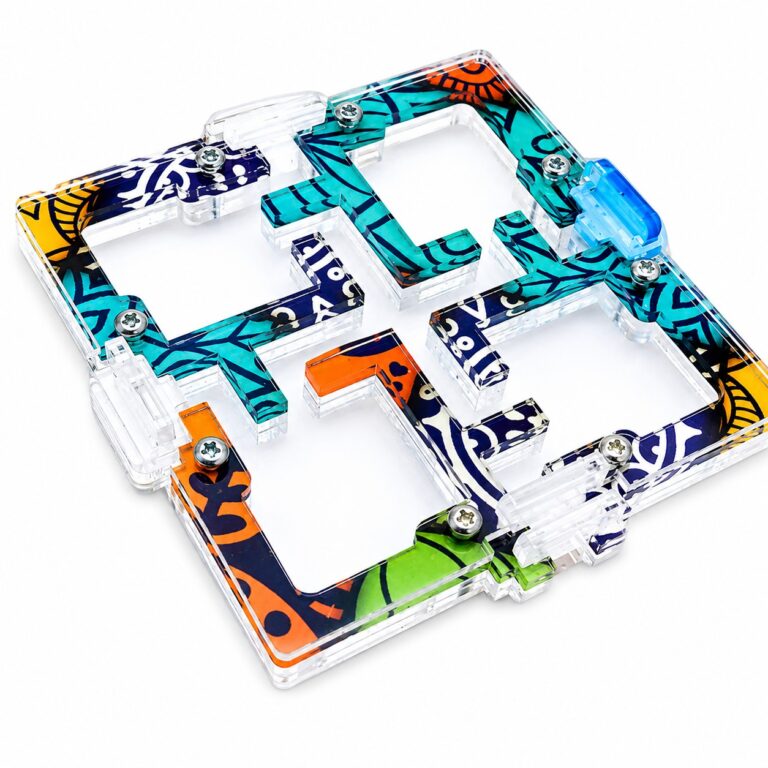
Ants don’t want every room the same — some dark and enclosed for brood, others open for traffic. The Quartz 10×10 cm gives them that with offset, asymmetric chambers instead of a uniform grid, so the colony gives each little space its own job. Lockable nut-and-screw ports, a sponge chamber and 9 mm rooms suit up to ~350 Lasius, Tetramorium, Messor or smaller Camponotus.
Varied rooms a colony actually uses differently.
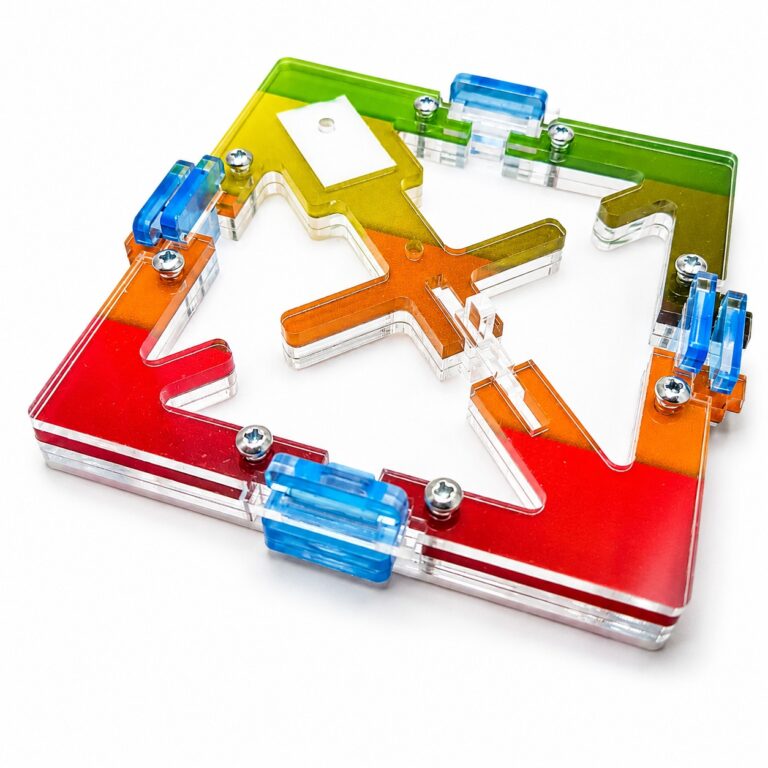
Four arms of chambers meet at one junction, so nothing in the Pulsar 10×10 cm sits more than a short hop from the centre, so traffic stays quick and brood care stays efficient. Lockable nut-and-screw ports (one per arm), a sponge chamber and 9 mm rooms suit up to ~350 Lasius, Tetramorium, Messor or smaller Camponotus, and it links into a growing modular setup.
Short routes, busy colony, easy to watch.
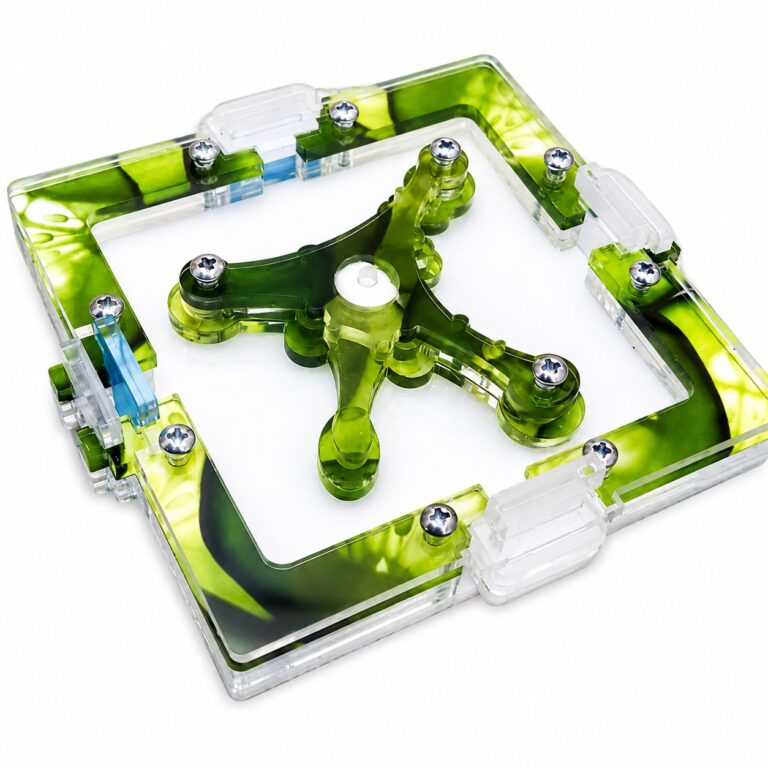
Some colonies need a moment to read a new nest. The Nexus 10×10 cm isn’t one of those puzzles: a large central room ringed by smaller chambers gives an obvious heart, and the colony settles almost on arrival. Lockable nut-and-screw ports, a sponge chamber and 9 mm rooms suit up to ~350 Lasius, Tetramorium, Messor or smaller Camponotus, and it links into a growing modular setup.
Give the colony a heart and rooms around it.
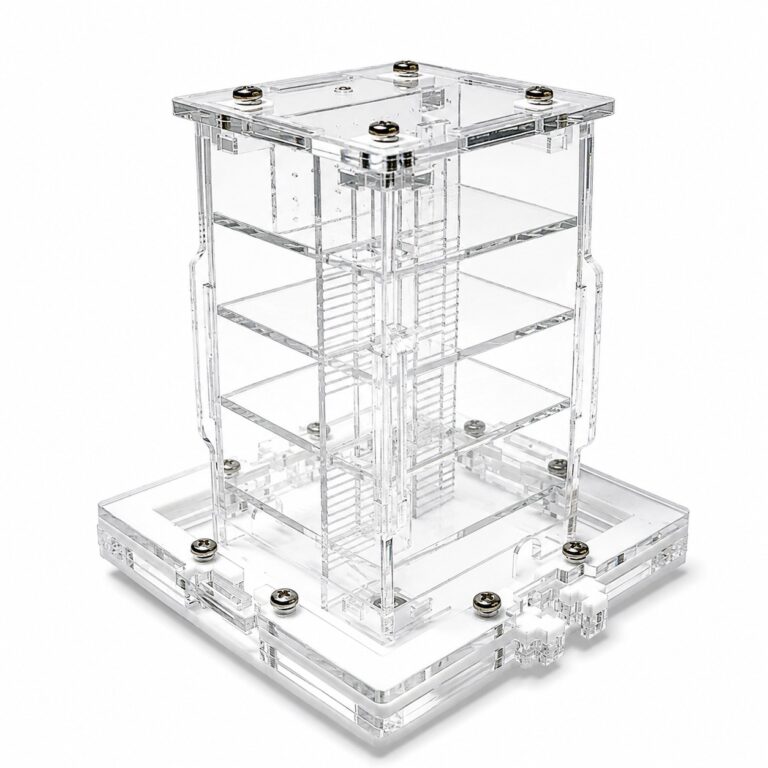
Most 10×10 nests are flat. The Tower stacks four floors onto that same footprint, so the colony moves brood up and down the levels to chase the warmth it wants. Lockable nut-and-screw ports, a sponge chamber and 9 mm rooms suit up to ~350 Lasius, Tetramorium, Messor or smaller Camponotus, and it links into a growing modular setup.
Let the colony pick its floor by climate.
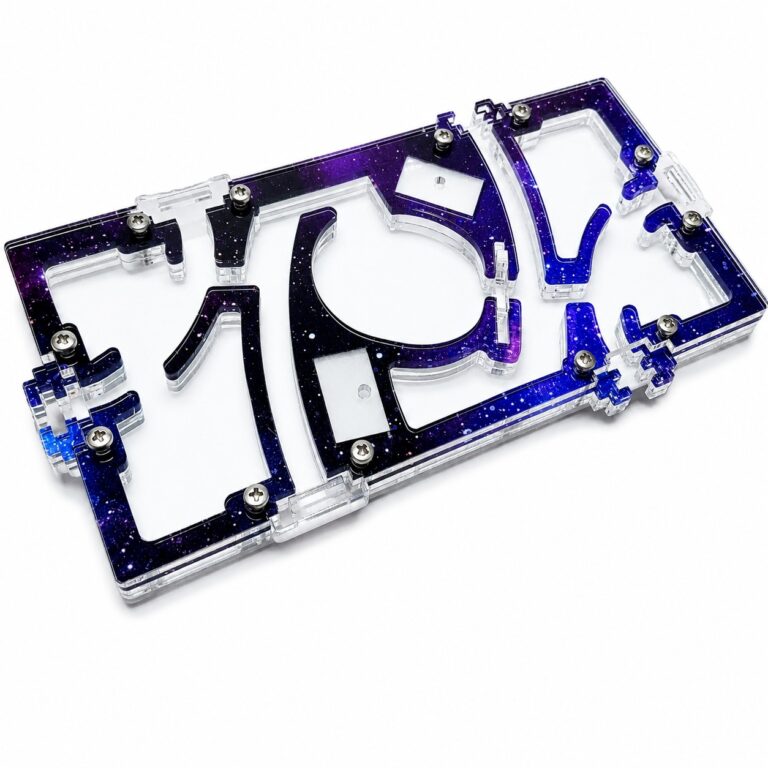
A loop runs the outer edge of the Orbit 20×10 cm and ties every inner chamber into a circle, so workers patrol it constantly and the colony fills the whole nest fast and evenly, with no dead-end rooms left empty. Six lockable ports, two sponge chambers, one internal latch and 9 mm rooms house ~400–800 Lasius, Tetramorium, Messor or smaller Camponotus.
The natural step up from a 10×10 starter.
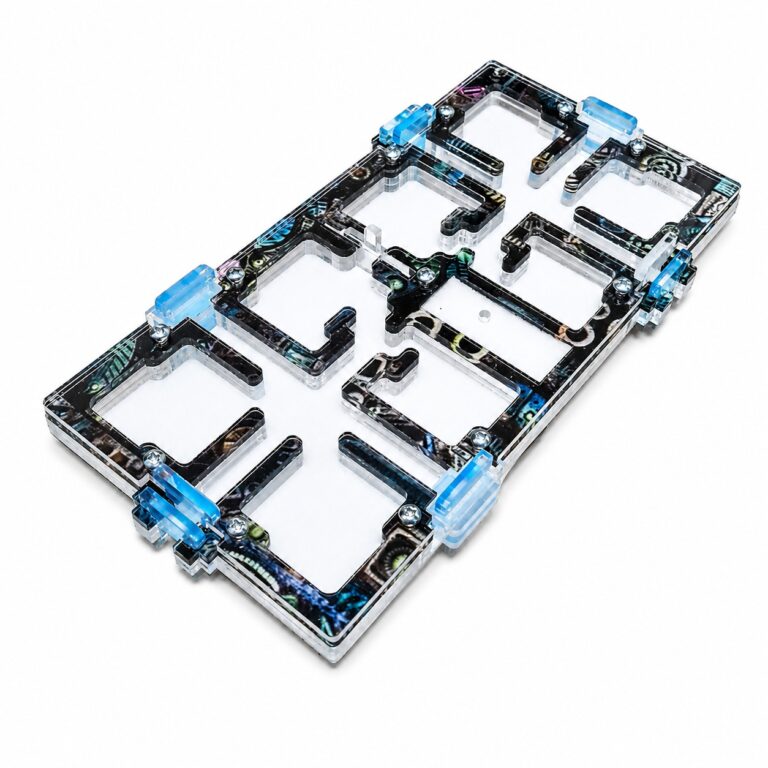
Your colony loved the orderly Quad grid and simply outgrew it. The Quad 20×10 cm carries the same clearly-zoned rooms onto a wider footprint — more of them, so a bigger colony keeps brood, food and waste apart without crowding. Six lockable ports, two sponge chambers, one internal latch and 9 mm rooms house ~400–800 Lasius, Tetramorium, Messor or smaller Camponotus.
The Quad grid, sized for a bigger colony.
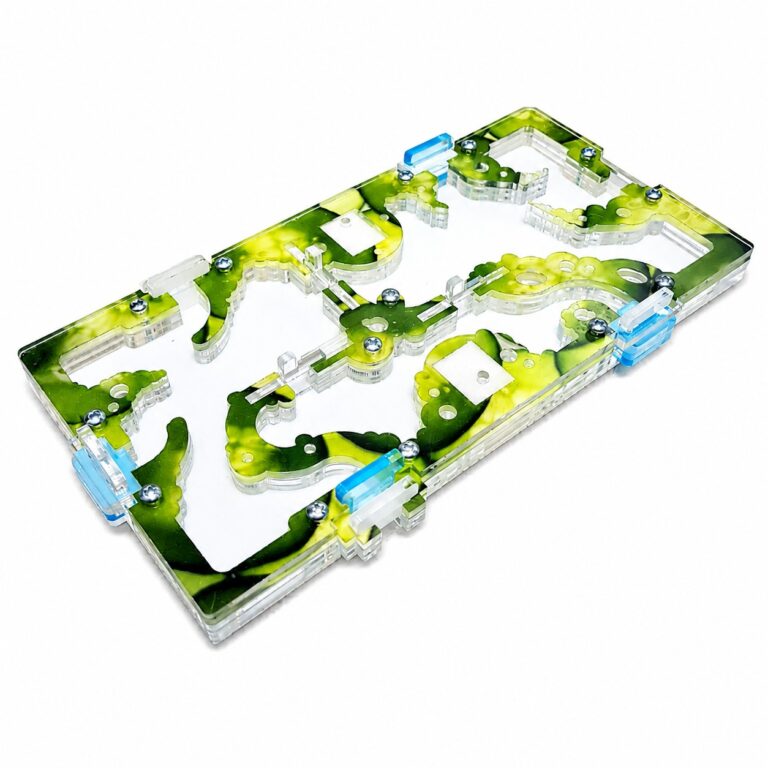
Growing colonies turn messy when they rattle around an oversized nest. The Vortex 20×10 cm answers that with three parallel zones the colony fills one at a time, plus an internal latch to hold it back until it’s ready. Six lockable ports, two sponge chambers and 9 mm rooms house ~400–800 Lasius, Tetramorium, Messor or smaller Camponotus, all linkable into a bigger formicarium.
Grow the colony zone by zone, stay tidy.
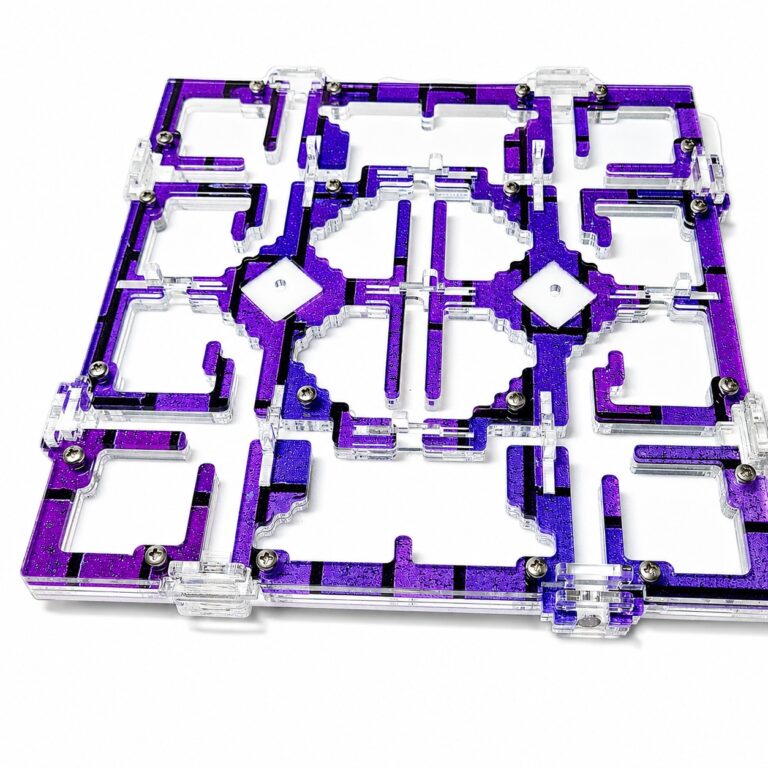
Watch a big colony run like a city. The Matrix 20×20 cm lays out rows and columns of interconnected rooms: dozens of defined cells the colony zones into brood, stores and quarters, readable like a street map behind clear acrylic. Eight lockable ports, two sponge chambers, four internal latches for staged release and 9 mm rooms for Lasius, Tetramorium, Messor and smaller Camponotus.
Watch a colony run its own city.
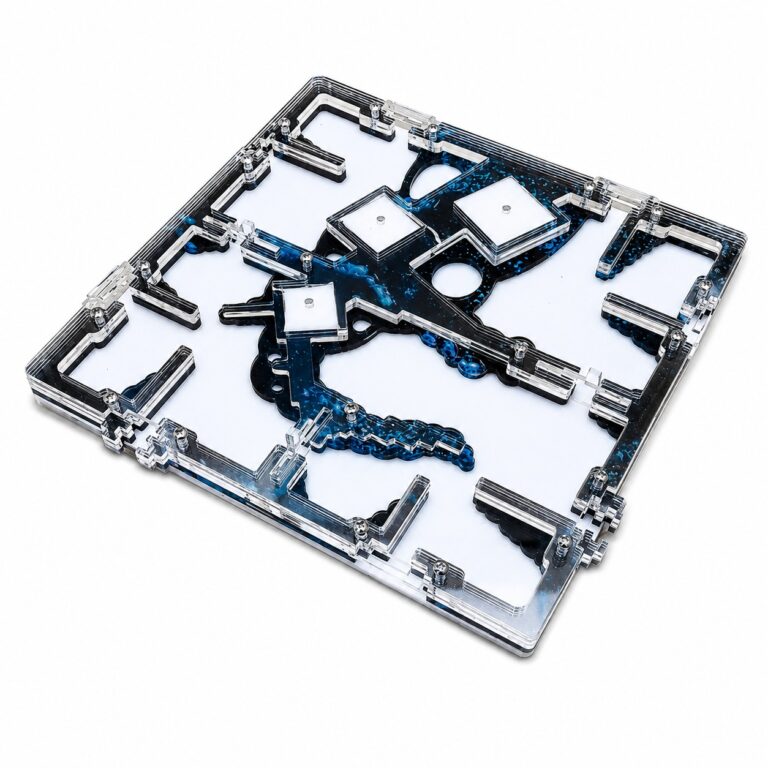
No wild colony digs a grid. The Helix 20×20 cm honours that with sculptural, irregular chambers that read like the branching galleries of a real underground nest: a living cross-section behind clear acrylic, sized for a large established colony. Eight lockable ports, two sponge chambers, four internal latches for staged release and 9 mm rooms for Lasius, Tetramorium, Messor and smaller Camponotus.
Give a big colony a wild, natural home.

Year-round shipping across Europe and the UK
Other ant shops stop shipping when it gets too cold or too hot. We do not. ANTonTOP ships formicaria and ant nests 12 months a year, because every order leaves Poland in seasonal thermal packaging matched to the destination weather. Winter orders include a 72-hour heat pack that keeps the contents above 18 °C even when outdoor temperatures drop below freezing. Summer orders include a cool gel pack and ventilated packaging that hold the contents below 28 °C through heat waves.
Inside Poland we ship via InPost parcel locker (1 to 2 business days). Across the EU and to the United Kingdom we ship via DHL (2 to 3 business days for EU destinations, 4 to 7 business days for the UK). No import paperwork is required from you — we handle every shipment the same way as inside the EU.
Delivery times by country
Poland — 1 to 2 business days via InPost parcel locker.
Germany, France, Netherlands, Belgium — 2 to 3 business days via DHL.
Spain — 3 to 4 business days via DHL.
Italy, Czechia, Austria, Denmark, Sweden, all other EU countries — 3 to 5 business days via DHL.
United Kingdom — 4 to 7 business days via DHL. No import paperwork from your side.
Direct from a Polish ant breeder, not a reseller
Every formicarium in our catalogue is one we have personally tested with live colonies at our Poland workshop. We do not list nests we have not kept ants in ourselves. Photography on each product page shows the actual unit, not a manufacturer render.
Questions about a specific build, humidity behaviour, or species fit go straight to the breeder by message — replies come back within 24 hours.
Formicarium types — 6 material lines for sale
Acrylic formicaria — lightweight, fully transparent, non-porous. Best for tropical and dry-climate species (Cataglyphis, Messor, desert Camponotus). 23 acrylic models, single-tube starter to multi-chamber blocks.
Gypsum formicaria — absorbent walls hold humidity naturally without misting. Best for beginners, tropical species, and species that like a stable humid microclimate. The most beginner-tolerant build.
Ytong (aerated concrete) formicaria — porous, mineral, breathable. Good middle ground for European species and most genera with moderate humidity needs.
Wooden formicaria — natural look, excellent insulation, ideal for arboreal and wood-loving species (Crematogaster, some Polyrhachis, Camponotus ligniperda).
Cork formicaria — natural cork bark inserts in a sealed outer chamber. Aesthetic display option with a forest-floor feel. Limited models.
Digfix formicaria — natural excavation substrate; the ants build their own tunnels. Ideal for soil-nesting species (Lasius, Formica, Myrmica, Messor) where natural excavation behaviour matters.
Unique / mix formicaria — aquarium conversions, ponerine-specific setups, and one-of-a-kind ant farm concepts for keepers who want something different.
Standalone components
Nests (modular) — just the nest block, no built-in arena. Connect to any standard ANTonTOP arena via 16 mm tubing as the colony outgrows the first chamber.
Arenas and Terrariums — dedicated foraging spaces (outworlds). S to XL sizes to match any colony scale.
Tube holders — test tube stands for founding queens and small colonies before they move into a proper nest.
How to choose your first formicarium
For founding queens (under 30 workers): a test tube nest is enough. Move into a small formicarium once the first 15-20 workers are out and brood no longer fits.
For small colonies (30 to 200 workers): an S or M acrylic or gypsum nest paired with a small arena. Most beginners stay here for 6 to 12 months.
For mid colonies (200 to 800 workers): an L multi-chamber nest. Switch to a digfix or wooden build if the species naturally excavates.
For mature display colonies (800+ workers): an XL multi-chamber block plus a large arena. Camponotus singularis, Myrmecocystus repletes, and Polyrhachis dives shine in large transparent acrylic builds.
What every formicarium order includes
- The formicarium you ordered, packaged to avoid scratching the acrylic or chipping the gypsum during transit.
- Connection tubing and starter accessories where applicable (depends on the model).
- A short setup guide for the specific build — first-time humidity, where to attach a heat mat, how to connect to an arena.
- Tracking number with door-to-door visibility, sent on dispatch day.
- Quality guarantee — if a unit arrives damaged we replace it at our cost.
Trusted by 4,000+ ant keepers
Follow the work behind the catalogue on YouTube (colony videos), Instagram (queen photography), TikTok (short-form clips), and Facebook. Join 4,000+ ant keepers following ANTonTOP across these channels.
Frequently asked questions about formicaria
What is the best formicarium for beginners?
A small gypsum or acrylic nest paired with a small arena. Gypsum is the most forgiving for humidity, acrylic the easiest to clean. Match the choice to your species — dry-climate ants in acrylic, beginners with humidity-loving species in gypsum.
Acrylic, gypsum, ytong or wooden — which build is best?
Acrylic gives the clearest view and easiest cleaning; gypsum holds humidity naturally; ytong is breathable for moderate-humidity species; wooden insulates and suits arboreal genera. Pick by species, not by aesthetics alone.
How do I control humidity in a formicarium?
Gypsum and digfix builds absorb water and hold humidity for days. Acrylic and ytong need a wet sponge or syringe misting on one side. Aim for 40-60 % in the nest and 60-80 % in the arena for most species.
Do you ship formicaria with the queen ant?
Formicaria are sold separately from live colonies. To buy a formicarium paired with a queen, browse our Kits section — full setups with the colony already inside.
How long does delivery take?
1 to 2 business days inside Poland via InPost. 2 to 3 days to Germany, France, Netherlands, Belgium via DHL. 3 to 5 days to other EU countries. 4 to 7 days to the United Kingdom via DHL.
Can I expand a formicarium later?
Yes. All our nests use a standard 16 mm tubing connector, so you can chain additional chambers, attach a larger arena, or connect a second nest as the colony outgrows the first.
What's the difference between a nest and an arena?
The nest is where the queen and brood live, protected from light and disturbance. The arena (outworld) is the open foraging area where workers eat, drink, and explore. A complete setup has both connected via tubing.
Does a formicarium need cleaning?
The arena gets cleaned weekly (remove dead food, dead workers, empty seed husks). The nest itself is rarely cleaned — the workers handle inside hygiene. Wipe outer acrylic walls with a microfibre cloth if dusty.
Is the formicarium escape-proof?
Yes when set up properly. The nest seal is airtight at the connection ports. The arena rim is treated with talc or Fluon (sold in Accessories) to prevent climb-outs.
What size formicarium should I get for my colony?
Match it to colony stage: under 30 workers — test tube. 30 to 200 — S/M nest. 200 to 800 — L multi-chamber. 800+ — XL display block. Over-sized nests can stress small founding colonies, so start small and expand.