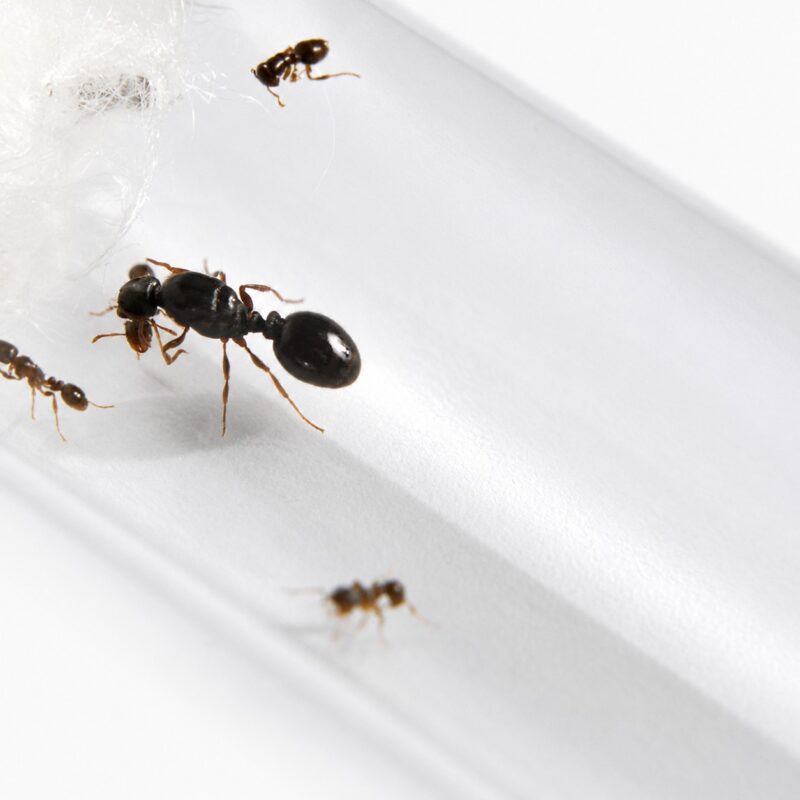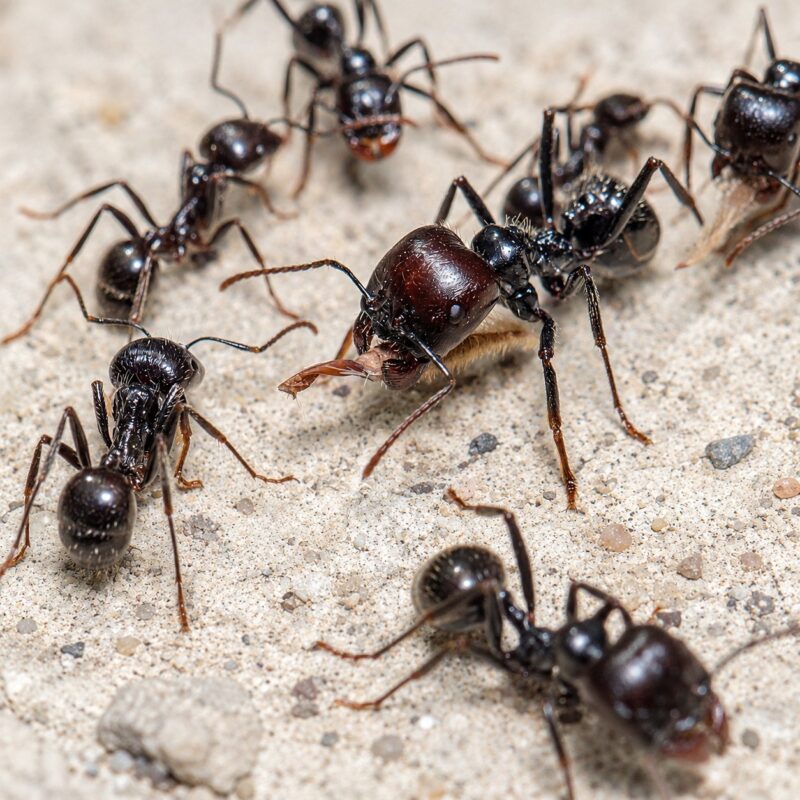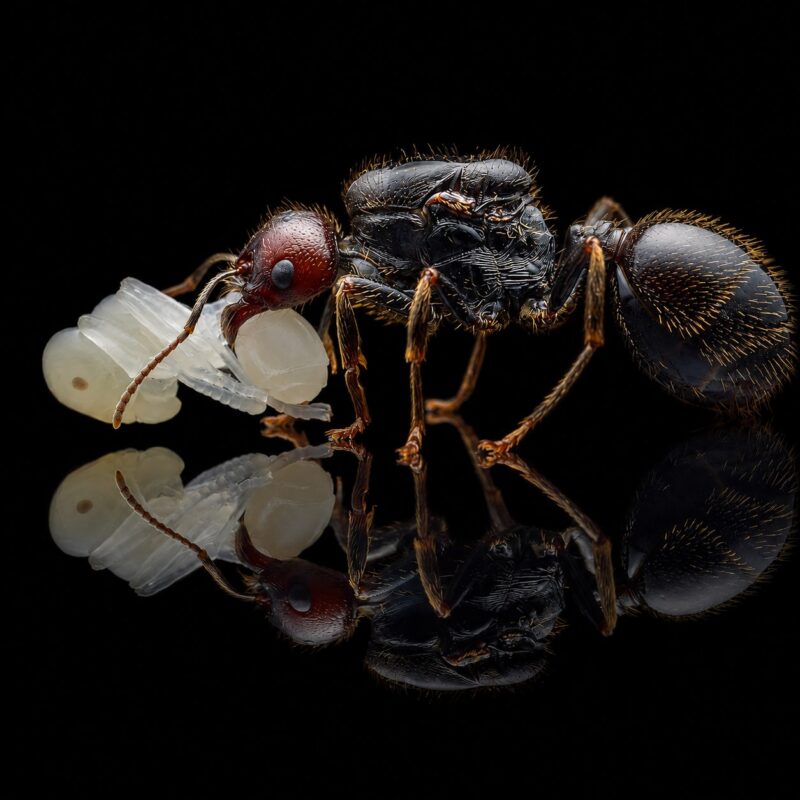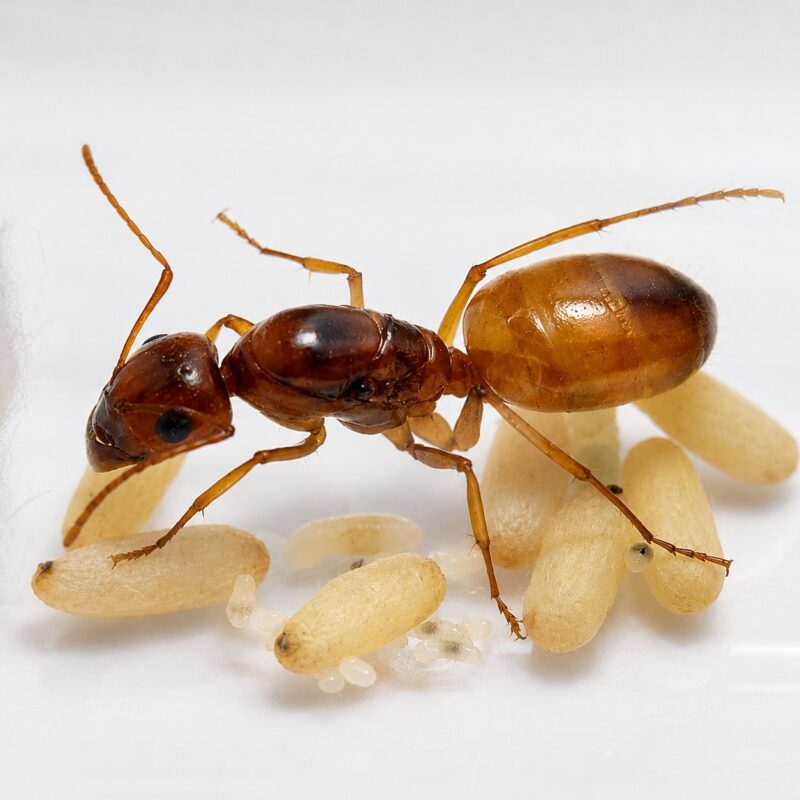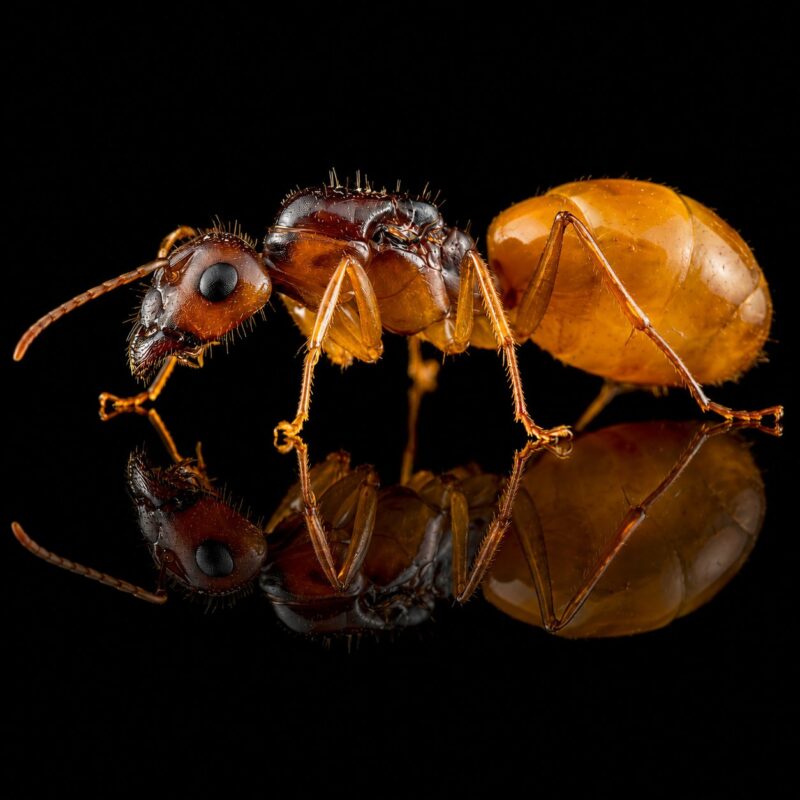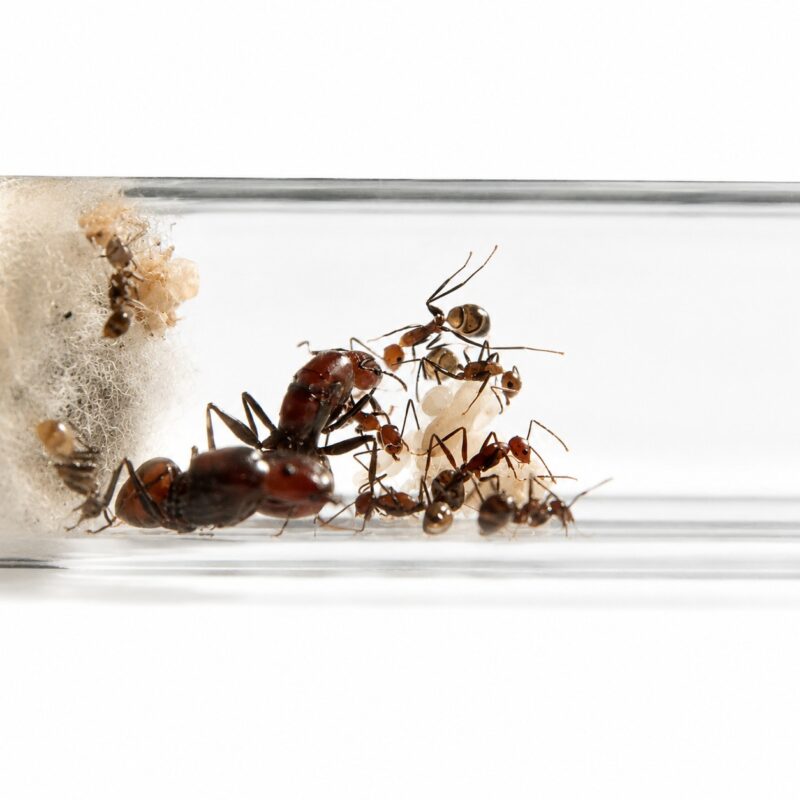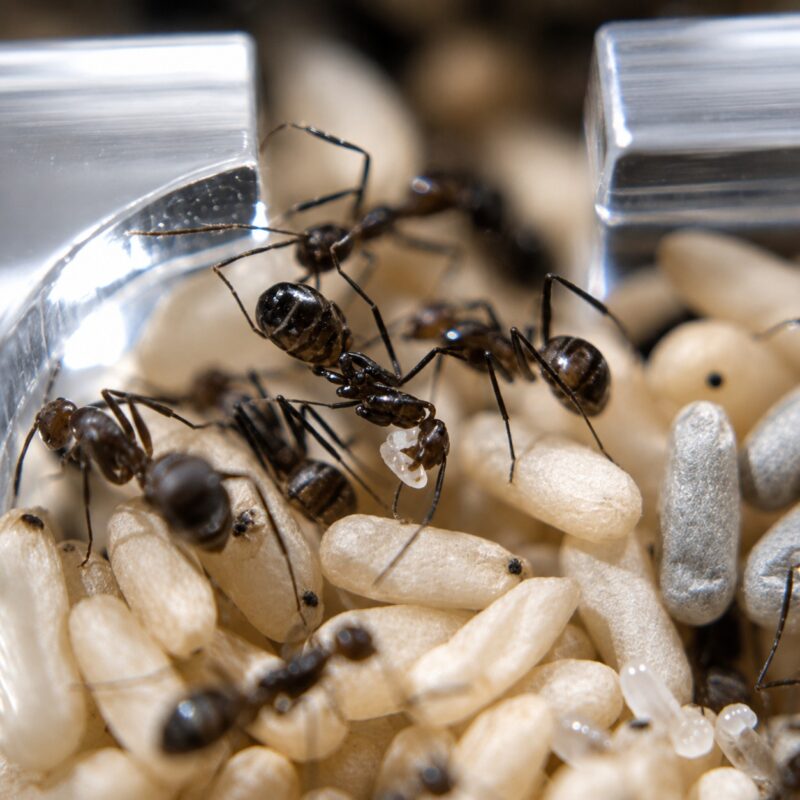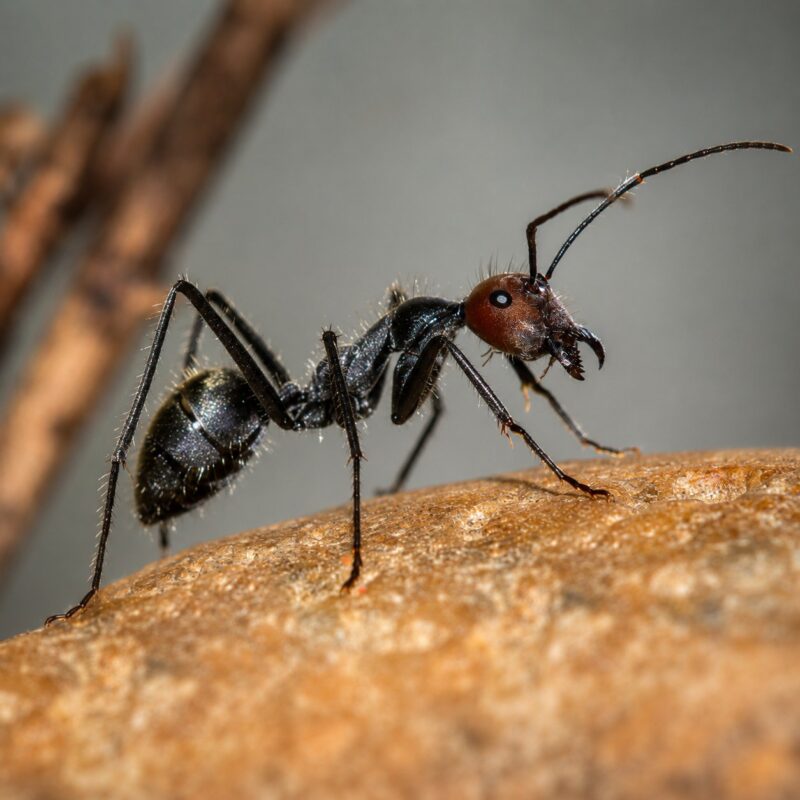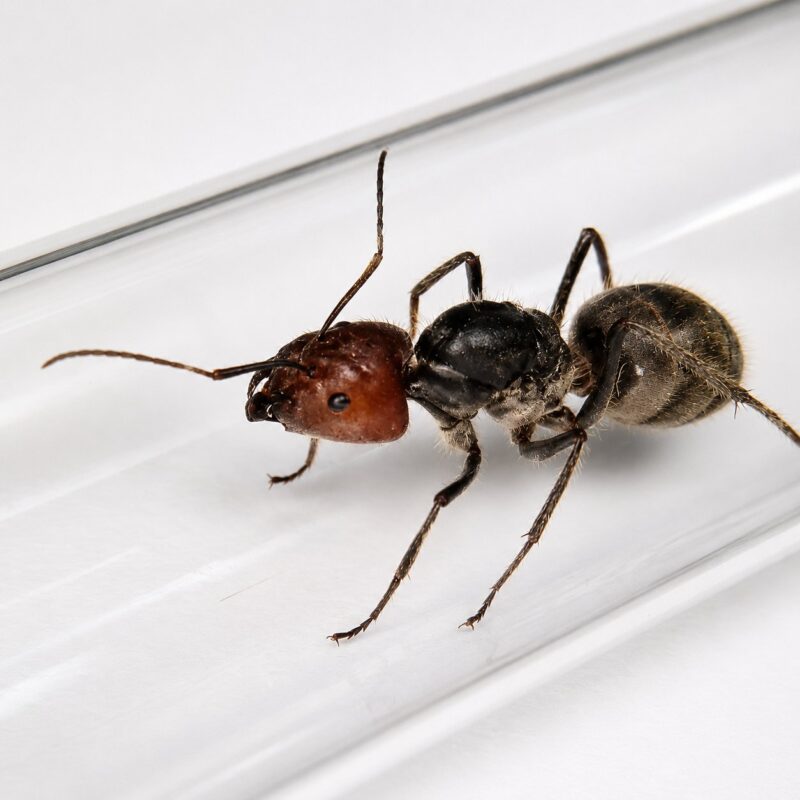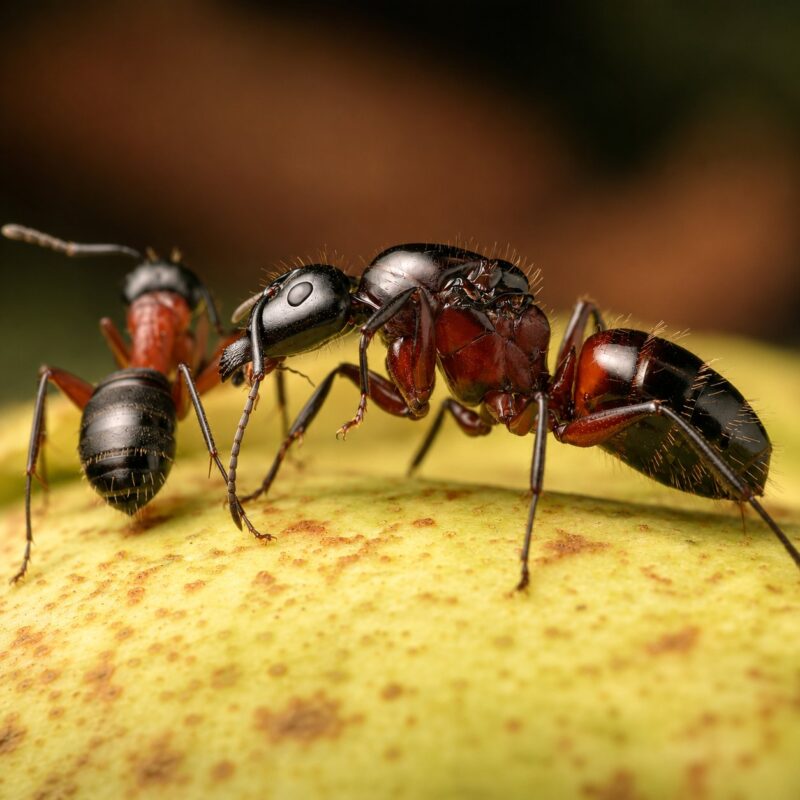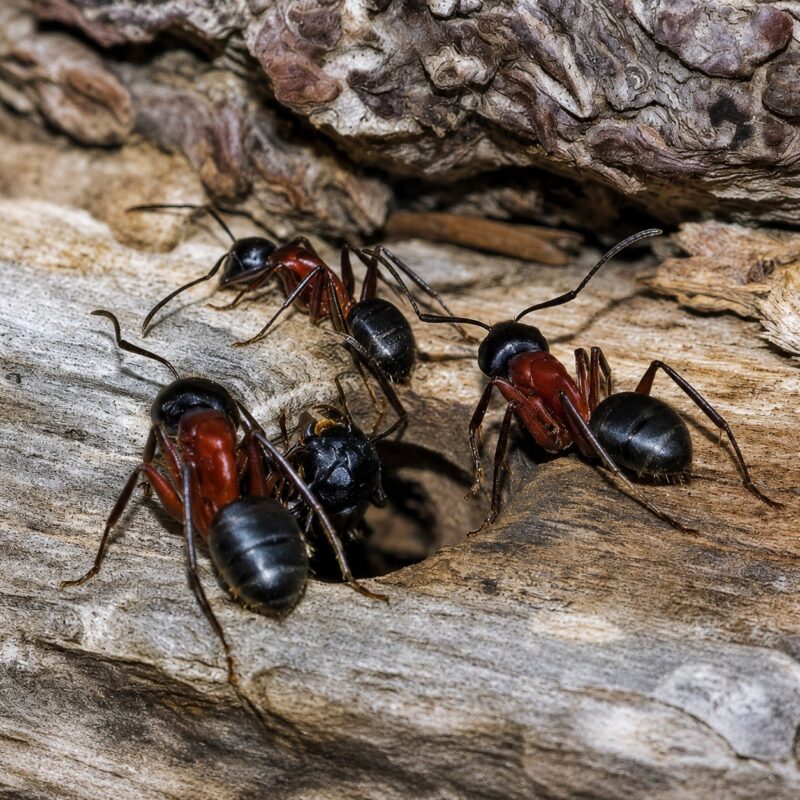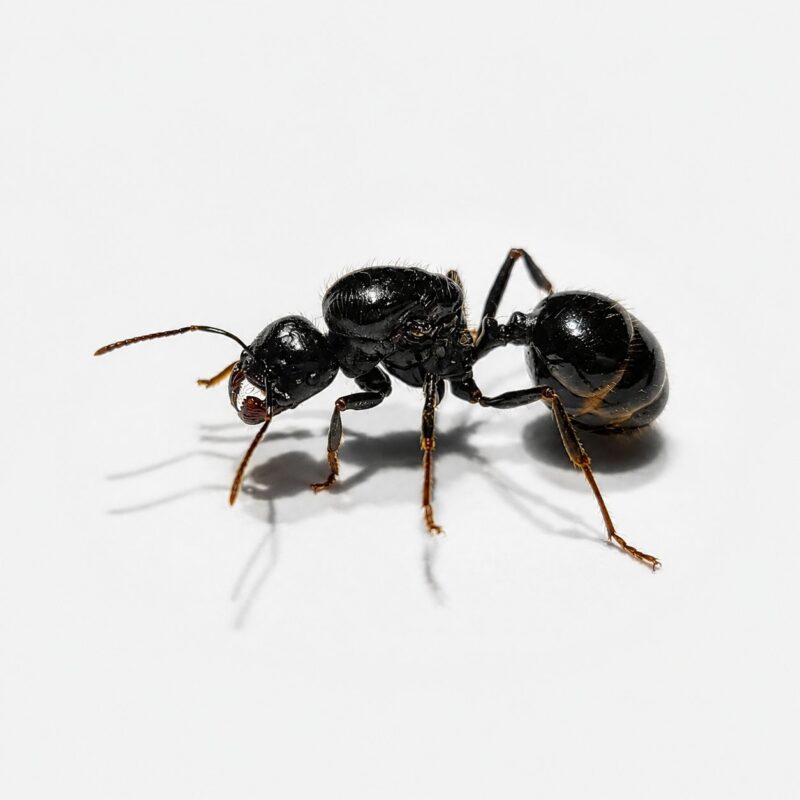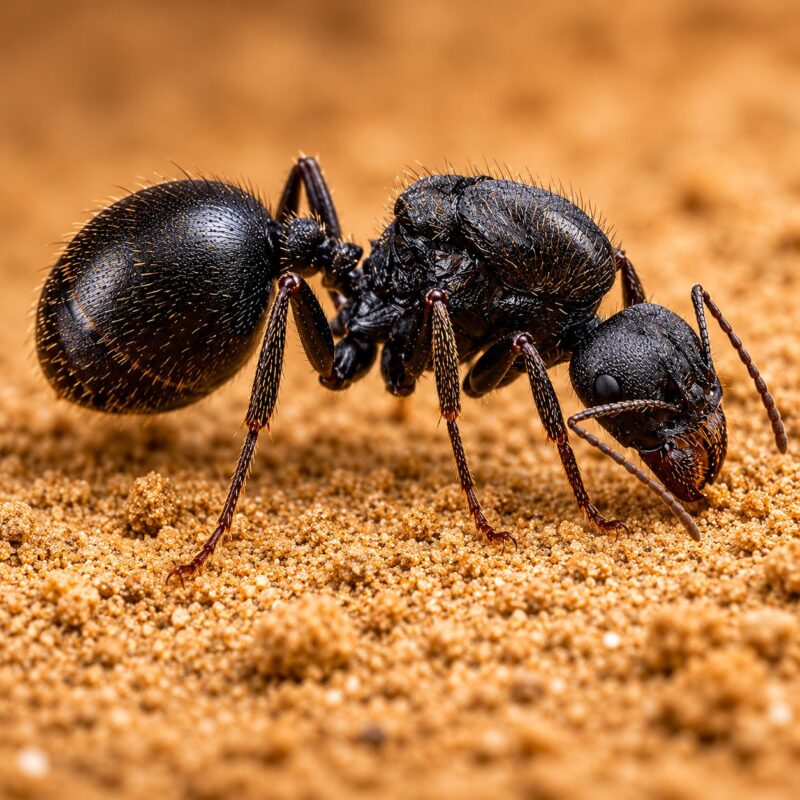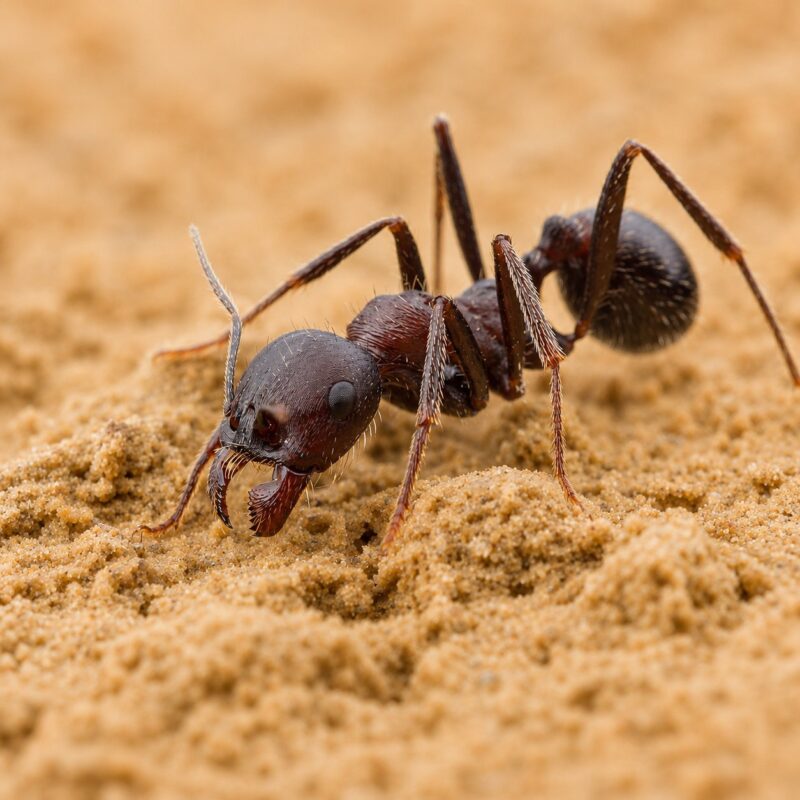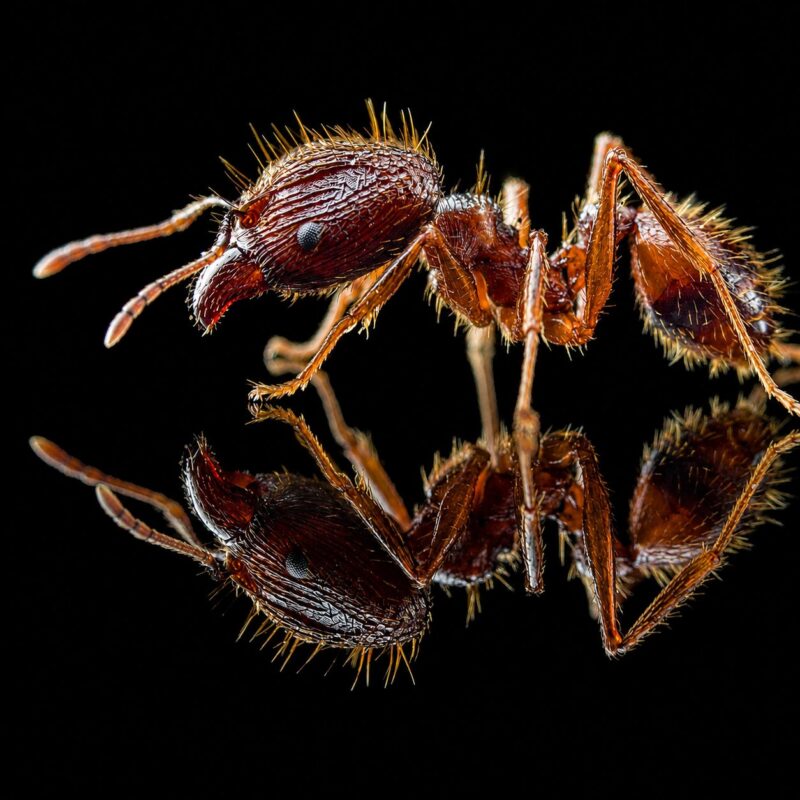

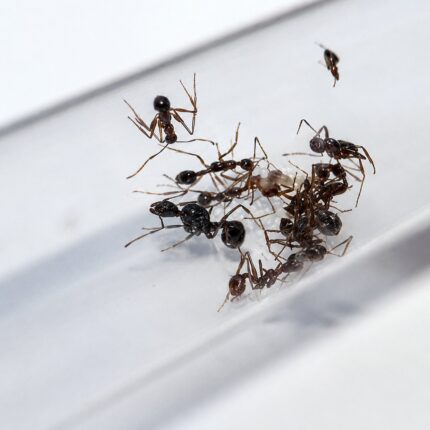
Aphaenogaster splendida
129,50 zł – 279,90 złPrice range: 129,50 zł through 279,90 zł
Live Queen Guarantee
Heat Pack & Summer Cooling
Fertilised Queen in Every Colony
Ships Within 24 h
Free Care Guide
24/7 Expert Support
Description
Slim, fast workers of Aphaenogaster splendida forage in plain daylight, yet the colony never feels crowded, topping out at a tidy 1,000 workers. This Greek species fits a desk-sized nest and makes an approachable step up. Order your Aphaenogaster splendida colony at ANTonTOP.
Free shipping across Europe over 1299 zł.
DHL / InPost / EMS · ships the EU & worldwide.
Intermediate · Q 7-9 mm / W 3-5.5 mm · Up to 1,000 workers · Winter rest at 5-10 °C for 4 months mandatory · Omnivore · Greece (Eastern Mediterranean) · Sting (mild), mild bite
Additional information
| Behavior | |
|---|---|
| Keeping difficulty | |
| Origin | |
| Ant size | |
| Hibernation | |
| Sting |
Has sting |
Aphaenogaster splendida
| Origin | Greece (Eastern Mediterranean) |
|---|---|
| Difficulty | Intermediate |
| Colony form | Monogyne (1 queen) |
| Max workers | Up to 1,000 workers |
| Queen | 7-9 mm |
| Worker | 3-5.5 mm |
| Soldier / major | – |
| Founding | Claustral |
| Temperature | 20-28 °C |
| Humidity | 50-70% |
| Hibernation | Winter rest at 5-10 °C for 4 months mandatory |
| Diet | Omnivore |
| Sting / bite | Sting (mild), mild bite |
| Egg to first worker | 5-7 weeks |
| Queen lifespan | 9-15 years |
| Nuptial flight | summer |
| Activity | diurnal |
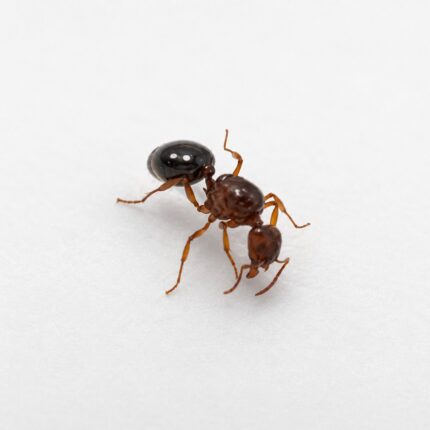
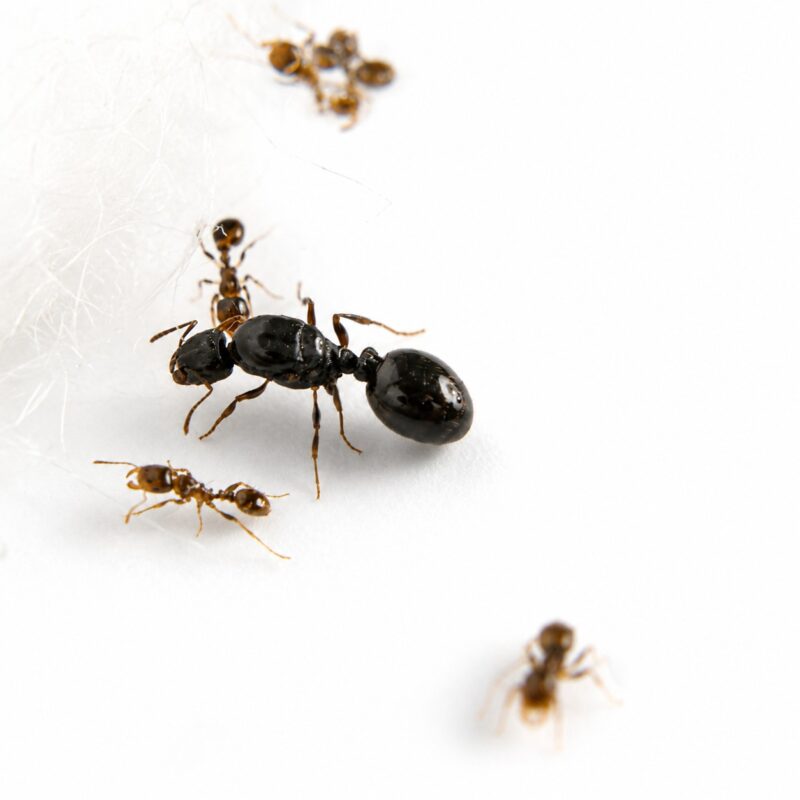
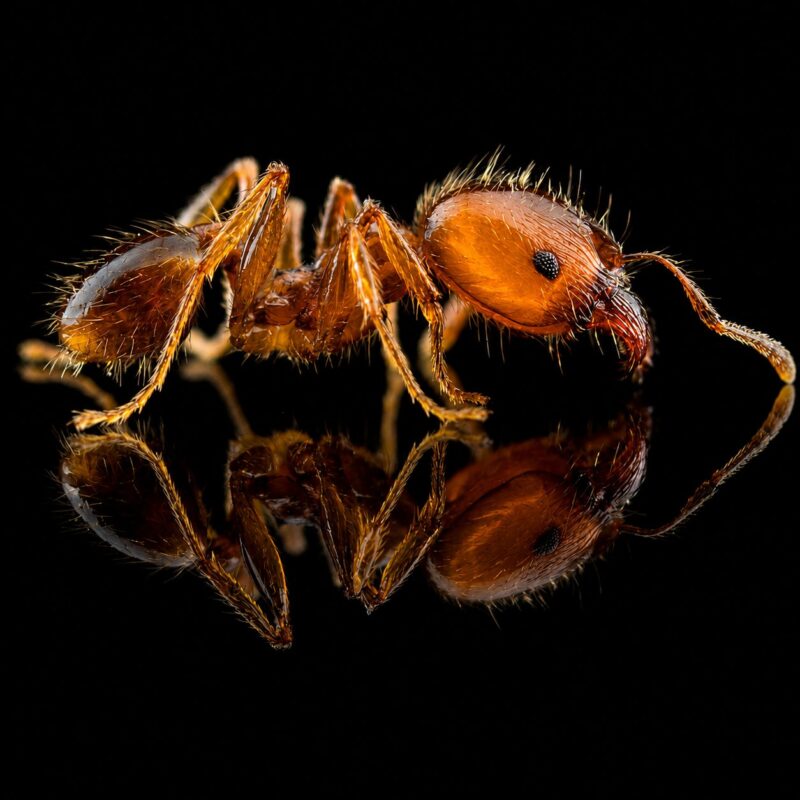
Aphaenogaster splendida is a slender, active ant from Greece in the Eastern Mediterranean, a tidy intermediate colony that stays manageable in size.
Why this species
This Greek ant carries the genus traits keepers prize, quick movement, keen foraging and easy feeding, but packages them in a colony that never outgrows its welcome. The slim workers are diurnal, working the arena steadily through the warm months, so there is plenty to watch and the setup never feels overrun. It settles happily into a desk-sized nest, which makes it an approachable step up. Its one non-negotiable is the obligatory winter rest, since the species depends on the Eastern Mediterranean cold season to reset. A fine pick once you are past a first beginner colony and want something active yet contained.
Feeding
A daytime scavenging omnivore, the slim, fast workers patrol the ground for insect prey and sweet food, sipping sugars themselves while carrying protein back to feed the brood. Have a sugar source ready at all times and add insects at regular intervals.
| Sugar water / honey water | ★★★ |
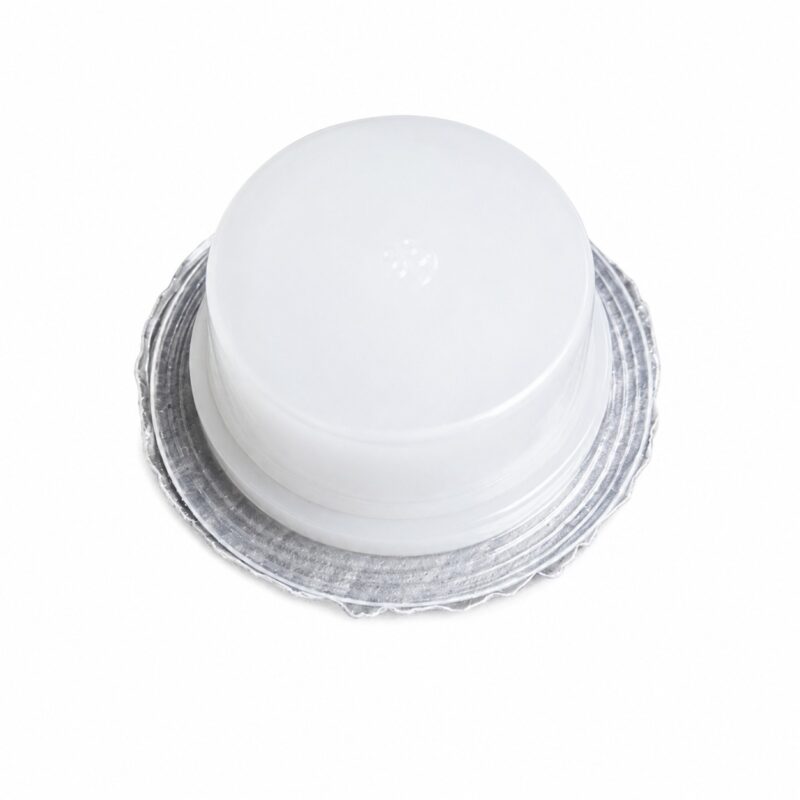
| Ant nectar / sugar jelly | ★★★ |
| Honey | ★★★ |
| Protein jelly | ★★★ |
| Crickets | ★★★ |
| Cockroaches (Dubia / Turkish) | ★★★ |
| Fruit flies (Drosophila) | ★★★ |
| Houseflies | ★★★ |
| Locusts | ★★ |
| Boiled egg yolk | ★★ |
| Mealworms | ★ |
| Superworms | ★ |
| Boiled lean chicken / shrimp / meat | ★ |
| Soft fruit (apple, pear, banana) | ★ |
| Dried insects | ★ |
★★★ readily · ★★ moderately · ★ occasionally · ✗ not eaten
Housing & formicarium
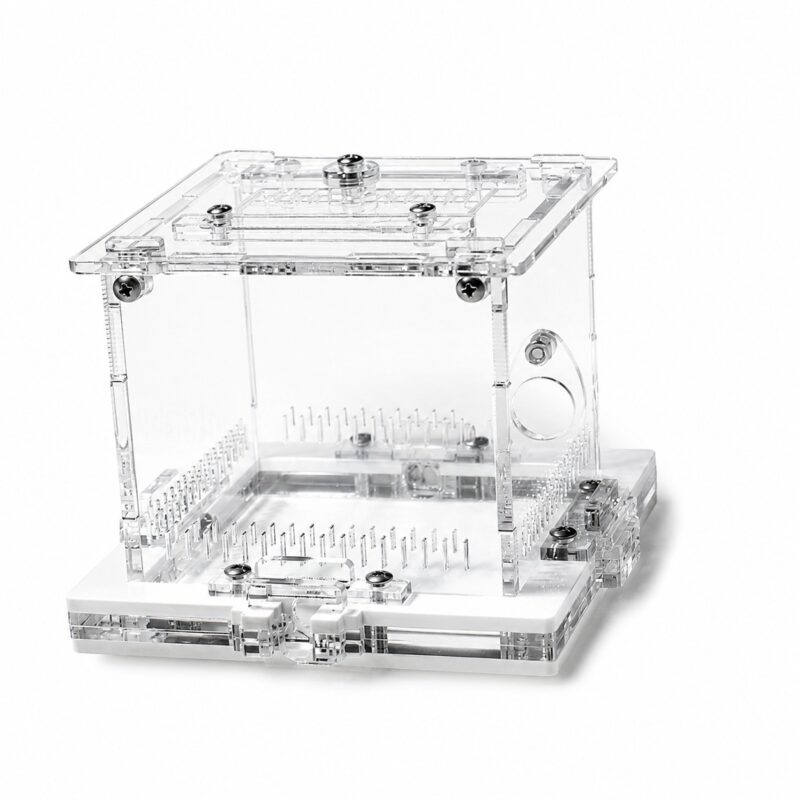
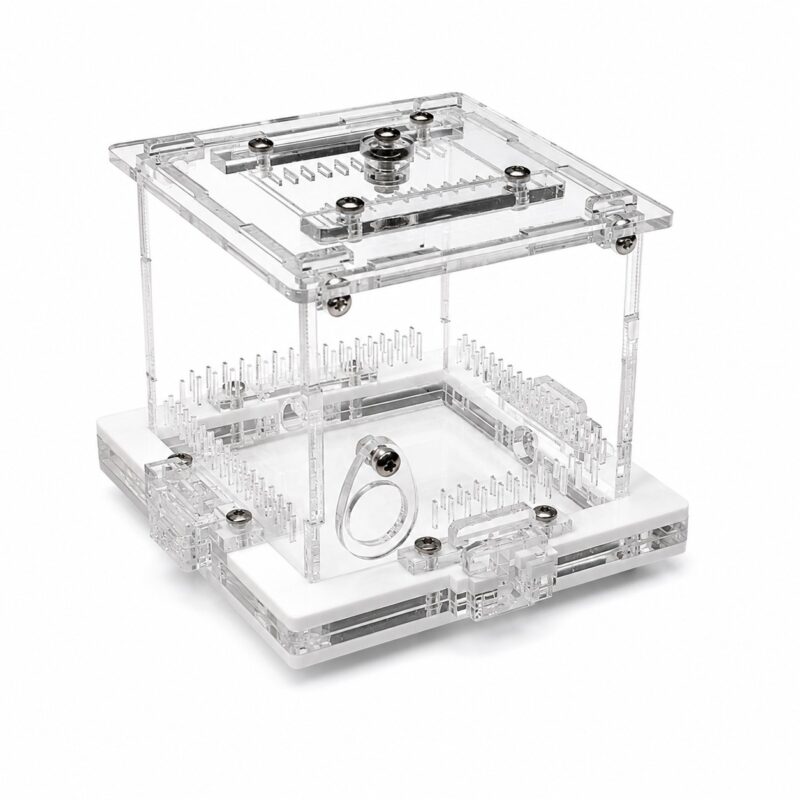
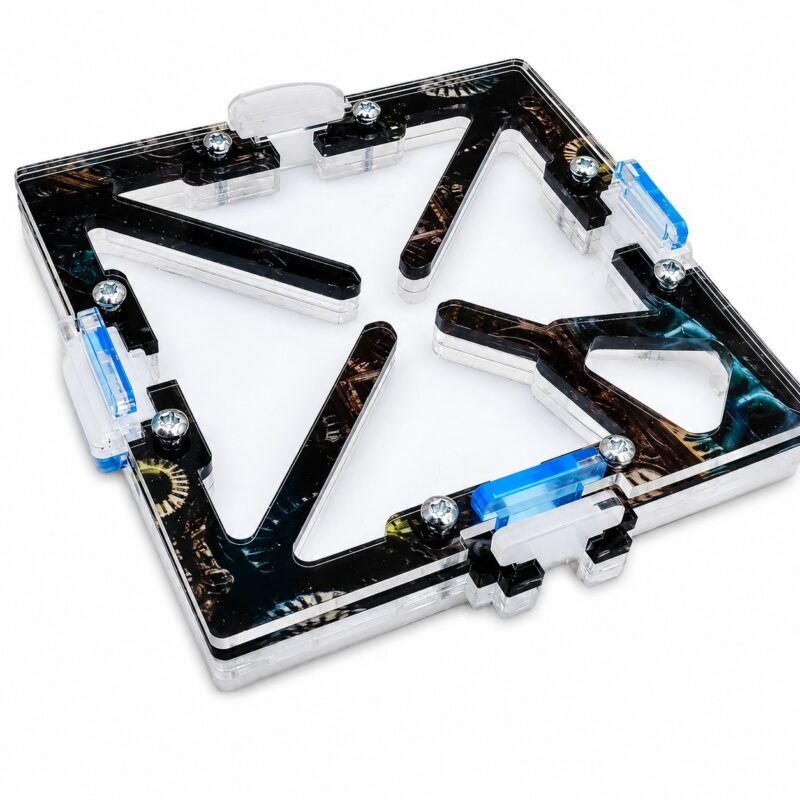
Begin in a test tube or small starter nest, then graduate to a ytong, acrylic, or plaster nest once about two thirds of the chamber is in use. As an Eastern Mediterranean ant it likes a drier arena set against a slightly damper nest pocket, with an outworld for feeding. Keep the colony contained with a fluon (PTFE) ring, an oil barrier, or talc-and-water paint at the rim. ANTonTOP formicaria and starter kits cover each stage of this path, pairing nest, arena and barrier in one set.
Climate & wintering
Keep the colony at 20-28 °C with humidity of 50-70%, warming one side to set up a gentle gradient the ants can choose along. As an Eastern Mediterranean species it relies on a cold season, so give a winter rest at 5-10 °C for 4 months every year to reset the colony.
Growth forecast + what you receive
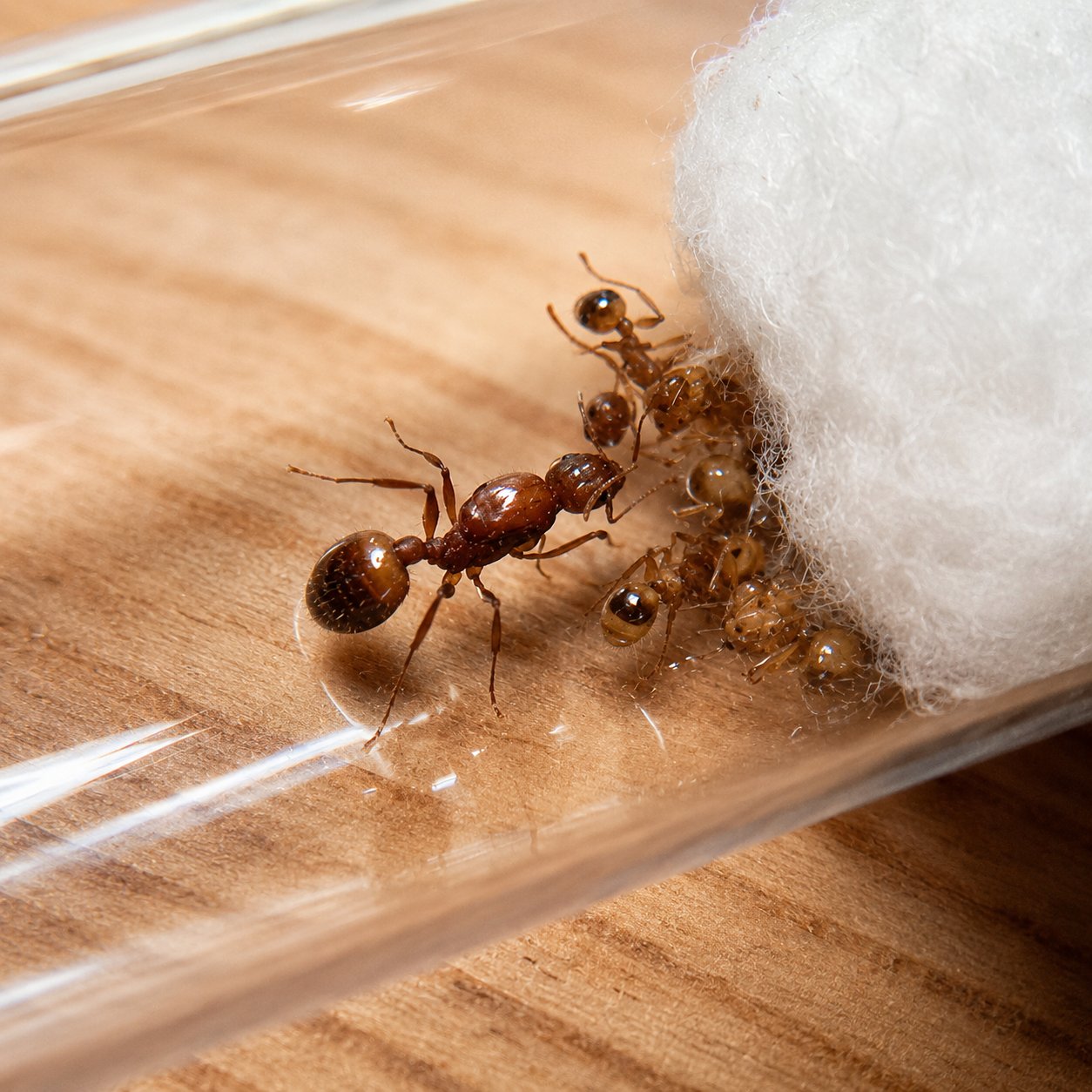
This is a moderate, dependable grower, filling out over time into a colony of up to 1,000 workers. Your colony comes as a queen with workers and brood, a settled group ready to move into its next nest.
Did you know
- Aphaenogaster are slender, long-legged ants known for their speed, among the quickest scavengers working the warm Mediterranean ground.
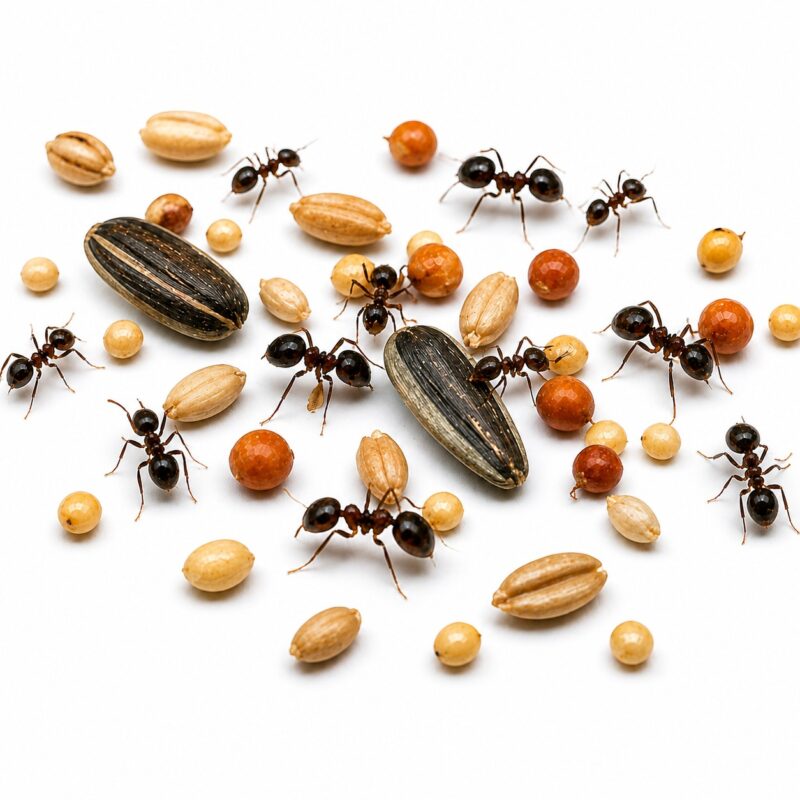
- The genus is an important seed disperser, carrying off seeds bearing a fatty elaiosome, eating that part and leaving the seed to germinate elsewhere.
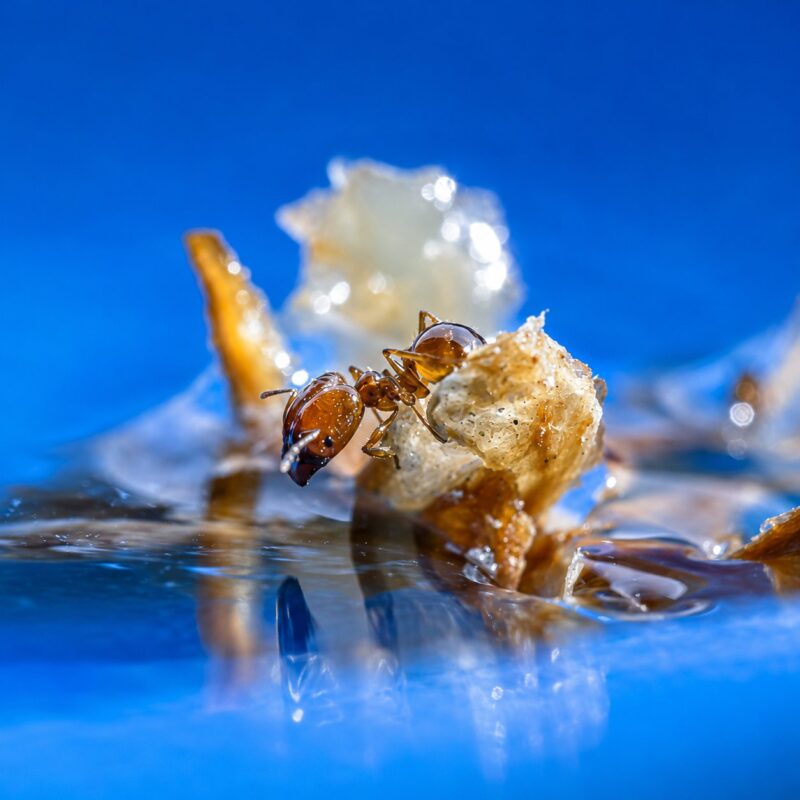
- Many species show a simple form of tool use, dropping scraps of leaf or soil onto liquid food to soak it up and carry it back to the nest.
- This is an agile, daytime forager of the Greek countryside, well suited to warm summers and cool winters.
Frequently asked questions
Is Aphaenogaster splendida good for beginners?
It is rated Intermediate, best for keepers with some experience because of the mandatory winter rest.
Does Aphaenogaster splendida need a winter rest?
Yes, a winter rest at 5-10 °C for 4 months is required every year.
Does this Greek ant sting or bite?
It has a sting but is mild, with only a light bite in practice.
How large does an Aphaenogaster splendida colony get?
Up to 1,000 workers as a monogyne colony.
How big is the queen?
The queen is 7-9 mm; workers are 3-5.5 mm.
How fast does it grow?
At a moderate, steady pace once workers mature.
What do they eat?
Sugar water or nectar with insects such as crickets and flies; they do not eat seeds.
How are they shipped and will they arrive alive?
Queen, workers, and brood travel with a heat or cool pack, sent within 24 hours with tracking for safe live arrival.
Keeping & shipping essentials
Escape prevention. Coat the inner rim of every open arena with fluon (PTFE), or use talc-and-water or an oil barrier as a backup, and keep a tight, fine-mesh lid on top. Check the barrier regularly, since dust, condensation and feeding debris break a fluon line over time. Keep tubing connectors tight and seal any gaps in the nest.
Keeping reminders. Always offer fresh water and never let the nest dry out completely. Give carbohydrates continuously and protein a few times a week, and remove uneaten insect prey within 24 hours before it moulds. Keep the formicarium out of direct sunlight and away from constant vibration, which stresses a young colony. A water-filled test tube plugged with cotton makes an ideal spare incubator whenever you need one.
Before you buy – do not rehouse too early. Have a test-tube setup or a small formicarium with an outworld and a working barrier ready before your colony arrives. A founding colony grows slowly at first, which is normal. Moving a small colony into a large nest too soon invites mould, mites and stress, and the workers die off one by one. Keep the colony in its open test tube on the arena, plug the nest entrance with cotton, and open up the next chambers only once the colony fills roughly 10-15% of the space.
What we ship. Every colony ships with a live-arrival guarantee, backed by our 24h unboxing-video guarantee: if the queen does not arrive alive, we reship free. Parcels travel with DHL, InPost (PL) or EMS, with a heat or cold pack to suit the season, packed discreetly and securely. We ship across the EU and worldwide, with free shipping over the Europe threshold.

Reviews
Clear filtersThere are no reviews yet.