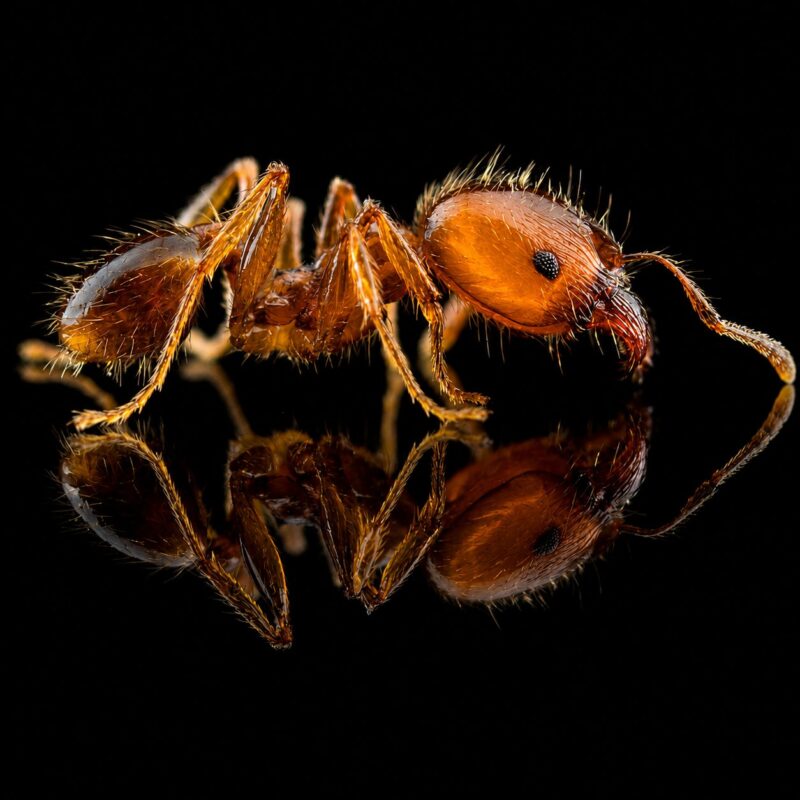

Pheidole flaveria
89,90 zł – 179,90 złPrice range: 89,90 zł through 179,90 zł
Live Queen Guarantee
Heat Pack & Summer Cooling
Fertilised Queen in Every Colony
Ships Within 24 h
Free Care Guide
24/7 Expert Support
Description
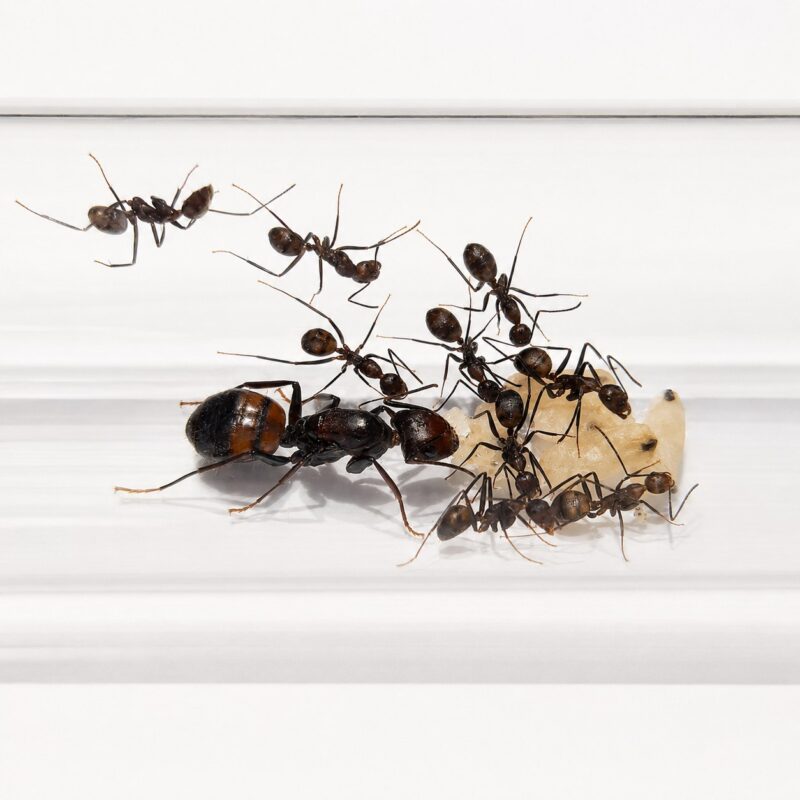
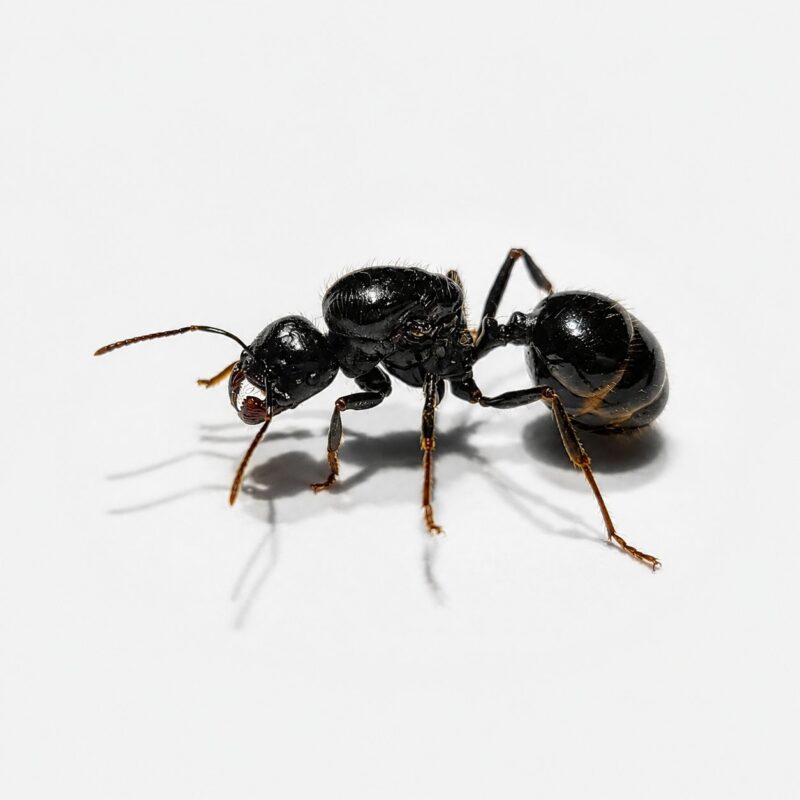
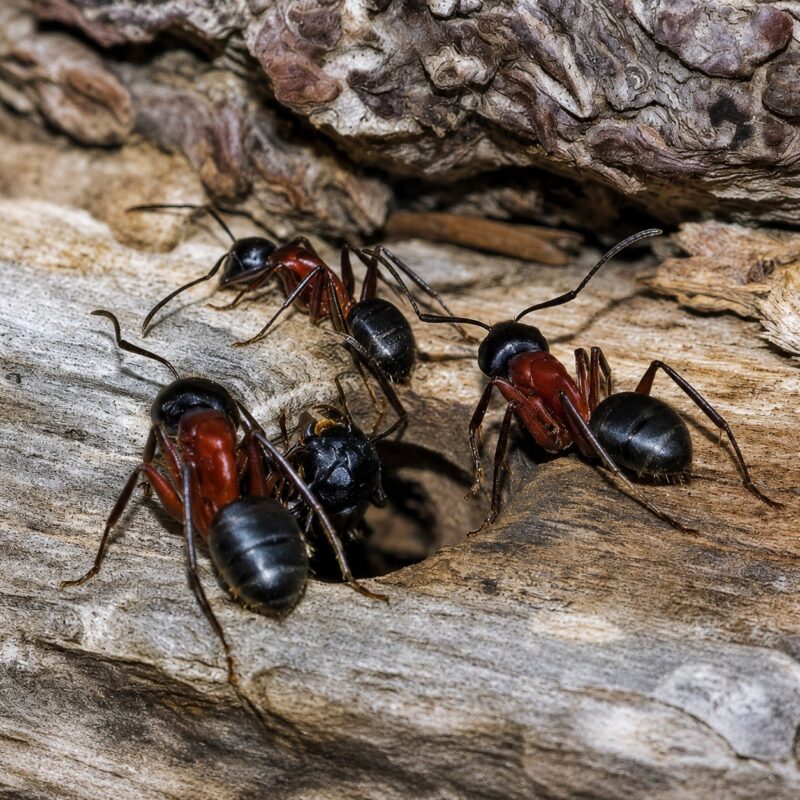
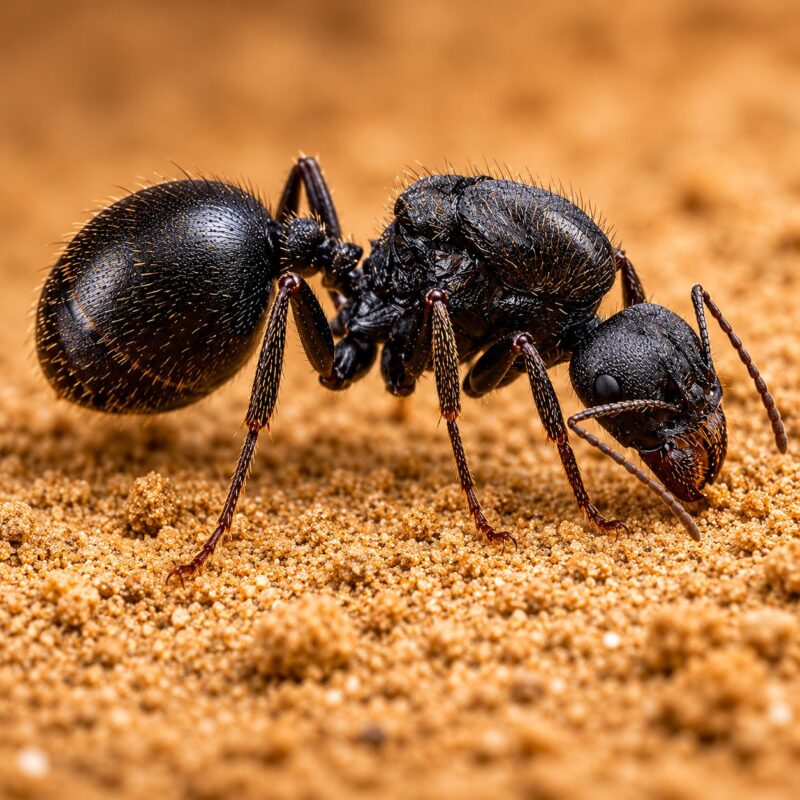
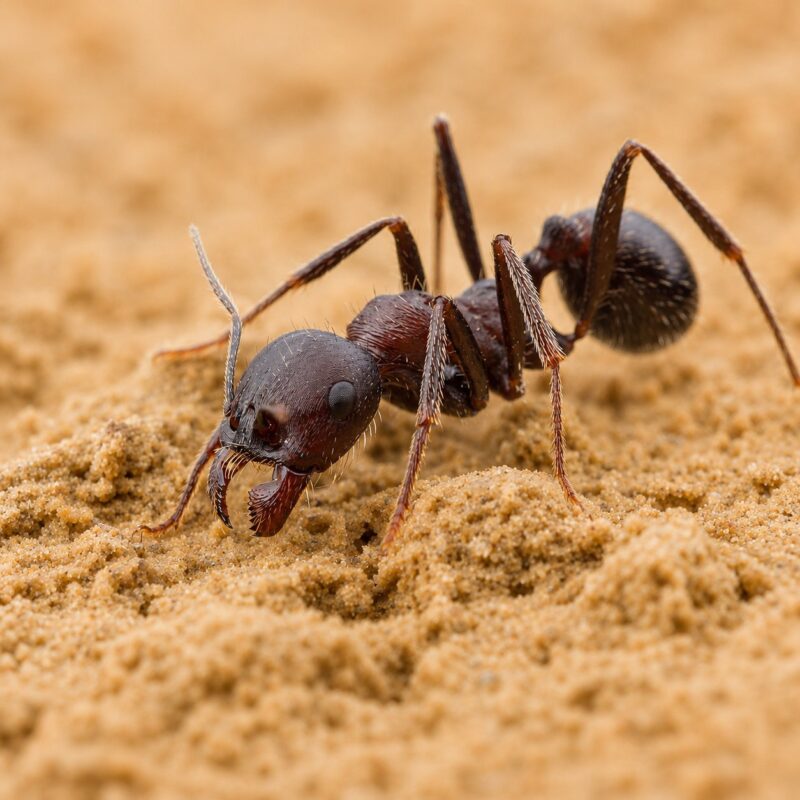
A compact Caribbean big-headed ant from Cuba whose tiny minors and broad-headed majors keep the nest busy, with several queens driving fast growth. Buy Pheidole flaveria from ANTonTOP.
Free shipping across Europe over 1299 zł.
DHL / InPost / EMS · ships the EU & worldwide.
Beginner · Q 5-6 mm / W 2-3 mm / S 3-4 mm · Up to 10,000 workers · No hibernation (tropical) · Omnivore · Cuba (Caribbean and Central America) · Sting (mild), mild bite
Additional information
| Behavior | |
|---|---|
| Keeping difficulty | |
| Origin | |
| Ant size | |
| Hibernation | |
| Sting |
Has sting |
Pheidole flaveria – Big-headed ant
| Origin | Cuba (Caribbean and Central America) |
|---|---|
| Difficulty | Beginner |
| Colony form | Polygyne (2+ queens) |
| Max workers | Up to 10,000 workers |
| Queen | 5-6 mm |
| Worker | 2-3 mm |
| Soldier / major | 3-4 mm |
| Founding | Claustral |
| Temperature | Nest 24-27 °C / Arena 25-29 °C |
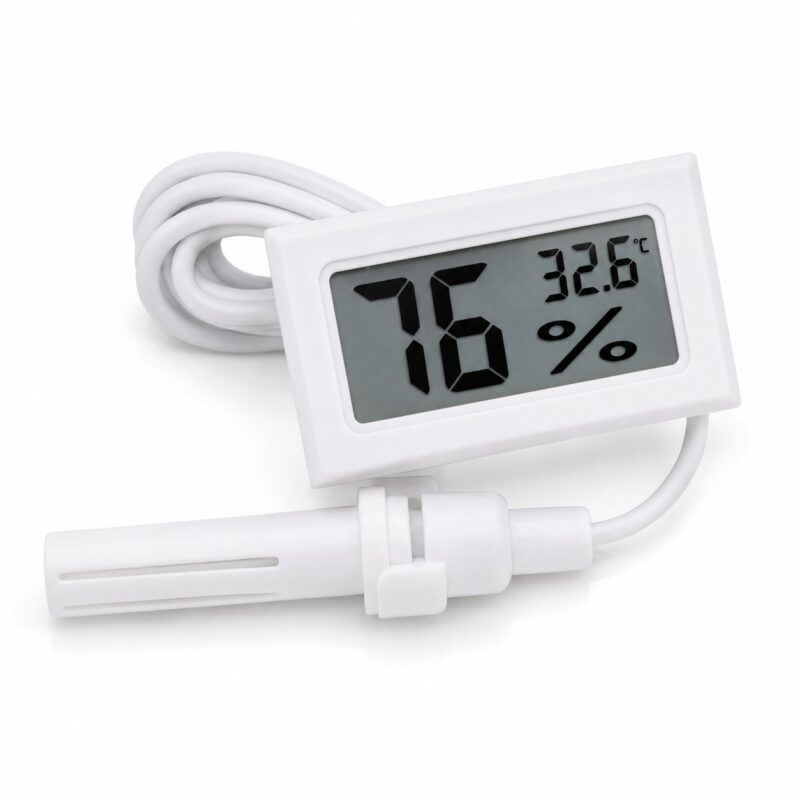
| Humidity | Nest 65-80% / Arena 55-70% |
| Hibernation | No hibernation (tropical) |
| Diet | Omnivore |
| Sting / bite | Sting (mild), mild bite |
| Egg to first worker | 3-5 weeks |
| Queen lifespan | 7-15 years |
| Nuptial flight | warm humid summer months, often after heavy rain |
| Activity | both |
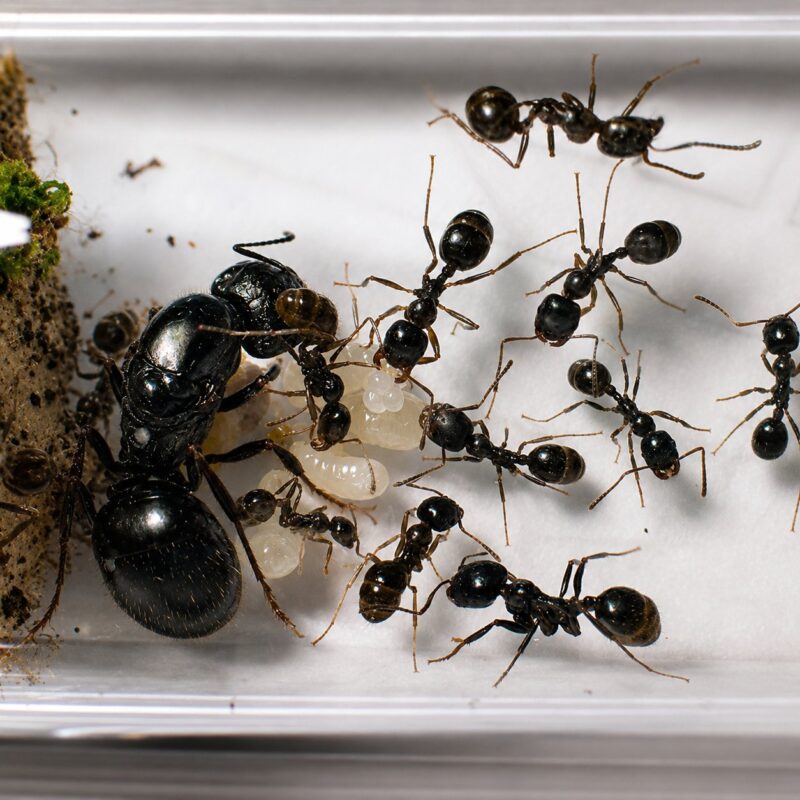
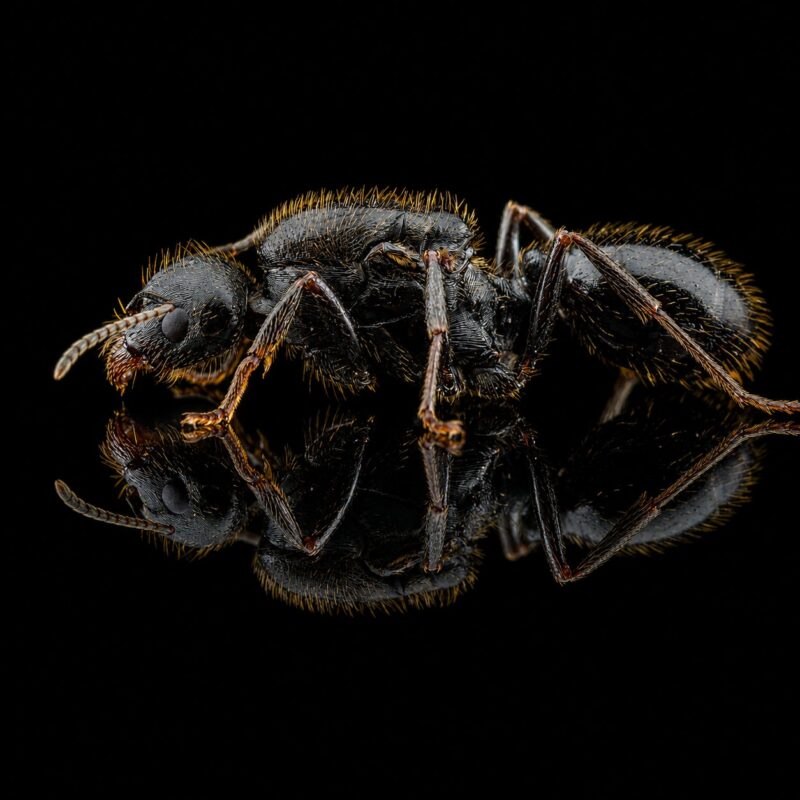
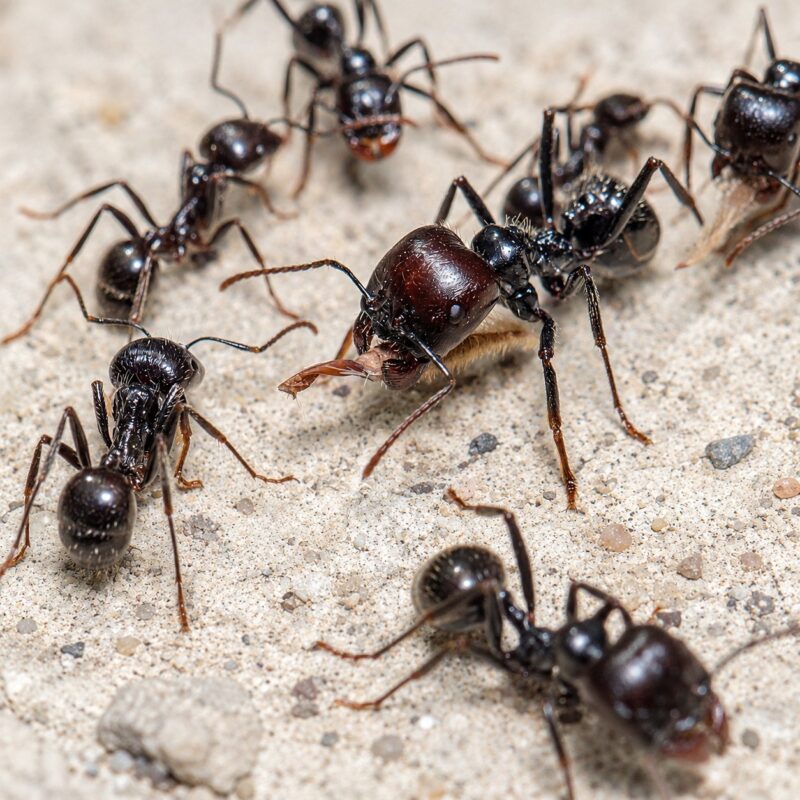
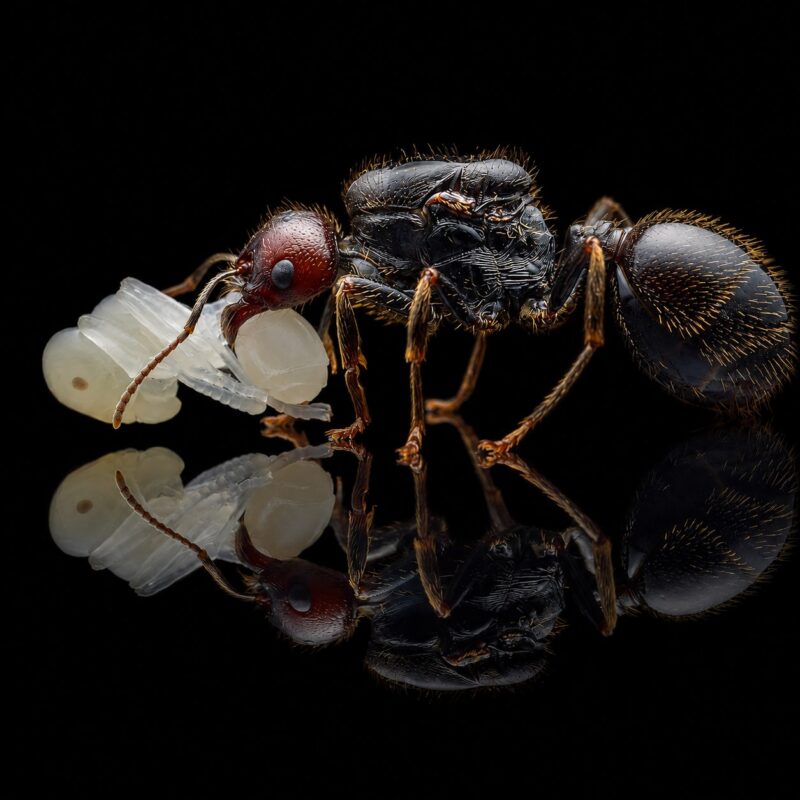
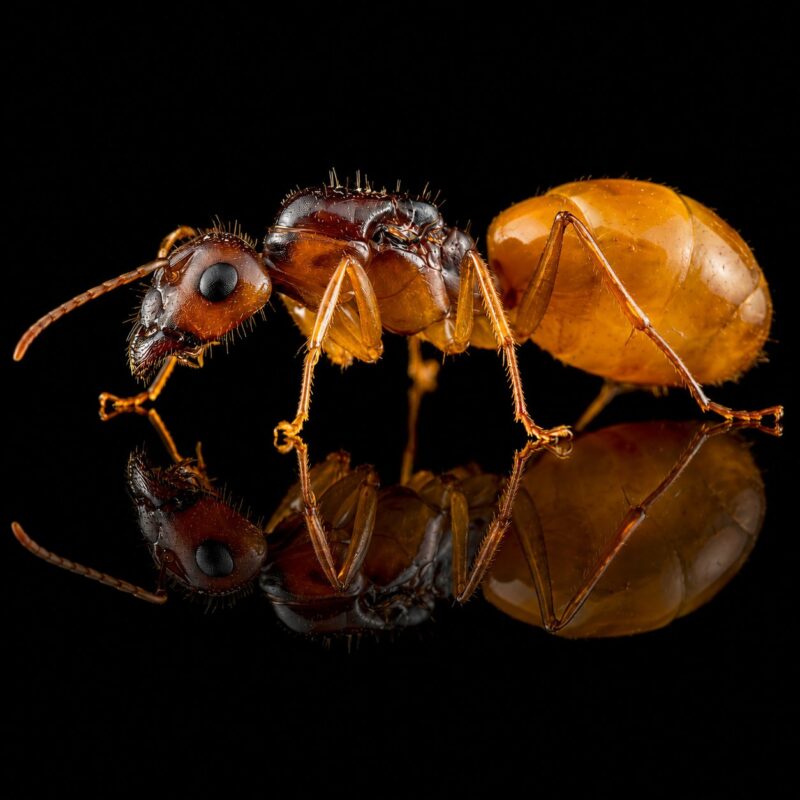
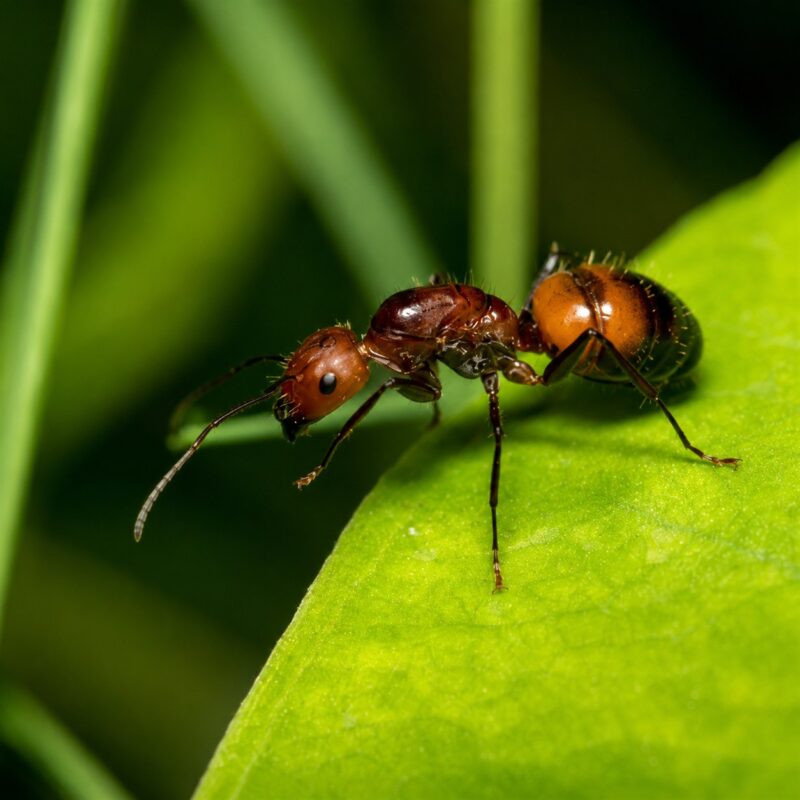
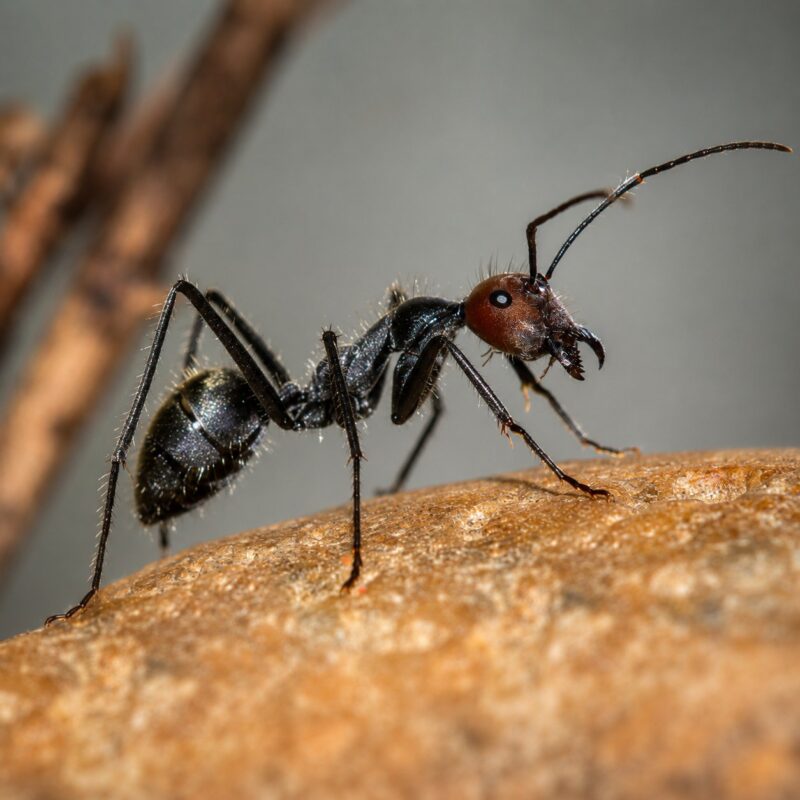
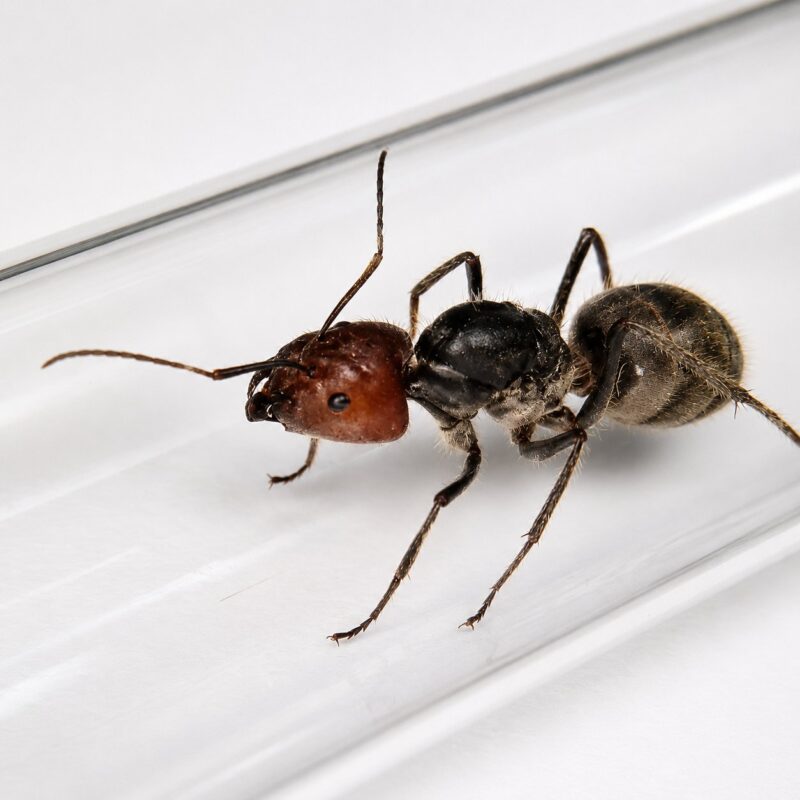
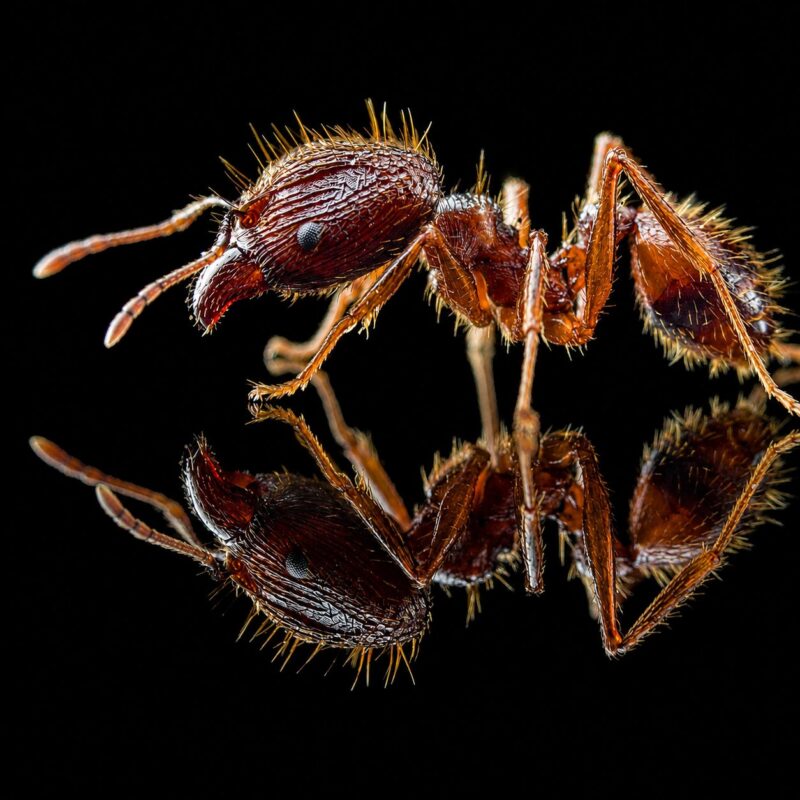
Pheidole flaveria is a Caribbean big-headed ant from Cuba, mixing quick little minors with broad-skulled majors into a lively, two-caste colony that builds fast.
Why this species
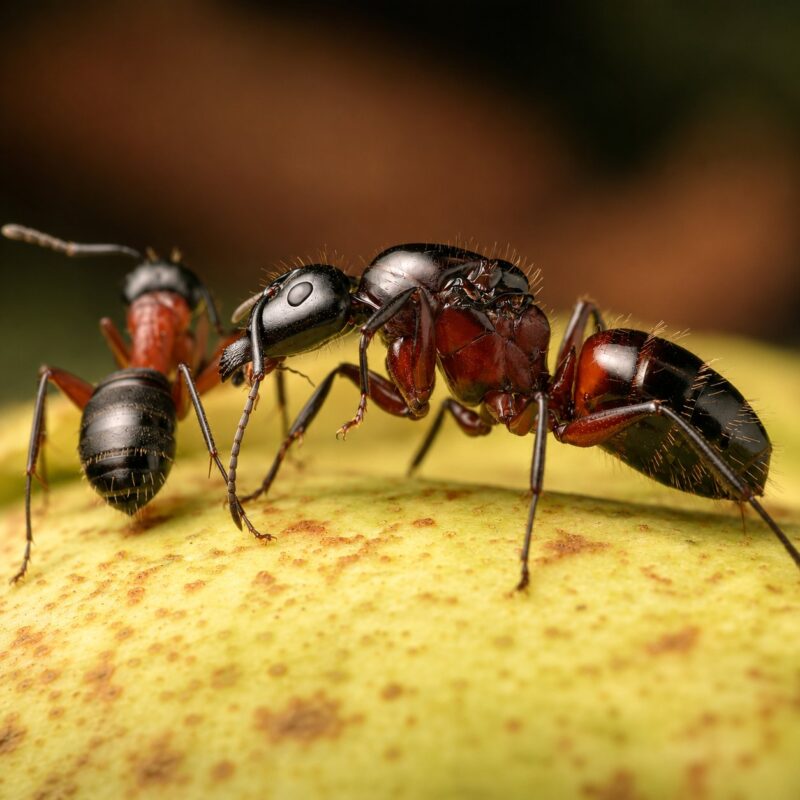
This species earns its big-headed name from the broad-headed majors that crack seeds and guard the nest, while the nimble minors handle the daily foraging, and watching the two castes work together is the draw. Shared-queen nests mean it establishes quickly and grows dense, so a beginner sees momentum early rather than a long, anxious wait. It is one of the easier tropical species to settle, gentle in temperament with only a mild bite, and it forgives small slips in care. A good pick for anyone who wants an active, populous colony without a demanding routine.
Feeding
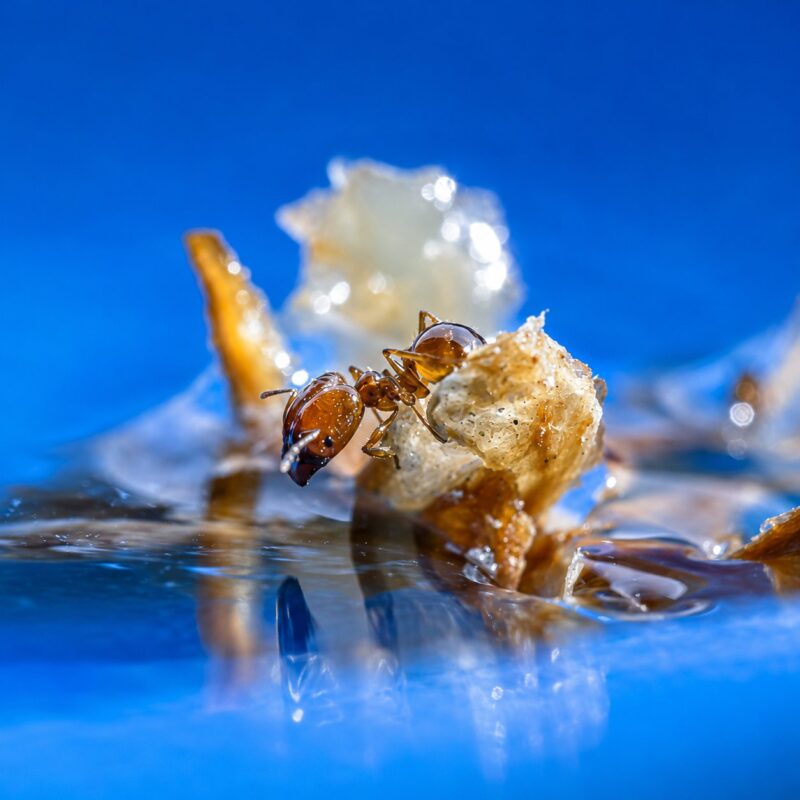
A small but eager omnivore, it takes sugars and honeydew for energy and relies on its majors to break up tougher food for the developing brood. Keep a carbohydrate source available constantly and offer insects regularly to push its quick early growth.
| Sugar water / honey water | ★★★ |
| Ant nectar / sugar jelly | ★★★ |
| Honey | ★★★ |
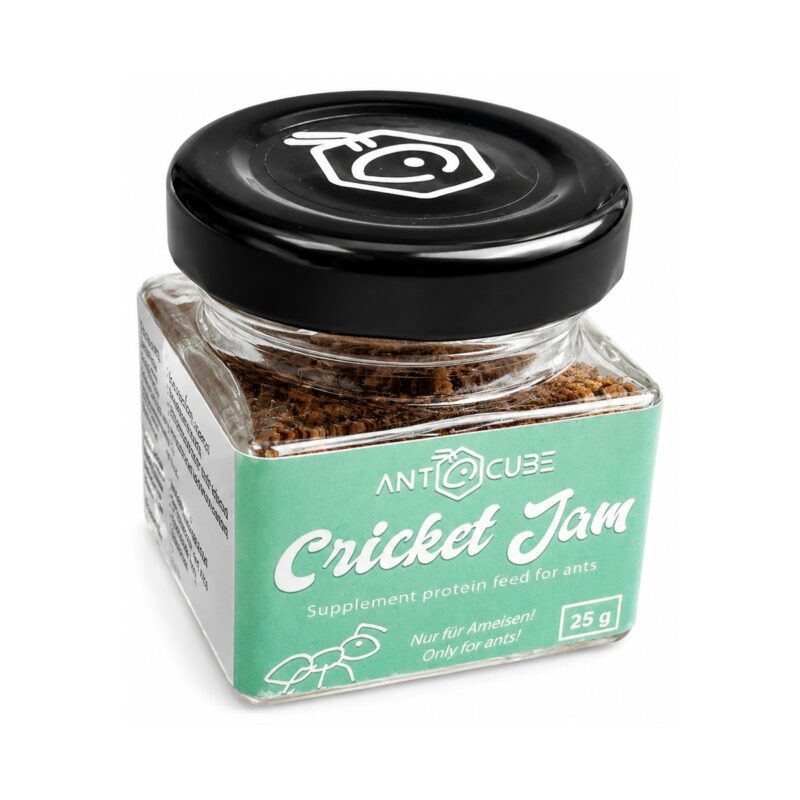
| Protein jelly | ★★★ |
| Crickets | ★★★ |
| Cockroaches (Dubia / Turkish) | ★★★ |
| Fruit flies (Drosophila) | ★★★ |
| Houseflies | ★★★ |
| Soft fruit (apple, pear, banana) | ★★★ |
| Locusts | ★★ |
| Boiled egg yolk | ★★ |
| Boiled lean chicken / shrimp / meat | ★★ |
| Soft seeds (poppy, sesame, chia) | ★★ |
| Mealworms | ★ |
| Superworms | ★ |
| Dried insects | ★ |
| Hard seeds (canary, millet, sunflower) | ★ |
★★★ readily · ★★ moderately · ★ occasionally · ✗ not eaten
Housing & formicarium
This stays a smaller Caribbean colony, so let the queen raise her first workers in a test tube before rehousing. Move up once the brood fills about two-thirds of the space, choosing a compact moisture-holding nest in aerated concrete (Ytong), gypsum or 3D-print so a small colony is not lost in a cavern. Damp one chamber and leave the rest drier. The minors are very small and fast, so seal every seam and line the arena rim with fluon, oil, or talc and water. ANTonTOP formicaria and starter kits come sized for compact tropical colonies like this.
Climate & wintering
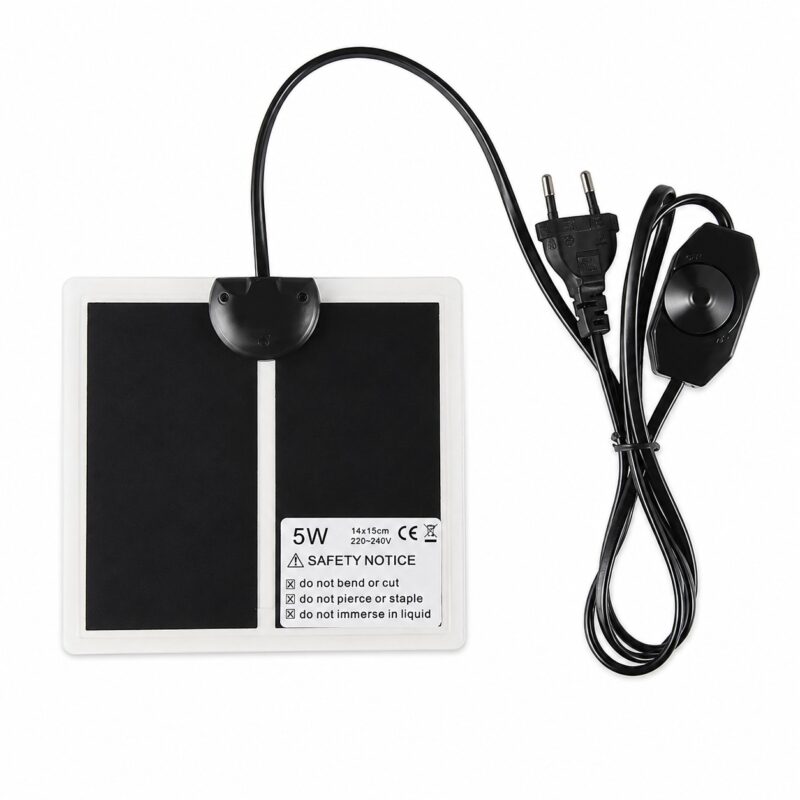
As a tropical Caribbean ant, this one takes no cool rest, so keep it warm and fed all year. Aim for a nest of 24-27 °C and an arena of 25-29 °C, with humidity of 65-80% in the nest and 55-70% in the arena. Warm one corner with a cable or mat so the colony can pick its spot along a gradient rather than sitting in even heat.
Growth forecast + what you receive
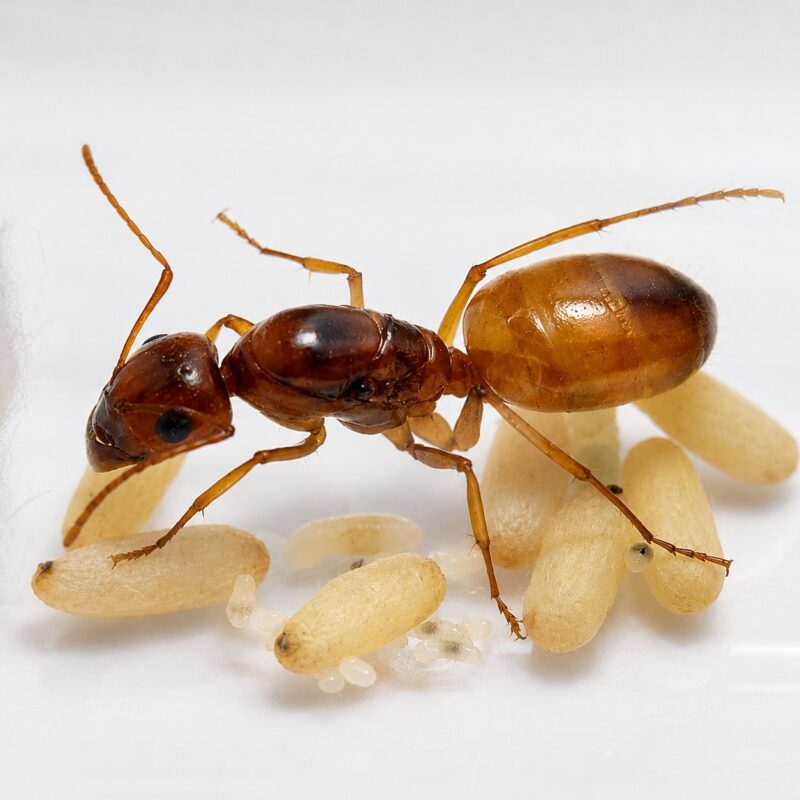
Pheidole are among the faster-growing ants, and with multiple queens laying this colony climbs quickly toward roughly 10,000 workers. Eggs become workers in about 3-5 weeks in the warmth, keeping numbers rising. You receive a queen, often more than one, with workers and brood, set up to expand straight away.
Did you know
- Pheidole is one of the most species-rich ant genera on Earth, with over a thousand species and a strong presence across the tropics.
- The common name big-headed ant comes from the major caste, whose heads can look almost too large for their bodies.
- Those outsized heads are mostly muscle, powering mandibles strong enough to crack seeds and mill hard food.
- Caribbean island Pheidole are diverse and ecologically busy, scavenging and helping recycle nutrients across the leaf litter.
Frequently asked questions
Is Pheidole flaveria good for beginners?
Yes, it is rated Beginner difficulty, hardy, and quick to establish.
Does it need hibernation?
No. It is tropical with no hibernation, so keep it active and fed all year.
Does it sting?
It has a sting and a mild bite, but it is gentle and not a problem for keepers.
How big can the colony get?
Up to 10,000 workers over time, helped along by multiple queens.
How large is the queen?
The queen measures 5-6 mm; workers are 2-3 mm and majors 3-4 mm.
How fast does it grow?
Quickly. Pheidole are fast growers, and polygyny speeds it up further.
What does it eat?
Sugar water, nectar or jelly, and insects like crickets and flies; it does not eat seeds.
Will it arrive alive?
Yes. It ships with a queen, workers and brood plus a heat or cool pack, sent within 24 h with tracking for safe live arrival.
Keeping & shipping essentials
Escape prevention. Coat the inner rim of every open arena with fluon (PTFE), or use talc-and-water or an oil barrier as a backup, and keep a tight, fine-mesh lid on top. Check the barrier regularly, since dust, condensation and feeding debris break a fluon line over time. Keep tubing connectors tight and seal any gaps in the nest.
Keeping reminders. Always offer fresh water and never let the nest dry out completely. Give carbohydrates continuously and protein a few times a week, and remove uneaten insect prey within 24 hours before it moulds. Keep the formicarium out of direct sunlight and away from constant vibration, which stresses a young colony. A water-filled test tube plugged with cotton makes an ideal spare incubator whenever you need one.
Before you buy – do not rehouse too early. Have a test-tube setup or a small formicarium with an outworld and a working barrier ready before your colony arrives. A founding colony grows slowly at first, which is normal. Moving a small colony into a large nest too soon invites mould, mites and stress, and the workers die off one by one. Keep the colony in its open test tube on the arena, plug the nest entrance with cotton, and open up the next chambers only once the colony fills roughly 10-15% of the space.
What we ship. Every colony ships with a live-arrival guarantee, backed by our 24h unboxing-video guarantee: if the queen does not arrive alive, we reship free. Parcels travel with DHL, InPost (PL) or EMS, with a heat or cold pack to suit the season, packed discreetly and securely. We ship across the EU and worldwide, with free shipping over the Europe threshold.
Care guide. See also our Pheidole ants guide.

Reviews
Clear filtersThere are no reviews yet.