





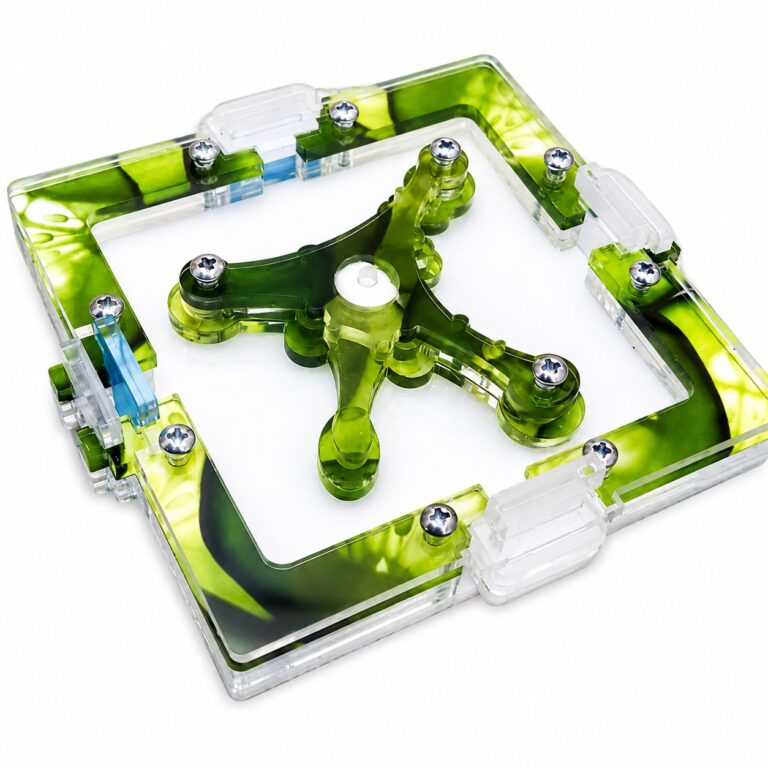
Some colonies need a moment to read a new nest. The Nexus 10×10 cm isn’t one of those puzzles: a large central room ringed by smaller chambers gives an obvious heart, and the colony settles almost on arrival. Lockable nut-and-screw ports, a sponge chamber and 9 mm rooms suit up to ~350 Lasius, Tetramorium, Messor or smaller Camponotus, and it links into a growing modular setup.
Give the colony a heart and rooms around it.
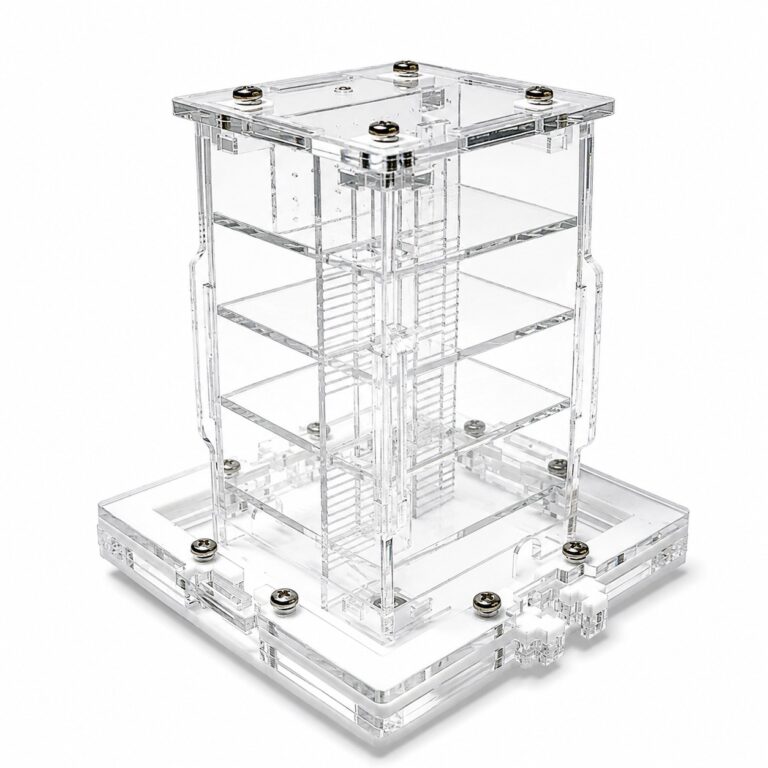
Most 10×10 nests are flat. The Tower stacks four floors onto that same footprint, so the colony moves brood up and down the levels to chase the warmth it wants. Lockable nut-and-screw ports, a sponge chamber and 9 mm rooms suit up to ~350 Lasius, Tetramorium, Messor or smaller Camponotus, and it links into a growing modular setup.
Let the colony pick its floor by climate.
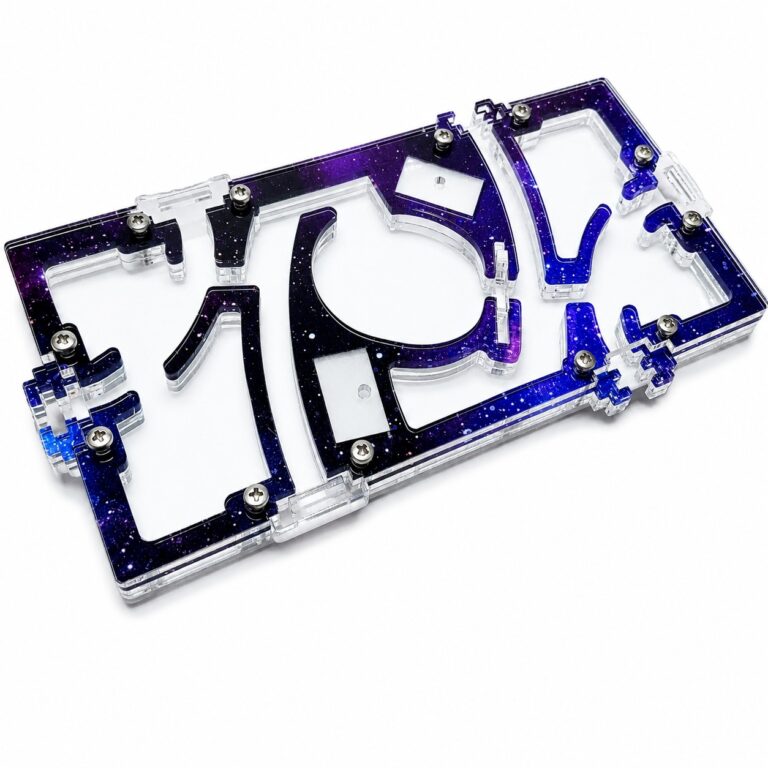
A loop runs the outer edge of the Orbit 20×10 cm and ties every inner chamber into a circle, so workers patrol it constantly and the colony fills the whole nest fast and evenly, with no dead-end rooms left empty. Six lockable ports, two sponge chambers, one internal latch and 9 mm rooms house ~400–800 Lasius, Tetramorium, Messor or smaller Camponotus.
The natural step up from a 10×10 starter.
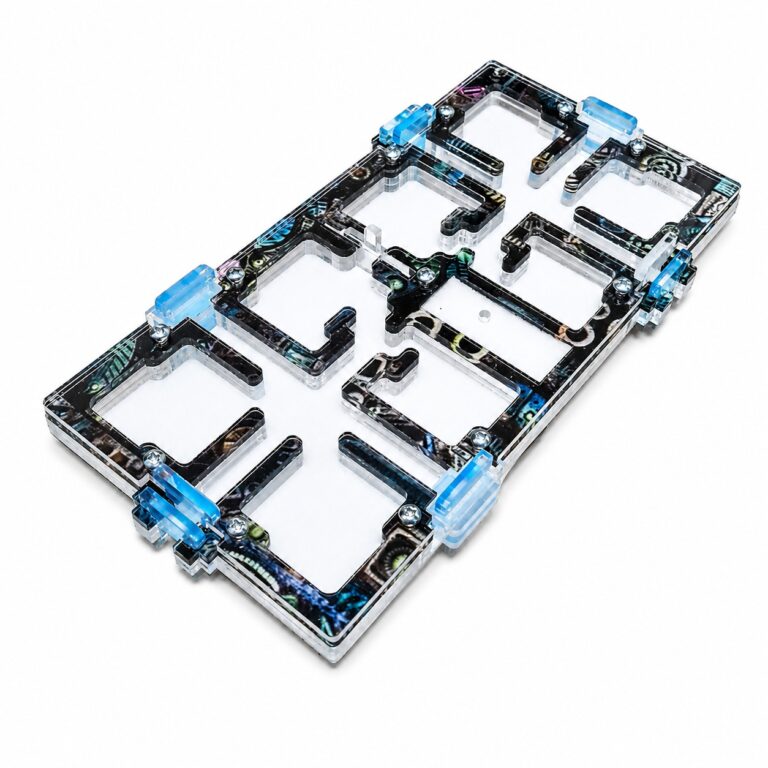
Your colony loved the orderly Quad grid and simply outgrew it. The Quad 20×10 cm carries the same clearly-zoned rooms onto a wider footprint — more of them, so a bigger colony keeps brood, food and waste apart without crowding. Six lockable ports, two sponge chambers, one internal latch and 9 mm rooms house ~400–800 Lasius, Tetramorium, Messor or smaller Camponotus.
The Quad grid, sized for a bigger colony.
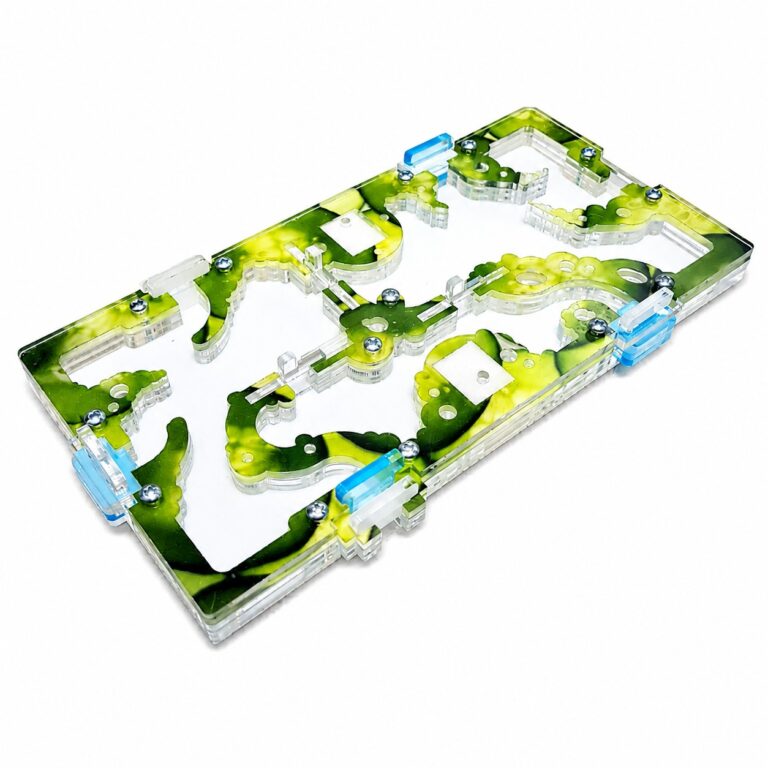
Growing colonies turn messy when they rattle around an oversized nest. The Vortex 20×10 cm answers that with three parallel zones the colony fills one at a time, plus an internal latch to hold it back until it’s ready. Six lockable ports, two sponge chambers and 9 mm rooms house ~400–800 Lasius, Tetramorium, Messor or smaller Camponotus, all linkable into a bigger formicarium.
Grow the colony zone by zone, stay tidy.
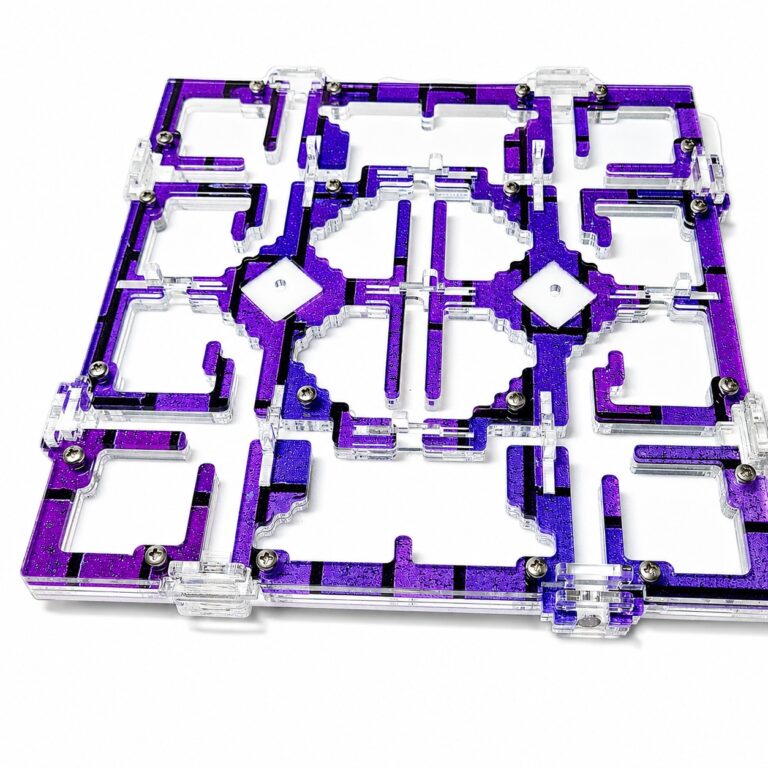
Watch a big colony run like a city. The Matrix 20×20 cm lays out rows and columns of interconnected rooms: dozens of defined cells the colony zones into brood, stores and quarters, readable like a street map behind clear acrylic. Eight lockable ports, two sponge chambers, four internal latches for staged release and 9 mm rooms for Lasius, Tetramorium, Messor and smaller Camponotus.
Watch a colony run its own city.
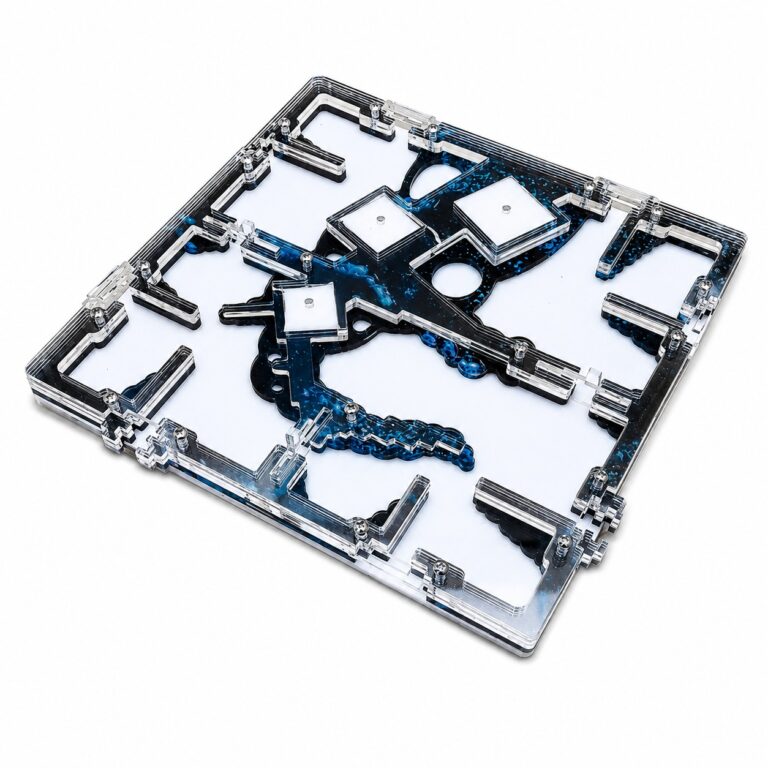
No wild colony digs a grid. The Helix 20×20 cm honours that with sculptural, irregular chambers that read like the branching galleries of a real underground nest: a living cross-section behind clear acrylic, sized for a large established colony. Eight lockable ports, two sponge chambers, four internal latches for staged release and 9 mm rooms for Lasius, Tetramorium, Messor and smaller Camponotus.
Give a big colony a wild, natural home.
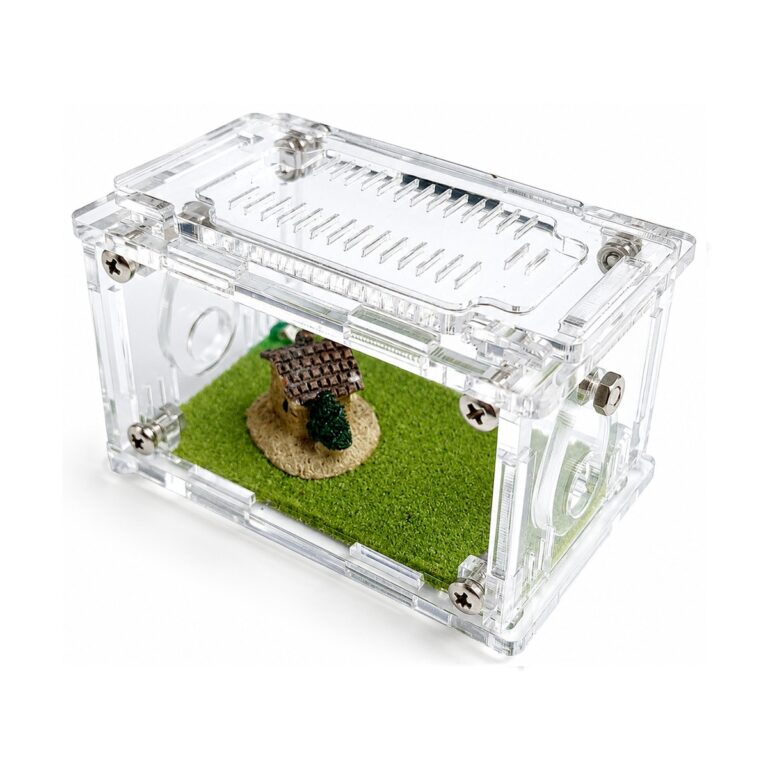
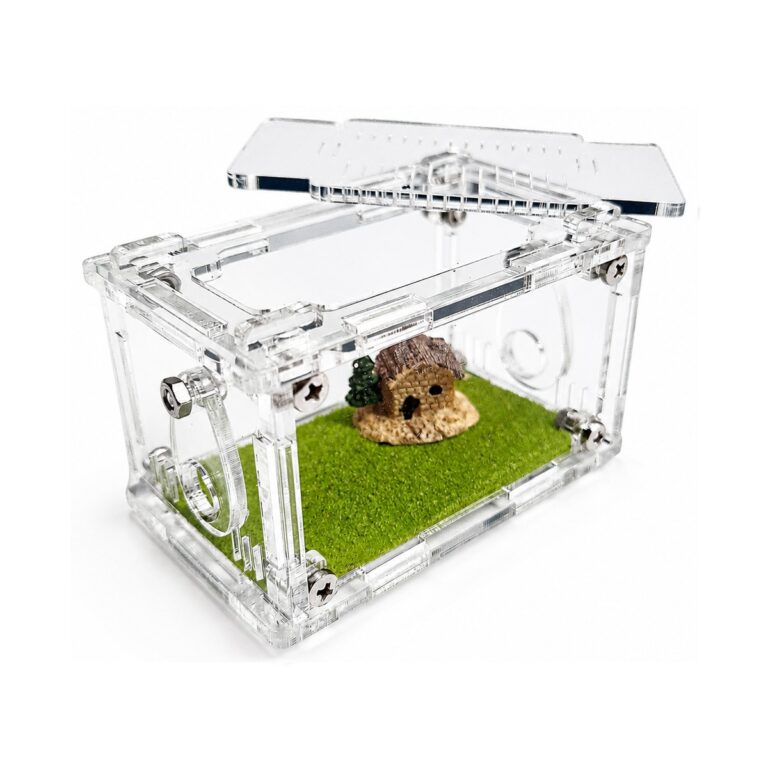
Young colonies and the tiniest species need a safe first home, and the Arena Terrarium S delivers it in 8×5×4 cm of fully sealed acrylic. Two ports (8 mm and 10 mm) link it to a test tube, a small nest or a formicarium, or run it standalone; laser-cut micro-perforation breathes without leaving a worker-sized gap. Made in Poland.
Start your colony off safely. Order your Arena Terrarium S.
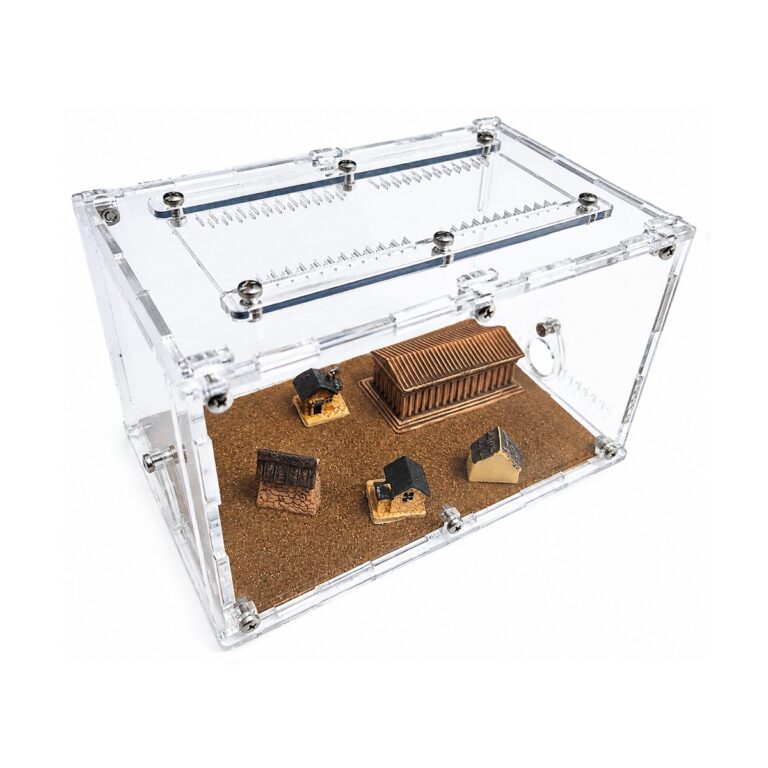
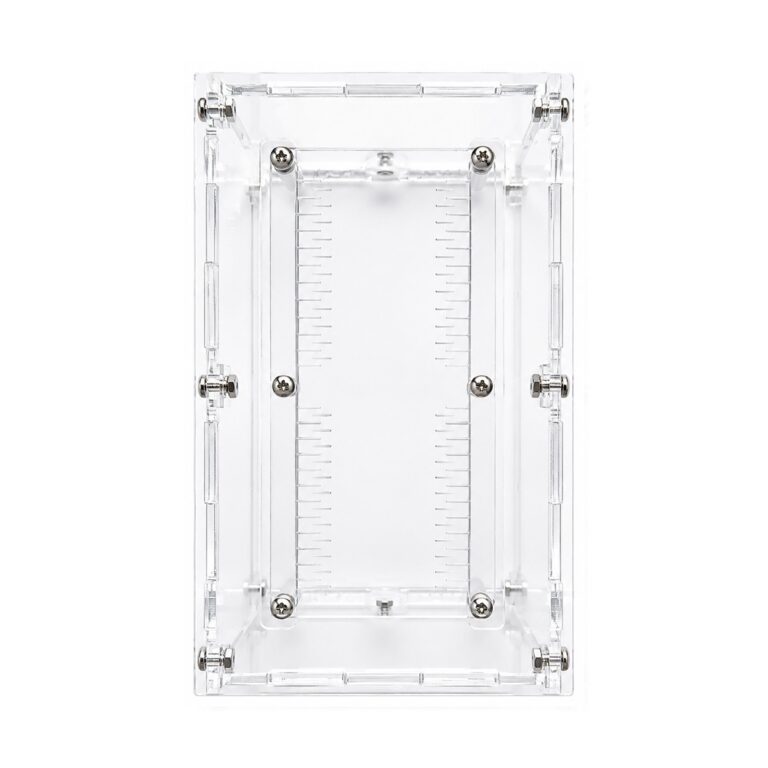
Some species walk straight out of an open arena. The Arena Terrarium M, 15×10×10 cm of fully sealed acrylic, keeps a small-to-medium colony where it belongs. Two ports (8 mm and 10 mm) connect it to your nest or formicarium, or use it standalone; laser-cut micro-perforation breathes without opening a worker-sized gap. Made in Poland.
Keep your colony safely contained — order your Arena Terrarium M.
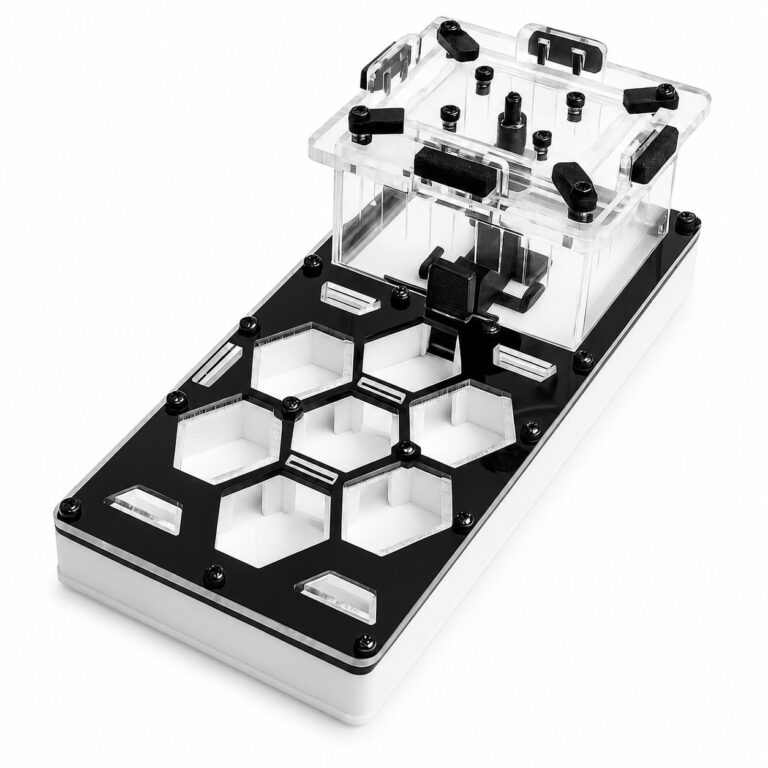
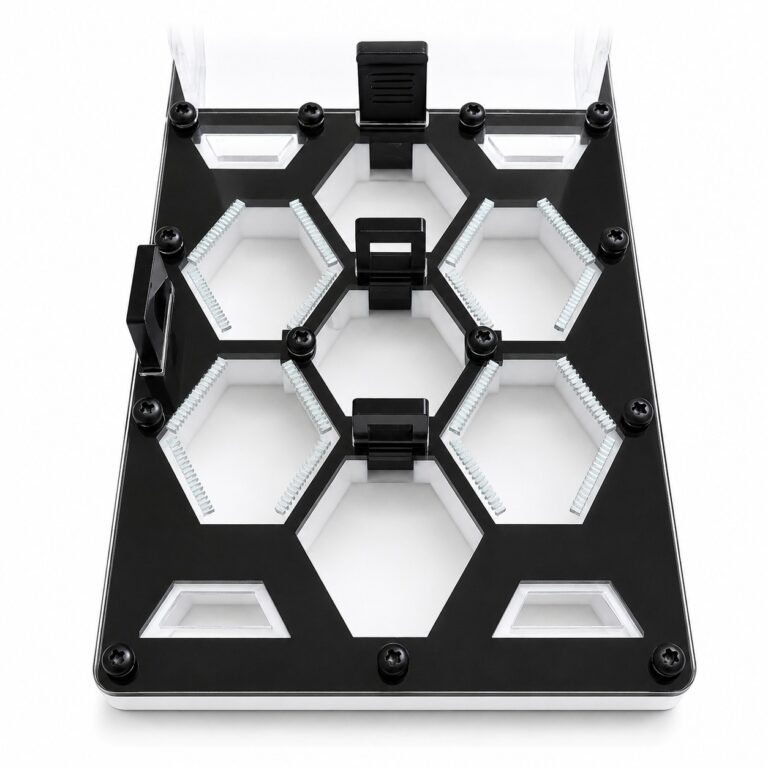
Where most small gypsum nests give you two humidity chambers, the Pearl S gives you four. Double the gypsum surface means steadier, more even moisture across this compact nest (22 × 11 × 7 cm) — the steadiest humidity in our small format, and a forgiving first home for moisture-sensitive species and founding colonies that struggle with dry swings. Two latches stage colony access; chambers run 10–15 mm.
Let the gypsum handle the climate. Order your Pearl S today.
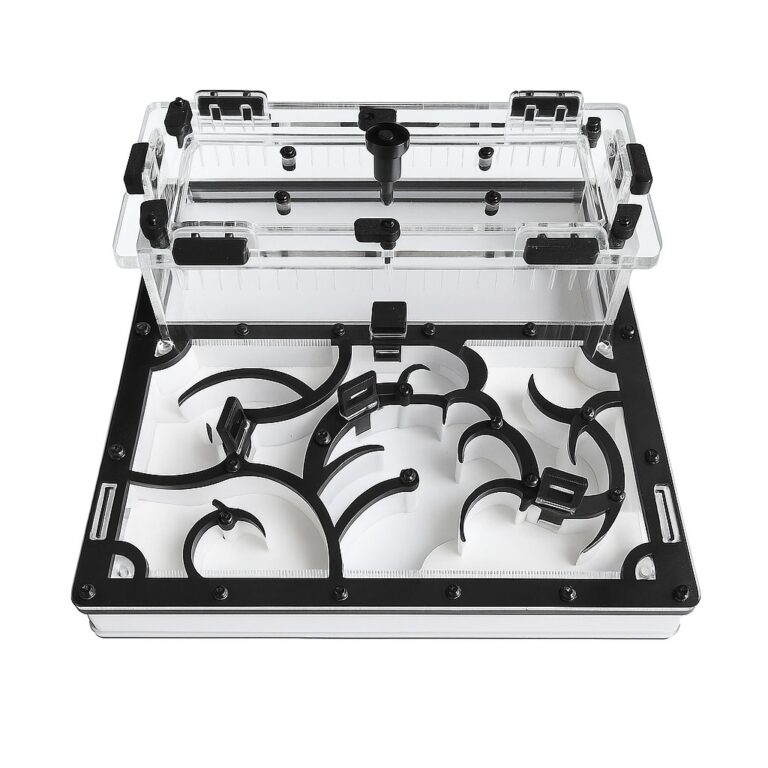
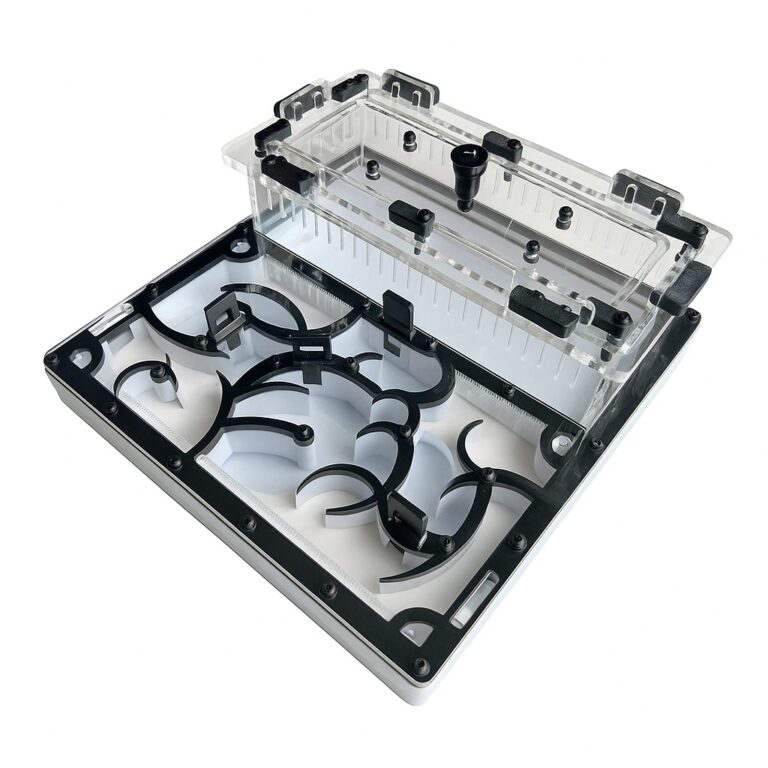
Wild ant nests are never grid-shaped, and neither is the Dragon. This large gypsum ant nest (20 × 20 × 7 cm) carves sculptural, irregular chambers that vary in shape, depth and size, echoing the underground architecture a colony digs for itself. Five humidity chambers, four-stage latch expansion and a 10 mm tubing port serve established colonies of 500–1200 workers, with the deep, even humidity cast gypsum holds.
Let your colony build like it would in the wild — order the Dragon.
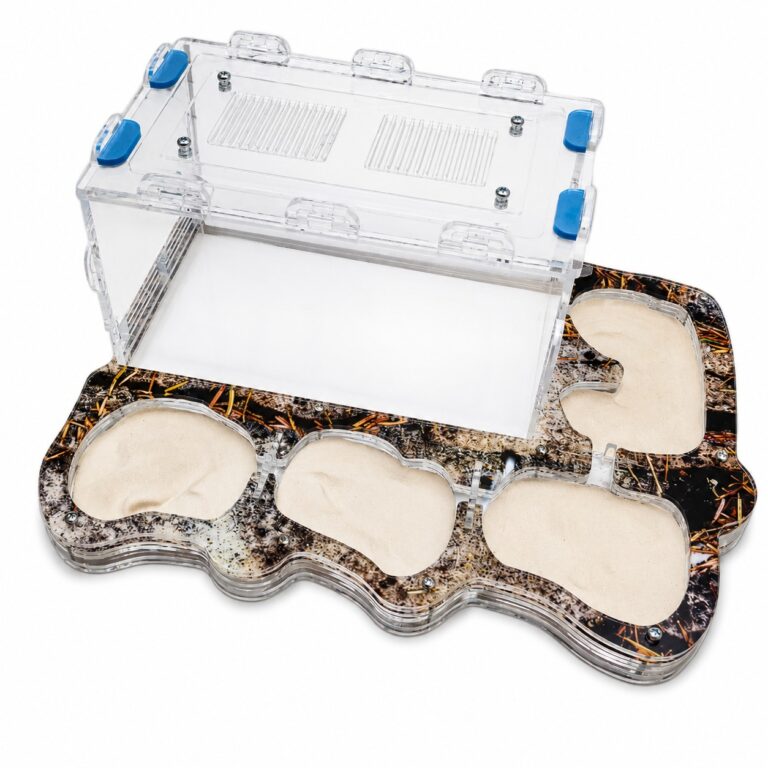
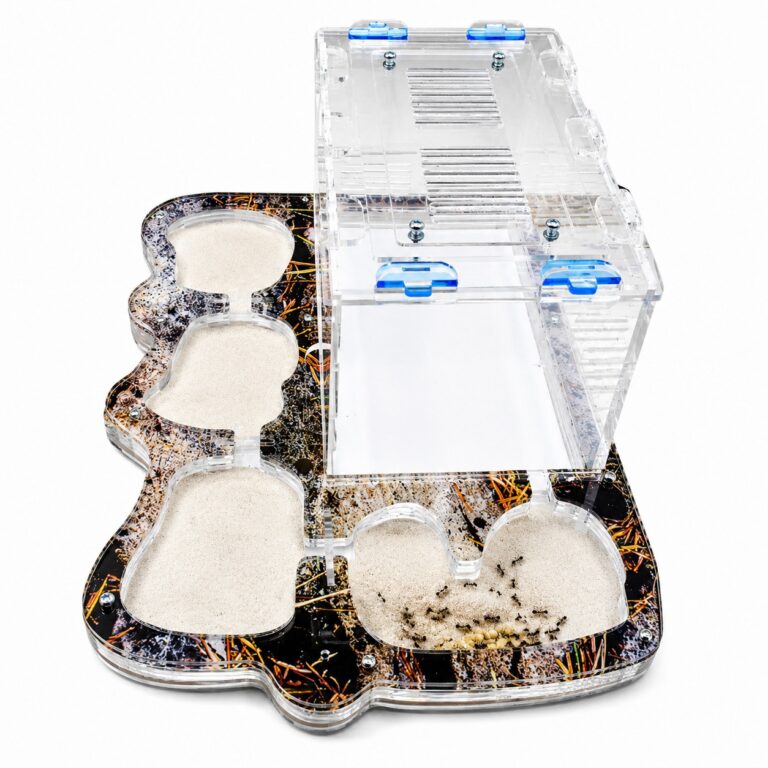
Big, thirsty species never quite settle in a dry acrylic box. The Opal is a large gypsum ant nest (32 × 23 × 13 cm) whose cast-stone walls breathe and hold deep humidity, giving 400–800-worker colonies of Camponotus singularis, Harpegnathos and Myrmecia the damp, stable climate they need. Two watering chambers, three sliding doors, two 25 mm hose ports and a roomy 20 × 13 cm arena make it a buy-once nest.
Give a big colony a proper home. Order the Opal today.
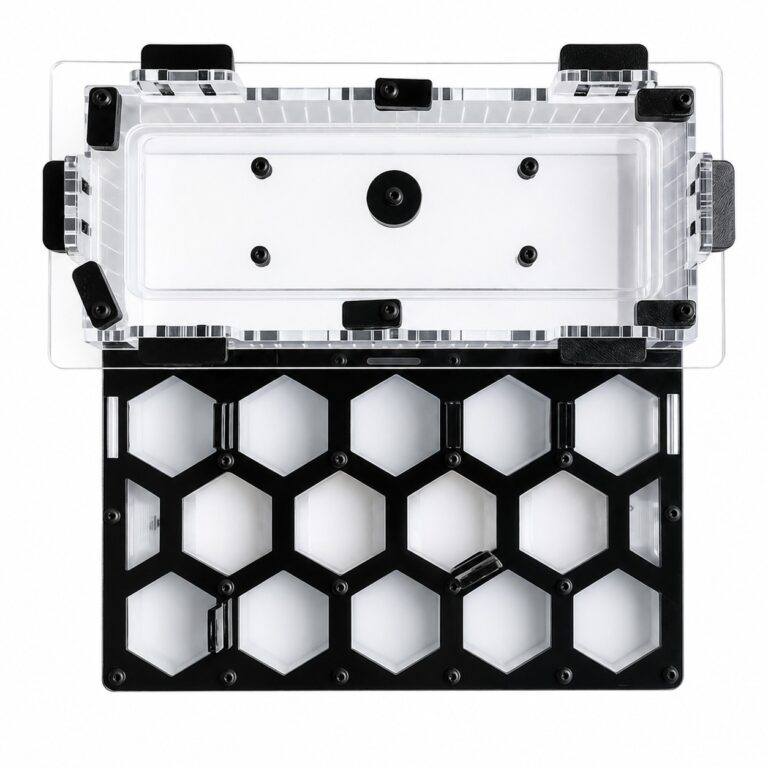
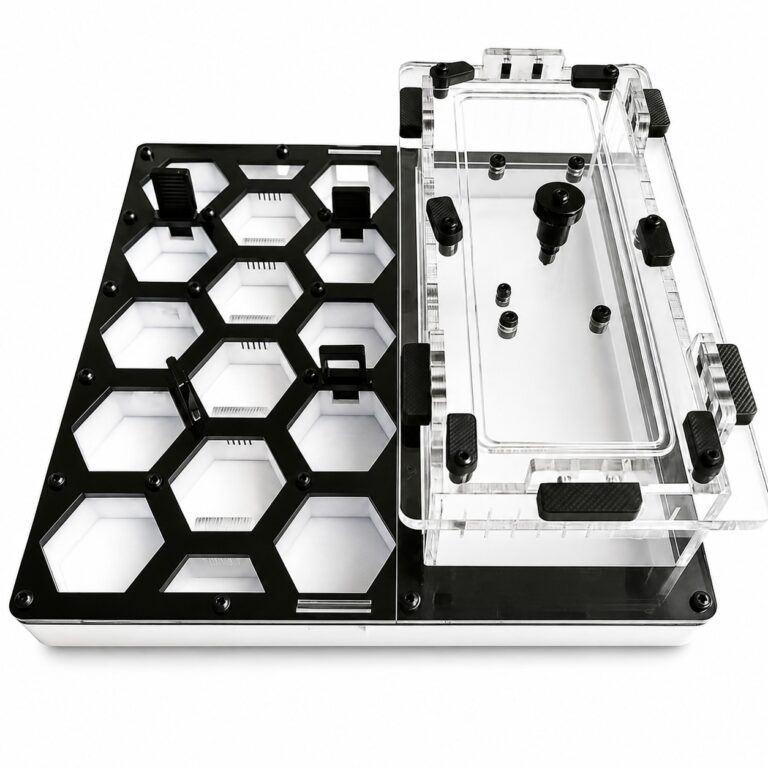
Five years from now, a thriving 500–1200-worker colony can still call the Pearl L home. This large gypsum ant nest (20 × 20 × 7 cm) runs a flowing corridor through its full footprint, winding chambers across the whole 20 × 20 cm so the colony reads as one natural interior. Multiple humidity chambers and staged latches keep big, damp-loving species comfortable without daily misting.
Move a growing colony into a home it can fill for years. Bring home the Pearl L.
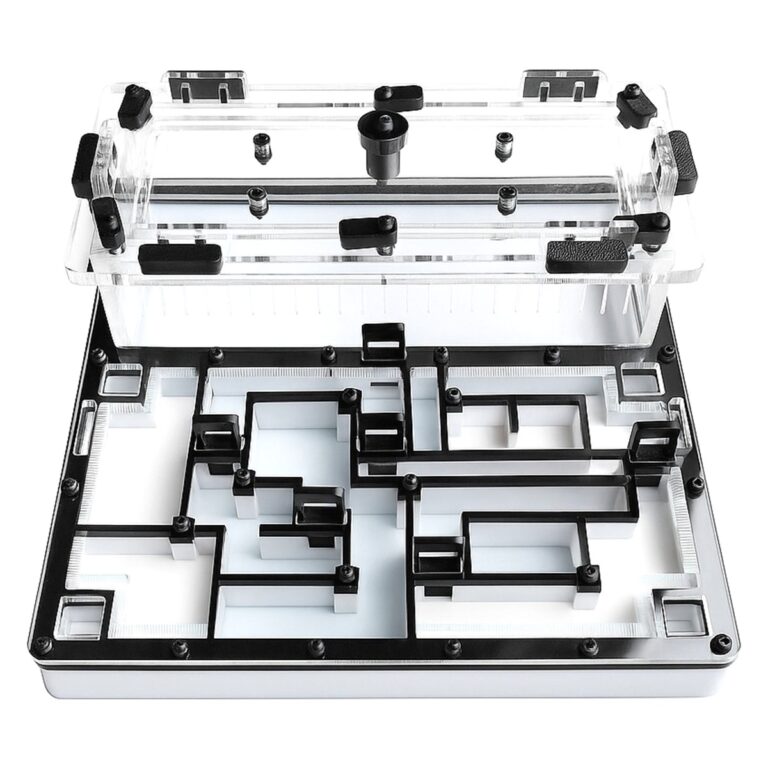
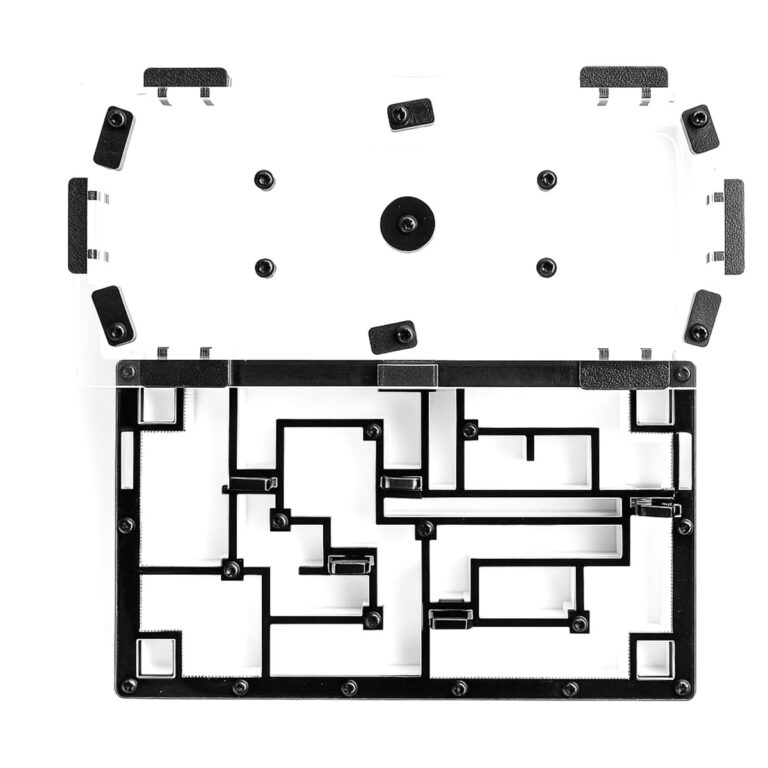
No other gypsum nest we make hands you this much control. The Marble L (20 × 20 × 7 cm) splits its large nest into five sections with five sliding latches — start a colony of 5–15 founders in one fifth and open the rest one section at a time, so it never gets more room than it can manage. Four humidity chambers hold a deep, even climate throughout; chambers run 10–15 mm.
Raise a colony its whole life in one nest — order the Marble L.
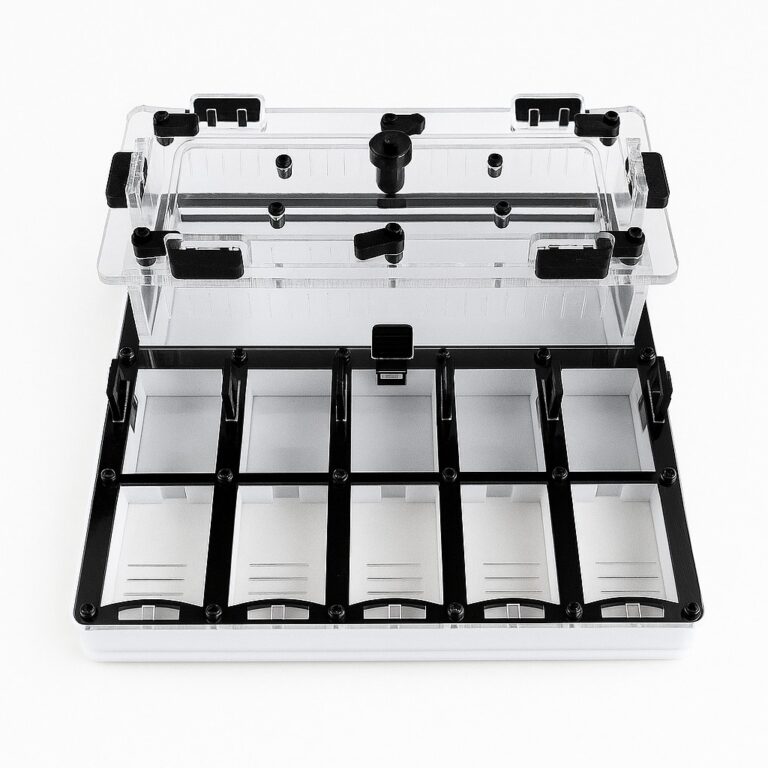
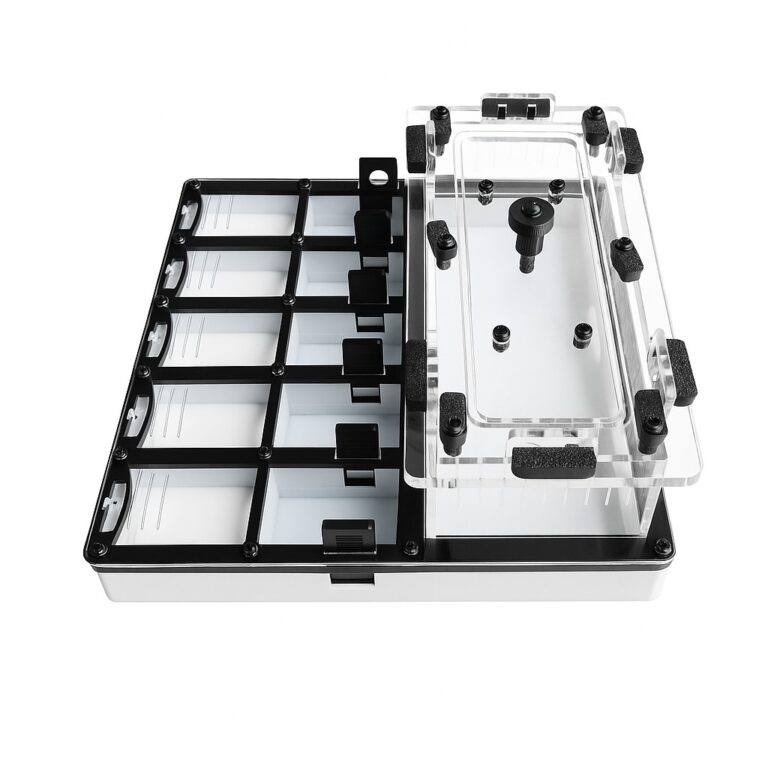
Ants are strict organisers — brood in one place, food near the entrance, waste far away — and the bigger the colony, the stricter it gets. The Ivory L (20 × 20 × 7 cm) hands a 500–1200-worker colony the enclosed square rooms to do exactly that, linked by corridors, with five humidity chambers and four-stage latch expansion for a stable climate and controlled growth. Cast gypsum holds deep, even humidity; chambers run 10–15 mm.
Give a big colony room to organise — order the Ivory L.
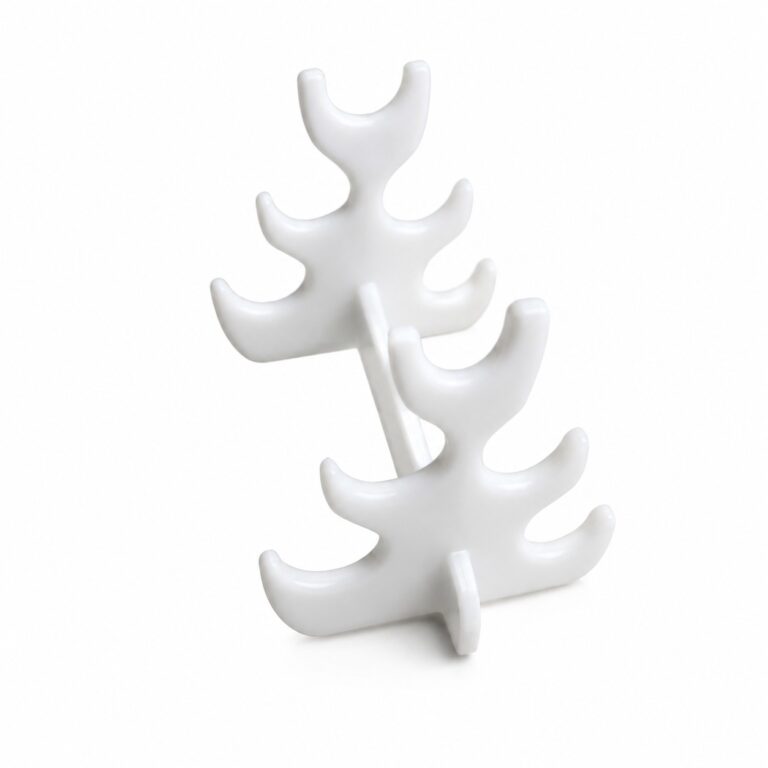
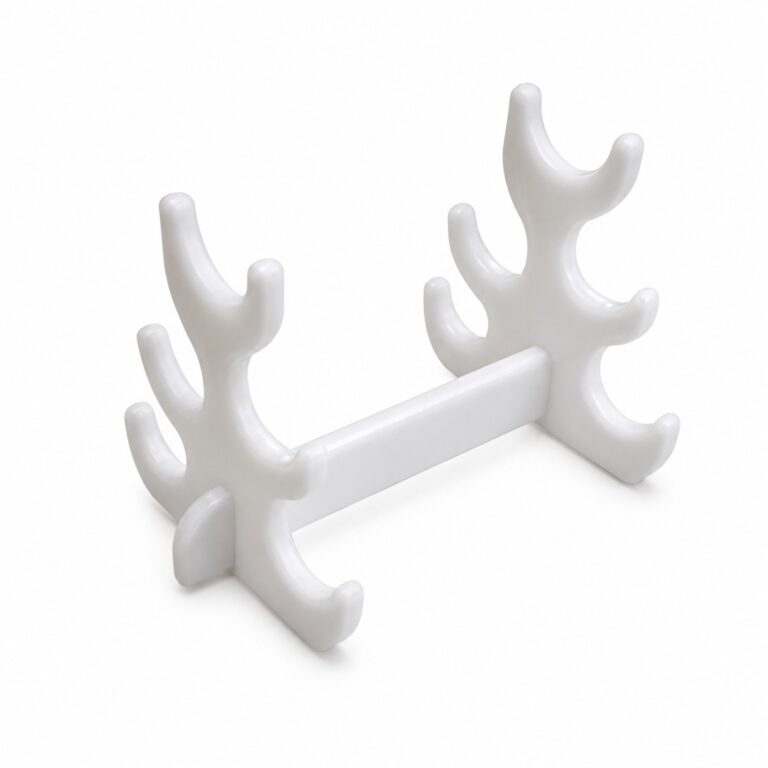
A few founding queens on the go? Tube Holder 5 keeps them upright and sorted: a rack for 5 test tubes (up to 16 mm) on a steady, anti-tip base, so tubes don’t roll, colonies don’t tip and you don’t mix up which queen is which. Tough plastic that wipes clean and disinfects between colonies, fitting standard ant-keeping and lab tubes. The right size for a small, growing collection.
Keep your founding queens tidy and upright — add one to your setup.
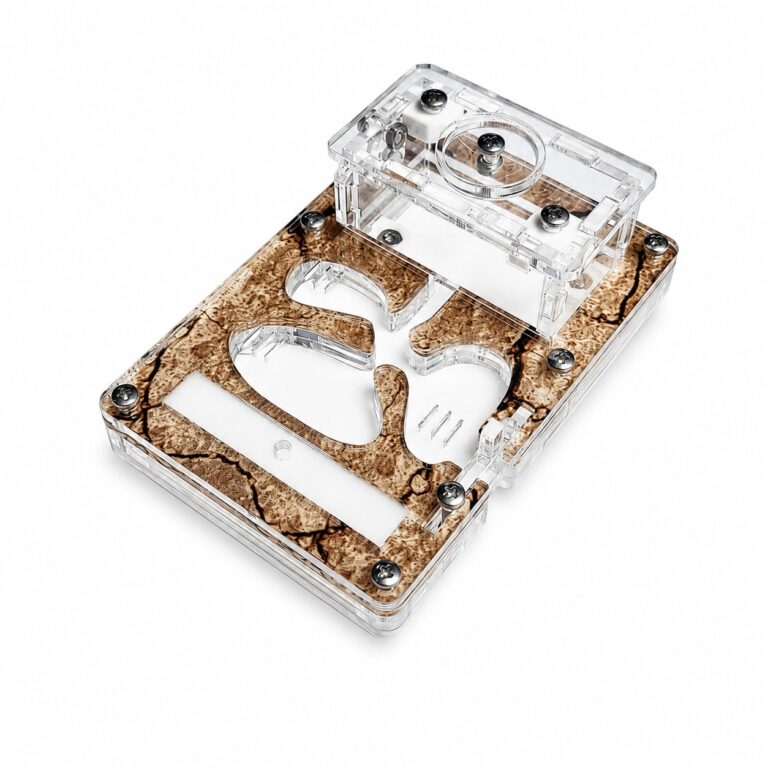
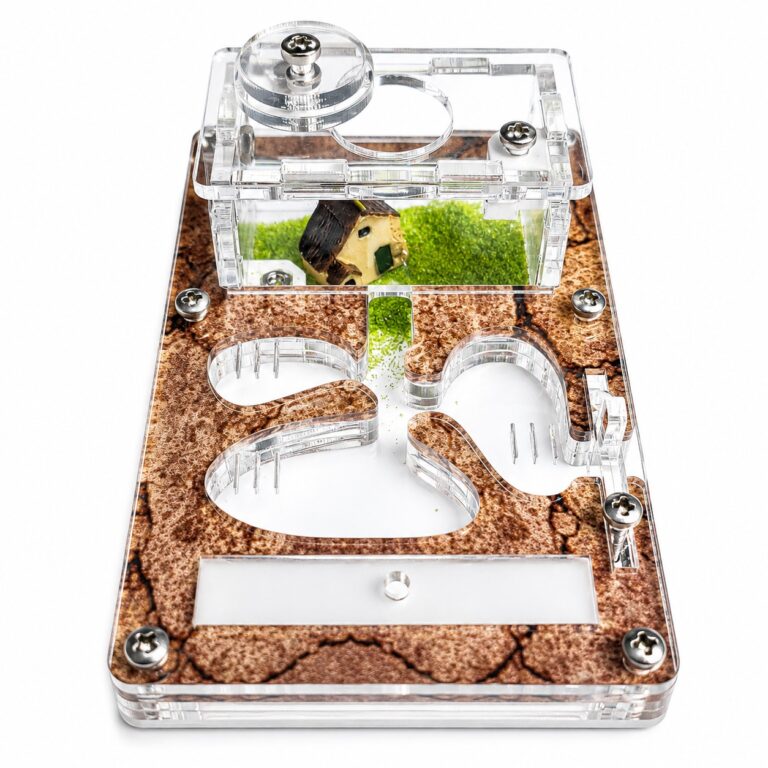
The fastest way to lose a first colony is to start it too big — empty chambers trap damp and stress the queen. The Start (11 × 7.5 cm) is small on purpose: a clear, precision laser-cut acrylic nest sized so a founding colony actually fills it. A 5.5 × 3 × 4 cm arena and 9 mm chamber suit 200–400 workers (move in from just 10), with a built-in humidity sponge, a ⌀8 mm port for modules and triple escape protection. Made in Poland, assembled in about 10 minutes.
Start your first colony the right way — order the Start today.
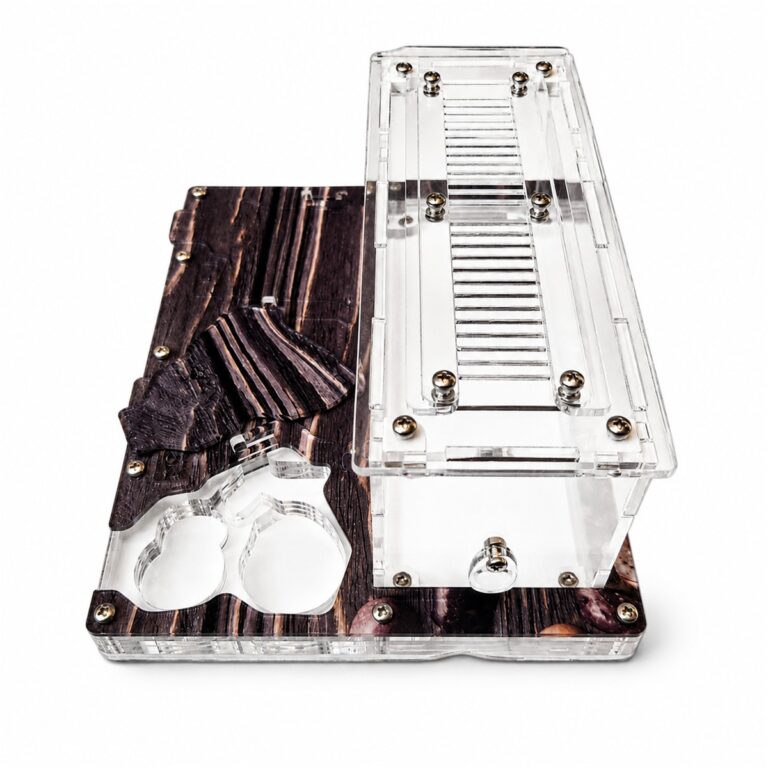
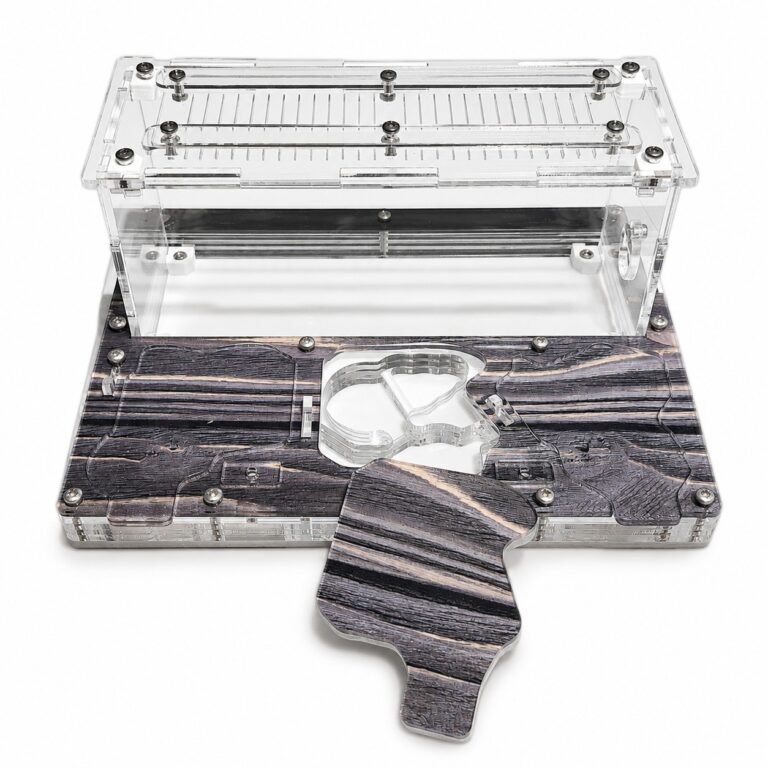
A colony outgrows its first nest faster than most beginners expect, and the Spoko is the sensible place it lands next. This mid-size acrylic ant nest (20 × 15 cm) gives a colony heading toward 800 workers the room to spread: two humidity chambers, a long 20 cm arena, passive micro-perforation airflow and a 9 mm chamber height for most popular species. Capacity 200–800 workers.
Give a growing colony its next home — order the Spoko.
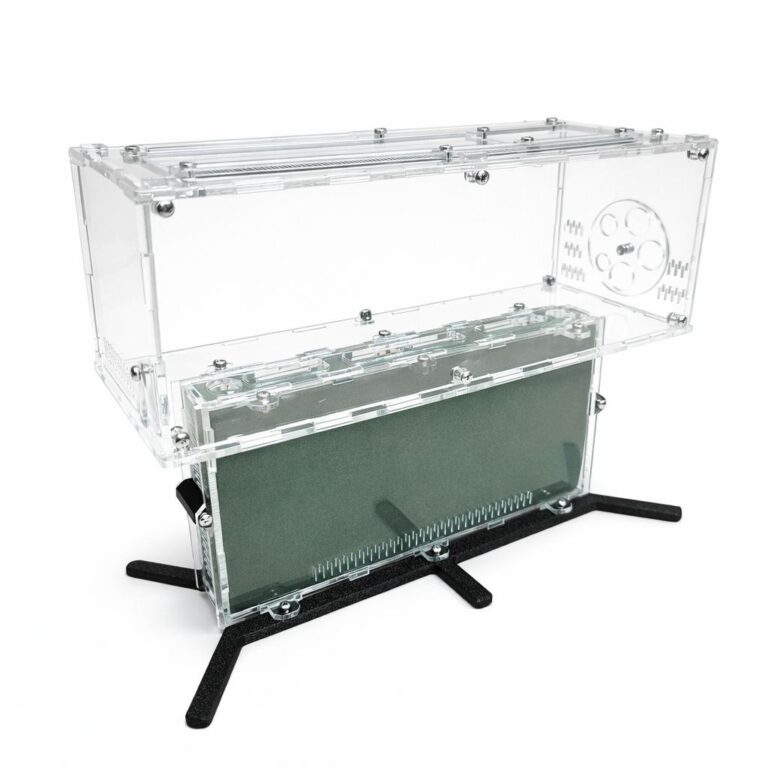
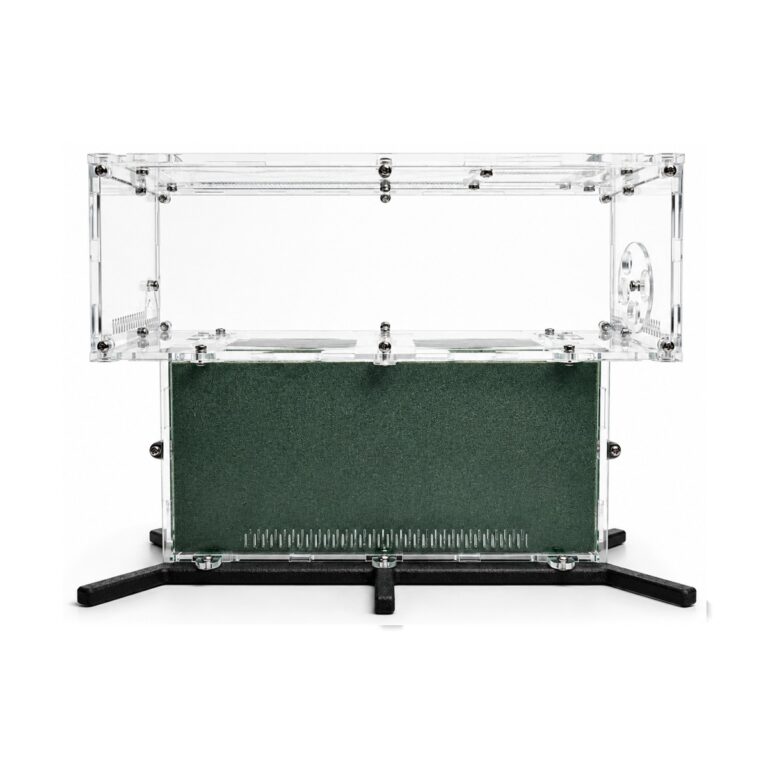
Most formicaria hand the colony pre-made rooms. The TerraCore Pro hands it a workable DigFix substrate and lets it excavate its own tunnels and chambers, the way ants build underground. Self-contained 26 × 12 × 20 cm acrylic setup with a 21 × 10 × 3 cm DigFix nest, integrated arena and universal 14 mm port. Capacity ~400–800 ants, beginner-friendly, made in Poland and ready from day one.
Let the colony dig the nest it actually wants.
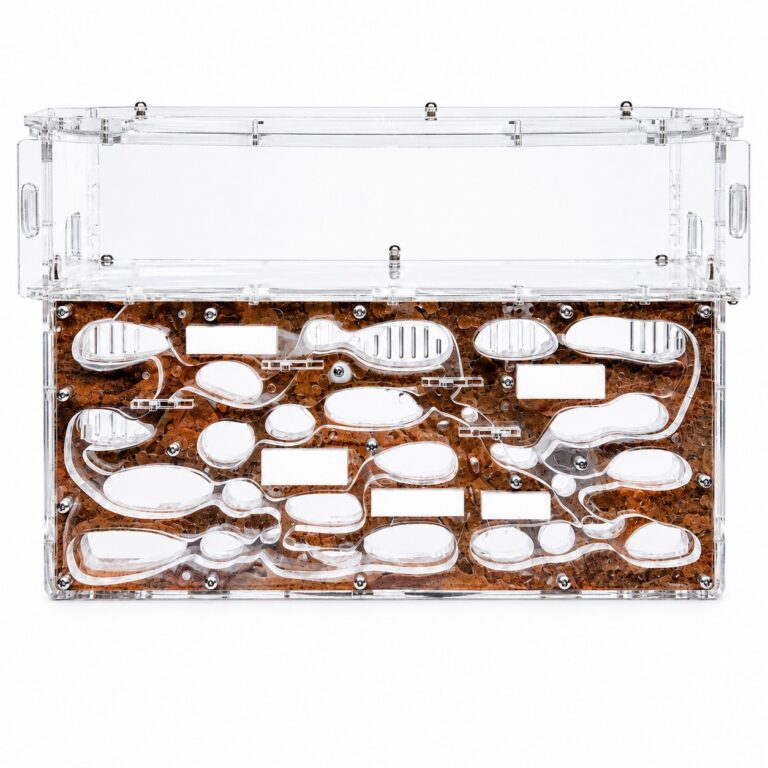
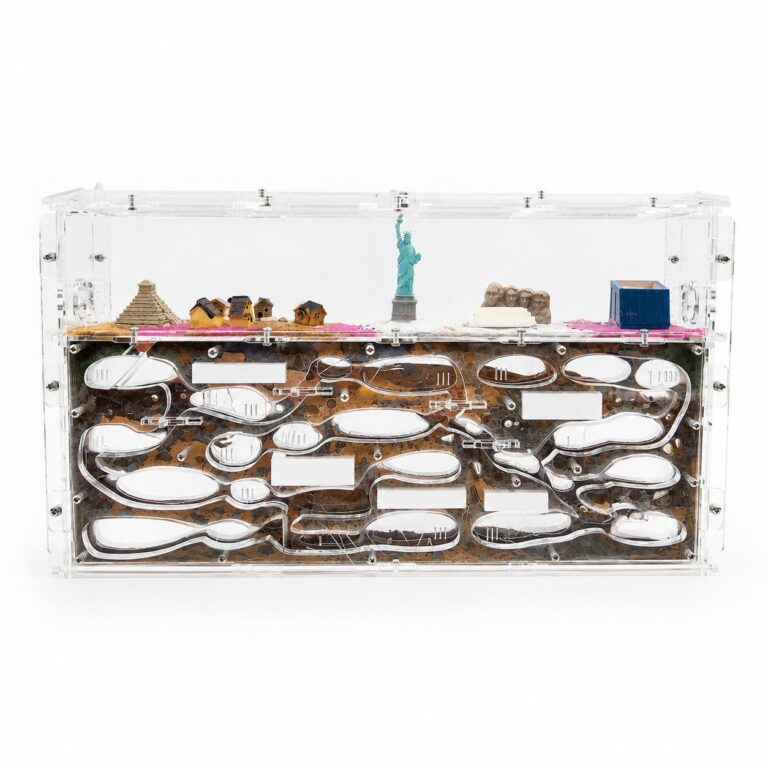
Fifty centimetres of nest, end to end (50 × 17 × 8 cm). The Giant XL is the longest standard acrylic nest we make, built for a mature colony of 1,500–2,400 workers and topped with 20 mm chambers that clear the biggest worker castes. A full-length 50 cm arena spreads the whole society into one view: nurseries, food stores, refuse piles and foraging trails at once.
Want the whole colony at a glance? Bring home the Giant XL.