





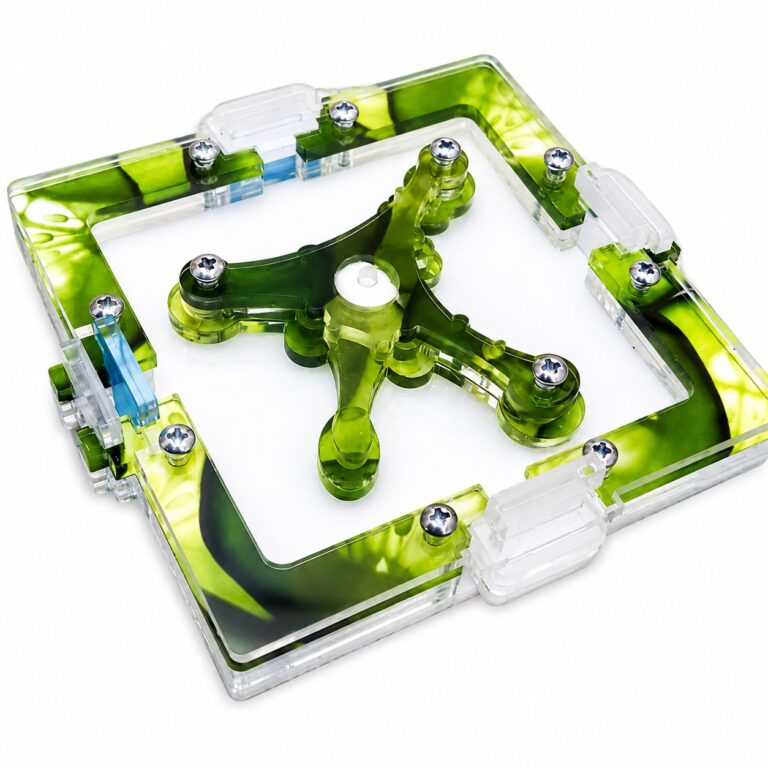
Some colonies need a moment to read a new nest. The Nexus 10×10 cm isn’t one of those puzzles: a large central room ringed by smaller chambers gives an obvious heart, and the colony settles almost on arrival. Lockable nut-and-screw ports, a sponge chamber and 9 mm rooms suit up to ~350 Lasius, Tetramorium, Messor or smaller Camponotus, and it links into a growing modular setup.
Give the colony a heart and rooms around it.
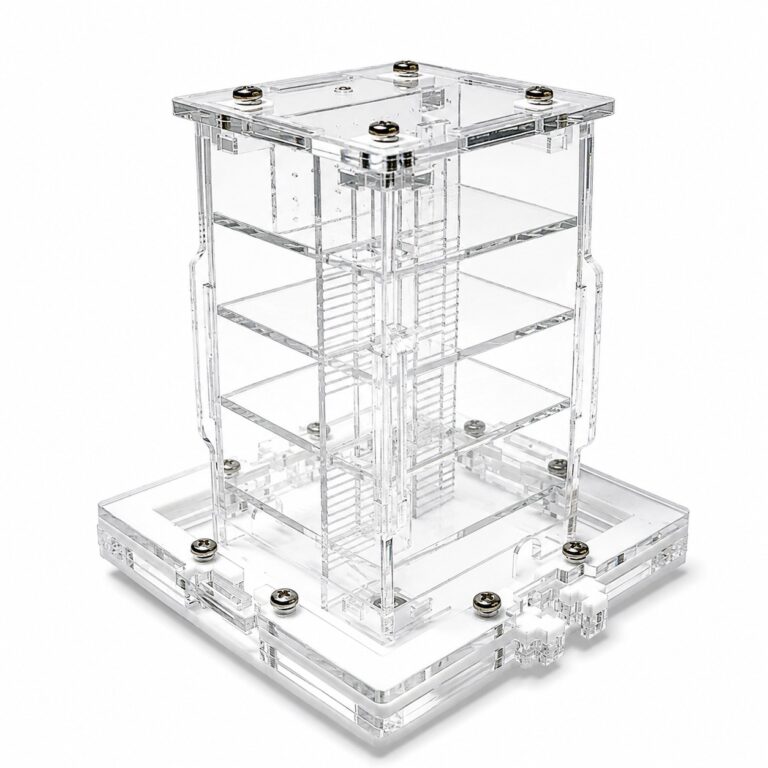
Most 10×10 nests are flat. The Tower stacks four floors onto that same footprint, so the colony moves brood up and down the levels to chase the warmth it wants. Lockable nut-and-screw ports, a sponge chamber and 9 mm rooms suit up to ~350 Lasius, Tetramorium, Messor or smaller Camponotus, and it links into a growing modular setup.
Let the colony pick its floor by climate.
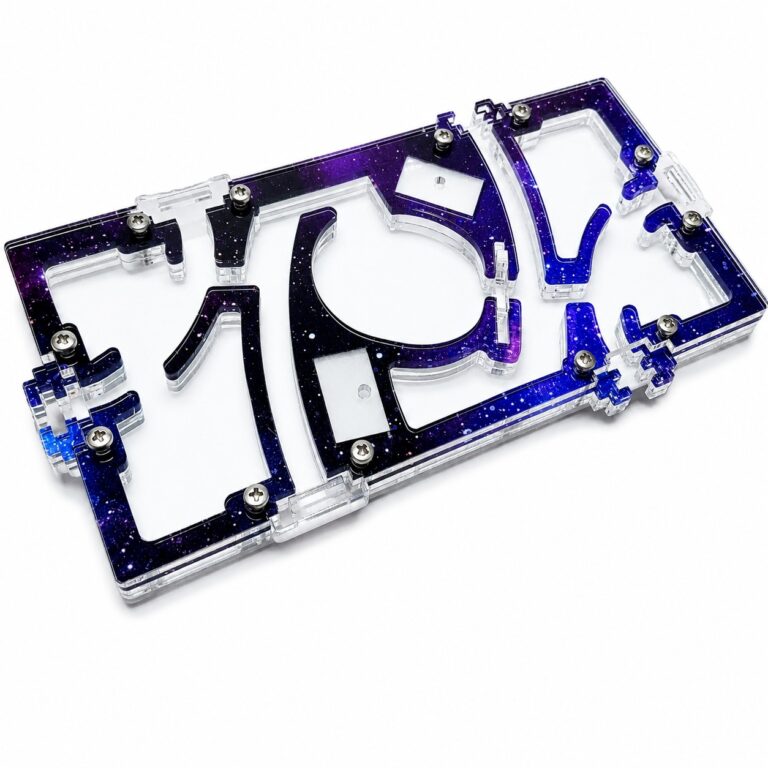
A loop runs the outer edge of the Orbit 20×10 cm and ties every inner chamber into a circle, so workers patrol it constantly and the colony fills the whole nest fast and evenly, with no dead-end rooms left empty. Six lockable ports, two sponge chambers, one internal latch and 9 mm rooms house ~400–800 Lasius, Tetramorium, Messor or smaller Camponotus.
The natural step up from a 10×10 starter.
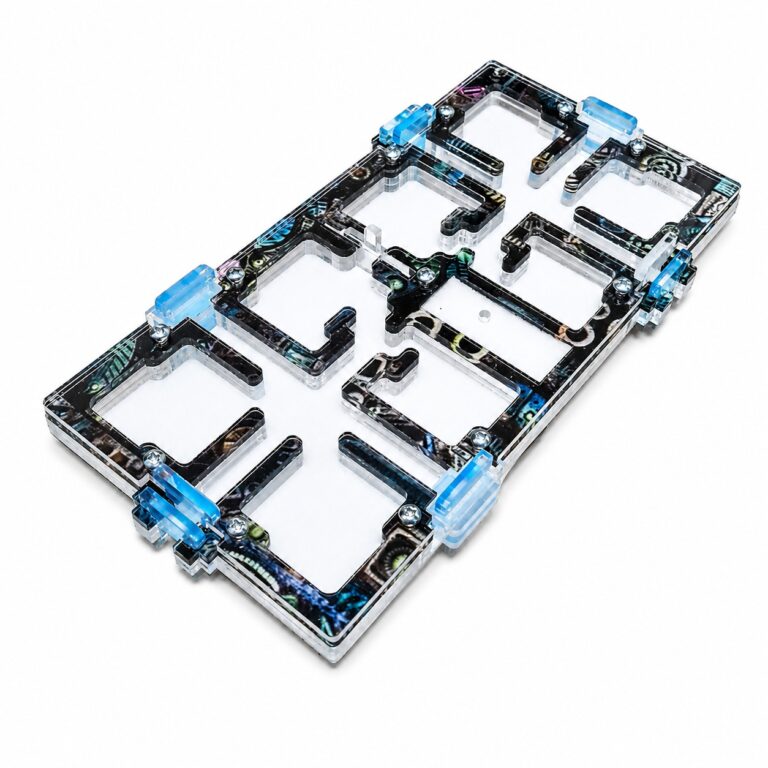
Your colony loved the orderly Quad grid and simply outgrew it. The Quad 20×10 cm carries the same clearly-zoned rooms onto a wider footprint — more of them, so a bigger colony keeps brood, food and waste apart without crowding. Six lockable ports, two sponge chambers, one internal latch and 9 mm rooms house ~400–800 Lasius, Tetramorium, Messor or smaller Camponotus.
The Quad grid, sized for a bigger colony.
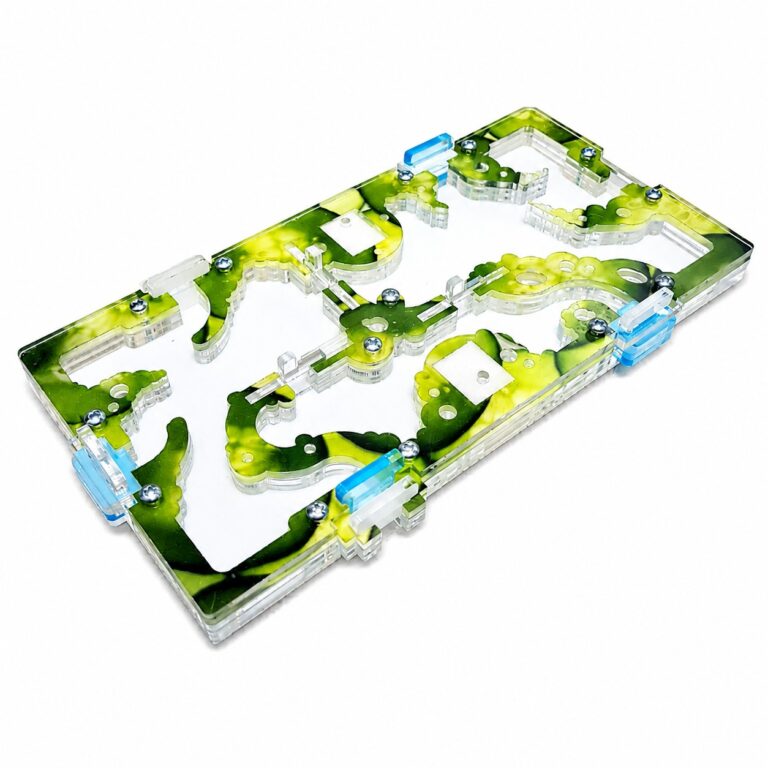
Growing colonies turn messy when they rattle around an oversized nest. The Vortex 20×10 cm answers that with three parallel zones the colony fills one at a time, plus an internal latch to hold it back until it’s ready. Six lockable ports, two sponge chambers and 9 mm rooms house ~400–800 Lasius, Tetramorium, Messor or smaller Camponotus, all linkable into a bigger formicarium.
Grow the colony zone by zone, stay tidy.
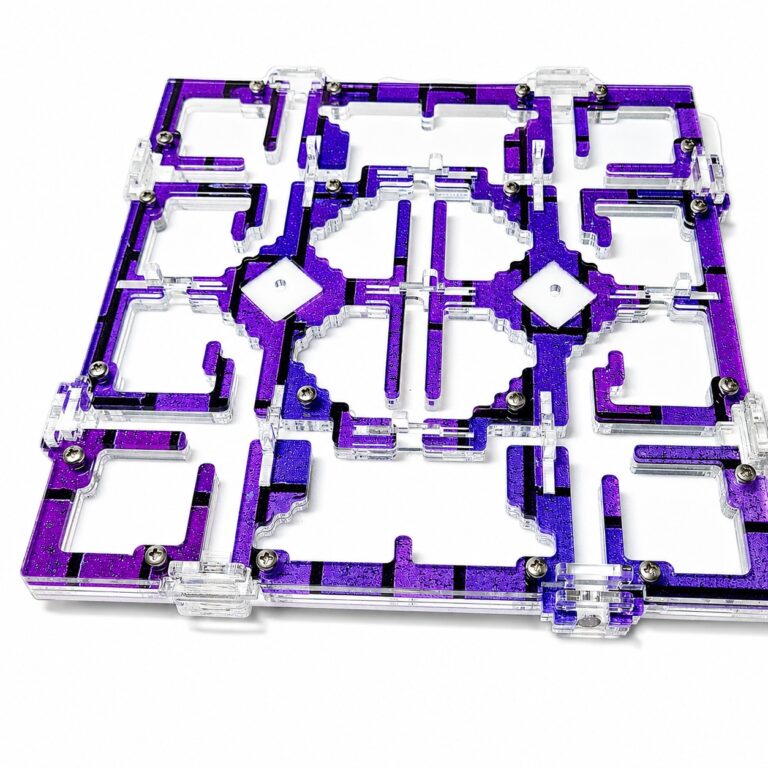
Watch a big colony run like a city. The Matrix 20×20 cm lays out rows and columns of interconnected rooms: dozens of defined cells the colony zones into brood, stores and quarters, readable like a street map behind clear acrylic. Eight lockable ports, two sponge chambers, four internal latches for staged release and 9 mm rooms for Lasius, Tetramorium, Messor and smaller Camponotus.
Watch a colony run its own city.
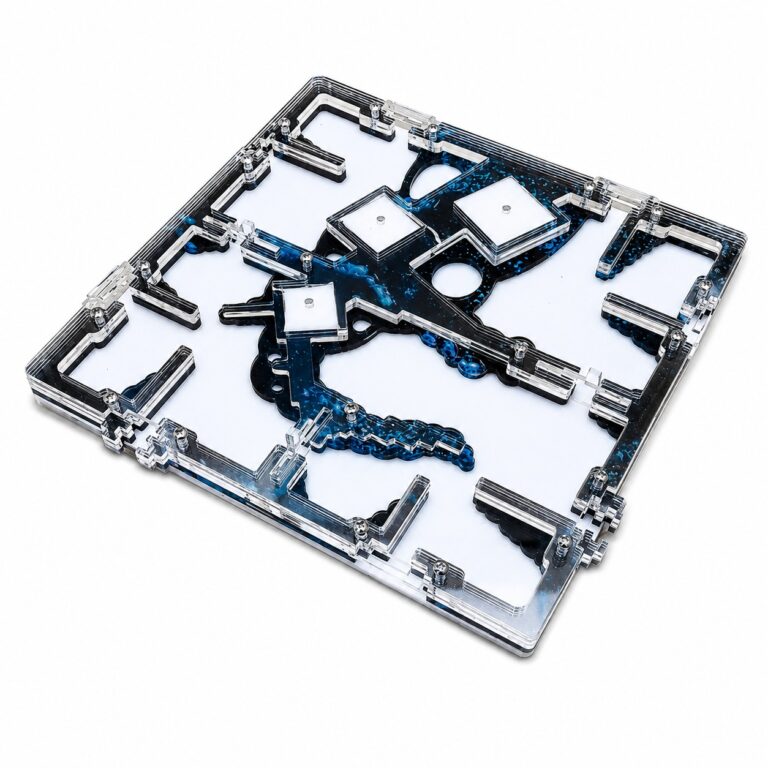
No wild colony digs a grid. The Helix 20×20 cm honours that with sculptural, irregular chambers that read like the branching galleries of a real underground nest: a living cross-section behind clear acrylic, sized for a large established colony. Eight lockable ports, two sponge chambers, four internal latches for staged release and 9 mm rooms for Lasius, Tetramorium, Messor and smaller Camponotus.
Give a big colony a wild, natural home.
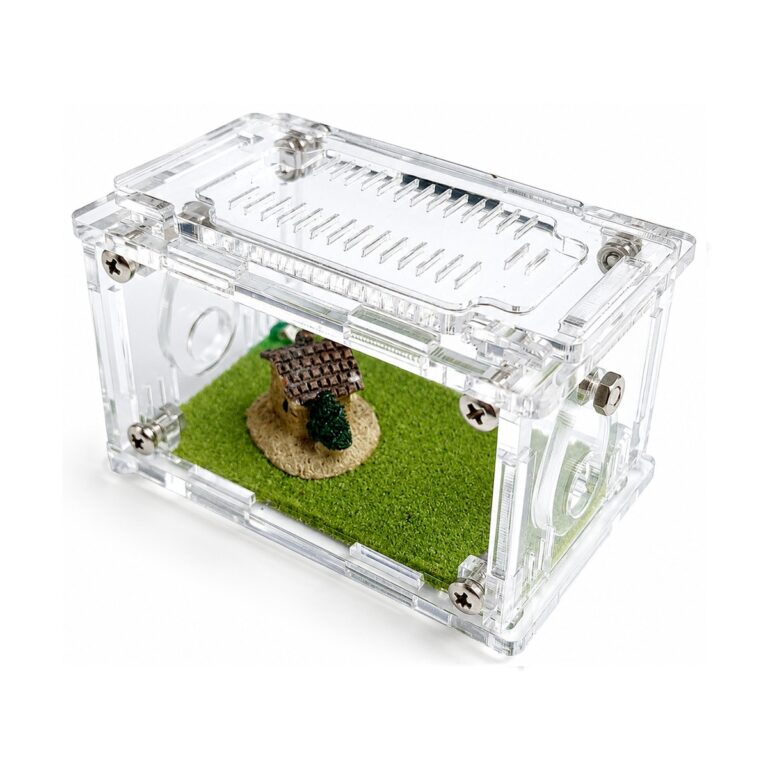
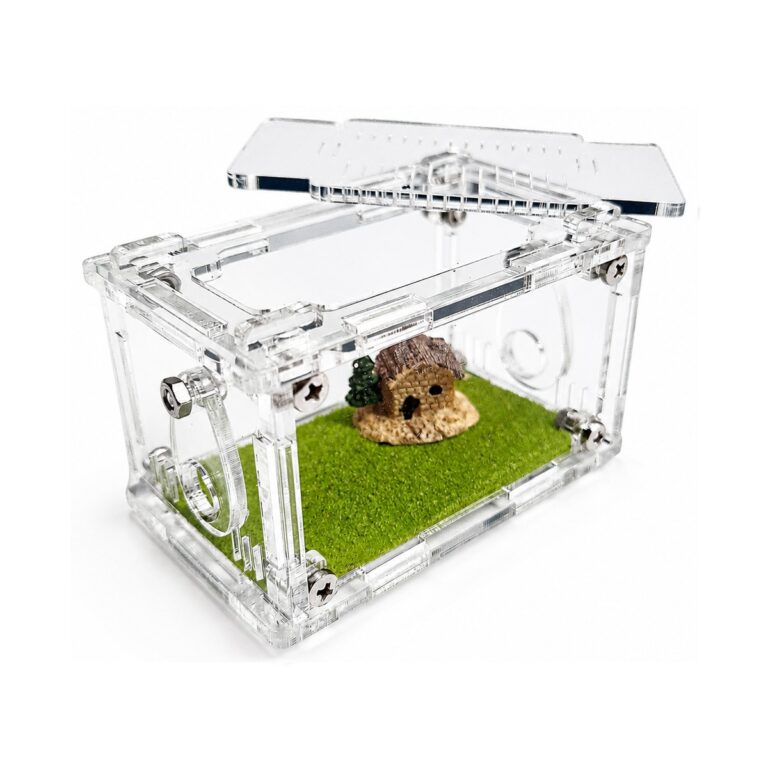
Young colonies and the tiniest species need a safe first home, and the Arena Terrarium S delivers it in 8×5×4 cm of fully sealed acrylic. Two ports (8 mm and 10 mm) link it to a test tube, a small nest or a formicarium, or run it standalone; laser-cut micro-perforation breathes without leaving a worker-sized gap. Made in Poland.
Start your colony off safely. Order your Arena Terrarium S.
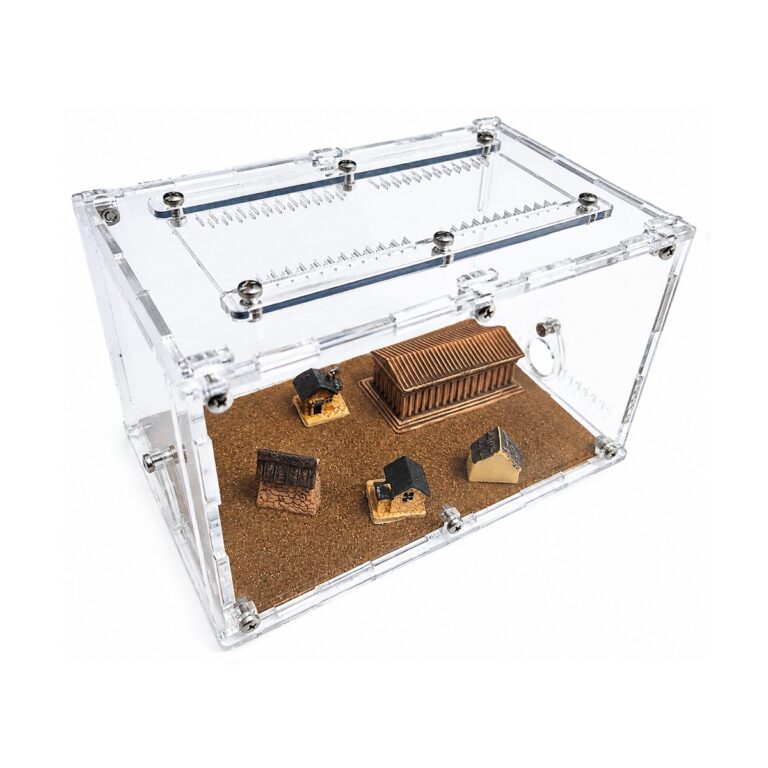
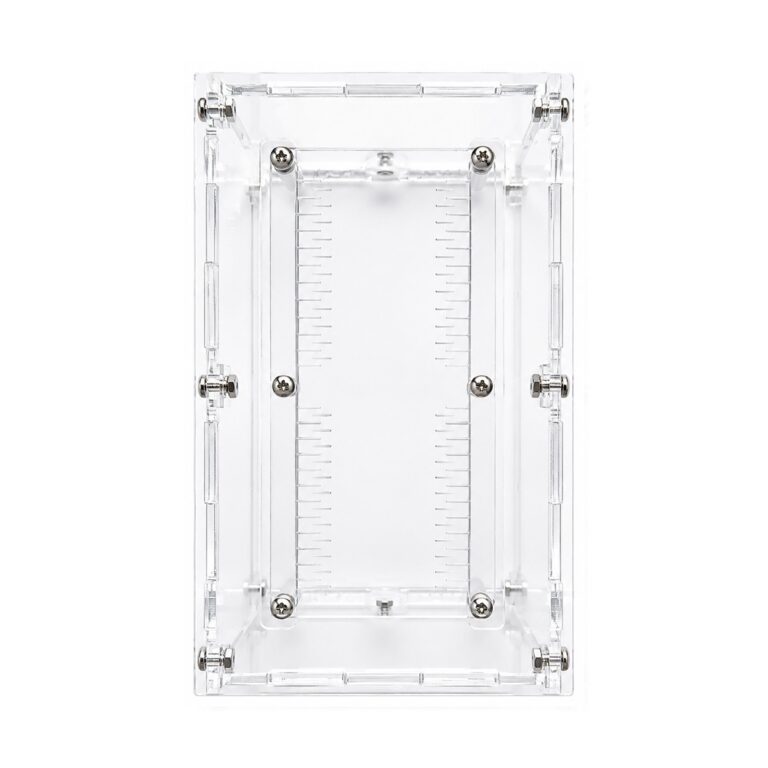
Some species walk straight out of an open arena. The Arena Terrarium M, 15×10×10 cm of fully sealed acrylic, keeps a small-to-medium colony where it belongs. Two ports (8 mm and 10 mm) connect it to your nest or formicarium, or use it standalone; laser-cut micro-perforation breathes without opening a worker-sized gap. Made in Poland.
Keep your colony safely contained — order your Arena Terrarium M.
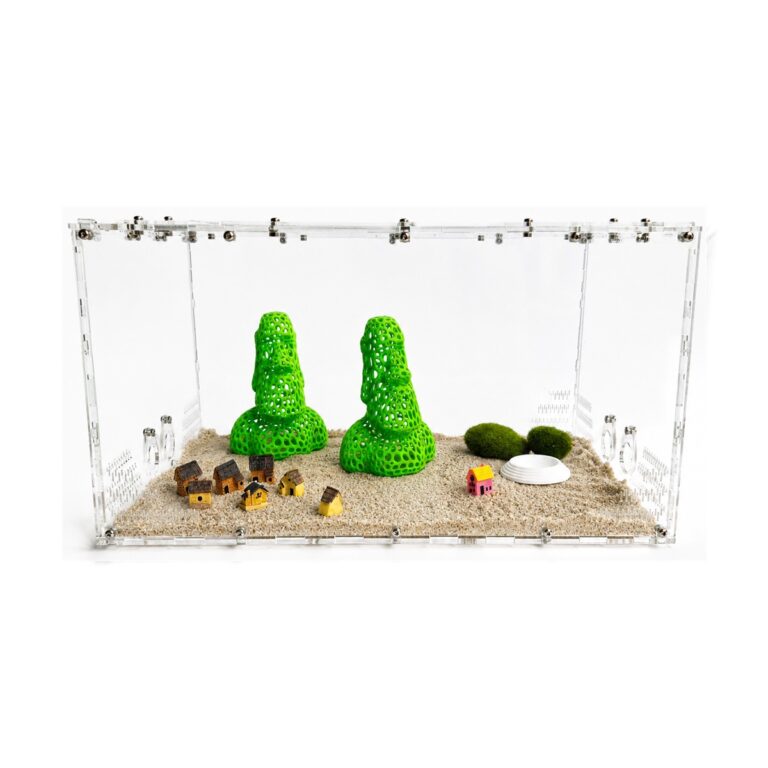
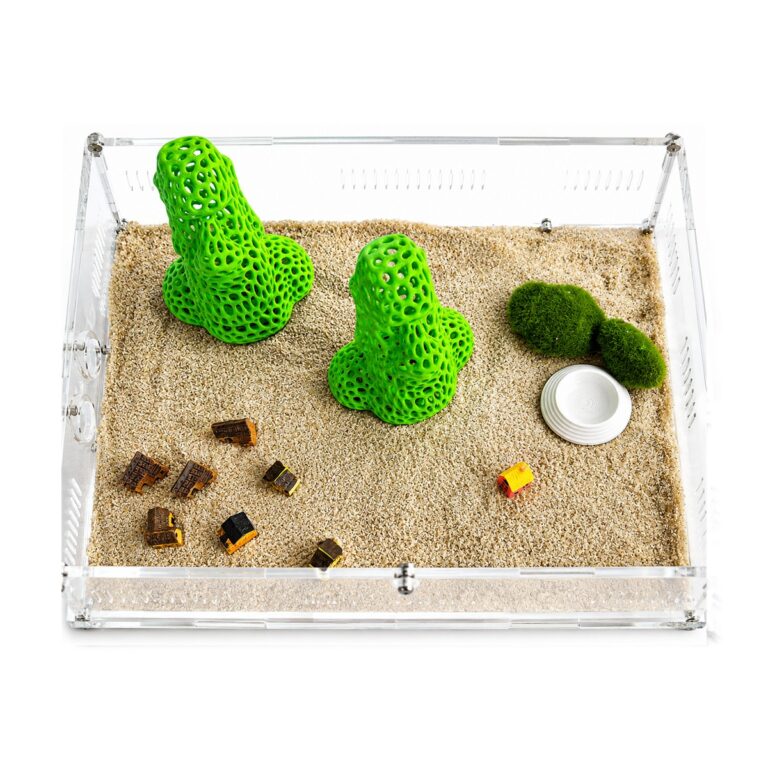
Big colonies push on every edge of their enclosure. The Arena Terrarium XL answers with 40×25×19 cm of fully sealed acrylic for 1000+ workers, schools and showpiece builds. Two ports (8 mm and 10 mm) link it to your nest or formicarium, or run it standalone; laser-cut micro-perforation breathes without giving a worker a way out. Made in Poland.
Give a big colony room to run. Order your Arena Terrarium XL.
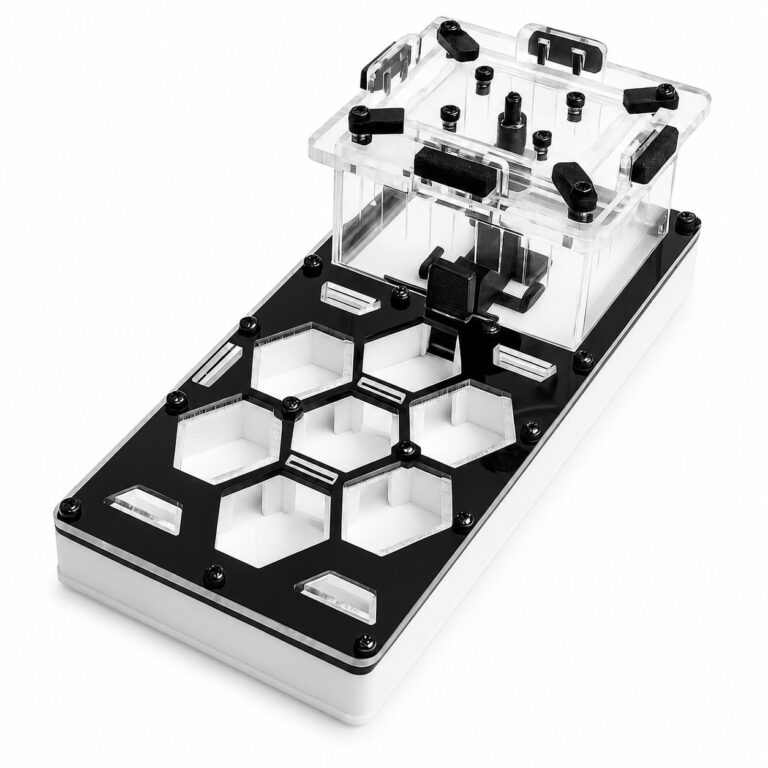
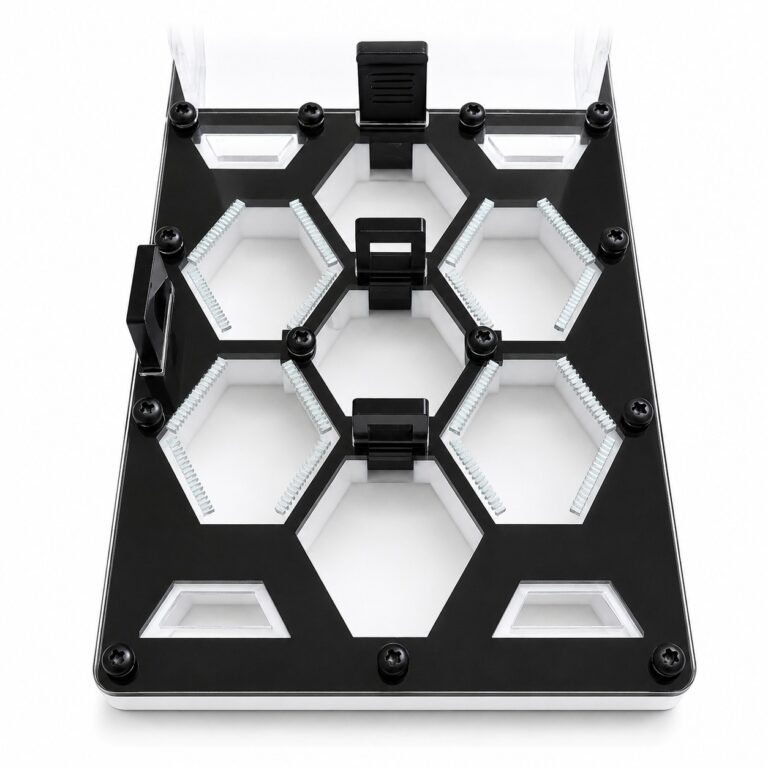
Where most small gypsum nests give you two humidity chambers, the Pearl S gives you four. Double the gypsum surface means steadier, more even moisture across this compact nest (22 × 11 × 7 cm) — the steadiest humidity in our small format, and a forgiving first home for moisture-sensitive species and founding colonies that struggle with dry swings. Two latches stage colony access; chambers run 10–15 mm.
Let the gypsum handle the climate. Order your Pearl S today.
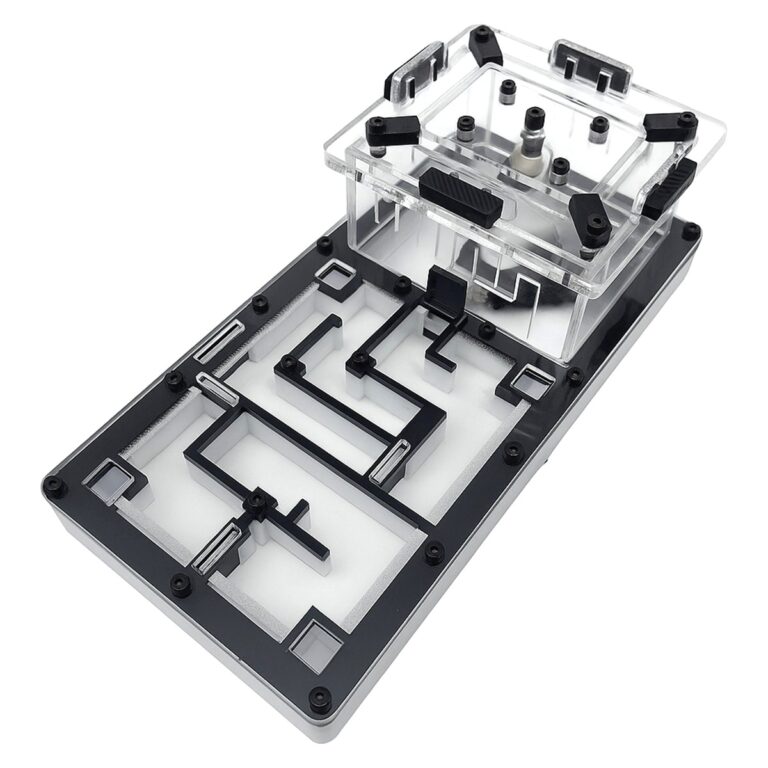
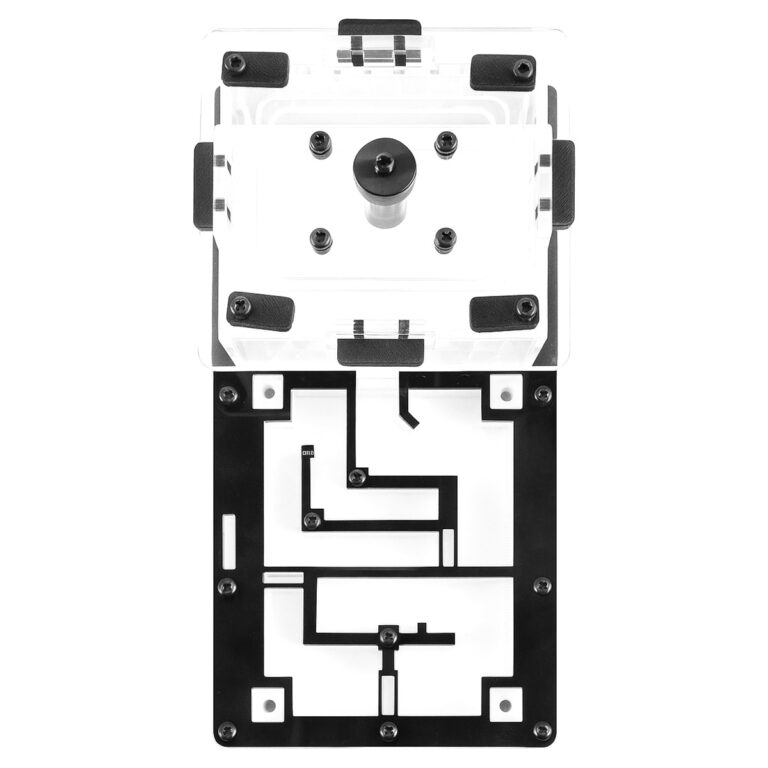
Three latches where most small nests have two — that is what makes the Marble S the most controllable small gypsum nest in the ANTonTOP line (22 × 11 × 7 cm). Cast-stone walls breathe and hold deep, even humidity through four chambers, while the three sliding latches open the nest to a founding colony in fine steps. Built for moisture-loving small species and precise, low-stress growth.
Start your queen small and grow her on your terms — order the Marble S today.
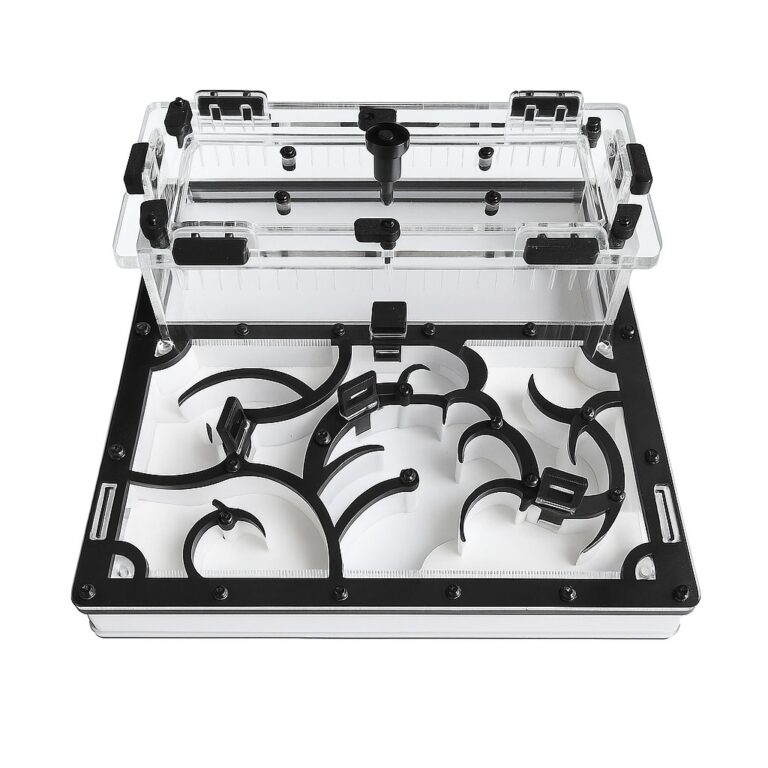
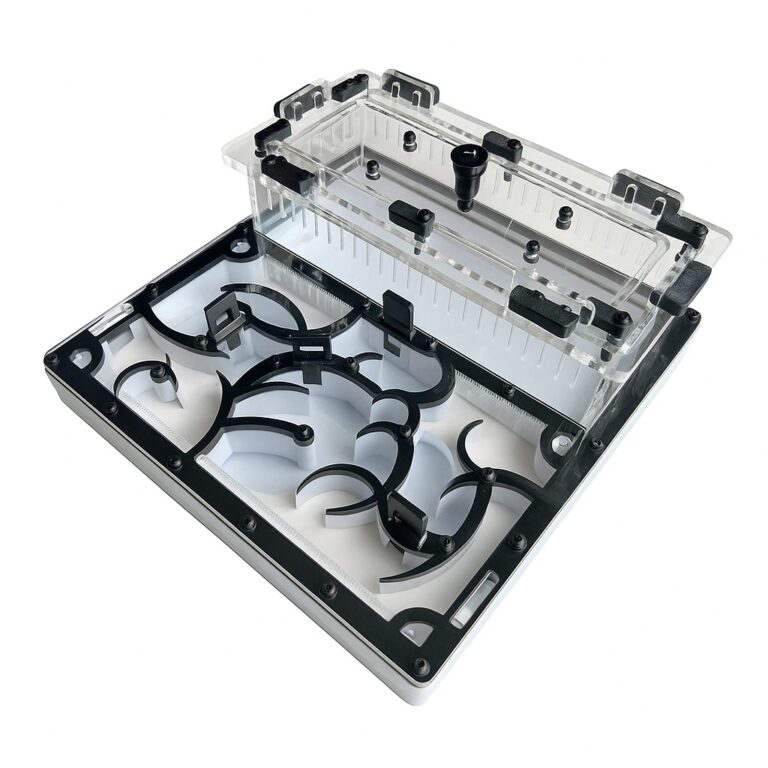
Wild ant nests are never grid-shaped, and neither is the Dragon. This large gypsum ant nest (20 × 20 × 7 cm) carves sculptural, irregular chambers that vary in shape, depth and size, echoing the underground architecture a colony digs for itself. Five humidity chambers, four-stage latch expansion and a 10 mm tubing port serve established colonies of 500–1200 workers, with the deep, even humidity cast gypsum holds.
Let your colony build like it would in the wild — order the Dragon.
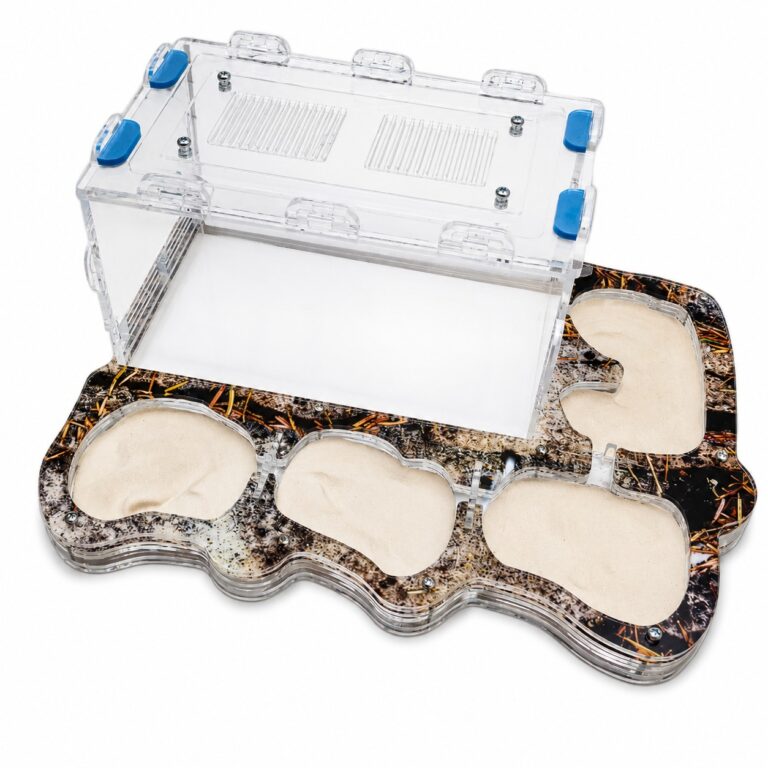
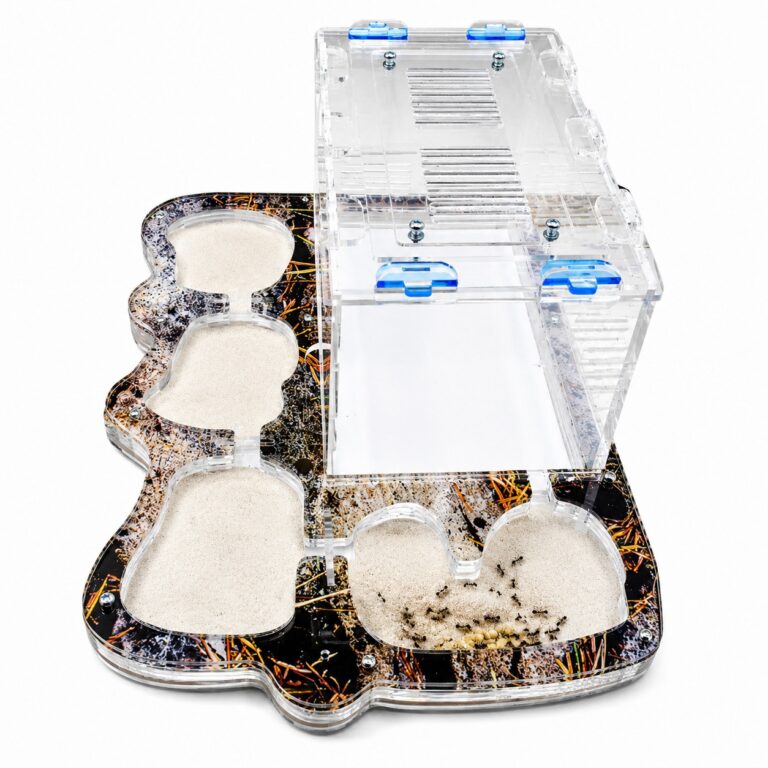
Big, thirsty species never quite settle in a dry acrylic box. The Opal is a large gypsum ant nest (32 × 23 × 13 cm) whose cast-stone walls breathe and hold deep humidity, giving 400–800-worker colonies of Camponotus singularis, Harpegnathos and Myrmecia the damp, stable climate they need. Two watering chambers, three sliding doors, two 25 mm hose ports and a roomy 20 × 13 cm arena make it a buy-once nest.
Give a big colony a proper home. Order the Opal today.
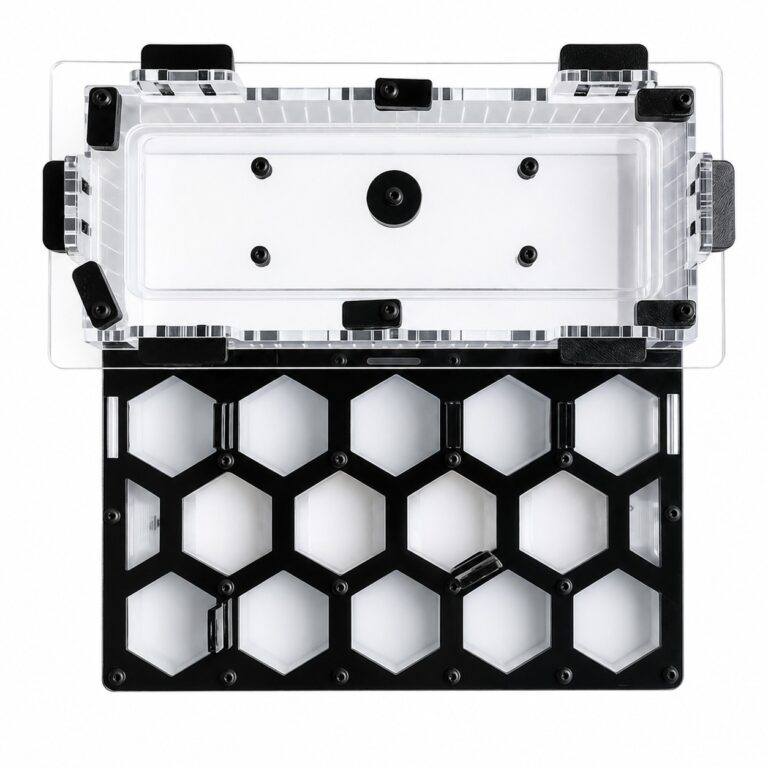
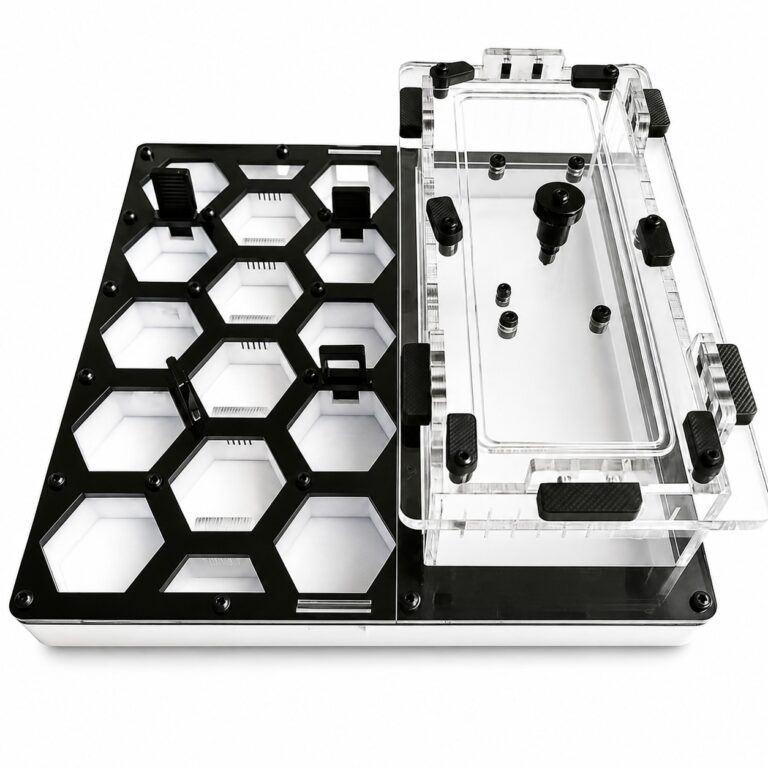
Five years from now, a thriving 500–1200-worker colony can still call the Pearl L home. This large gypsum ant nest (20 × 20 × 7 cm) runs a flowing corridor through its full footprint, winding chambers across the whole 20 × 20 cm so the colony reads as one natural interior. Multiple humidity chambers and staged latches keep big, damp-loving species comfortable without daily misting.
Move a growing colony into a home it can fill for years. Bring home the Pearl L.
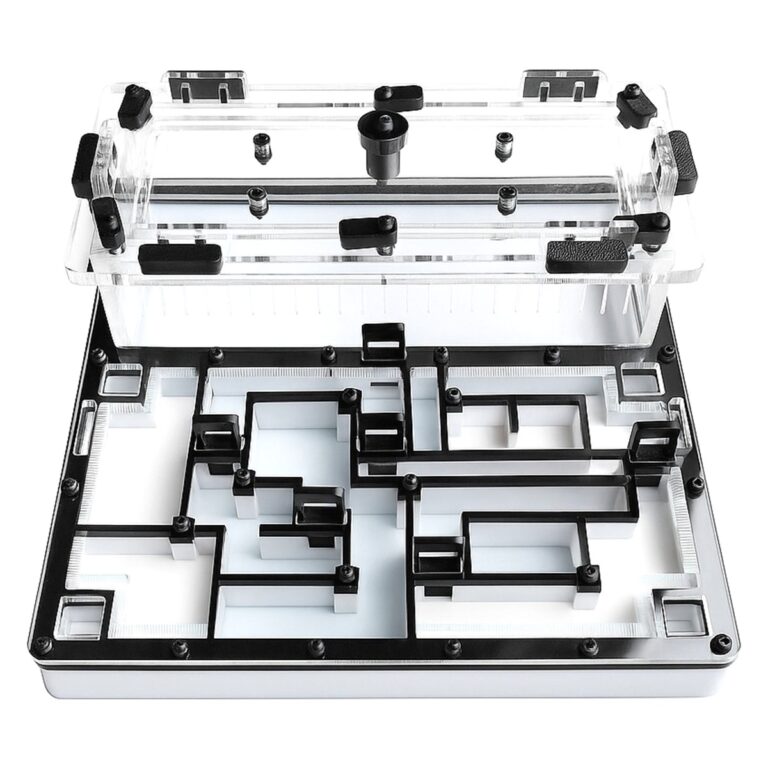
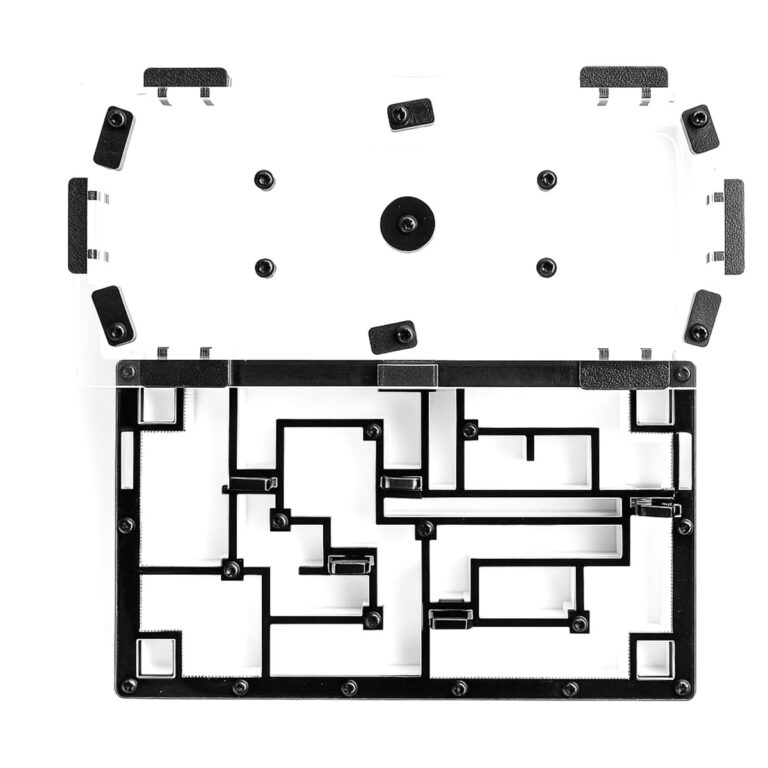
No other gypsum nest we make hands you this much control. The Marble L (20 × 20 × 7 cm) splits its large nest into five sections with five sliding latches — start a colony of 5–15 founders in one fifth and open the rest one section at a time, so it never gets more room than it can manage. Four humidity chambers hold a deep, even climate throughout; chambers run 10–15 mm.
Raise a colony its whole life in one nest — order the Marble L.
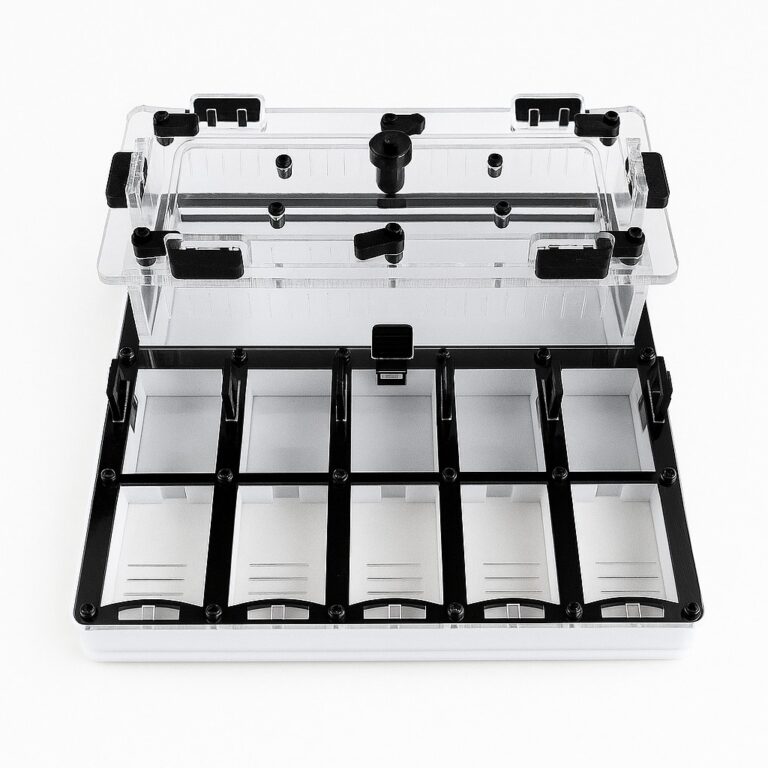
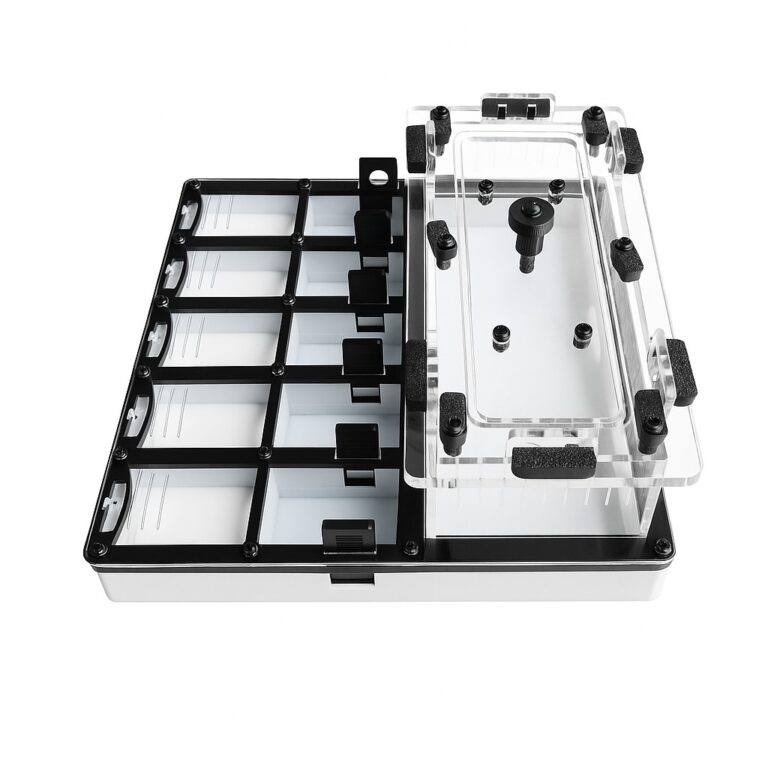
Ants are strict organisers — brood in one place, food near the entrance, waste far away — and the bigger the colony, the stricter it gets. The Ivory L (20 × 20 × 7 cm) hands a 500–1200-worker colony the enclosed square rooms to do exactly that, linked by corridors, with five humidity chambers and four-stage latch expansion for a stable climate and controlled growth. Cast gypsum holds deep, even humidity; chambers run 10–15 mm.
Give a big colony room to organise — order the Ivory L.
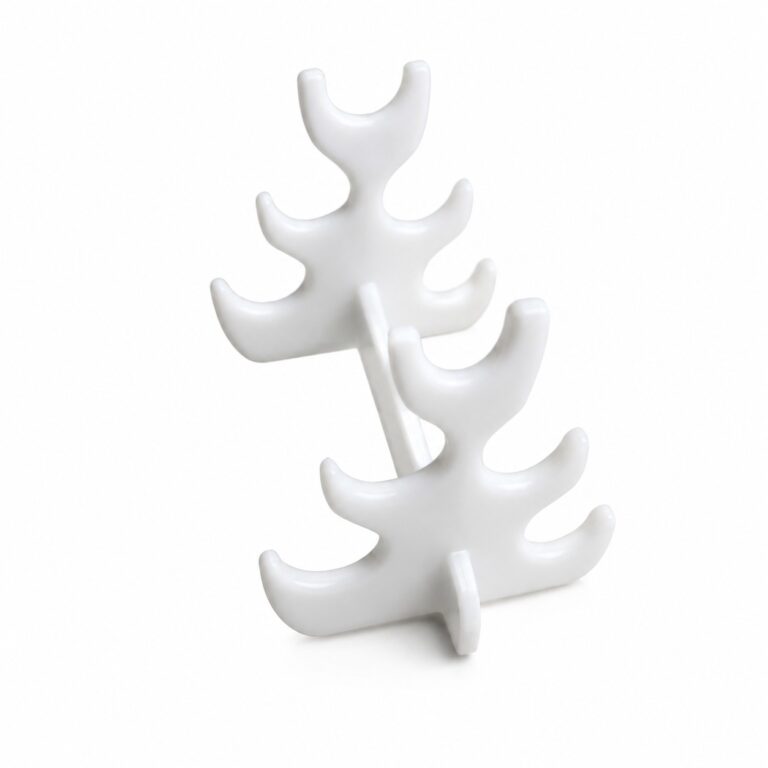
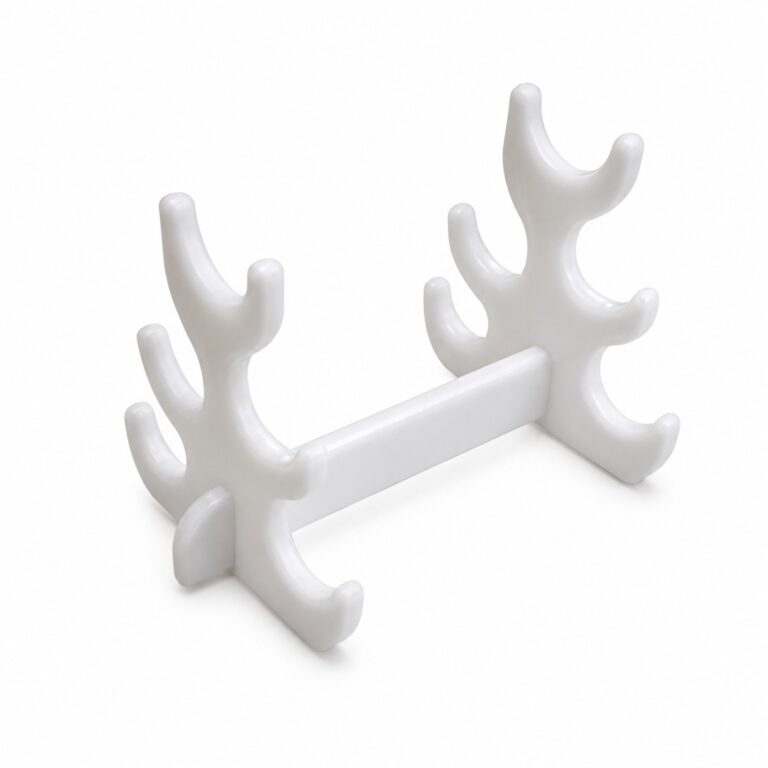
A few founding queens on the go? Tube Holder 5 keeps them upright and sorted: a rack for 5 test tubes (up to 16 mm) on a steady, anti-tip base, so tubes don’t roll, colonies don’t tip and you don’t mix up which queen is which. Tough plastic that wipes clean and disinfects between colonies, fitting standard ant-keeping and lab tubes. The right size for a small, growing collection.
Keep your founding queens tidy and upright — add one to your setup.
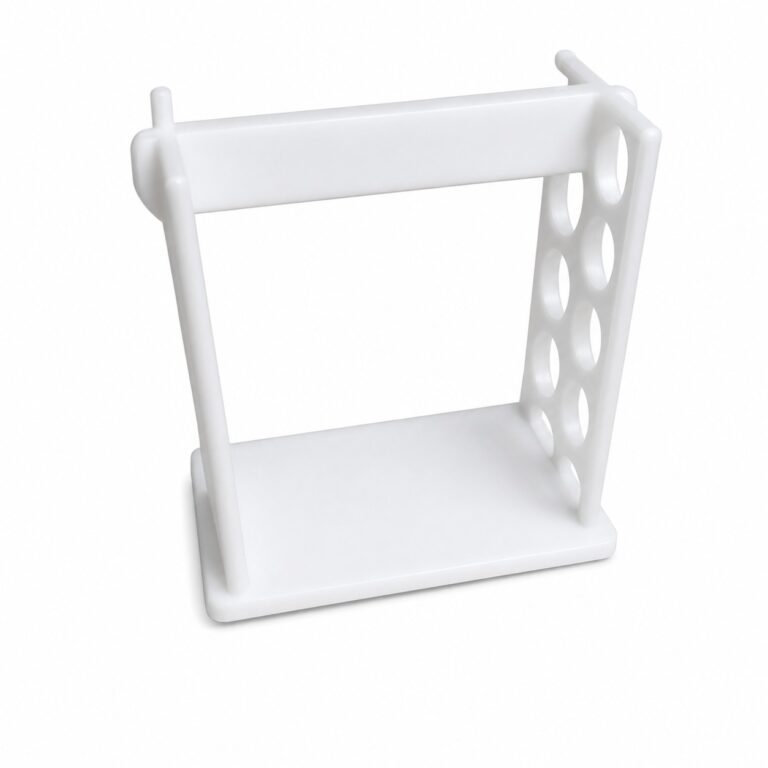
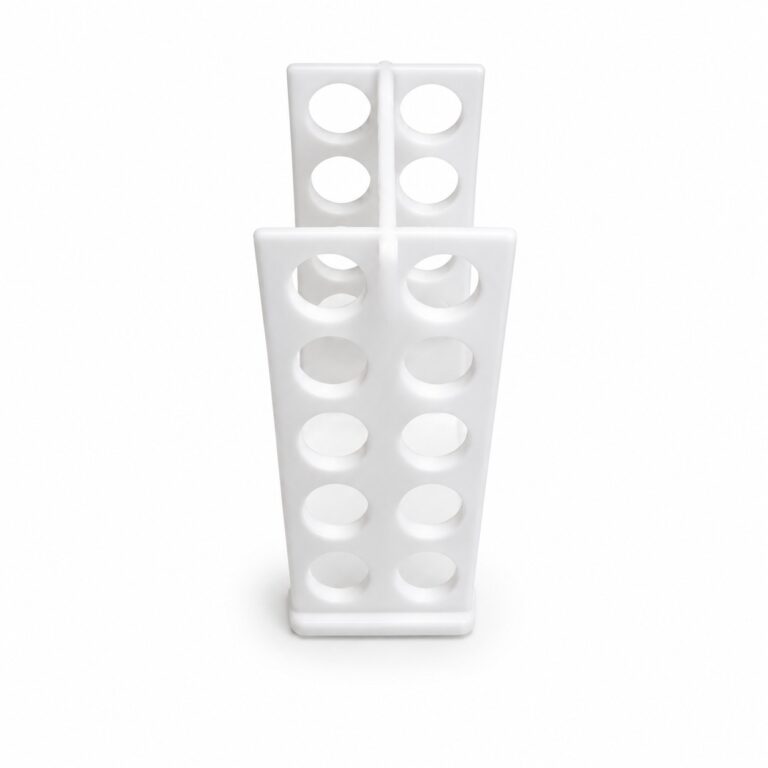
Running ten founding queens at once? Tube Holder 10 keeps them in line: a rack for 10 test tubes (16 mm) on a steady, anti-tip base, so no tubes roll off the desk and no colonies get tipped over by morning. It also keeps track of which tube holds which queen. Tough plastic that wipes clean and disinfects between colonies, fitting standard ant-keeping and lab tubes. Built for breeders juggling several species.
Bring order to ten founding queens — add one to your bench.
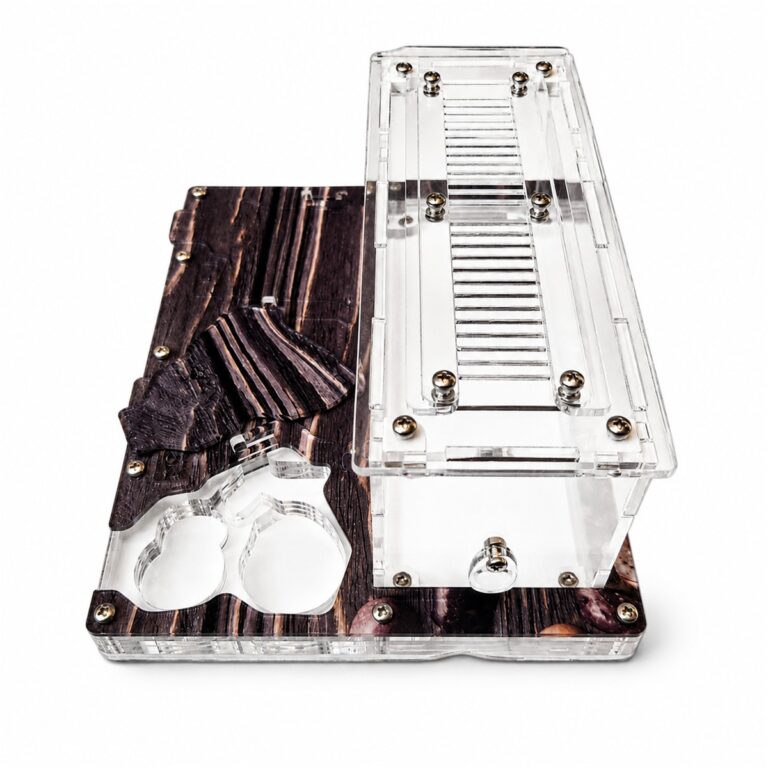
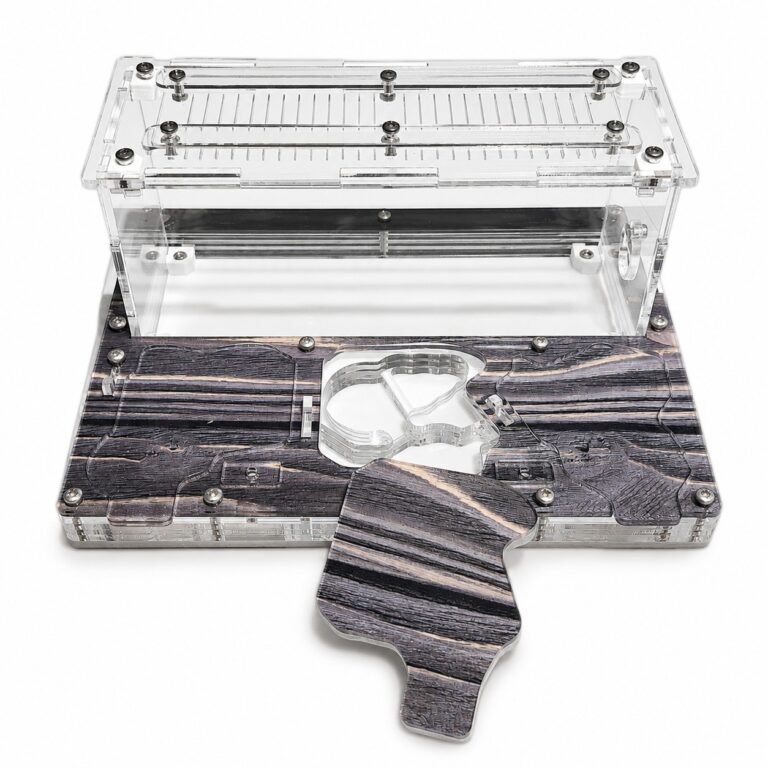
A colony outgrows its first nest faster than most beginners expect, and the Spoko is the sensible place it lands next. This mid-size acrylic ant nest (20 × 15 cm) gives a colony heading toward 800 workers the room to spread: two humidity chambers, a long 20 cm arena, passive micro-perforation airflow and a 9 mm chamber height for most popular species. Capacity 200–800 workers.
Give a growing colony its next home — order the Spoko.